

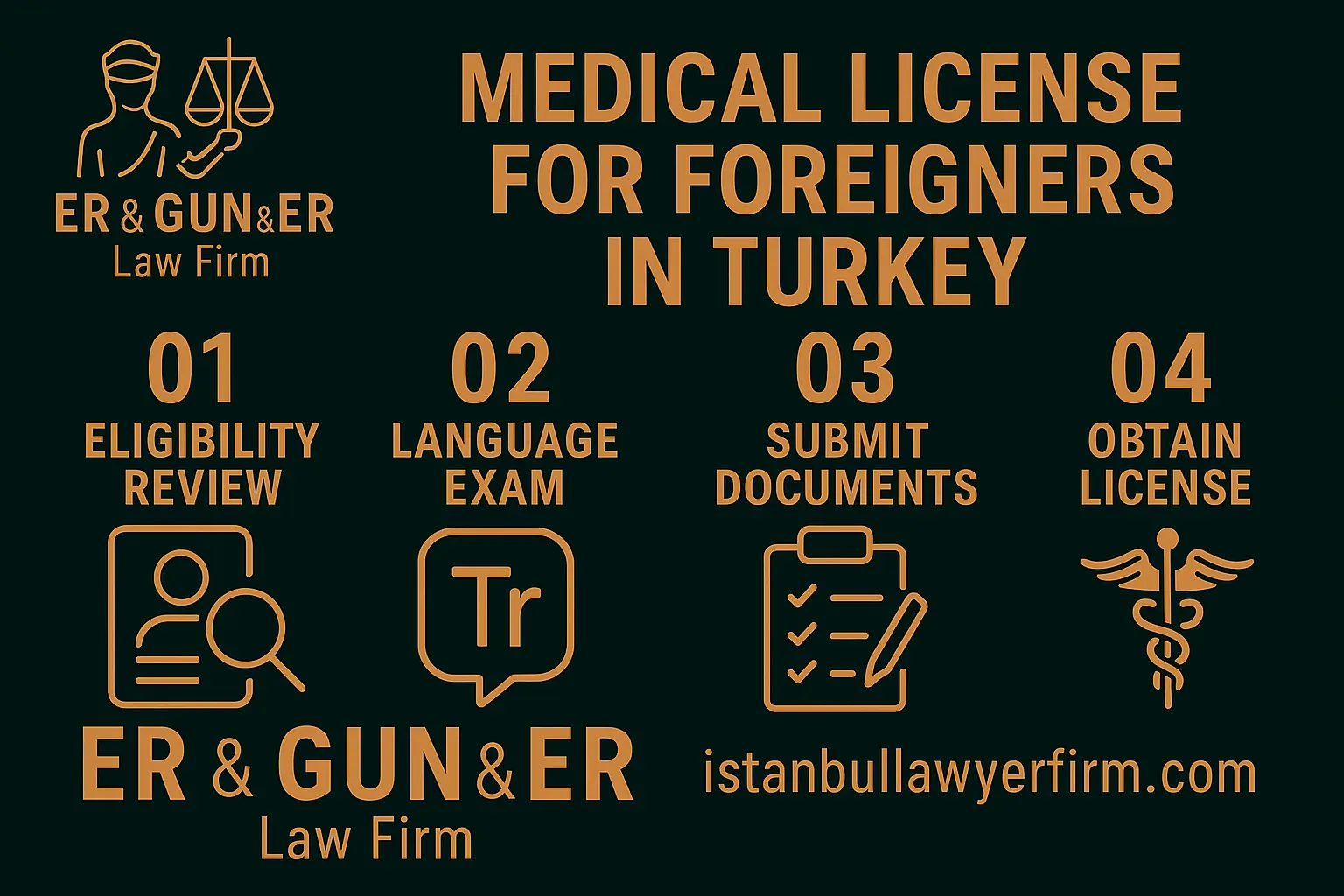
Medical licensing for foreign nationals in Türkiye operates through an integrated framework spanning practice authorisation, immigration, higher education recognition, language certification, and professional regulation. The principal legal sources are: the Law on the Manner of Practice of Medicine and Related Arts (Law No. 1219, the "Tababet Kanunu") of 11 April 1928 (Resmi Gazete 14.4.1928/863), substantially amended by Law No. 6354 of 1 July 2012 liberalising foreign physician practice; the International Labour Force Law (Law No. 6735) of 28 July 2016 governing work permits for foreign workers including healthcare professionals; the Foreigners and International Protection Law (Law No. 6458, the "YUKK") of 4 April 2013 governing residence permits; the Higher Education Law (Law No. 2547) of 4 November 1981 with Article 7/p establishing YÖK denklik (equivalency) authority and the Foreign Higher Education Diploma Recognition and Equivalency Regulation (Resmi Gazete 5.12.2017/30261); the Decree-Law on Ministry of Health Organisation (Decree-Law No. 663 of 2 November 2011); the Turkish Medical Association Law (Law No. 6023) governing TTB membership and disciplinary framework; the Patient Rights Regulation (Resmi Gazete 1.8.1998/23420); and 1219 Article 41-Bis (added by Law 6354) establishing mandatory medical malpractice insurance.
The fundamental shift in foreign physician practice came through Law No. 6354 of 1 July 2012, which substantially amended Law 1219 to permit foreign nationals holding equivalent qualifications to practise medicine in Türkiye under specific conditions. Prior to this reform, Law 1219 Article 4 required Turkish citizenship for medical practice with limited exceptions. The 2012 amendment opened pathways for foreign doctors based on diploma equivalency, language proficiency, work permit, and Ministry of Health authorisation. The current framework requires coordination between multiple regulators: the Ministry of Health (Sağlık Bakanlığı) for licensing authorisation; the Council of Higher Education (Yükseköğretim Kurulu, "YÖK") for diploma equivalency; ÖSYM for STS (Seviye Tespit Sınavı) examination administration; the Ministry of Labour and Social Security (Çalışma ve Sosyal Güvenlik Bakanlığı) for work permits; the Ministry of Interior and Migration Administration for residence permits; and the Turkish Medical Association (Türk Tabipleri Birliği, "TTB") for professional registration where applicable. ER&GUN&ER Law Firm advises foreign physicians and Turkish healthcare institutions through the integrated framework. Practice may vary by authority and year — check current guidance.
Law 1219 Practice Framework and Law 6354 Liberalisation
The Law on the Manner of Practice of Medicine and Related Arts (Law No. 1219, "Tababet Kanunu") of 11 April 1928 establishes the foundational Turkish medical practice framework. Law 1219 Article 1 establishes the basic principle: only persons holding diplomas from Turkish medical faculties or holding equivalency recognition can practise medicine in Türkiye. Law 1219 Article 7 governs the equivalency framework for foreign-graduated physicians, requiring formal recognition through YÖK procedures before practice authorisation. Law 1219 also covers related healthcare professions through specific articles: Articles 30-39 (dentists), 42-46 (pharmacists), 47-71 (midwives), and similar provisions for other categories.
Law No. 6354 of 1 July 2012 substantially transformed the foreign physician landscape through several integrated reforms. Pre-2012 Law 1219 Article 4 required Turkish citizenship for medical practice with extremely limited exceptions, effectively excluding foreign nationals from Turkish medical practice. Law 6354 amended this framework to permit foreign nationals meeting specified conditions including diploma equivalency, language proficiency, work permit authorisation, and Ministry of Health licensing approval. The reform reflected broader policy objectives including healthcare workforce expansion, international medical cooperation, and Türkiye's positioning as a healthcare destination. Practice may vary by authority and year — check current guidance.
Law 1219 Article 41-Bis (added by Law 6354) established mandatory medical malpractice insurance (tıbbi kötü uygulamaya ilişkin zorunlu mali sorumluluk sigortası) for all practising physicians including foreign nationals. The insurance covers damages arising from medical malpractice with specified minimum coverage levels and integrated regulatory oversight. The mandatory insurance framework operates through licensed insurance providers offering specific malpractice insurance products meeting Ministry of Health and Treasury requirements. Failure to maintain mandatory insurance constitutes professional misconduct triggering disciplinary consequences and potential practice suspension. The framework provides patient protection through guaranteed compensation availability while enabling physicians to manage malpractice exposure through structured insurance coverage. Foreign physicians joining Turkish practice typically incorporate mandatory insurance into their employment arrangements with hospital-side coordination supporting integrated coverage.
YÖK Denklik (Diploma Equivalency) Procedure
Diploma equivalency (denklik) through the Council of Higher Education (Yükseköğretim Kurulu, "YÖK") is the foundational gateway for foreign physicians seeking Turkish medical practice authorisation. The framework operates under Higher Education Law (Law No. 2547) Article 7/p establishing YÖK's denklik authority and the Foreign Higher Education Diploma Recognition and Equivalency Regulation (Yurtdışı Yükseköğretim Diplomaları Tanıma ve Denklik Yönetmeliği) of 5 December 2017 (Resmi Gazete 30261) providing comprehensive procedural framework.
The denklik application requires comprehensive documentation including: original diploma with Hague Apostille 1961 certification (Türkiye party through Law No. 6303 of 8 May 1985 since 1985, with recent expansions including UAE effective 7 May 2022, Canada 2024, and Qatar 2024) for member states or consular legalisation for non-member states; comprehensive academic transcripts showing complete educational programme; institutional accreditation documentation demonstrating the issuing institution's recognition status; clinical training records documenting practical medical training; and similar supporting documentation. All foreign-language documents require sworn translation under HMK Article 223 by translators registered with Turkish notaries. The application proceeds through YÖK's centralised review system with comparative analysis against Turkish medical curriculum requirements. Practice may vary by authority and year — check current guidance.
YÖK evaluation outcomes operate across several pathways. Direct recognition (doğrudan tanıma) applies for diplomas from institutions and countries with established equivalency precedents — these applications proceed to direct denklik certification without additional examination requirements. Equivalency through Seviye Tespit Sınavı (STS, "Level Determination Examination") applies for diplomas requiring substantive validation through standardised testing administered by ÖSYM (Student Selection and Placement Centre). The STS evaluates the foreign-graduated physician's knowledge against Turkish medical education standards through comprehensive multi-stage examination. Successful STS completion supports denklik certification. Equivalency through bridging education applies where foreign training shows substantive gaps — the foreign physician completes specific Turkish medical faculty courses or clinical rotations to address identified deficiencies before denklik certification. Partial recognition or rejection outcomes occur where foreign training is determined insufficient for equivalency, triggering appeal rights through YÖK internal procedures and ultimately judicial review through administrative courts. The integrated denklik framework typically requires substantial time investment, with application processing varying significantly based on case complexity and YÖK workload — generic timelines are unreliable indicators given individual variation.
Turkish Language Proficiency: TÖMER and TYS
Turkish language proficiency is a substantive prerequisite for medical practice in Türkiye reflecting the practical necessity of communicating with patients, colleagues, and regulatory authorities in Turkish. The principal certified examination pathways are TÖMER (Türkçe Öğretim Merkezi) examinations administered through Ankara University TÖMER and partner institutions, and TYS (Türkçe Yeterlilik Sınavı) administered through Yunus Emre Enstitüsü. Both examinations evaluate Turkish proficiency across reading, listening, speaking, and writing skills against the Common European Framework of Reference for Languages (CEFR) levels.
The Ministry of Health typically requires C1 level Turkish proficiency for medical practice authorisation, reflecting the substantive communication requirements in clinical practice. The C1 level demonstrates effective communication including complex topics, fluent and spontaneous expression, and accurate use of Turkish across professional contexts. Some institutions or specific practice configurations may accept B2 level with additional support arrangements, but C1 is the typical Ministry expectation for general practice authorisation. The certification is generally valid for a defined period with renewal requirements where extensive time elapses between certification and practice commencement. Practice may vary by authority and year — check current guidance.
Practical language preparation for foreign physicians typically involves intensive Turkish language courses through TÖMER, Yunus Emre Institute, or private language institutions providing physician-focused Turkish instruction. Medical Turkish vocabulary training addresses specialised clinical terminology supplementing general Turkish proficiency. The integrated language preparation often runs concurrently with denklik application processing, with successful language certification supporting subsequent licensing application. Language proficiency requirements reflect not only regulatory compliance but practical patient safety concerns — physicians lacking adequate Turkish proficiency cannot effectively obtain medical history, explain treatment options, obtain informed consent under Patient Rights Regulation (Resmi Gazete 1.8.1998/23420) framework, or document medical care in Turkish-language records. Misrepresentation of language proficiency or practising with insufficient Turkish creates professional misconduct exposure regardless of formal certification status. Strategic preparation involves both formal certification achievement and substantive functional proficiency for safe medical practice.
Work Permit Under International Labour Force Law 6735
Work permit (çalışma izni) under International Labour Force Law (Law No. 6735) of 28 July 2016 is mandatory for foreign physicians' lawful employment in Türkiye. Law 6735 replaced the earlier Foreign Workers Work Permit Law (Law No. 4817) establishing comprehensive modern framework for foreign worker authorisation. The work permit serves multiple integrated functions: employment authorisation establishing the legal right to work for the specified employer; immigration status enabling lawful residence based on the work relationship; tax and social security registration supporting integrated obligations; and regulatory compliance integration with sector-specific frameworks including Ministry of Health authorisation for medical practice.
Work permit application for foreign physicians operates through the Çalışma ve Sosyal Güvenlik Bakanlığı (Ministry of Labour and Social Security) electronic application system with employer-side filing supported by the foreign physician's documentation. The integrated documentation includes: comprehensive employment contract with the prospective Turkish healthcare institution employer; YÖK denklik certificate or equivalency status documentation; Turkish language proficiency certification (TÖMER or TYS); Ministry of Health pre-authorisation or coordination evidence where required; passport and identity documentation; criminal record clearances from country of origin and Türkiye; medical fitness documentation; and similar supporting materials. Employment contracts typically specify position, compensation, duration, employer obligations, and similar standard terms with sector-specific provisions for medical practice. Practice may vary by authority and year — check current guidance.
Work permit categories under Law 6735 framework include several pathways relevant to foreign physicians. Standard work permits (çalışma izni) operate as the principal category with initial duration up to one year and renewal pathways enabling longer-term employment. Long-term work permits (süresiz çalışma izni) become available after specified continuous employment periods (typically 8 years), providing permanent work authorisation independent of specific employer. Independent work permits (bağımsız çalışma izni) for self-employment scenarios apply where the foreign physician operates own practice rather than employee position. Turquoise card framework provides accelerated pathway for high-skilled foreign workers including specialists in specific medical fields. The integrated framework requires careful pathway selection based on specific circumstances and career objectives. Failure to obtain proper work permit triggers severe consequences including practice prohibition, monetary penalties under Law 6735, deportation procedures under Law 6458, and future entry restrictions affecting both Türkiye and EU/Schengen area.
Residence Permit Under YUKK Law 6458
Residence permit (ikamet izni) under Foreigners and International Protection Law (Law No. 6458) is required for foreign physicians' lawful presence in Türkiye beyond visa-free or short visit periods. Law 6458 establishes multiple residence permit categories with specific application to working foreign physicians. The work permit obtained under Law 6735 generally serves as the residence permit basis for the foreign physician — Law 6735 Article 12 establishes that the work permit functions concurrently as residence permit, eliminating duplicate application requirements.
Family residence permits (aile ikamet izni) under Law 6458 Article 34 enable foreign physicians' family members to accompany them in Türkiye. Spouse and minor children typically qualify based on the principal foreign worker's status with specific documentation including marriage certificates, birth certificates, family relationship evidence, and similar supporting materials. Family residence permits do not automatically include work authorisation for spouses — separate work permit applications are required if the spouse intends to work in Türkiye. Educational provisions for accompanying children operate under Turkish education framework with specific support mechanisms for foreign students. Practice may vary by authority and year — check current guidance.
Long-term residence and citizenship pathways become available after specified continuous residence periods. Long-term residence permit (uzun dönem ikamet izni) under Law 6458 Article 42 becomes available after 8 years of continuous residence with specific qualifying conditions including no public order or security concerns, sufficient income, and integrated documentation. The long-term residence permit provides indefinite duration without renewal requirement (subject to maintained qualifying conditions). Turkish citizenship by naturalisation under Citizenship Law (Law No. 5901) Article 11 becomes available after 5 years of continuous residence with specific qualifying conditions including good character, sufficient income, Turkish language proficiency, and integration evidence. Investment-based exceptional citizenship pathways under Law 5901 Article 12/A and Cabinet Decree provisions enable expedited citizenship for foreign nationals making qualifying investments — though typically not applicable to standard medical practice scenarios. The integrated immigration framework supports career development pathways for foreign physicians establishing long-term Turkish practice. ER&GUN&ER Law Firm coordinates work permit, residence permit, family residence, long-term residence, and citizenship pathways through integrated representation across multiple regulatory frameworks.
Ministry of Health Licensing and Registration
Ministry of Health (Sağlık Bakanlığı) licensing represents the final gateway for medical practice authorisation following denklik, language certification, and immigration compliance. The Ministry framework operates under Decree-Law No. 663 of 2 November 2011 (the "663 KHK") establishing Ministry organisation and authority. The Ministry of Health licensing process integrates documentation review, ethical clearance, professional registration, and ongoing supervision frameworks.
Licensing application documentation includes: YÖK denklik certificate or equivalency completion documentation; Turkish language proficiency certification (TÖMER C1 or equivalent); work permit issuance under Law 6735; residence permit under Law 6458; criminal record clearances; medical fitness documentation; ethical conduct declarations; mandatory medical malpractice insurance under Law 1219 Article 41-Bis; specialty board certifications where applicable for specialised practice; and similar supporting documentation. The Ministry review evaluates documentation completeness, qualification adequacy, ethical fitness, and integrated regulatory compliance. Specialty practice (cardiology, surgery, paediatrics, obstetrics, etc.) requires separate specialty recognition through TUS (Tıpta Uzmanlık Sınavı) for Turkish-qualified physicians or alternative specialty equivalency procedures for foreign-qualified specialists. Practice may vary by authority and year — check current guidance.
Healthcare worker registration in Çekirdek Kaynak Yönetim Sistemi (ÇKYS) — the Ministry of Health's centralised healthcare worker registry — supports ongoing supervision and integrated employment coordination. The registry tracks practising physicians, specialty status, employment institutions, and continuing professional development records. Practice institutions verify ÇKYS registration before employment commencement and ongoing employment relationships. Türk Tabipleri Birliği (TTB, "Turkish Medical Association") membership operates under Law No. 6023 framework — TTB membership traditionally was mandatory for Turkish-citizen physicians, with foreign physicians' membership status varying based on specific circumstances and recent regulatory developments. TTB provides professional development, ethical guidance, disciplinary framework, and collective representation functions. Foreign physicians should evaluate TTB membership relevance based on specific practice configuration and current regulatory framework. Continuing medical education (CME) requirements operate through Ministry of Health and TTB coordinated frameworks ensuring physicians maintain current knowledge and skills throughout their practice careers.
Professional Conduct, Liability, and Disciplinary Framework
Professional conduct framework for foreign physicians integrates Patient Rights Regulation (Resmi Gazete 1.8.1998/23420), Law 1219 ethical provisions, TTB disciplinary framework under Law 6023 where applicable, and Ministry of Health supervisory authority. Patient rights principles include informed consent (aydınlatılmış onam) requiring comprehensive disclosure to patients before medical interventions, patient confidentiality protected under Constitution Article 20 and KVKK Law 6698 framework with specific medical data protections, treatment refusal rights, second opinion access, and similar foundational protections.
Civil liability for medical malpractice operates under Turkish Code of Obligations (Law No. 6098, "TBK") general framework with specific application to medical practice. TBK Article 66 establishes employer liability framework potentially applicable to hospital-physician relationships. TBK Article 49 tort liability framework applies to medical malpractice claims by injured patients with elements including unlawful act, fault, damage, and causal nexus. The mandatory medical malpractice insurance under Law 1219 Article 41-Bis provides primary coverage for civil liability with specific minimum levels and integrated procedures. Limitation periods under TBK general framework apply with specific medical malpractice considerations. Hospital-side liability operates alongside individual physician liability with employer recourse rights against fault-contributing physicians. Practice may vary by authority and year — check current guidance.
Criminal liability for medical malpractice operates under Penal Code (Law No. 5237) framework with specific provisions applicable to healthcare contexts. TCK Article 85 (negligent killing) applies to medical malpractice cases involving patient death with imprisonment 2-6 years for single death and 2-15 years for multiple deaths. TCK Article 89 (negligent injury) applies to non-fatal medical malpractice with various penalty categories based on injury severity. TCK Article 257 (abuse of office) potentially applies to public healthcare physician misconduct involving public sector employment. TCK Articles 232-233 (family member violence and obligation breach) generally do not apply to medical practice contexts. Ağır Ceza Mahkemesi (Heavy Criminal Court) generally has jurisdiction for major medical malpractice criminal cases under TCK 85 framework, while Asliye Ceza Mahkemesi (Criminal Court of First Instance) handles lesser cases. Disciplinary framework operates through Ministry of Health authority for licensing-related discipline and TTB framework where applicable for membership discipline, with appeals through administrative courts and judicial review pathways. Strategic legal management for foreign physicians involves: comprehensive informed consent documentation; rigorous medical record-keeping; maintained mandatory insurance coverage; ongoing professional development; and integrated legal counsel for both prevention and incident response. ER&GUN&ER Law Firm advises foreign physicians on professional conduct compliance, malpractice prevention, incident response coordination, civil and criminal defence representation, and disciplinary proceedings.
Public Sector vs. Private Sector Practice
Practice setting selection between public and private sectors involves different legal, employment, and career frameworks for foreign physicians. Public sector practice operates principally under State Civil Servants Law (Law No. 657) framework with specific Ministry of Health employment configurations. The public sector has historically been restricted primarily to Turkish citizens given the State Civil Servants Law citizenship requirement, though specific contractual arrangements under Law No. 4924 (Contracted Healthcare Personnel Law) and similar frameworks may enable specific foreign physician public sector arrangements in defined circumstances.
Private sector practice provides broader pathways for foreign physicians with private hospitals, polyclinics, and specialty clinics representing the principal employment context. Private sector employment operates under Labour Law (Law No. 4857) framework with standard employment relationships, labour court jurisdiction for disputes under Labour Courts Law (Law No. 7036), and integrated regulatory compliance with Ministry of Health licensing and quality standards. Private hospital employment typically involves specific contractual provisions including: salary and benefits structure; working hours and on-call arrangements; specialty practice scope; patient assignment frameworks; ethics and quality compliance obligations; mandatory insurance coordination; and similar comprehensive employment terms. Private practice ownership for foreign physicians involves additional considerations including company formation under Turkish Commercial Code (Law No. 6102) with specific healthcare-specific licensing, Ministry of Health facility authorisation, and integrated regulatory compliance. Practice may vary by authority and year — check current guidance.
University hospital practice represents a hybrid pathway combining academic and clinical components. Foreign physicians with strong academic credentials may qualify for university hospital positions through Yükseköğretim Kurulu (YÖK) academic appointment processes integrated with Ministry of Health practice authorisation. University hospital positions provide research opportunities, postgraduate medical education involvement, and integrated academic-clinical practice. International healthcare cooperation programmes including bilateral agreements between Türkiye and other countries support specific foreign physician practice arrangements with streamlined procedures for participating countries. Sector selection strategic considerations include: Turkish language proficiency level (private sector often more accommodating with bilingual support); specialty practice scope and growth opportunities; salary expectations and benefit structures; long-term career objectives including potential Turkish citizenship pathway; family considerations including children's education and spouse employment; and integrated immigration status implications. ER&GUN&ER Law Firm advises foreign physicians on sector selection, employment contract negotiation, regulatory compliance integration, and ongoing employment relationship management.
Frequently Asked Questions
- Can foreign physicians practise medicine in Türkiye? Yes, following the substantial liberalisation through Law No. 6354 of 1 July 2012 amending Law No. 1219 (Tababet Kanunu of 11.4.1928). Requirements include YÖK denklik (diploma equivalency), Turkish language proficiency (typically TÖMER C1), work permit under Law No. 6735, residence permit under Law No. 6458, and Ministry of Health licensing.
- What is YÖK denklik? Diploma equivalency through Council of Higher Education under Law No. 2547 Article 7/p and Foreign Higher Education Diploma Recognition and Equivalency Regulation (RG 5.12.2017/30261). Required for foreign-graduated physicians. May involve direct recognition, STS examination through ÖSYM, or bridging education depending on diploma origin.
- What is STS? Seviye Tespit Sınavı (Level Determination Examination) administered by ÖSYM for foreign-graduated physicians requiring substantive validation through standardised testing against Turkish medical education standards. Different from TUS (Tıpta Uzmanlık Sınavı) which is for specialty training.
- What language proficiency is required? Typically C1 level Turkish through TÖMER (Türkçe Öğretim Merkezi at Ankara University) or TYS (Türkçe Yeterlilik Sınavı by Yunus Emre Enstitüsü). Some configurations may accept B2 with support arrangements. Note: YLSY mentioned in some sources is a graduate scholarship programme, not a language exam.
- What documents are needed? Original diploma with Hague Apostille 1961 (Türkiye party through Law No. 6303 since 1985 — recent expansions UAE 2022, Canada 2024, Qatar 2024) or consular legalisation; comprehensive transcripts; clinical training records; sworn translation under HMK Article 223; criminal records; medical fitness documentation; mandatory insurance documentation.
- What about work permits? Work permit (çalışma izni) under International Labour Force Law (Law No. 6735) of 28.7.2016 mandatory for foreign physicians' employment. Application through employer-side filing on Ministry of Labour electronic system. Work permit functions concurrently as residence permit under Law 6735 Article 12.
- What about residence permits? Foreigners and International Protection Law (Law No. 6458) of 4.4.2013 governs residence framework. Work permit serves as residence permit basis. Family residence permits under Article 34 enable family accompaniment. Long-term residence after 8 years under Article 42.
- What is mandatory malpractice insurance? Tıbbi Kötü Uygulamaya İlişkin Zorunlu Mali Sorumluluk Sigortası under Law 1219 Article 41-Bis (added by Law 6354) — mandatory for all practising physicians including foreign nationals. Specific minimum coverage levels with integrated regulatory oversight.
- What civil liability applies? TBK (Law No. 6098) Article 49 tort framework for medical malpractice claims; Article 66 employer liability for hospital-physician relationships. Mandatory insurance under Law 1219 Article 41-Bis provides primary civil coverage.
- What criminal liability applies? TCK Article 85 (negligent killing) imprisonment 2-6 years (single death), 2-15 years (multiple deaths). Article 89 (negligent injury) various categories. Article 257 (abuse of office) for public sector employment. Ağır Ceza Mahkemesi jurisdiction for major cases.
- What is ÇKYS? Çekirdek Kaynak Yönetim Sistemi — Ministry of Health's centralised healthcare worker registry tracking practising physicians, specialty status, employment institutions. Required for healthcare employment verification.
- How does TTB membership work? Türk Tabipleri Birliği (Turkish Medical Association) under Law No. 6023 — historically mandatory for Turkish-citizen physicians, with foreign physicians' membership status varying. TTB provides professional development, disciplinary framework, and collective representation. Evaluate based on specific practice configuration.
- Public vs. private sector? Public sector under State Civil Servants Law (Law No. 657) historically restricted to Turkish citizens; specific contractual arrangements under Law No. 4924 may enable defined foreign physician arrangements. Private sector under Labour Law (Law No. 4857) provides broader pathways.
- What about specialty practice? Specialty recognition through TUS (Tıpta Uzmanlık Sınavı) for Turkish-qualified physicians or alternative specialty equivalency procedures for foreign-qualified specialists. Separate from initial medical practice authorisation.
- Where does ER&GUN&ER Law Firm support medical licensing? Comprehensive YÖK denklik representation under Law 2547 with STS coordination through ÖSYM; Turkish language certification coordination with TÖMER and TYS; work permit application under Law 6735 with employer-side coordination; residence permits under Law 6458 with family residence integration; Ministry of Health licensing coordination under Law 1219 framework as amended by Law 6354; ÇKYS registration; mandatory medical malpractice insurance under Article 41-Bis; civil and criminal liability defence under TBK 49 and TCK 85/89; disciplinary proceedings before Ministry of Health and TTB; long-term residence and Turkish citizenship pathway under Law 5901; sector selection between public Law 657/4924 and private Law 4857 frameworks; specialty practice through TUS or equivalency; bilateral cooperation framework navigation; and integrated multi-regulator engagement.
Author: Mirkan Topcu is an attorney registered with the Istanbul Bar Association (Istanbul 1st Bar), Bar Registration No: 67874. His practice focuses on cross-border and high-stakes matters where evidence discipline, procedural accuracy, and risk control are decisive.
He advises foreign physicians, Turkish healthcare institutions, and international medical groups across Medical Practice Authorisation under Law No. 1219 (Tababet Kanunu of 11.4.1928) as Amended by Law No. 6354 of 1.7.2012, YÖK Denklik Procedures under Law No. 2547 Article 7/p and Foreign Higher Education Diploma Recognition and Equivalency Regulation (RG 5.12.2017/30261), STS Examination Coordination through ÖSYM, Turkish Language Certification through TÖMER and TYS, Work Permit Applications under International Labour Force Law (Law No. 6735) of 28.7.2016, Residence Permits under Foreigners and International Protection Law (Law No. 6458) of 4.4.2013 with Family Residence under Article 34 and Long-term Residence under Article 42, Ministry of Health Licensing under Decree-Law No. 663 of 2.11.2011 Framework, ÇKYS Registration, Mandatory Medical Malpractice Insurance under Law 1219 Article 41-Bis, Türk Tabipleri Birliği Engagement under Law No. 6023, Civil Liability under TBK Articles 49 and 66, Criminal Liability under TCK Articles 85 (negligent killing) and 89 (negligent injury), Patient Rights under Patient Rights Regulation (RG 1.8.1998/23420), Specialty Practice through TUS or Equivalency Procedures, Public Sector Employment under Law No. 657 and Law No. 4924, Private Sector Employment under Labour Law (Law No. 4857), Long-term Pathways including Turkish Citizenship under Citizenship Law (Law No. 5901), and Integrated Cross-border Healthcare Cooperation Frameworks.
Education: Istanbul University Faculty of Law (2018); Galatasaray University, LL.M. (2022). LinkedIn: Profile. Istanbul Bar Association: Official website.