

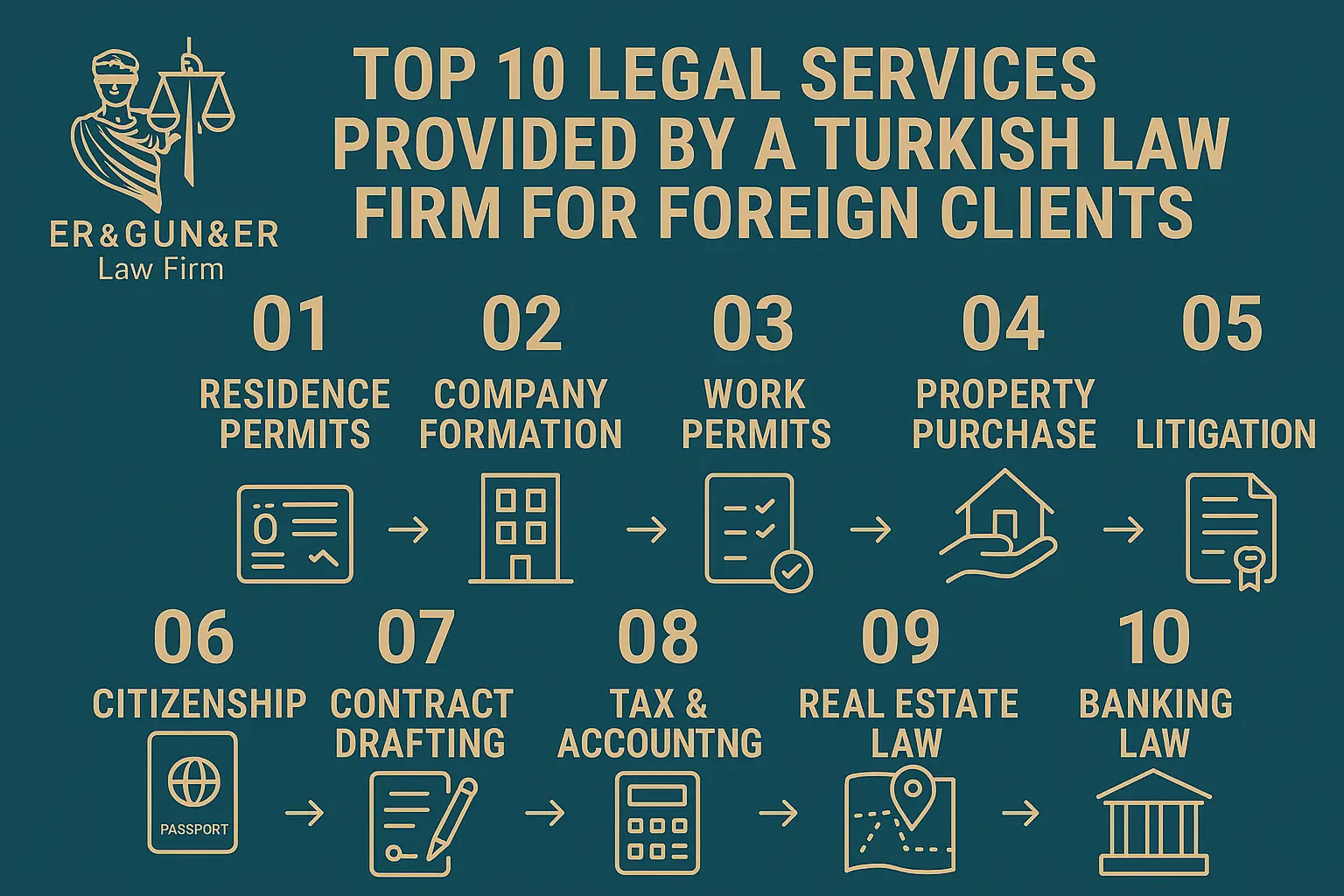
Foreign individuals, corporations, and family offices engaging with Türkiye encounter integrated Turkish legal frameworks across corporate, immigration, real estate, dispute resolution, intellectual property, tax, labour, citizenship, and family-inheritance matters. Effective legal representation requires substantive expertise across multiple statutes, procedural frameworks, and integrated regulatory bodies. The principal Turkish statutory frameworks relevant to foreign client representation include: the Commercial Code (Law No. 6102, "TTK") of 13 January 2011 governing corporate and commercial matters; the International Labour Force Law (Law No. 6735) of 28 July 2016 governing foreign worker permits; the Foreigners and International Protection Law (Law No. 6458, "YUKK") of 4 April 2013 governing residence permits; the Land Registry Law (Law No. 2644, "Tapu Kanunu") of 22 December 1934 with Article 35 governing foreign immovable acquisition; the Civil Code (Law No. 4721, "TMK") governing property, family, and inheritance; the Civil Procedure Code (Law No. 6100, "HMK") governing civil litigation; the Mediation Law (Law No. 6325, "HUAK") with Article 18/B mandatory mediation framework added by Law No. 7445 of 28 March 2023 (effective 1 September 2023); the Industrial Property Law (Law No. 6769, "SMK") of 22 December 2016 governing trademarks, patents, and designs; the Personal Data Protection Law (Law No. 6698, "KVKK") with Article 9 cross-border framework substantially amended by Law No. 7499 of 2 March 2024; the Income Tax Law (Law No. 193) and Corporate Tax Law (Law No. 5520); the Labour Law (Law No. 4857); the Citizenship Law (Law No. 5901) with Article 12/A exceptional citizenship pathway; and the Inheritance and Transfer Tax Law (Law No. 7338, "VİV") with Article 9 declaration deadlines.
Cross-border framework integration operates through the International Private Law and Procedure Law (Law No. 5718, "MÖHUK") with Article 20 establishing lex rei sitae for Turkish immovables; the Hague Apostille Convention 1961 (Türkiye party through Law No. 6303 of 8 May 1985 since 1985, with recent expansions including UAE effective 7 May 2022, Canada 2024, and Qatar 2024); HMK Article 223 sworn translation through translators registered with Turkish notaries; the New York Convention 1958 for international arbitration award enforcement (Türkiye party since 1992); and integrated bilateral treaties supporting specific country-relationship procedural cooperation. Practice may vary by authority and year — check current guidance. ER&GUN&ER Law Firm advises foreign clients across integrated Turkish legal services with substantive statutory expertise, procedural discipline, and integrated cross-border coordination.
1. Corporate Formation and Governance Under TTK Law 6102
Corporate formation and governance under the Turkish Commercial Code (Law No. 6102, "TTK") of 13 January 2011 represents foundational service for foreign clients establishing Turkish business operations. The principal corporate structures include limited liability company (limited şirket) under TTK Articles 573-644 and joint stock company (anonim şirket) under TTK Articles 329-562. Limited şirket structures provide streamlined operations suitable for most foreign-owned closely-held businesses, while anonim şirket structures support broader capital-raising including potential capital markets access. Branch office (şube) and liaison office structures provide alternative pathways for specific foreign entity operational configurations.
TTK formation requirements include: articles of association (esas sözleşme) under Article 339 (anonim şirket) and Article 575 (limited şirket) with specific mandatory content; minimum capital requirements (TRY 50,000 anonim şirket under TTK Article 332 as amended; TRY 10,000 limited şirket under Article 580 — recent legislative developments may have modified specific thresholds); shareholder identification with appropriate beneficial ownership documentation; director appointment with specific authority documentation; trade registry registration through the relevant Ticaret Sicil Müdürlüğü; integrated tax registration through Vergi Dairesi; and similar foundational requirements. Practice may vary by authority and year — check current guidance.
Ongoing governance under TTK framework includes: shareholder meeting requirements under Articles 407-414 (anonim şirket) and Article 616 (limited şirket); director duties under Articles 369-371 with specific fiduciary obligations; financial reporting under Articles 514-528 with annual financial statement preparation; auditing requirements under Articles 397-406 for qualifying entities; and integrated compliance with broader regulatory frameworks including capital markets (Law No. 6362) for listed entities, banking (Law No. 5411) for banking entities, and similar sector-specific frameworks. Director liability under TTK Articles 553-557 establishes personal liability for breach of duties — comprehensive corporate governance compliance protects directors and integrated stakeholders. Cross-border configurations including foreign parent oversight, foreign director appointments, and integrated multinational governance structures require careful TTK compliance integration with foreign jurisdiction frameworks. Mergers, acquisitions, and corporate restructuring under TTK Articles 134-194 (mergers), 159-179 (divisions), and integrated restructuring frameworks support business development with comprehensive substantive procedural framework. ER&GUN&ER Law Firm advises foreign clients across TTK corporate formation, governance, and integrated commercial framework.
2. Immigration: Residence and Work Permits Under Laws 6458 and 6735
Immigration framework for foreign nationals operates through two principal integrated statutes. The Foreigners and International Protection Law (Law No. 6458, "YUKK") of 4 April 2013 governs residence permits with multiple categories supporting different foreign national circumstances. The International Labour Force Law (Law No. 6735) of 28 July 2016 governs work permits for foreign workers including comprehensive framework replacing the prior Foreign Workers Work Permit Law (Law No. 4817).
YUKK residence permit categories include: short-term residence permit under Article 31 supporting tourism, business, family, healthcare, and integrated short-term purposes; family residence permit under Article 34 supporting family members of Turkish citizens or residence permit holders; student residence permit under Article 38 for educational purposes; long-term residence permit under Article 42 after 8 continuous years of residence; humanitarian residence permit under Article 46 for specific humanitarian circumstances; and integrated specialised categories. Each category involves specific eligibility requirements, documentation, and procedural framework administered through Göç İdaresi Başkanlığı (Migration Administration). Practice may vary by authority and year — check current guidance.
Law 6735 work permit framework includes: standard work permit (çalışma izni) with initial duration up to one year and renewal pathways; long-term work permit (süresiz çalışma izni) after 8 years of continuous employment supporting permanent work authorisation; independent work permit (bağımsız çalışma izni) for self-employment scenarios; Turquoise Card (Turkuaz Kart) framework for high-skilled workers and investors providing accelerated pathway with permanent residence and integrated benefits. Law 6735 Article 12 establishes that work permit functions concurrently as residence permit for the foreign worker — eliminating duplicate residence permit application requirements. Integration with Citizenship Law (Law No. 5901) framework supports long-term pathway including: 5-year residence-based naturalisation under Article 11; exceptional citizenship under Article 12/A for qualifying investments including USD 400,000 real estate investment under Cumhurbaşkanlığı Kararı No. 5042 of 13 June 2022 with three-year hold annotation. Strategic immigration planning typically addresses entire pathway from initial entry through long-term residence or citizenship with appropriate sequencing and integrated documentation. ER&GUN&ER Law Firm coordinates residence permits, work permits, family residence, long-term residence, and citizenship pathways through integrated representation.
3. Real Estate: Tapu Kanunu 2644 and TMK 4721 Framework
Real estate services for foreign clients operate within integrated framework spanning the Land Registry Law (Law No. 2644, "Tapu Kanunu") of 22 December 1934 and Civil Code (Law No. 4721, "TMK") property framework. TMK Article 705 establishes that immovable property ownership transfers only through registration in the land registry — Tapu Müdürlüğü registration is constituent transfer requirement, not merely confirmatory. TMK Article 706 establishes the official deed (resmi senet) requirement specifying procedural form. TMK Articles 997-1027 govern the land registry system including the registry good-faith principle under Article 1023 protecting bona fide purchasers.
Foreign acquisition framework under Tapu Kanunu Article 35 operates through Cumhurbaşkanlığı Kararı No. 6302 of 18 June 2022 country eligibility framework. Substantive limitations include: total foreign acquisition not exceeding 10% of provincial district private property; individual foreign acquisition not exceeding 30 hectares total in Türkiye (with exceptional increase to 60 hectares with Presidential authorisation); restriction on military zones requiring specific permits under Law No. 2565 (Askeri Yasak Bölgeler ve Güvenlik Bölgeleri Kanunu); restrictions in conservation sites under Law No. 2863 (Kültür ve Tabiat Varlıklarını Koruma Kanunu); disaster risk areas under Law No. 6306; agricultural land restrictions under Law No. 5403; coastal area restrictions under Law No. 3621; forest area restrictions under Law No. 6831; and integrated regulatory compliance. Tapu Kanunu Article 36 governs foreign legal entity acquisition with corporate purpose connection requirements. Practice may vary by authority and year — check current guidance.
Comprehensive real estate due diligence operates through integrated verification including: title chain analysis through TAKBİS (Tapu ve Kadastro Bilgi Sistemi) and Web-Tapu electronic verification; encumbrance review covering ipotek (mortgage), haciz (judicial seizure), şerh (annotations), and integrated encumbrance categories; zoning verification under İmar Kanunu (Law No. 3194) framework with Articles 20 (yapı ruhsatı — building permit), 30 (yapı kullanma izin belgesi — occupancy permit), and 32 (unlicensed buildings); condominium framework under Kat Mülkiyeti Kanunu (Law No. 634) for apartment ownership; SPK-licensed appraisal under Capital Markets Law (Law No. 6362) framework where applicable particularly for citizenship-by-investment transactions; and integrated supporting analysis. Citizenship-by-investment under Law 5901 Article 12/A and Cumhurbaşkanlığı Kararı No. 5042 (USD 400,000 minimum investment with three-year hold annotation) requires comprehensive title verification, qualifying valuation, and integrated procedural compliance. Title fraud remedies include tapu iptali ve tescili davası under TMK Article 1024, State Treasury liability under TMK Article 1007, and integrated criminal prosecution under TCK Articles 204 (resmi belgede sahtecilik), 207, 157, 158. Mandatory mediation under HUAK Article 18/B applies to qualifying immovable property disputes. ER&GUN&ER Law Firm provides comprehensive real estate representation across acquisition, due diligence, citizenship investment, and dispute resolution.
4. Dispute Resolution: HMK Litigation, HUAK Mediation, ISTAC Arbitration
Dispute resolution services operate through integrated framework spanning litigation under the Civil Procedure Code (Law No. 6100, "HMK"), mediation under the Mediation Law (Law No. 6325, "HUAK"), and arbitration through Istanbul Arbitration Centre (ISTAC) and integrated international arbitration frameworks. HMK Articles 1-447 establish comprehensive civil procedure framework including jurisdiction (Articles 1-22), parties (Articles 50-83), evidence (Articles 187-265), and integrated procedural framework.
Court structure includes: Sulh Hukuk Mahkemesi (Civil Court of Peace) for specific subject matter including kat mülkiyeti disputes, partition (paylaşma davası) under TMK Articles 642-679, and integrated specialised matters; Asliye Hukuk Mahkemesi (Civil Court of First Instance) for general civil and commercial disputes; specialised Asliye Ticaret Mahkemesi (Commercial Court) under TTK Article 4 for commercial matters; Aile Mahkemesi (Family Court) under Aile Mahkemeleri Kanunu (Law No. 4787) for family matters; İş Mahkemesi (Labour Court) under İş Mahkemeleri Kanunu (Law No. 7036) for labour disputes; Tüketici Mahkemesi (Consumer Court) under Tüketici Kanunu (Law No. 6502) for consumer matters; Bölge Adliye Mahkemesi (Regional Court of Appeal — istinaf) for first-tier appellate review; and Yargıtay (Court of Cassation) with specialised civil chambers for cassation review. Practice may vary by authority and year — check current guidance.
Mandatory mediation framework under HUAK has substantially expanded through legislative development. HUAK Article 18/A (added by Law No. 7036 of 12 October 2017) established mandatory mediation for labour disputes effective 1 January 2018. HUAK Article 18/B (added by Law No. 7445 of 28 March 2023) extended mandatory mediation to qualifying immovable property disputes effective 1 September 2023. Mandatory mediation operates as procedural prerequisite for court filing in covered dispute categories — failure to attempt mediation results in court dismissal without prejudice. International arbitration through ISTAC (Istanbul Arbitration Centre) supports cross-border dispute resolution with comprehensive procedural framework. New York Convention 1958 (Türkiye party since 1992) supports international arbitration award enforcement across member states. International Chamber of Commerce (ICC) arbitration with Paris Secretariat operates frequently for international commercial disputes. MÖHUK Articles 50-59 govern foreign judgment recognition (tenfiz) procedures for cross-border judgment enforcement. Strategic dispute resolution typically combines: pre-dispute structuring with appropriate dispute resolution clauses; alternative dispute resolution through mediation supporting relationship preservation; arbitration for specific scenarios particularly cross-border commercial; and litigation for matters requiring formal court adjudication. ER&GUN&ER Law Firm provides comprehensive dispute resolution representation across all forums with substantive substantive expertise and procedural discipline.
5. Intellectual Property Under SMK Law 6769
Intellectual property services for foreign clients operate primarily under the Industrial Property Law (Law No. 6769, "SMK") of 22 December 2016 (Resmi Gazete 30139) which consolidated and modernised Turkish IP framework. SMK Articles 4-26 govern trademark protection with comprehensive registration framework, scope of protection, and enforcement mechanisms. Articles 82-138 govern patent protection. Articles 55-81 govern industrial design protection. Articles 39-54 govern geographical indications. Articles 27-38 govern integrated circuit topography. The integrated framework provides comprehensive substantive IP protection aligned with international standards.
Trademark registration through Türk Patent ve Marka Kurumu (Türk Patent — Turkish Patent and Trademark Office) operates under SMK Article 11 application framework with comprehensive examination including absolute grounds (Article 5) and relative grounds (Article 6) review. Madrid Protocol membership supports international trademark registration for Turkish trademark holders and Turkish protection extension for international applicants. Patent prosecution through Türk Patent operates under SMK Articles 86-127 with novelty, inventive step, and industrial applicability requirements (Articles 83-84). European Patent Convention (EPC) membership supports European patent validation in Türkiye. Practice may vary by authority and year — check current guidance.
IP enforcement framework operates through multiple integrated mechanisms. Civil enforcement through specialised Fikri ve Sınai Haklar Hukuk Mahkemesi (Intellectual and Industrial Property Rights Civil Court) under SMK and HMK framework supports infringement actions, injunctions, damages, and integrated remedies. Criminal enforcement through specialised Fikri ve Sınai Haklar Ceza Mahkemesi (IP Criminal Court) supports criminal prosecution for qualifying infringement under SMK Articles 30 (trademark), 89 (patent), and integrated criminal provisions with imprisonment up to 4 years and judicial fine. Administrative enforcement through Türk Patent supports cancellation, opposition, and integrated administrative procedures. Customs enforcement through Customs Administration supports border measures preventing counterfeit goods importation. Yargıtay 11. Hukuk Dairesi specialised civil chamber and 7. Ceza Dairesi specialised criminal chamber provide appellate review for IP matters. Cross-border enforcement coordination through Madrid Protocol, EPC, TRIPS framework, and integrated international cooperation supports comprehensive multinational IP protection. ER&GUN&ER Law Firm advises on IP registration, enforcement, transactions, and integrated multi-jurisdiction protection.
6. Data Protection Under KVKK Law 6698
Data protection framework under the Personal Data Protection Law (Law No. 6698, "KVKK") of 24 March 2016 establishes comprehensive Turkish data protection framework with substantial application to foreign clients operating in Türkiye or processing Turkish residents' personal data. KVKK Article 5 establishes processing legitimacy bases including: explicit consent (5/1); express legal authorisation (5/2/a); contract necessity (5/2/c); legal obligation (5/2/ç); vital interests (5/2/d); legitimate interests (5/2/f); and similar processing bases. Article 6 establishes special categories of personal data with enhanced protection including health, sexual life, criminal convictions, religious beliefs, ethnic origin, and similar sensitive categories.
Article 9 cross-border data transfer framework was substantially amended by Law No. 7499 of 2 March 2024 introducing standard contractual clauses, binding corporate rules, certification mechanisms, and integrated transfer mechanisms more aligned with international frameworks including EU GDPR. Importantly, KVKK and EU GDPR are NOT formally harmonised despite structural similarities — separate compliance analysis is required for entities subject to both frameworks. Article 10 establishes information notice obligations to data subjects. Article 11 establishes data subject rights including access, correction, erasure, processing restriction, and integrated rights. Article 12 establishes data security obligations. Article 16 establishes Data Controllers Registry (VERBIS) registration requirements for qualifying entities. Article 18 establishes administrative fine framework with penalties ranging from approximately TRY 47,000 to TRY 9.4 million (with annual indexation adjustments). Practice may vary by authority and year — check current guidance.
Strategic KVKK compliance for foreign clients operates through several integrated elements. Comprehensive processing inventory documenting all personal data processing activities with appropriate legal bases supports both compliance demonstration and integrated operational planning. Privacy notice (aydınlatma metni) deployment covering all data subject contact points supports Article 10 information notice compliance. Data subject rights response framework with appropriate procedural infrastructure supports Article 11 rights compliance. Data security framework including technical and organisational measures appropriate to processing risk supports Article 12 security obligations. Cross-border transfer framework integration with appropriate transfer mechanism selection (standard contractual clauses, BCRs, certification, similar) supports Article 9 compliance under post-Law 7499 framework. VERBIS registration where applicable with comprehensive disclosure supports Article 16 compliance. Integration with broader regulatory frameworks including sector-specific requirements (banking, telecommunications, healthcare, similar) supports unified compliance infrastructure. Kişisel Verileri Koruma Kurulu (Personal Data Protection Board) operates as principal regulatory authority with enforcement, guidance, and integrated supervisory functions. Anayasa Mahkemesi individual application under Article 148/3 provides constitutional review pathway for fundamental privacy rights matters. ER&GUN&ER Law Firm advises foreign clients on comprehensive KVKK compliance with integrated cross-border framework coordination.
7. Tax: GVK 193, KVK 5520, KDV 3065 Framework
Tax services for foreign clients operate within integrated Turkish tax framework spanning income, corporate, value-added, and integrated tax categories. The Income Tax Law (Law No. 193, "GVK") governs personal income taxation with comprehensive framework covering employment income (Articles 61-64), self-employment (Articles 65-68), commercial income (Articles 37-50), agricultural income (Articles 52-59), capital gains and integrated investment income (Articles 80-82), and similar income categories. The Corporate Tax Law (Law No. 5520, "KVK") governs corporate taxation with 25% standard rate (subject to legislative modifications) applying to corporate profits.
The VAT Law (Law No. 3065, "KDV") establishes comprehensive value-added tax framework with standard 20% rate (since 2023 increase from 18%) applying to most goods and services, reduced rates of 10% and 1% for specific categories, and integrated exemption framework. The Tax Procedure Law (Law No. 213, "VUK") provides procedural framework including assessment, payment, audit, penalty, and integrated procedural mechanisms. The Inheritance and Transfer Tax Law (Law No. 7338, "VİV") governs inheritance taxation with Article 9 declaration deadlines (4 months Türkiye / 6 months cross-border) and Article 17 clearance certificate framework. Practice may vary by authority and year — check current guidance.
Cross-border tax framework integration includes several integrated elements. Tax residency analysis under GVK Article 4 establishing Turkish tax residency framework with worldwide income taxation for residents and Turkish-source income taxation for non-residents. Double taxation treaty framework with comprehensive bilateral treaty network supporting reduced withholding rates and integrated dispute resolution mechanisms. Türkiye signed the BEPS Multilateral Instrument (MLI) on 7 June 2017 implementing OECD Base Erosion and Profit Shifting recommendations. Foreign tax credit framework under domestic law and treaty provisions supports double taxation relief. Permanent establishment analysis under treaty and domestic frameworks determines Turkish taxation scope for foreign entities. Transfer pricing framework under KVK Article 13 and implementing regulations governs related party transactions. Tax audit defence operates through Vergi Dairesi administrative framework with appeal pathways through Vergi Mahkemesi (Tax Court), Bölge İdare Mahkemesi (Regional Administrative Court), and Danıştay (Council of State) for cassation review. Strategic tax planning for foreign clients typically integrates: structural design optimising entity choice and jurisdictional placement; treaty utilisation maximising available benefits; transfer pricing compliance with comprehensive documentation; and audit-defence preparation supporting controversy resolution. ER&GUN&ER Law Firm coordinates with tax advisory partners providing integrated legal-tax representation for foreign clients.
8. Labour and Employment Under İş Kanunu 4857
Labour and employment services operate primarily under the Labour Law (Law No. 4857, "İş Kanunu") of 22 May 2003 establishing comprehensive employment framework. İş Kanunu Article 8 establishes employment contract requirements with written form mandate for contracts of one year or longer. Article 14 governs remote work arrangements (substantially amended by Law No. 6715 of 6 May 2016 introducing remote work to Article 14, with detailed implementation through Uzaktan Çalışma Yönetmeliği of 10 March 2021). Articles 17-21 govern termination including just cause framework (Article 25), notice periods (Article 17), and severance (kıdem tazminatı under Article 14 of repealed Law No. 1475 still applicable for severance calculation).
Working time under Article 63 establishes 45-hour weekly maximum with overtime under Article 41. Annual leave under Articles 53-57 provides minimum 14-day annual leave increasing with seniority. Wage protection under Articles 32-35 establishes minimum wage requirements through annually-set asgari ücret framework. Maternity protection under Article 74 provides 16 weeks paid leave (8 pre-birth, 8 post-birth, 18 weeks for multiple births) with nursing breaks and integrated family protections. Workplace safety under İş Sağlığı ve Güvenliği Kanunu (Law No. 6331) of 20 June 2012 establishes comprehensive occupational health and safety framework with employer obligations including risk assessment, training, and integrated preventive measures. Practice may vary by authority and year — check current guidance.
Foreign worker employment integrates with International Labour Force Law (Law No. 6735) work permit framework. Foreign workers must hold valid work permits before commencing employment with specific quota and qualification considerations. Equal treatment requirements under Article 5 prohibit discrimination based on language, race, gender, political opinion, philosophical belief, religion, and similar protected characteristics. Job security under Articles 18-21 protects employees with specific employment duration and entity size criteria from unjust termination. Mandatory mediation under HUAK Article 18/A (Law 7036) applies to labour disputes effective 1 January 2018 — procedural prerequisite for İş Mahkemesi filing. Social security framework under Sosyal Sigortalar ve Genel Sağlık Sigortası Kanunu (Law No. 5510) of 31 May 2006 covers SGK registration, contributions, and integrated benefits for both Turkish and qualifying foreign workers. Collective labour relations under Sendikalar ve Toplu İş Sözleşmesi Kanunu (Law No. 6356) governs union formation, collective bargaining, and integrated industrial relations. ER&GUN&ER Law Firm advises on labour compliance, work permits, employment contracts, dispute resolution, and integrated workforce management for foreign employers operating in Türkiye.
9. Citizenship Under Law 5901 with Article 12/A Investment Pathway
Citizenship services operate under the Turkish Citizenship Law (Law No. 5901, "Türk Vatandaşlığı Kanunu") of 29 May 2009 establishing comprehensive citizenship framework with multiple acquisition pathways. Article 11 establishes general residence-based naturalisation requiring 5 years of continuous Turkish residence with specific qualifying conditions including good character, sufficient income, Turkish language proficiency, integration evidence, and integrated requirements.
Article 12/A establishes exceptional citizenship pathway through qualifying investments with substantially expanded framework through implementing regulations. Cumhurbaşkanlığı Kararı No. 5042 of 13 June 2022 establishes the principal investment thresholds: USD 400,000 real estate investment (increased from prior USD 250,000 threshold in 2022) with three-year hold annotation registered as title deed restriction; USD 500,000 minimum capital investment in qualifying corporate operations; USD 500,000 minimum government bond investment; USD 500,000 minimum bank deposit; USD 500,000 minimum private pension fund participation; and integrated investment categories. Practice may vary by authority and year — check current guidance.
Citizenship application procedures involve comprehensive documentation including: investment qualifying documentation (SPK-licensed valuation reports for real estate, corporate documentation, banking documentation, similar); identity and family documentation; criminal record clearances; medical fitness documentation; and integrated supporting documentation. Processing operates through Nüfus ve Vatandaşlık İşleri Genel Müdürlüğü (Directorate General of Population and Citizenship Affairs) with specific procedural framework. Family member coordination through Article 12/A enables spouse and minor children inclusion under specific conditions supporting family-unit citizenship acquisition. Strategic citizenship planning typically operates through: pre-application qualification analysis confirming investment meets specific requirements; investment execution with integrated documentation supporting later application; comprehensive application submission with appropriate documentation; and post-application coordination through processing completion. Citizenship benefits include Turkish passport with substantial visa-free travel access, integrated EU candidate country status benefits, geographic and cultural advantages, and integrated long-term residency security. Cross-border integration with foreign jurisdiction including dual nationality recognition, foreign tax implications, foreign reporting obligations, and integrated foreign jurisdiction considerations requires comprehensive multi-jurisdiction analysis. ER&GUN&ER Law Firm coordinates citizenship applications with integrated investment execution, family coordination, and cross-border planning.
10. Family and Inheritance Under TMK 4721
Family and inheritance services operate under Turkish Civil Code (Law No. 4721, "TMK") with comprehensive frameworks across both areas. TMK Articles 118-330 govern family law including marriage (Articles 134-160), divorce (Articles 161-184), spousal property regimes including default acquired property regime (edinilmiş mallara katılma) under Articles 218-241 since 1 January 2002, parent-child relationships (Articles 282-336), and integrated family law framework. TMK Articles 495-682 govern inheritance with comprehensive framework.
Marriage framework establishes minimum age of 17 under Article 124, with marriage capacity, formal requirements, and integrated marital framework. Divorce grounds under Article 166 include fundamental shaking of marriage union (general ground) and specific grounds including infidelity, ill-treatment, abandonment, and similar specific grounds. Spousal property regime under Articles 218-241 default applies to marriages contracted on or after 1 January 2002 with property acquired during marriage subject to equal division upon dissolution (with specific exceptions for personal property, gifts, inheritances). Pre-2002 marriages remained under prior separation regime unless specifically converted. Custody arrangements under Articles 182-336 prioritise child welfare with specific procedural framework. Aile Mahkemesi (Family Court) under Aile Mahkemeleri Kanunu (Law No. 4787) of 9 January 2003 has jurisdiction for most family matters with specialised judicial expertise. Practice may vary by authority and year — check current guidance.
Inheritance framework operates through TMK Articles 495-682. Veraset ilamı (inheritance certificate) under Article 598 establishes standing through Sulh Hukuk Mahkemesi or notarial pathway under Law 6217 of 14 January 2011. Spousal share under Article 499 varies by parentela: 1/4 with descendants, 1/2 with parents/siblings, 3/4 with grandparents, all if alone. Forced shares (saklı pay) under Article 506 protect descendants (1/2 of legal share), parents (1/4 of legal share), and spouse (variable). Reduction action (tenkis davası) under Articles 560-571 enables forced share infringement remedy. Renunciation (reddi miras) under Article 605 within 3 months provides debt-protection mechanism. Inheritance and Transfer Tax Law (Law No. 7338, "VİV") Article 9 establishes declaration deadlines (4 months Türkiye / 6 months cross-border) with Article 17 clearance certificate prerequisite for land registry transfer of inherited property. Cross-border inheritance under MÖHUK Article 20 lex rei sitae confirms Turkish law application to Turkish immovables regardless of decedent or heir foreign connections. Partition (paylaşma) under Articles 642-679 with HUAK Article 18/B mandatory mediation for qualifying disputes operates through Sulh Hukuk Mahkemesi. ER&GUN&ER Law Firm advises foreign clients on integrated family and inheritance representation across marriage, divorce, custody, inheritance certificate, partition, and integrated cross-border coordination.
Frequently Asked Questions
- What corporate framework applies to foreign-owned Turkish companies? TTK (Law 6102) of 13.1.2011 — limited şirket under Articles 573-644 or anonim şirket under Articles 329-562. Director liability under Articles 553-557. Trade registry registration through Ticaret Sicil Müdürlüğü.
- What are the principal immigration laws? Foreigners and International Protection Law (Law 6458, "YUKK") of 4.4.2013 governs residence permits across short-term (Article 31), family (Article 34), long-term (Article 42) categories. International Labour Force Law (Law 6735) of 28.7.2016 governs work permits including standard, long-term (Article 12 dual residence/work function), and Turquoise Card pathways.
- What about real estate framework? Tapu Kanunu (Law 2644) Article 35 with Cumhurbaşkanlığı Kararı 6302 of 18.6.2022 governs foreign acquisition. TMK (Law 4721) Articles 705-706 require Tapu Müdürlüğü registration for title transfer. Special risk areas: military zones (Law 2565), conservation (Law 2863), disaster risk (Law 6306), agricultural (Law 5403).
- What is the citizenship investment threshold? Citizenship Law (Law 5901) Article 12/A with Cumhurbaşkanlığı Kararı No. 5042 of 13.6.2022: USD 400,000 minimum real estate investment with three-year hold annotation registered as title deed restriction. Alternative pathways include USD 500,000 corporate investment, government bonds, bank deposits, or private pension fund participation.
- Where are disputes resolved? HMK (Law 6100) civil procedure framework. Sulh Hukuk Mahkemesi for partition and specialised matters; Asliye Hukuk and Asliye Ticaret Mahkemesi for general civil/commercial; Aile, İş, Tüketici Mahkemesi for specialised matters. Bölge Adliye Mahkemesi appellate; Yargıtay cassation. ISTAC arbitration. New York Convention 1958 for international award enforcement (Türkiye party since 1992).
- Does mandatory mediation apply? HUAK Article 18/A (Law 7036) for labour disputes since 2018. HUAK Article 18/B (Law 7445 of 28.3.2023, effective 1.9.2023) for qualifying immovable property disputes. Procedural prerequisite for court filing in covered categories.
- What about IP protection? SMK (Law 6769) of 22.12.2016 — comprehensive industrial property framework. Trademark (Articles 4-26), patent (Articles 82-138), industrial design (Articles 55-81). Türk Patent ve Marka Kurumu administers. Madrid Protocol membership for international trademarks. Specialised Fikri ve Sınai Haklar Mahkemesi.
- What KVKK obligations apply? Personal Data Protection Law (Law 6698) of 24.3.2016. Article 5 processing legitimacy bases. Article 9 cross-border transfer (substantially amended Law 7499 of 2.3.2024). Article 18 administrative fines TRY 47K-9.4M. KVKK and EU GDPR are NOT formally harmonised — separate compliance analysis required.
- What is the tax framework? GVK (Law 193) personal income; KVK (Law 5520) corporate 25% standard rate; KDV (Law 3065) standard 20% rate (since 2023 increase from 18%); VUK (Law 213) procedural; VİV (Law 7338) inheritance Article 9 deadlines (4 months TR / 6 months cross-border) and Article 17 clearance. BEPS MLI signed 7.6.2017.
- What about labour law? İş Kanunu (Law 4857) of 22.5.2003. Article 14 remote work (Law 6715 of 2016). Articles 17-21 termination. Article 41 overtime. Article 63 45-hour week. Article 74 maternity (16/18 weeks). İş Sağlığı ve Güvenliği Kanunu (Law 6331). Foreign workers via Law 6735 work permits. HUAK 18/A mandatory mediation.
- What about family and inheritance? TMK (Law 4721) Articles 118-330 family, 495-682 inheritance. Marriage age 17 (Article 124). Acquired property regime default since 1.1.2002 (Articles 218-241). Veraset ilamı under Article 598. Spousal share Article 499 (1/4, 1/2, 3/4, all). Forced shares Article 506. Reddi miras Article 605 (3 months). Aile Mahkemesi (Law 4787).
- What cross-border framework applies? MÖHUK (Law 5718) Article 20 lex rei sitae for Turkish immovables; Articles 50-59 tenfiz. Hague Apostille 1961 (Türkiye party through Law 6303 since 1985, recent expansions UAE 2022, Canada 2024, Qatar 2024). HMK Article 223 sworn translation. New York Convention 1958.
- How is power of attorney structured? TBK (Law 6098) Articles 502-514. Article 506 requires specific authorisation for real estate transactions. Foreign-issued POAs require Hague Apostille and HMK 223 sworn translation. Scope must specifically authorise the intended actions.
- What about sanctions and AML? AML Law 5549 with MASAK obligated parties framework, Article 4 STR with 10-business-day deadline, Article 5 8-year retention. Sanctions through Constitution Article 90 international agreement supremacy with UN/EU/OFAC implementation through banking channels.
- Where does ER&GUN&ER Law Firm support foreign clients? Comprehensive corporate formation under TTK Law 6102; immigration under YUKK Law 6458 and UIK Law 6735; real estate under Tapu Kanunu Law 2644 and TMK Law 4721 with citizenship investment under Law 5901 Article 12/A and CK 5042; dispute resolution through HMK litigation, HUAK 18/A and 18/B mediation, ISTAC and ICC arbitration; intellectual property under SMK Law 6769; data protection under KVKK Law 6698 with Law 7499 cross-border amendment; tax across GVK 193, KVK 5520, KDV 3065, VUK 213, VİV 7338; labour under İş Kanunu 4857 with Law 6331 occupational safety; citizenship under Law 5901 with comprehensive investment pathway; family and inheritance under TMK 4721 Articles 495-682 and 118-330; cross-border framework under MÖHUK Law 5718 with Hague Apostille (Law 6303) and New York Convention 1958; AML under Law 5549 and sanctions under Constitution Article 90; and integrated multi-track representation across all Turkish legal frameworks.
Author: Mirkan Topcu is an attorney registered with the Istanbul Bar Association (Istanbul 1st Bar), Bar Registration No: 67874. His practice focuses on cross-border and high-stakes matters where evidence discipline, procedural accuracy, and risk control are decisive.
He advises foreign clients, multinational corporations, family offices, and institutional investors across Corporate Formation and Governance under TTK (Law No. 6102) of 13.1.2011, Immigration under Foreigners and International Protection Law (Law No. 6458, "YUKK") of 4.4.2013 with Article 31 Short-term, Article 34 Family, Article 42 Long-term Residence and International Labour Force Law (Law No. 6735) of 28.7.2016 with Standard, Long-term, and Turquoise Card Work Permits, Real Estate under Tapu Kanunu (Law No. 2644) of 22.12.1934 with Article 35 Foreign Acquisition and Cumhurbaşkanlığı Kararı No. 6302 of 18.6.2022 with TMK (Law No. 4721) Articles 705-706 Registration Framework, Citizenship-by-Investment under Citizenship Law (Law No. 5901) Article 12/A with Cumhurbaşkanlığı Kararı No. 5042 of 13.6.2022 USD 400,000 Threshold and Three-Year Hold Annotation, Dispute Resolution through HMK (Law No. 6100) Litigation, HUAK (Law No. 6325) Article 18/A Labour Mediation under Law No. 7036 and Article 18/B Immovable Mediation under Law No. 7445 of 28.3.2023, ISTAC Arbitration, ICC Arbitration, and New York Convention 1958 (Türkiye party since 1992) Award Enforcement, Intellectual Property under SMK (Law No. 6769) of 22.12.2016 with Türk Patent ve Marka Kurumu Registration and Madrid Protocol, KVKK (Law No. 6698) Compliance with Article 9 Cross-border Transfer Framework as Amended by Law No. 7499 of 2.3.2024, Tax across GVK (Law No. 193), KVK (Law No. 5520) 25% Corporate Rate, KDV (Law No. 3065) 20% Standard Rate, VUK (Law No. 213) Procedural, and VİV (Law No. 7338) Inheritance Tax with BEPS MLI of 7.6.2017, Labour under İş Kanunu (Law No. 4857) of 22.5.2003 with Article 14 Remote Work under Law No. 6715 of 6.5.2016 and İş Sağlığı ve Güvenliği Kanunu (Law No. 6331), Family and Inheritance under TMK (Law No. 4721) Articles 118-330 Family and Articles 495-682 Inheritance with TMK Article 506 Saklı Pay and Article 605 Reddi Miras and TMK Article 499 Spousal Shares, Cross-border Framework under MÖHUK (Law No. 5718) Article 20 Lex Rei Sitae and Articles 50-59 Tenfiz, Hague Apostille Convention 1961 (Türkiye party through Law No. 6303 since 1985 with Recent Expansions UAE 2022, Canada 2024, Qatar 2024), HMK Article 223 Sworn Translation, TBK (Law No. 6098) Articles 502-514 Power of Attorney, AML under Law No. 5549 with MASAK Framework, and Constitution Article 90 International Agreement Supremacy and Article 148/3 Anayasa Mahkemesi Individual Application.
Education: Istanbul University Faculty of Law (2018); Galatasaray University, LL.M. (2022). LinkedIn: Profile. Istanbul Bar Association: Official website.