

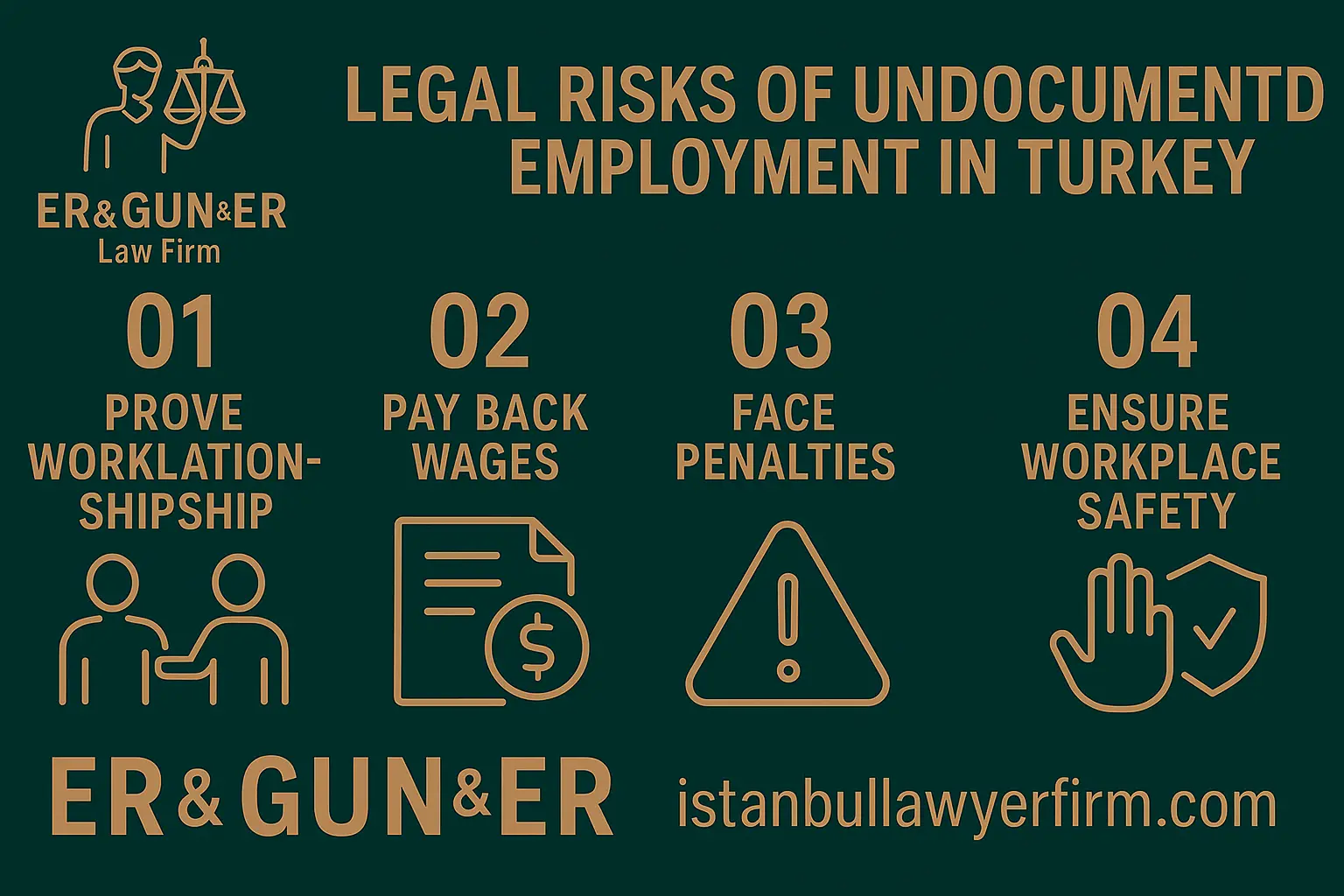
Undocumented employment in Türkiye — kayıt dışı istihdam — covers any employment relationship lacking proper documentation, social security registration, work permit (for foreign nationals), or other prescribed regulatory compliance. Foreign-affiliated employers, multinational subsidiaries, family businesses, and SMEs all face the framework regardless of size or sector. The substantive consequences span administrative penalties, employee civil claims, criminal liability in specific cases, public tender exclusion, M&A complications, and reputational harm. The framework's multi-statute character produces compliance complexity requiring substantive engagement rather than superficial documentation.
The substantive law operates through 4857 sayılı İş Kanunu (Labour Code, Law No. 4857) of 22 May 2003 (Resmi Gazete 10 June 2003 No. 25134) governing employment relationships; 5510 sayılı Sosyal Sigortalar ve Genel Sağlık Sigortası Kanunu (Social Insurance and General Health Insurance Code, Law No. 5510) of 31 May 2006 (Resmi Gazete 16 June 2006 No. 26200) governing social security; 6735 sayılı Uluslararası İşgücü Kanunu (International Labour Force Code, Law No. 6735) of 28 July 2016 (Resmi Gazete 13 August 2016 No. 29800) governing foreign worker employment; 6458 sayılı Yabancılar ve Uluslararası Koruma Kanunu (Foreigners and International Protection Code, Law No. 6458) of 4 April 2013 (Resmi Gazete 11 April 2013 No. 28615) governing foreign nationals' status; 6331 sayılı İş Sağlığı ve Güvenliği Kanunu (Occupational Health and Safety Code, Law No. 6331) of 20 June 2012 (Resmi Gazete 30 June 2012 No. 28339) governing workplace safety; 5237 sayılı Türk Ceza Kanunu (Turkish Criminal Code, TCK, Law No. 5237) Articles 79-80 governing migrant smuggling and human trafficking with potential criminal exposure for severe undocumented employment scenarios; 5326 sayılı Kabahatler Kanunu (Misdemeanours Code, Law No. 5326) of 30 March 2005 governing administrative sanctions framework; 193 sayılı Gelir Vergisi Kanunu (Income Tax Code, GVK, Law No. 193) Article 94 governing payroll withholding tax (stopaj); and 213 sayılı Vergi Usul Kanunu (Tax Procedure Code, VUK, Law No. 213) Article 371 pişmanlık voluntary disclosure framework supporting tax compliance correction.
The institutional architecture runs through Çalışma ve Sosyal Güvenlik Bakanlığı (Ministry of Labour and Social Security — separated from prior consolidated ministry in 2021 reorganisation) administering employment policy; Sosyal Güvenlik Kurumu (SGK — Social Security Institution) administering social insurance; İŞKUR (Türkiye İş Kurumu — Turkish Employment Agency) and Çalışma ve İş Kurumu İl Müdürlükleri (Provincial Labour and Employment Directorates) administering local labour matters; Göç İdaresi Başkanlığı (Migration Directorate) under İçişleri Bakanlığı administering foreign nationals' status; iş müfettişleri (labour inspectors) conducting workplace inspections; Gelir İdaresi Başkanlığı (GİB — Revenue Administration) administering tax aspects; and Cumhuriyet Başsavcılığı (Public Prosecutor's Office) handling criminal aspects of severe undocumented employment scenarios.
Defining Kayıt Dışı İstihdam Under Multi-Statute Framework
Kayıt dışı istihdam (undocumented employment) operates as functional concept rather than single statutory definition. The substantive concept captures any employment relationship lacking proper compliance with employment, social security, immigration, tax, or related framework. Foreign-affiliated employers benefit from understanding the concept's multi-dimensional character rather than treating it as single-issue concern.
Substantive elements producing kayıt dışı status include: absence of written employment contract under İş Kanunu Article 8 framework; absence of SGK sigortalı işe giriş bildirgesi (insured worker entry notification) under SGK Article 8 framework filed at least 1 day before work commencement; absence of work permit for foreign nationals under 6735 framework; absence of SGK monthly premium and service notification (APHB — Aylık Prim ve Hizmet Belgesi) under SGK Article 86; absence of payroll withholding tax compliance under GVK Article 94; absence of occupational health and safety compliance under 6331 framework; and similar substantive omissions.
Written contract requirement under İş Kanunu Article 8 establishes substantive content. Article 8/2 requires employment contracts of one year or longer to be in writing; Article 8/3 requires written contracts for specific other categories. Even where written form is not strictly required, written contract supports substantive evidence of employment terms. Article 8/4 requires employer to provide written document specifying work conditions where written contract not produced.
SGK sigortalı işe giriş bildirgesi requirement under 5510 Article 8 establishes critical pre-employment notification framework. Substantive requirement: notification submitted to SGK at least 1 day before work commencement (with specific exceptions for daily, casual, or specific other employment categories). Notification operates through e-Bildirge electronic system. Failure to file timely notification produces employer liability for kayıt dışı period regardless of subsequent compliance.
APHB monthly notification requirement under 5510 Article 86 establishes ongoing reporting framework. Substantive content includes: employed personnel identification; work days; gross wages; specific other content. Filing deadline operates through specific monthly schedule. Failure produces specific penalty exposure under 5510 Article 102.
İşyeri tescili (workplace registration) under 5510 framework establishes employer registration framework. Workplaces face SGK registration through specific procedural framework producing işyeri sicil numarası (workplace registration number) for employment registration. Operation without proper işyeri tescili produces specific compliance violations alongside individual employee compliance violations.
Çalışma izni (work permit) requirement for foreign nationals under 6735 framework operates as separate compliance dimension. Foreign nationals working in Türkiye require çalışma izni (work permit) through Çalışma ve Sosyal Güvenlik Bakanlığı issuance. Specific exemptions exist for diplomatic personnel, specific categories of foreign students, and similar narrow categories. Standard foreign employment without çalışma izni produces both employment violation and immigration violation.
İkamet izni (residence permit) requirement under 6458 YUKK framework operates as immigration requirement separate from work permit. Foreign nationals residing in Türkiye for substantial periods require ikamet izni; çalışma izni grants implicit ikamet izni effect for permit duration. Standard foreign nationals without proper status face immigration violations alongside any employment violations.
Stopaj (payroll withholding tax) under GVK Article 94 establishes employer withholding obligation for employee income tax. Employers withhold income tax from employee wages and remit to GİB through specific procedural framework. Failure produces both employer tax liability and contributory factor in kayıt dışı characterisation. Stopaj framework integrates with social security contribution framework producing comprehensive payroll compliance framework.
Sectoral variations produce specific framework applications. 4857 İş Kanunu applies generally; 5953 Basın İş Kanunu (Press Labour Code) governs journalists; 854 Deniz İş Kanunu (Maritime Labour Code) governs maritime workers; specific other sectoral frameworks apply to specific worker categories. Sectoral analysis becomes essential for proper compliance framework identification.
Administrative Penalties Under SGK Article 102 and 6735 Article 23
Administrative penalty framework for kayıt dışı istihdam operates through multiple statute-specific frameworks producing aggregate penalty exposure. Foreign-affiliated employers benefit from understanding penalty calculation methodology and aggregate exposure framework.
SGK Article 102 framework establishes detailed administrative fine structure for SGK violations. Penalty categories include: failure to file sigortalı işe giriş bildirgesi (entry notification) producing specific fine per worker; failure to file APHB (monthly notification) producing specific fine; failure to register workplace (işyeri tescili) producing specific fine; production of false or incomplete information producing specific fine; and similar substantive content. Fines operate as multiples of asgari ücret (minimum wage) producing inflation-indexed framework.
Penalty calculation methodology under SGK Article 102 produces specific framework. Each undocumented worker for each undocumented period generates separate penalty calculation. Multi-month undocumented employment produces multi-month penalty exposure. Aggregate exposure for businesses with multiple undocumented workers and extended periods reaches substantial amounts producing meaningful financial pressure for compliance.
6735 Article 23 framework establishes specific penalties for unauthorised foreign worker employment. Penalty operates per foreign worker employed without proper çalışma izni with substantial individual penalty amounts. Repeated violations produce escalated penalty framework. Foreign worker without çalışma izni faces personal deportation and entry ban exposure. Employer faces both worker-by-worker penalty and aggregate operational exposure.
4857 İş Kanunu Article 99 framework establishes penalties for various employment law violations including: failure to provide written contract; violation of working time provisions; violation of overtime framework; violation of weekly rest framework; violation of annual leave framework; and similar substantive violations. Penalties operate as specific monetary amounts adjustable through annual revaluation.
6331 Article 26 framework establishes penalties for occupational health and safety violations. Penalty categories include: failure to assess workplace risks; failure to provide health surveillance; failure to provide training; failure to provide protective equipment; and similar substantive violations. Penalties scale with violation severity and employee count producing meaningful financial framework.
Tax framework penalties under VUK Article 344 (tax loss penalty) and Article 359 (tax evasion criminal liability) produce additional exposure for stopaj violations. Failure to withhold and remit employee tax produces tax loss with specific penalty calculation. Severe intentional violations may produce criminal liability under VUK Article 359 framework with imprisonment exposure.
Aggregate exposure scenarios produce substantial total penalty potential. Hypothetical scenario: SME with 10 undocumented employees over 12 months faces SGK Article 102 entry notification penalties (10 × specific amount), APHB penalties (12 × specific amount), workplace registration penalties, 4857 contract penalties, 6331 OHS penalties (where applicable), VUK stopaj penalties, and where foreign worker involvement 6735 Article 23 penalties. Aggregate exposure reaches multiples of annual payroll producing meaningful business risk.
Operational consequences alongside monetary penalties include: public tender exclusion under specific framework restricting government procurement participation; investment incentive ineligibility affecting Yatırım Teşvik Belgesi and similar incentive programs; banking restrictions through credit relationship complications; and specific other operational consequences. The framework's aggregate impact extends beyond direct monetary penalties.
Penalty mitigation pathways include: voluntary disclosure framework with specific reduction mechanisms; appeal pathway through 5326 Kabahatler Kanunu administrative review and judicial review through Sulh Ceza Hakimliği; instalment payment frameworks for substantial penalties; and specific other mitigation pathways. Counsel coordination supports specific mitigation strategy development.
Worker Civil Claims and Employment Liability
Civil liability framework for kayıt dışı istihdam produces substantial exposure to worker claims under İş Kanunu and related frameworks. Workers' substantive rights operate regardless of formal documentation status — courts recognise actual employment relationship despite absence of formal contract.
Substantive rights framework under İş Kanunu produces worker entitlements regardless of documentation status. Article 17 notice termination framework with notice period requirements graduating with seniority (2 weeks for under 6 months, 4 weeks for 6-18 months, 6 weeks for 18-36 months, 8 weeks for over 36 months service). Article 24 worker termination grounds with kıdem tazminatı (severance pay) entitlement preserved. Article 25 employer termination grounds framework. Article 32 ücret (wage) framework with minimum wage protection.
Severance pay (kıdem tazminatı) framework under 1475 sayılı eski İş Kanunu Article 14 (preserved from prior Labour Code) entitles workers with 1+ year service to severance equal to one month's gross wage per service year on qualifying termination grounds. Substantive content covers most termination scenarios with specific exceptions. Calculation includes base wage, regular bonuses, and specific other compensation elements producing substantial severance entitlement for long-tenured workers.
Notice indemnity (ihbar tazminatı) framework under İş Kanunu Article 17 provides additional indemnity where employer terminates without proper notice period. Calculation: equivalent of unpaid notice period wages. Combined with kıdem tazminatı, total termination liability for tenured workers reaches substantial amounts.
Overtime (fazla çalışma) framework under İş Kanunu Article 41 entitles workers to overtime compensation at 50% premium over normal hourly wage for work exceeding 45-hour weekly schedule. Workers subjected to extensive uncompensated overtime accumulate substantial unpaid overtime liability. Documentation through worker testimony, witness evidence, and similar substantive content supports claims.
Weekly rest (hafta tatili) under İş Kanunu Article 46 entitles workers to one paid day per week. National holidays (ulusal bayram ve genel tatil) under İş Kanunu Article 47 entitle workers to specific holiday compensation framework. Annual leave (yıllık ücretli izin) under İş Kanunu Article 53-59 entitles workers to graduated annual leave (14-26 days based on seniority). Unpaid leave entitlements produce substantial cumulative liability for kayıt dışı periods.
Discrimination claims under İş Kanunu Article 5 framework address discriminatory employment practices. Equal treatment principles apply regardless of documentation status. Discrimination compensation, termination indemnities, and similar substantive content produce additional liability exposure where discrimination occurs.
Mobbing and workplace harassment claims under TBK (Türk Borçlar Kanunu — Turkish Code of Obligations) Article 49 (general tort framework) and specific employment frameworks produce additional liability exposure. Maddi tazminat (material damages) and manevi tazminat (moral damages) frameworks support substantive recovery for harassed workers.
Procedural framework for worker claims operates through Asliye Hukuk Mahkemesi or specialised İş Mahkemesi (Labour Court) where established. Pre-litigation arabuluculuk (mediation) under İş Mahkemeleri Kanunu (Labour Courts Code, Law No. 7036) of 12 October 2017 (RG 25 October 2017 No. 30221) operates as mandatory pre-litigation requirement for most employment claims.
Statute of limitations framework under various provisions: 5-year framework for most employment claims; 10-year framework for kıdem tazminatı; specific frameworks for specific claim categories. Kayıt dışı periods extend statute of limitations effectively because workers may pursue claims after substantial delays particularly post-termination.
Worker testimony framework supports claims even absent formal documentation. İş Mahkemesi accepts worker testimony alongside witness testimony, indirect evidence (bank records, communications, photographic evidence), and similar substantive content for proving kayıt dışı employment relationship and substantive terms. The framework's evidentiary flexibility produces substantial worker leverage despite absence of formal documents.
Class action-equivalent collective claims framework, while not a true class action, allows multiple workers to file coordinated claims producing aggregate proceedings with shared evidence and parallel handling. Coordinated worker action by multiple kayıt dışı employees produces substantial litigation exposure for employers.
SGK Coordination and Tax Reporting Risks
SGK and tax coordination framework produces overlapping reporting obligations with distinct compliance dimensions. Failures across either dimension produce specific consequences requiring coordinated remediation framework.
SGK e-Bildirge framework operates as primary electronic notification system. Sigortalı işe giriş bildirgesi (entry notification), aylık prim ve hizmet belgesi (APHB), and various other notifications operate through e-Bildirge electronic platform. Employers maintain e-Bildirge access through specific procedural framework with specific user authorisation. Operational continuity requires e-Bildirge functional access.
Premium calculation framework produces detailed premium framework. SGK premium rates operate at specific percentages of gross wage with employer share and employee share components. Various risk classes affect specific premium calculation. Calculation produces total premium amount due monthly through specific procedural framework.
Premium payment framework operates through specific payment timeline with specific banking channels. Late payment produces specific late payment charges (gecikme zammı) and gecikme cezası (late penalty) under specific framework. Cumulative late charges produce substantial additional exposure beyond base premium amounts.
Stopaj (payroll withholding tax) framework under GVK Article 94 produces parallel reporting obligation. Income tax withholding, stamp tax (damga vergisi) withholding, and similar withholding categories operate through specific framework. Muhtasar Beyanname (Withholding Tax Return) and Muhtasar ve Prim Hizmet Beyannamesi (combined framework following 2020 unification) operate as reporting framework.
Combined reporting framework following 2020 unification produces integrated reporting through Muhtasar ve Prim Hizmet Beyannamesi consolidating SGK premium reporting and tax withholding reporting. The framework's structure produces operational efficiency for compliant employers while increasing visibility for non-compliant operations.
SGK inspection framework operates through müfettiş (inspector) review of workplace records, payroll documentation, employee verification, and similar substantive content. Inspections may operate scheduled (with notice) or unannounced (without notice) depending on framework and case-specific factors. Foreign-affiliated workplaces particularly face inspection priority for kayıt dışı yabancı personel scenarios.
Tax inspection framework under VUK operates through tax inspectors (vergi müfettişi) review. Inspections cover employer obligations including stopaj compliance, record-keeping, and substantive tax compliance. Inspection findings produce specific assessment framework with appeal pathways through specific tax tribunal framework.
Voluntary disclosure framework under VUK Article 371 pişmanlık supports tax error correction with substantial penalty mitigation. Employer voluntarily declaring stopaj or related errors before inspection initiation faces reduced penalty framework. Specific procedural framework supports pişmanlık benefits including timing requirements and substantive compliance.
SGK installment framework under specific framework supports deferred payment of substantial premium liabilities. Negotiation with SGK supports specific installment structures based on employer financial capacity. Documentation supports installment application alongside ongoing compliance commitments.
Incentive eligibility framework integrates with employment compliance. Yatırım Teşvik Belgesi (Investment Incentive Certificate), specific employer incentives (employer SGK premium reduction programs, R&D incentives, similar), and other specific employer benefits often require kayıtlı istihdam (documented employment) compliance. Kayıt dışı istihdam discovery may trigger incentive revocation alongside direct penalties.
MASAK framework integration produces specific reporting obligations. Suspicious employment payments, particularly cash payments without proper documentation, may trigger MASAK reporting requirements under anti-money-laundering framework. Severe undocumented employment scenarios with money laundering or tax evasion components face MASAK framework alongside employment framework.
Foreign Worker Permits Under 6735 Uluslararası İşgücü Kanunu
Foreign worker employment framework under 6735 sayılı Uluslararası İşgücü Kanunu (Law No. 6735) of 28 July 2016 (Resmi Gazete 13 August 2016 No. 29800) replaced prior Yabancıların Çalışma İzinleri Hakkında Kanun (Law No. 4817) producing modernised framework. The framework's substantive content produces specific compliance pathway distinct from Turkish national employment.
Çalışma izni (work permit) requirement under 6735 framework applies to most foreign nationals employed in Türkiye. Substantive scope covers: employment by Turkish employers; foreign nationals working in Türkiye through Turkish branches of foreign employers; foreign nationals self-employed in Türkiye; and substantive other categories. Specific narrow exemptions exist for diplomatic personnel, specific student categories, and similar narrow categories.
Çalışma izni application framework operates through specific procedural pathway. Domestic application: through Turkish employer's submission to Çalışma ve Sosyal Güvenlik Bakanlığı for foreign national already in Türkiye through specific other status. Overseas application: through Turkish consulate abroad with specific procedural framework. e-İzin elektronik başvuru framework supports online processing for specific application categories.
Substantive prerequisites for çalışma izni include: foreign national identification (passport with sufficient validity); Turkish employer identification with operational substance; substantive employment offer with specific employment terms; foreign national qualifications appropriate for proposed position; specific other substantive content. Quota and substantive review framework produces case-specific outcomes.
Çalışma izni categories include: süreli çalışma izni (time-limited permit, typically 1 year initial then renewals); süresiz çalışma izni (indefinite permit available after specific tenure typically 8 years); bağımsız çalışma izni (independent work permit for self-employed foreign nationals); turkuaz kart (Turquoise Card for high-qualified workers introduced under 6735 framework); and specific other categories.
Turkuaz Kart framework under 6735 establishes accelerated framework for high-qualified foreign workers. Substantive prerequisites: high qualifications (specific framework on qualification standards); substantial Turkish economic contribution; Turkish family integration where applicable; and specific other substantive content. Procedural framework produces accelerated permit issuance with specific employer documentation framework.
İkamet izni (residence permit) framework under 6458 sayılı Yabancılar ve Uluslararası Koruma Kanunu (Law No. 6458) of 4 April 2013 governs foreign nationals' residence status. Çalışma izni grants implicit ikamet izni effect during permit duration eliminating separate residence permit requirement for permit-holding workers. Specific procedural coordination through Göç İdaresi Başkanlığı supports integrated status management.
Permit renewal framework operates through specific timeline framework. Renewals filed before expiration support continuous status; renewals filed after expiration produce specific complications and potential gap periods. Documentation framework for renewals includes ongoing employment evidence, tax compliance evidence, and similar substantive content.
Permit transfer between employers operates through specific procedural framework rather than automatic continuation. Foreign worker changing employers requires new permit application or transfer procedure with specific documentation. Continuous valid permit maintenance during transition requires specific procedural compliance.
Foreign worker without çalışma izni faces multiple consequences. Personal consequences include: deportation under 6458 framework with specific procedural pathway; entry ban under specific framework reaching multi-year periods; specific other consequences. Employer consequences include: 6735 Article 23 administrative penalties per worker; complementary employment law penalties; potential criminal liability under TCK Article 79 framework for severe scenarios.
TCK Article 79 göçmen kaçakçılığı (migrant smuggling) framework establishes potential criminal liability for severe undocumented foreign worker employment scenarios with specific elements. Framework targets organised migration trafficking rather than standard non-compliance, but specific egregious cases producing exploitation, vulnerable worker targeting, or organised non-compliance may face framework application. Counsel engagement essential for specific scenario analysis.
Seasonal worker (geçici çalışma izni — temporary work permit) framework supports specific sectoral seasonal employment. Agricultural seasonal work, tourism seasonal work, and similar specific seasonal scenarios face specific framework with simplified procedural pathways for specific categories. The framework's structure supports legitimate seasonal employment while maintaining substantive compliance requirements.
Refugee and international protection status holders under 6458 framework face specific employment framework. Geçici koruma (temporary protection — Syrian refugees primarily) and uluslararası koruma (international protection) status holders face specific work permit framework with specific provisions on employment access. Sectoral and geographical restrictions apply with specific framework producing compliance complexity.
Occupational Health and Safety Under 6331 Framework
Occupational health and safety framework under 6331 sayılı İş Sağlığı ve Güvenliği Kanunu (Law No. 6331) of 20 June 2012 (Resmi Gazete 30 June 2012 No. 28339) establishes substantial workplace safety obligations operating alongside employment compliance framework. Kayıt dışı employment frequently produces simultaneous OHS non-compliance producing aggregate exposure.
Substantive obligations under 6331 framework include: workplace risk assessment (risk değerlendirmesi); occupational physician (işyeri hekimi) and workplace safety specialist (iş güvenliği uzmanı) engagement; health surveillance for workers; safety training; personal protective equipment (PPE — kişisel koruyucu donanım) provision; emergency response framework; and similar substantive content. Obligations scale with workplace risk class and worker count.
Risk classification framework under 6331 categorises workplaces into: çok tehlikeli (very dangerous), tehlikeli (dangerous), and az tehlikeli (less dangerous) classes. Risk class determines specific framework requirements including OHS specialist hours, training frequency, health surveillance frequency, and similar substantive content. Construction, manufacturing, mining, and similar sectors typically operate at higher risk classifications.
Workplace accident framework under 5510 SGK Article 13 establishes specific workplace accident definition. Accidents occurring during work, related to work, or during work-related travel face specific framework producing employer obligations including SGK reporting (within 3 days for accidents producing more than 3 days incapacity) and specific worker compensation framework.
Kayıt dışı worker accidents produce specific complications. Workers face SGK benefit access despite kayıt dışı status — SGK provides benefits and pursues recovery from employer through specific framework. Employer faces aggravated liability including: standard accident liability; SGK reimbursement obligation for benefits paid; specific penalty framework for kayıt dışı accident scenarios; and potential criminal liability where negligence severity reaches criminal threshold under TCK frameworks.
Criminal liability framework for serious workplace accidents operates through TCK provisions. TCK Article 89 (taksirle yaralama — negligent injury) and Article 85 (taksirle öldürme — negligent killing) frameworks address accidents producing serious injury or death. Aggravating circumstances under specific provisions produce enhanced framework where employer negligence rises to criminal threshold.
Eko-rotaTeftiş (electronic inspection coordination) framework supports OHS inspection coordination. İş müfettişleri inspect OHS compliance alongside employment compliance producing integrated inspection framework. Findings across multiple compliance dimensions produce coordinated penalty framework.
Sectoral OHS frameworks supplement general 6331 framework. Maden Kanunu (Mining Code) framework with specific mining safety requirements; İnşaat Sektörü Yönetmeliği (Construction Sector Regulation) with specific construction safety requirements; sectoral healthcare framework; and similar substantive content produce sector-specific compliance dimensions.
Insurance framework integration includes mandatory accident insurance coverage through SGK premium framework, voluntary supplementary insurance through private market, and specific other insurance arrangements. Kayıt dışı workers' accidents produce coverage complications with employer faced with full liability where SGK pursues recovery and supplementary insurance excludes coverage for unregistered workers.
OHS documentation framework includes: risk değerlendirme raporu (risk assessment report); acil durum planı (emergency plan); eğitim kayıtları (training records); sağlık gözetimi kayıtları (health surveillance records); işe giriş ve dönemsel sağlık raporları (entry and periodic health reports); KKD (PPE) verme tutanakları (PPE delivery records); and similar substantive content. Documentation supports inspection defense and substantive accident defense framework.
Subcontractor (alt işveren) framework produces specific complications under 4857 Article 2 framework. Principal employer (asıl işveren) maintains specific joint liability for subcontractor employees including OHS dimensions. Kayıt dışı employment by subcontractors produces principal employer exposure requiring substantive due diligence framework.
HR Audit and Remediation Programmes
HR audit and remediation framework supports proactive identification and correction of kayıt dışı istihdam scenarios. Substantive engagement produces meaningful risk reduction compared to reactive responses to inspections or claims.
Audit scope framework includes comprehensive review across multiple compliance dimensions. Documentation audit examining: written employment contracts under İş Kanunu Article 8 framework; SGK registration verification through e-Bildirge cross-reference; çalışma izni verification for foreign workers; OHS documentation under 6331 framework; payroll and tax compliance documentation; and similar substantive content.
Worker classification audit examines whether worker relationships are properly characterised. Common misclassification scenarios include: workers treated as independent contractors but operating in substantive employee status; family members assisting business operations without proper employment registration; commission-based salespersons without proper employment framework; and similar substantive scenarios. Reclassification produces substantial retroactive compliance obligations.
Foreign worker audit specifically examines çalışma izni status for all non-Turkish workers. Permit validity, scope appropriateness for actual work performed, employer designation accuracy, and similar substantive content produce comprehensive foreign worker compliance picture. İl Müdürlüğü records cross-reference supports verification.
Wage and hour audit examines compensation compliance against İş Kanunu framework. Asgari ücret (minimum wage) compliance, fazla çalışma (overtime) compensation accuracy, hafta tatili (weekly rest) compliance, yıllık izin (annual leave) compliance, and similar substantive content produce wage and hour exposure assessment.
SGK premium audit examines premium calculation accuracy and timely remittance. APHB filing accuracy, premium calculation methodology, late payment situation, and similar substantive content produce SGK compliance picture. Cross-reference with bank records and accounting records supports verification.
Tax compliance audit examines stopaj (withholding tax) accuracy and Muhtasar ve Prim Hizmet Beyannamesi filing. Income tax withholding accuracy, stamp tax compliance, and similar substantive content produce tax compliance picture alongside SGK compliance picture.
OHS audit examines 6331 compliance including risk assessment currency, OHS specialist engagement compliance, training records, health surveillance records, PPE provision documentation, and similar substantive content. OHS gaps frequently accompany kayıt dışı scenarios producing aggregate exposure.
Remediation strategy development addresses identified gaps through specific framework. Voluntary disclosure pathways through SGK, GİB, and similar institutions support penalty mitigation. Retroactive registration through specific procedural framework regularises status. Procedural compliance restoration through proper documentation, contracts, and ongoing compliance framework supports forward-looking compliance.
Prioritisation framework supports remediation sequencing. High-priority items typically include: foreign worker permit issues with deportation/criminal liability exposure; severe OHS gaps with accident exposure; substantial SGK gaps with substantial penalty exposure; tax compliance gaps with criminal liability exposure (severe cases). Lower-priority items include documentation modernisation, policy updates, and similar improvement-oriented items.
Voluntary disclosure pathways operate across multiple frameworks. SGK voluntary disclosure with specific penalty reduction; VUK Article 371 pişmanlık framework for tax errors; specific frameworks for specific other compliance dimensions. Coordination across multiple voluntary disclosure pathways produces optimised mitigation framework.
Compliance programme establishment supports forward-looking risk management. Written policies covering employment contracts, SGK procedures, foreign worker management, OHS framework, and similar substantive content; training programmes for HR personnel and supervisors; monitoring framework with specific KPIs; periodic audit framework; and similar substantive content produce sustainable compliance framework.
Ongoing monitoring framework supports continuous compliance. e-Bildirge monitoring for SGK compliance; permit expiration tracking for foreign workers; OHS compliance monitoring; payroll compliance monitoring; and similar substantive content produce real-time compliance visibility. Technology integration through HR information systems supports monitoring efficiency.
Reputation, M&A Due Diligence, and Public Tender Implications
Reputational and transactional consequences of kayıt dışı istihdam extend beyond direct legal penalties producing substantial business impact. Foreign-affiliated employers benefit from understanding the broader consequences framework.
Public tender exclusion framework under Kamu İhale Kanunu (Public Procurement Code, Law No. 4734) and related framework produces specific exclusion grounds. Employers with severe employment law violations or specific other compliance failures face exclusion from public procurement participation for specific periods. Exclusion framework operates per specific procedural mechanism with potential lifetime impact for severe scenarios.
Investment incentive eligibility under specific frameworks frequently requires substantive employment compliance. Yatırım Teşvik Belgesi requirements include kayıtlı istihdam (documented employment) commitments with specific employee count thresholds. Kayıt dışı discovery may trigger incentive revocation including retroactive retraction of benefits already received.
Banking and credit relationship complications produce specific consequences. Banks performing customer due diligence for credit relationships may identify kayıt dışı discoveries through SGK records, court filings, or similar sources. Adverse credit decisions, requirement for specific remediation before continued banking, and similar consequences produce business operational impact.
M&A due diligence framework specifically addresses employment compliance during target company evaluation. Buyer-side due diligence reviews: SGK records cross-reference; çalışma izni verification for foreign workers; written contract availability for employees; OHS compliance status; tax compliance status; and similar substantive content. Findings produce specific transaction structuring requirements including indemnity provisions, escrow arrangements, purchase price reductions, or transaction failure.
SPA (Share Purchase Agreement) protections specifically address employment compliance through specific representations and warranties, indemnity framework, escrow framework, and similar substantive content. Kayıt dışı discovery during due diligence frequently produces specific SPA modifications protecting buyer from identified exposure. Disclosure schedule preparation produces specific seller obligations regarding identified compliance issues.
Post-closing claims framework supports buyer recovery for pre-closing employment violations discovered after transaction completion. Claims operate through specific SPA framework with specific procedural requirements. Substantial undisclosed kayıt dışı liability discoveries produce buyer recovery actions with specific resolution pathways.
Capital markets implications affect publicly listed companies. Material kayıt dışı discoveries may produce specific disclosure obligations under SPK (Sermaye Piyasası Kurulu — Capital Markets Board) framework with specific market disclosure requirements. Stock price impact, regulatory enforcement consequences, and similar substantive content produce additional dimensions of consequence.
Reputational management framework addresses public-facing consequences. Media coverage of substantial labour law violations, social media impact, employee community impact, and similar substantive content produce reputational consequences alongside formal legal consequences. Crisis management coordination with legal counsel supports effective reputation management.
International parent company implications affect subsidiaries of foreign multinationals. Home jurisdiction parent companies may face specific consequences through anti-corruption frameworks (FCPA, UK Bribery Act, similar), corporate governance frameworks, and similar substantive content. Coordinated communication and substantive remediation supports parent company protection.
Director and officer liability framework produces specific exposure for management. Severe kayıt dışı scenarios may produce specific director liability under TCK frameworks for organised non-compliance scenarios, civil director liability under TBK frameworks for negligence, and specific other liability dimensions. D&O insurance coverage analysis becomes essential for management protection.
Customer and supplier relationship implications produce specific consequences. Major customers performing supplier compliance audits may identify kayıt dışı discoveries producing supplier disqualification or specific remediation requirements. Major suppliers may face similar customer-side compliance considerations producing reverse impact.
Counsel Engagement Across Employment Compliance
Counsel engagement across employment compliance scenarios benefits from substantive expertise integrating multi-statute framework knowledge with practical operational experience. The framework's complexity and aggregate exposure produce meaningful value from professional support throughout the compliance lifecycle. A Turkish Law Firm experienced in employment, social security, and labour law matters approaches the engagement substantively rather than treating compliance as routine documentation.
Pre-engagement compliance programme development establishes substantive baseline. Foreign-affiliated employers entering Turkish market benefit from comprehensive compliance programme development before operational launch. Framework analysis across İş Kanunu, SGK, 6735 foreign workers (where applicable), 6331 OHS, tax framework, and similar substantive content produces case-specific compliance requirements. Operational integration through HR systems, payroll providers, and similar substantive infrastructure produces sustainable compliance framework.
Audit and remediation engagement specifically addresses identified compliance gaps. Comprehensive audit across documentation, classification, foreign worker compliance, wage and hour, SGK premium, tax compliance, and OHS dimensions produces detailed exposure picture. Prioritised remediation strategy with specific procedural pathway through voluntary disclosure, retroactive registration, and similar substantive content produces efficient gap closure.
Inspection defense engagement addresses active inspection scenarios. Müfettiş engagement coordination with substantive document production, witness preparation, and substantive defense framework. Penalty mitigation through procedural compliance with specific frameworks supports reduced exposure. Appeal pathways through Sulh Ceza Hakimliği administrative review and specific other appeal frameworks support unfavourable inspection outcomes.
Worker claim defense engagement addresses individual or collective worker claims. Pre-litigation arabuluculuk under 7036 framework supports substantial claim resolution before formal litigation. İş Mahkemesi litigation defense with substantive evidentiary and procedural framework. Settlement coordination with specific substantive content supports favourable resolution where appropriate.
Foreign worker compliance specifically addresses 6735 framework navigation. Çalışma izni applications, renewal coordination, employer change procedures, Turkuaz Kart applications for qualified workers, ikamet izni coordination under 6458 framework, and similar substantive content produce comprehensive foreign worker management. Cross-border coordination with home jurisdiction counsel supports specific scenarios.
OHS compliance and accident response engagement addresses 6331 framework alongside accident response. Substantive 6331 compliance framework establishment, ongoing OHS monitoring, accident response with SGK reporting and worker support, criminal defense coordination where TCK Article 85/89 framework engaged, and similar substantive content produce comprehensive OHS handling.
Tax compliance and disclosure engagement specifically addresses tax dimensions. Stopaj compliance restoration, VUK Article 371 pişmanlık voluntary disclosure coordination, GİB inspection defense, tax court litigation where unfavourable outcomes pursued, and similar substantive content produce tax-specific compliance pathway. Coordination with VUK criminal defense where Article 359 framework engaged supports comprehensive tax handling.
M&A transaction support specifically addresses transaction-context employment compliance. Buyer-side due diligence with comprehensive employment audit, SPA representation and warranty drafting, indemnity framework drafting, escrow arrangement coordination, post-closing claims support, and similar substantive content produce comprehensive transaction support. Coordinated handling with corporate counsel produces integrated transaction execution. The Turkish Law Firm value-add concentrates in substantive engagement with multi-statute framework producing case-specific outcomes that an Istanbul Law Firm experienced in employment compliance can deliver alongside corporate, tax, and immigration coordination.
Crisis management for severe scenarios addresses substantial discovery scenarios with potential criminal exposure. Coordinated handling across criminal defense (where TCK Article 79, 85, 89, or 359 frameworks engaged), civil litigation defense, regulatory enforcement defense, reputational management, and stakeholder communication produces comprehensive crisis response. Counsel coordination with crisis management consultants, public relations specialists, and similar professional support produces effective handling.
Ongoing compliance support framework provides sustained engagement beyond crisis or audit scenarios. Periodic compliance review, regulatory development monitoring, employee relations advisory, transaction structuring support, and similar substantive content produce sustained compliance framework. Cost-effective engagement through retainer arrangements, periodic review programmes, and specific other engagement structures supports ongoing relationship.
Frequently Asked Questions
- What constitutes kayıt dışı istihdam? Functional concept covering any employment relationship lacking proper compliance: absence of written contract under İş Kanunu Article 8; absence of SGK sigortalı işe giriş bildirgesi under 5510 Article 8 (filed at least 1 day before commencement); absence of çalışma izni for foreign nationals under 6735 framework; absence of APHB monthly notification under SGK Article 86; absence of payroll withholding tax compliance under GVK Article 94; absence of 6331 OHS compliance.
- What are the primary statutes? 4857 sayılı İş Kanunu (Labour Code) of 22 May 2003 (RG 10.6.2003 No. 25134); 5510 sayılı Sosyal Sigortalar ve Genel Sağlık Sigortası Kanunu of 31 May 2006 (RG 16.6.2006 No. 26200); 6735 sayılı Uluslararası İşgücü Kanunu of 28 July 2016 (RG 13.8.2016 No. 29800); 6458 sayılı YUKK of 4 April 2013; 6331 sayılı İş Sağlığı ve Güvenliği Kanunu of 20 June 2012; 5237 TCK Articles 79-80 (severe scenarios); 5326 Kabahatler Kanunu administrative sanctions; 193 GVK and 213 VUK tax framework.
- What administrative penalties apply? SGK Article 102 framework: per-worker per-period penalties for entry notification failures, APHB failures, workplace registration failures, calculated as multiples of asgari ücret. 6735 Article 23: substantial penalties per unauthorised foreign worker with escalating framework for repeat violations. 4857 Article 99: contract, working time, overtime, weekly rest, annual leave violations. 6331 Article 26: OHS violations scaling with severity. VUK Article 344 tax loss penalties. Aggregate exposure across multiple statutes reaches substantial total.
- Can workers sue despite undocumented status? Yes. İş Mahkemesi recognises actual employment relationship despite absence of formal documentation. Substantive rights operate regardless of documentation: kıdem tazminatı (severance) under 1475 Article 14, ihbar tazminatı (notice indemnity) under İş Kanunu Article 17, fazla çalışma (overtime) under Article 41, hafta tatili (weekly rest) under Article 46, yıllık izin (annual leave) under Article 53-59, ücret (wage) under Article 32. Worker testimony, witness evidence, indirect evidence support claims. Pre-litigation arabuluculuk under 7036 framework mandatory before litigation.
- What about foreign workers without permits? Foreign nationals working without çalışma izni under 6735 face deportation under 6458 framework, multi-year entry bans, and personal consequences. Employers face 6735 Article 23 administrative penalties per worker, complementary employment law penalties, and potential criminal liability under TCK Article 79 (göçmen kaçakçılığı) for severe organised scenarios. Both worker and employer consequences operate concurrently.
- What about workplace accidents involving undocumented workers? SGK provides benefits to injured worker despite kayıt dışı status, then pursues recovery from employer. Employer faces aggravated liability: standard accident liability; SGK reimbursement obligation; specific kayıt dışı accident penalties; potential TCK Article 85 (negligent killing) or Article 89 (negligent injury) criminal liability where negligence severity reaches criminal threshold.
- What is the SGK e-Bildirge system? Electronic notification platform for SGK reporting. Sigortalı işe giriş bildirgesi (entry notification) and APHB (monthly notification) operate through e-Bildirge. Employers maintain access through specific procedural framework. Operational continuity requires functional e-Bildirge access. Combined Muhtasar ve Prim Hizmet Beyannamesi following 2020 unification consolidates SGK premium and tax withholding reporting.
- What is voluntary disclosure? VUK Article 371 pişmanlık framework for tax errors with penalty mitigation when employer voluntarily declares before inspection. Specific procedural and timing requirements. SGK voluntary disclosure framework with specific penalty reduction. Combined voluntary disclosure across multiple frameworks produces optimised mitigation. Counsel coordination supports specific timing and content optimisation.
- What is the asıl işveren-alt işveren framework? İş Kanunu Article 2 principal employer (asıl işveren) and subcontractor (alt işveren) framework. Principal employer maintains specific joint liability for subcontractor employees including OHS and employment compliance dimensions. Kayıt dışı employment by subcontractors produces principal employer exposure. Substantive subcontractor due diligence and ongoing monitoring required for principal employer protection.
- What about M&A transactions? Buyer-side due diligence reviews SGK records, çalışma izni status, written contracts, OHS compliance, tax compliance. Findings produce SPA representation and warranty drafting, indemnity framework, escrow arrangements, purchase price adjustments. Disclosure schedules require specific seller content. Post-closing claims framework supports buyer recovery for pre-closing violations discovered later.
- What about public tender participation? Kamu İhale Kanunu (Law No. 4734) framework excludes employers with severe employment law violations from public procurement participation for specific periods. Investment incentive eligibility under specific frameworks requires kayıtlı istihdam compliance with specific employee count thresholds. Kayıt dışı discovery may trigger incentive revocation including retroactive retraction.
- What about Turkuaz Kart for qualified workers? 6735 framework introduced Turquoise Card for high-qualified foreign workers with accelerated pathway. Substantive prerequisites: high qualifications; substantial Turkish economic contribution; specific other content. Procedural framework produces accelerated permit issuance with specific employer documentation framework. Permit holder enjoys broader rights than standard çalışma izni holders.
- What about refugees and protected persons? Geçici koruma (temporary protection — Syrian refugees) and uluslararası koruma (international protection) status holders under 6458 framework face specific work permit framework with sectoral and geographical restrictions. Specific provisions on employment access vary from general framework. Employer compliance with specific framework essential for legitimate refugee employment.
- How can compliance be remediated? Comprehensive HR audit identifies gaps. Voluntary disclosure pathways through SGK, GİB. Retroactive SGK registration with specific procedural framework. Çalışma izni applications for foreign workers without permits where eligible. Written contract preparation for undocumented workers. OHS compliance establishment under 6331 framework. Compliance programme establishment for forward-looking risk management. Penalty mitigation through procedural and substantive cooperation framework.
- Where does ER&GUN&ER Law Firm support employment compliance? As a Turkish Law Firm experienced in employment, social security, and labour law matters, support across the compliance lifecycle: Pre-Engagement Compliance Programme Development under 4857 sayılı İş Kanunu (Labour Code) of 22 May 2003 (RG 10.6.2003 No. 25134) framework with comprehensive Article 8 written contract framework analysis Article 17 notice termination Article 32 ücret wage Article 41 fazla çalışma overtime Article 46 hafta tatili weekly rest Article 47 ulusal bayram general holiday Article 53-59 yıllık izin annual leave; 5510 sayılı Sosyal Sigortalar ve Genel Sağlık Sigortası Kanunu of 31 May 2006 (RG 16.6.2006 No. 26200) framework with Article 8 sigortalı işe giriş bildirgesi 1-day pre-commencement notification, Article 86 APHB monthly premium and service notification framework, Article 102 idari para cezaları administrative fines framework with per-worker per-period calculation methodology; 1475 sayılı eski İş Kanunu Article 14 kıdem tazminatı severance pay framework; e-Bildirge electronic notification system coordination; Muhtasar ve Prim Hizmet Beyannamesi combined reporting following 2020 unification; HR Audit and Remediation including comprehensive documentation audit examining written employment contracts SGK registration verification through e-Bildirge cross-reference, çalışma izni verification for foreign workers, OHS documentation, payroll and tax compliance documentation; worker classification audit identifying misclassification scenarios including independent contractor relationships family member assistance commission-based salespersons; foreign worker audit specifically examining 6735 sayılı Uluslararası İşgücü Kanunu of 28 July 2016 (RG 13.8.2016 No. 29800) framework çalışma izni status with permit validity scope appropriateness employer designation accuracy; wage and hour audit examining asgari ücret compliance fazla çalışma compensation hafta tatili compliance yıllık izin compliance; SGK premium audit; tax compliance audit examining stopaj accuracy under 193 GVK Article 94 framework and Muhtasar ve Prim Hizmet Beyannamesi filing; OHS audit under 6331 sayılı İş Sağlığı ve Güvenliği Kanunu of 20 June 2012 (RG 30.6.2012 No. 28339) framework examining risk değerlendirmesi currency işyeri hekimi and iş güvenliği uzmanı engagement training records health surveillance PPE provision documentation; Inspection Defense including müfettiş engagement coordination substantive document production witness preparation defense framework, penalty mitigation through procedural and substantive cooperation, appeal pathways through Sulh Ceza Hakimliği administrative review under 5326 sayılı Kabahatler Kanunu framework; Worker Claim Defense including pre-litigation arabuluculuk under İş Mahkemeleri Kanunu (Law No. 7036) of 12 October 2017 framework İş Mahkemesi litigation defense settlement coordination with kıdem tazminatı ihbar tazminatı fazla çalışma hafta tatili ulusal bayram yıllık izin claims defense; Foreign Worker Compliance under 6735 framework with çalışma izni applications, renewal coordination, employer change procedures, Turkuaz Kart applications for qualified workers, ikamet izni coordination under 6458 sayılı YUKK of 4 April 2013 (RG 11.4.2013 No. 28615) framework, geçici koruma and uluslararası koruma status framework where applicable; OHS Compliance and Accident Response under 6331 framework with substantive compliance framework establishment ongoing OHS monitoring accident response with SGK reporting under 5510 Article 13 framework worker support, criminal defense coordination where TCK 5237 Article 85 taksirle öldürme negligent killing or Article 89 taksirle yaralama negligent injury framework engaged; Tax Compliance and Disclosure including stopaj compliance restoration, VUK 213 sayılı Vergi Usul Kanunu Article 371 pişmanlık voluntary disclosure coordination, GİB inspection defense, tax court litigation, criminal defense where VUK Article 359 vergi kaçakçılığı framework engaged; M&A Transaction Support including buyer-side due diligence with comprehensive employment audit SPA representation and warranty drafting indemnity framework drafting escrow arrangement coordination post-closing claims support; Subcontractor (alt işveren) Framework Coordination under İş Kanunu Article 2 framework with principal employer joint liability analysis subcontractor due diligence ongoing monitoring; Public Tender Compliance under Kamu İhale Kanunu (Law No. 4734) framework with kayıtlı istihdam compliance verification investment incentive coordination under Yatırım Teşvik Belgesi framework; Crisis Management for severe scenarios with potential criminal exposure including TCK Article 79 göçmen kaçakçılığı framework where engaged TCK Articles 85 and 89 negligence frameworks where engaged VUK Article 359 framework where engaged coordinated handling across criminal defense civil litigation regulatory enforcement reputational management stakeholder communication; Sectoral Framework Coordination including 5953 sayılı Basın İş Kanunu for journalists 854 sayılı Deniz İş Kanunu for maritime workers Maden Kanunu mining safety İnşaat Sektörü Yönetmeliği construction safety sectoral healthcare frameworks; Power of Attorney (vekaletname) coordination through Turkish consulate abroad without apostille requirement or foreign notary with apostille under 1961 Hague Apostille Convention (Türkiye party since 1985) plus Turkish sworn translation enabling representation across compliance programme development audit and remediation inspection defense worker claim defense foreign worker compliance OHS compliance tax compliance and M&A transaction scenarios; coordination with payroll providers, accounting professionals, OHS specialists, immigration counsel where applicable, and home jurisdiction counsel for cross-border matters; integrated multi-disciplinary engagement across substantive employment law under 4857 İş Kanunu, social security under 5510 SGK, foreign worker permits under 6735 Uluslararası İşgücü Kanunu, foreign nationals' status under 6458 YUKK, occupational safety under 6331 İş Sağlığı Güvenliği Kanunu, criminal frameworks under TCK 5237 Articles 79 80 85 89 359, administrative sanctions under 5326 Kabahatler Kanunu, tax framework under 193 GVK and 213 VUK, public procurement under 4734 Kamu İhale Kanunu, civil litigation under 7036 İş Mahkemeleri Kanunu and TBK general framework, and cross-border coordination dimensions throughout the employment compliance lifecycle from pre-engagement programme development through ongoing operations to crisis response and dispute resolution where applicable.
Author: Mirkan Topcu is an attorney registered with the Istanbul Bar Association (Istanbul 1st Bar), Bar Registration No: 67874. His practice at this Turkish Law Firm focuses on cross-border and high-stakes matters where evidence discipline, procedural accuracy, and risk control are decisive.
He advises foreign-affiliated employers, multinational corporations operating Turkish subsidiaries and branches, family businesses, SMEs across various sectors, employers facing inspection scenarios, employers managing M&A transaction employment issues, and individuals managing complex employment compliance across Turkish employment compliance engagements under 4857 sayılı İş Kanunu (Labour Code) of 22 May 2003 (Resmi Gazete 10 June 2003 No. 25134) framework including Article 2 asıl işveren (principal employer) and alt işveren (subcontractor) framework with joint liability analysis, Article 5 equal treatment and discrimination framework, Article 8 written contract requirements, Article 17 notice termination indemnity (ihbar tazminatı) with graduated notice periods, Article 18 fesih hakkının kötüye kullanılması (abuse of termination right), Article 24 worker termination grounds with kıdem tazminatı preservation, Article 25 employer termination grounds, Article 32 ücret (wage) framework with minimum wage protection, Article 41 fazla çalışma (overtime) with 50% premium, Article 46 hafta tatili (weekly rest), Article 47 ulusal bayram ve genel tatil (national and general holidays), Article 53-59 yıllık ücretli izin (annual paid leave) with graduated 14-26 day framework, Article 99 administrative penalties for various violations; 1475 sayılı eski İş Kanunu Article 14 kıdem tazminatı (severance pay) framework retained from prior code with one month's gross wage per service year on qualifying termination grounds; 5510 sayılı Sosyal Sigortalar ve Genel Sağlık Sigortası Kanunu (Social Insurance and General Health Insurance Code) of 31 May 2006 (Resmi Gazete 16 June 2006 No. 26200) framework with Article 8 sigortalı işe giriş bildirgesi (insured worker entry notification) requiring submission at least 1 day before work commencement, Article 13 workplace accident framework with 3-day SGK reporting requirement for accidents producing more than 3-day incapacity, Article 86 aylık prim ve hizmet belgesi (APHB — monthly premium and service notification) framework, Article 102 idari para cezaları (administrative fines) framework with per-worker per-period penalty calculation as multiples of asgari ücret, premium calculation framework with risk class differentiation, e-Bildirge electronic notification system coordination, gecikme zammı (late payment charge) and gecikme cezası (late penalty) framework, installment framework for substantial liabilities; 6735 sayılı Uluslararası İşgücü Kanunu (International Labour Force Code) of 28 July 2016 (Resmi Gazete 13 August 2016 No. 29800) replacing prior 4817 framework with Article 23 unauthorised foreign worker employment penalties per worker with escalating repeat violation framework, çalışma izni categories including süreli çalışma izni süresiz çalışma izni bağımsız çalışma izni Turkuaz Kart for high-qualified workers, application framework through Çalışma ve Sosyal Güvenlik Bakanlığı domestic processing or Turkish consulate overseas processing or e-İzin elektronik başvuru online framework, renewal framework, employer transfer framework; 6458 sayılı Yabancılar ve Uluslararası Koruma Kanunu (Foreigners and International Protection Code, YUKK) of 4 April 2013 (Resmi Gazete 11 April 2013 No. 28615) framework with ikamet izni residence permit framework, Göç İdaresi Başkanlığı administration, geçici koruma (temporary protection) framework primarily for Syrian refugees with specific employment access provisions, uluslararası koruma (international protection) framework with specific employment provisions, deportation framework for status violations with multi-year entry ban exposure; 6331 sayılı İş Sağlığı ve Güvenliği Kanunu (Occupational Health and Safety Code) of 20 June 2012 (Resmi Gazete 30 June 2012 No. 28339) framework with risk değerlendirmesi (risk assessment) requirements, işyeri hekimi (occupational physician) and iş güvenliği uzmanı (workplace safety specialist) engagement requirements scaling with risk class (çok tehlikeli very dangerous, tehlikeli dangerous, az tehlikeli less dangerous), health surveillance framework, training framework, kişisel koruyucu donanım (KKD — PPE) provision framework, emergency response framework, Article 26 administrative penalties; 5237 sayılı Türk Ceza Kanunu (Turkish Criminal Code, TCK) framework with Article 79 göçmen kaçakçılığı (migrant smuggling) potential application for severe organised undocumented foreign worker scenarios, Article 80 insan ticareti (human trafficking) framework, Article 85 taksirle öldürme (negligent killing) framework for severe workplace accident scenarios, Article 89 taksirle yaralama (negligent injury) framework for severe workplace accident scenarios producing serious injury; 5326 sayılı Kabahatler Kanunu (Misdemeanours Code) of 30 March 2005 framework with administrative sanctions framework, judicial review through Sulh Ceza Hakimliği (Magistrates' Criminal Judgeship); 193 sayılı Gelir Vergisi Kanunu (Income Tax Code, GVK) Article 94 stopaj (payroll withholding tax) framework with employer withholding obligation; 213 sayılı Vergi Usul Kanunu (Tax Procedure Code, VUK) framework with Article 344 vergi ziyaı cezası (tax loss penalty) framework, Article 359 vergi kaçakçılığı (tax evasion) potential criminal liability with imprisonment exposure for severe intentional violations, Article 371 pişmanlık (voluntary disclosure) framework with substantial penalty mitigation; İş Mahkemeleri Kanunu (Labour Courts Code, Law No. 7036) of 12 October 2017 (Resmi Gazete 25 October 2017 No. 30221) framework with mandatory pre-litigation arabuluculuk (mediation) requirement; Türk Borçlar Kanunu (TBK, Law No. 6098) of 11 January 2011 framework for workplace tort claims including Article 49 general tort framework for mobbing and discrimination claims with maddi tazminat (material damages) and manevi tazminat (moral damages); Kamu İhale Kanunu (Public Procurement Code, Law No. 4734) framework with employer exclusion grounds for severe employment law violations affecting public procurement participation; Yatırım Teşvik Belgesi framework with kayıtlı istihdam (documented employment) requirements for incentive eligibility; sectoral frameworks including 5953 sayılı Basın İş Kanunu (Press Labour Code) for journalists, 854 sayılı Deniz İş Kanunu (Maritime Labour Code) for maritime workers, Maden Kanunu (Mining Code) framework for mining sector safety, İnşaat Sektörü Yönetmeliği (Construction Sector Regulation) for construction safety, sectoral healthcare frameworks; institutional coordination including Çalışma ve Sosyal Güvenlik Bakanlığı (Ministry of Labour and Social Security separated in 2021 reorganisation), SGK (Sosyal Güvenlik Kurumu — Social Security Institution), İŞKUR (Türkiye İş Kurumu — Turkish Employment Agency), Çalışma ve İş Kurumu İl Müdürlükleri (Provincial Directorates), Göç İdaresi Başkanlığı (Migration Directorate) under İçişleri Bakanlığı, GİB (Gelir İdaresi Başkanlığı — Revenue Administration), Cumhuriyet Başsavcılığı for severe scenarios; international frameworks including ILO (International Labour Organization) conventions ratified by Türkiye, OECD Common Reporting Standard (CRS) framework for tax compliance information exchange where applicable, FATCA framework for US-related employment scenarios, bilateral social security agreements with multiple countries supporting cross-border worker coordination; Power of Attorney (vekaletname) coordination through Turkish consulate abroad without apostille requirement or foreign notary with apostille under 1961 Hague Apostille Convention (Türkiye party since 1985) plus Turkish sworn translation enabling representation across compliance programme development, audit and remediation, inspection defense, worker claim defense, foreign worker compliance, OHS compliance and accident response, tax compliance and disclosure, M&A transaction support, subcontractor framework coordination, public tender compliance, crisis management, sectoral framework coordination, and ongoing compliance support scenarios; coordination with payroll providers including major Turkish payroll service providers, accounting professionals, OHS specialists including occupational physicians and workplace safety specialists, immigration counsel where applicable, foreign jurisdiction counsel for cross-border matters, sworn translators (yeminli tercüman) for documentary translation, public relations specialists for crisis management scenarios; integrated multi-disciplinary engagement across substantive employment law under 4857 İş Kanunu, social security under 5510 SGK with e-Bildirge and Muhtasar ve Prim Hizmet Beyannamesi frameworks, foreign worker permits under 6735 Uluslararası İşgücü Kanunu, foreign nationals' status under 6458 YUKK, occupational safety under 6331 İş Sağlığı Güvenliği Kanunu, criminal frameworks under TCK 5237 Articles 79 80 85 89 359, administrative sanctions under 5326 Kabahatler Kanunu, tax framework under 193 GVK and 213 VUK, public procurement under 4734 Kamu İhale Kanunu, civil litigation under 7036 İş Mahkemeleri Kanunu and TBK general framework, and cross-border coordination dimensions throughout the employment compliance lifecycle from pre-engagement programme development through ongoing operations to crisis response and dispute resolution where applicable.
Education: Istanbul University Faculty of Law (2018); Galatasaray University, LL.M. (2022). LinkedIn: Profile. Istanbul Bar Association: Official website.