

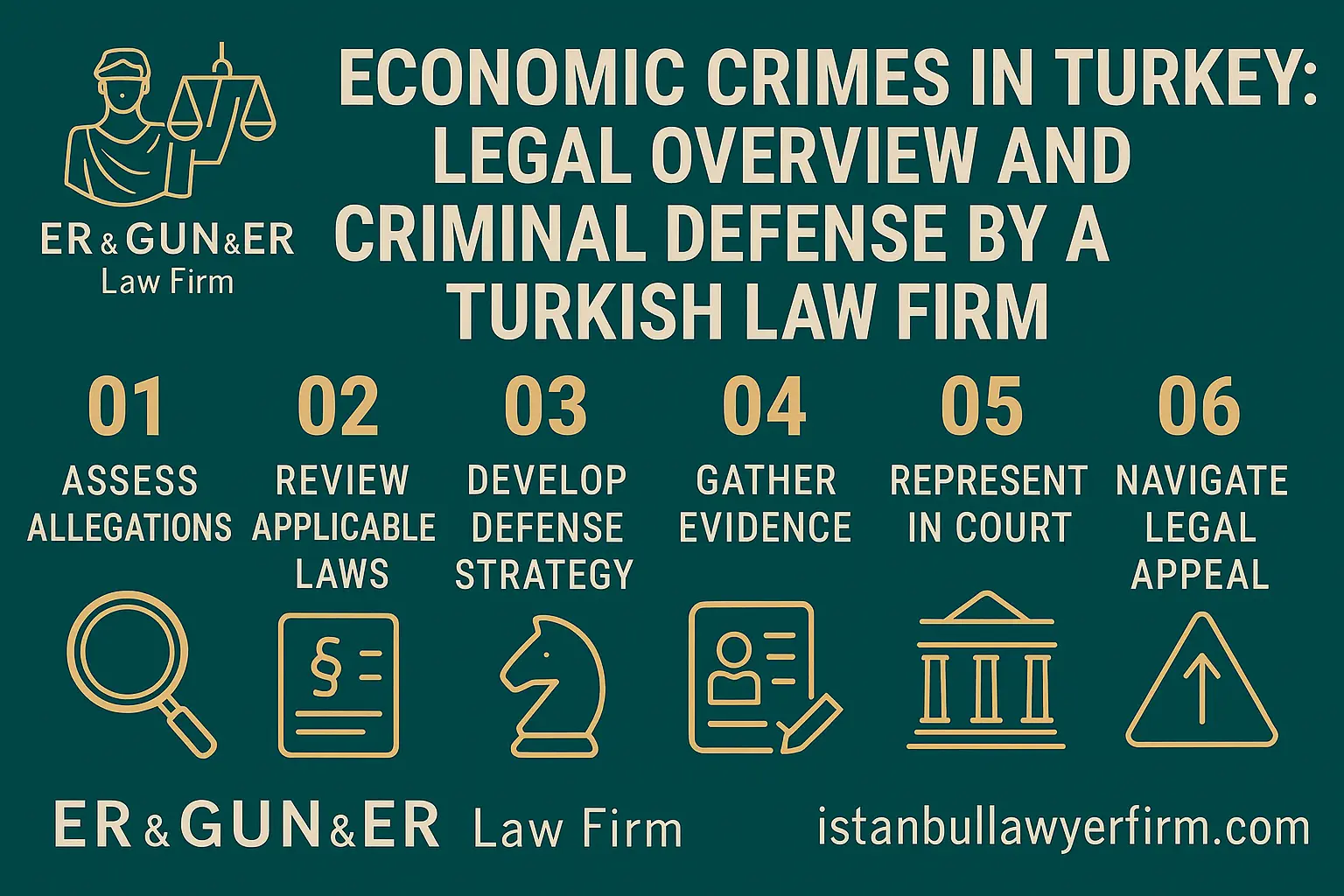
A lawyer in Turkey who advises clients on economic crimes understands that Turkey's economic crime enforcement landscape—spanning the Turkish Penal Code's fraud, embezzlement, bribery and money laundering provisions, the Capital Markets Law's insider trading and market manipulation offenses, the Banking Law's financial crime provisions, and MASAK's administrative enforcement powers—creates a complex multi-authority enforcement environment where criminal prosecution, regulatory enforcement and civil asset recovery proceedings can proceed simultaneously, requiring coordinated legal strategy that addresses every enforcement channel rather than focusing narrowly on any single dimension. An Istanbul Law Firm that defends clients in economic crime proceedings and advises on corporate compliance to prevent such proceedings provides comprehensive legal support spanning the complete enforcement lifecycle: conducting privileged internal investigations that identify facts, assess legal exposure and develop defense strategy before external authorities commence formal proceedings; advising on voluntary disclosure opportunities where proactive engagement with enforcement authorities can significantly reduce both prosecution probability and penalty severity when offenses have occurred; managing the investigation phase including responding to regulatory information requests, managing document preservation obligations, representing clients in witness interviews and protecting legally privileged communications from compelled disclosure; providing full criminal trial defense including preparation of factual and legal defenses, cross-examination of prosecution witnesses, presentation of expert evidence, and sentencing mitigation advocacy; managing parallel regulatory proceedings before MASAK, SPK, BDDK and other sector-specific authorities that may proceed alongside or independently of criminal prosecution; challenging and where possible reversing asset freeze and seizure orders that affect business operations and personal finances during pending proceedings; advising on corporate compliance program design, implementation and monitoring that reduces economic crime risk and demonstrates the institutional diligence that may affect enforcement outcomes if violations occur; and managing the reputational and media dimensions of economic crime investigations where publicity creates business and personal consequences independent of the criminal proceeding's outcome. A Turkish Law Firm with experience in economic crime defense brings practical knowledge of how Turkish prosecutors build economic crime cases, what defenses are most effective in Turkish criminal courts, how MASAK and SPK enforcement proceedings operate in practice, and what compliance program features most effectively demonstrate institutional diligence to Turkish enforcement authorities. An English speaking lawyer in Turkey who advises multinational corporations and foreign nationals in Turkish economic crime proceedings provides the bilingual legal coordination that enables global organizations to manage Turkish enforcement proceedings in the context of their overall international compliance and legal risk management framework. Practice may vary by authority and year — verify current Turkish Penal Code economic crime provisions, current MASAK and SPK enforcement powers, and current Turkish court practice on economic crime cases before assessing any specific legal situation.
Fraud and Embezzlement: Investigation and Defense
A lawyer in Turkey who advises on fraud and embezzlement cases explains that Turkish Penal Code provisions on fraud (dolandırıcılık) under Article 157 and embezzlement (zimmet) under Article 247 create criminal liability for specific patterns of conduct—fraud requiring demonstration of deceptive conduct that caused another person's financial loss to the defendant's benefit, and embezzlement requiring demonstration that a person entrusted with management or custody of property misappropriated those assets—and that the specific elements of each offense must be carefully analyzed against the available facts to determine both the prosecution's probable case and the most effective defense arguments. An Istanbul Law Firm that manages fraud and embezzlement internal investigations helps corporate clients conduct privileged internal investigations that identify what occurred, assess individual and corporate exposure, preserve relevant evidence, and develop defense strategy before external authorities become involved: designing the investigation scope and methodology to address the specific suspected conduct while managing the evidentiary record that will be created; implementing document preservation holds that secure relevant electronic and physical records without alerting subjects prematurely; conducting privileged witness interviews with current and former employees whose knowledge is relevant to understanding what occurred; engaging forensic accounting specialists who can trace financial flows, identify documentation irregularities, and quantify losses in formats usable in both internal assessment and external proceedings; and assessing voluntary disclosure opportunities where self-reporting to prosecutors with cooperation offers can significantly affect the criminal exposure of both the organization and relevant individuals. Turkish lawyers advising on fraud and embezzlement defense in criminal proceedings help clients develop the specific defense arguments most applicable to each case: challenging whether the prosecution's evidence establishes each required element of the specific charged offense; presenting alternative factual explanations for conduct that the prosecution characterizes as fraudulent or embezzlement without the specific intent required for criminal liability; challenging the quantum of alleged loss with forensic evidence demonstrating that claimed damages are overstated or attributable to causes other than the charged conduct; and pursuing mitigating circumstances including cooperation, restitution, first-time offender status and absence of personal benefit that affect the sentencing outcome when conviction is established. Practice may vary by authority and year — verify current Turkish Penal Code fraud and embezzlement provisions and their current judicial interpretation, current Turkish prosecutor practice on corporate fraud investigations, and current Turkish court standards for fraud and embezzlement sentencing mitigation before assessing any specific case situation.
An Istanbul Law Firm that advises on corporate liability in fraud and embezzlement cases explains that while Turkish criminal law primarily focuses on individual criminal liability, corporate entities face significant collateral exposure from fraud and embezzlement within their organizations—including administrative fines, asset confiscation, license revocation, public procurement blacklisting, and reputational consequences that can affect the organization's ongoing commercial viability regardless of the criminal proceeding's outcome for individual defendants. Turkish lawyers advising on corporate exposure management in fraud and embezzlement cases help organizations implement the specific measures that most effectively manage this collateral exposure: voluntary cooperation with investigators that demonstrates institutional good faith rather than obstruction; independent remediation measures including personnel changes, compliance program upgrades, and financial controls improvements that demonstrate the organization is addressing the conduct's root causes; transparent engagement with affected counterparties and regulators that manages reputational consequences before they escalate; and where appropriate, negotiated resolution with prosecutors and regulators that settles corporate liability while allowing the organization to continue operating. An English speaking lawyer in Turkey who manages fraud investigations for multinational corporations coordinates the Turkish investigation and criminal defense strategy with the global organization's crisis management framework—ensuring that Turkish enforcement proceedings are managed consistently with the organization's overall legal and reputational risk management strategy rather than as an isolated local matter without strategic integration.
A Turkish Law Firm that advises on post-conviction consequences of fraud and embezzlement convictions explains that Turkish criminal convictions for economic crimes carry consequences extending significantly beyond the primary sentence—including asset confiscation of proceeds and instrumentalities, prohibition from public office, licensing consequences for regulated professions, and in some cases corporate dissolution orders—and that managing these collateral consequences requires planning that begins during the defense phase rather than after conviction. An English speaking lawyer in Turkey who advises on post-conviction consequence management helps clients understand each category of consequence and the specific legal mechanisms available to mitigate each: challenging the scope of confiscation orders that exceed the legally recoverable amount or include assets not demonstrably connected to the charged offenses; pursuing regulatory accommodation for professional licensing consequences where rehabilitation evidence and compliance demonstrations may support license retention or expedited reinstatement; and developing corporate governance reform plans that address the specific identified weaknesses while positioning the organization for continued operation.
Money Laundering, MASAK Enforcement and Anti-Corruption Defense
A lawyer in Turkey who advises on money laundering cases explains that Turkish anti-money laundering law—implemented through the Law on Prevention of Laundering Proceeds of Crime and its implementing regulations—creates both criminal liability for laundering the proceeds of crime and extensive administrative compliance obligations for reporting entities including banks, financial institutions, real estate professionals, lawyers, accountants and others designated as obligated parties under the AML framework—and that MASAK, Turkey's Financial Crimes Investigation Board, has both investigative authority to examine suspicious transactions and administrative enforcement powers to sanction obligated parties whose compliance programs are deficient. An Istanbul Law Firm that advises on MASAK proceedings and money laundering defense helps clients navigate both dimensions of Turkish AML enforcement: in criminal proceedings, assessing whether the prosecution can establish that the defendant knew or should have known that the assets being laundered were criminal proceeds, and developing defense arguments that challenge the knowledge element, the identification of the predicate offense generating the proceeds, or the characterization of specific transactions as laundering conduct; in administrative MASAK proceedings, responding to information requests, demonstrating compliance with suspicious transaction reporting obligations, presenting the organization's AML compliance program as evidence of institutional diligence, and negotiating remediation agreements where administrative violations have occurred. Turkish lawyers advising on AML compliance for obligated parties help organizations design and implement the specific compliance elements that most effectively satisfy MASAK's requirements and reduce the probability of both enforcement proceedings and criminal exposure: customer due diligence and know-your-customer procedures calibrated to the specific risk profile of each customer type; suspicious transaction monitoring systems that identify and escalate potentially suspicious activity for compliance review; suspicious transaction reporting procedures that satisfy MASAK's reporting requirements within applicable timelines; and staff training programs that ensure every employee who has customer contact understands their AML obligations. Practice may vary by authority and year — verify current Turkish AML law provisions, current MASAK guidance on suspicious transaction reporting, current compliance program standards, and current MASAK administrative sanction practice before implementing any AML compliance program or responding to any MASAK enforcement action.
An Istanbul Law Firm that advises on bribery and corruption defense in Turkey explains that bribery and corruption offenses under Turkish Penal Code Articles 252 (bribery of public officials) and 254 (facilitating bribery) and related provisions create criminal liability for both the person offering or providing a benefit and the public official receiving it—and that investigations frequently begin with one party cooperating with prosecutors and providing information that implicates others, making early legal advice about cooperation decisions critical to managing criminal exposure. Turkish lawyers advising on bribery and corruption defense help clients understand the specific legal elements that prosecutors must establish for each offense category: active bribery of public officials requires proof that a benefit was offered or provided to a public official specifically to influence an official act or decision, with the specific connection between the benefit and the official's conduct being an essential element; passive bribery by public officials requires proof that the official solicited or accepted a benefit in connection with official acts; commercial bribery in the private sector has its own specific elements under Turkish commercial law that differ from public sector bribery; and foreign public official bribery has additional dimensions under Turkey's international anti-corruption treaty obligations. An English speaking lawyer in Turkey who advises multinational corporations on Turkish anti-corruption compliance ensures that the organization's global anti-bribery program addresses Turkey-specific risk factors—including sectors and government interactions that present elevated bribery risk in the Turkish context—and that Turkish-specific compliance measures satisfy both Turkish legal requirements and the international anti-bribery standards applicable to the organization's global operations.
A Turkish Law Firm that advises on anti-corruption compliance program design explains that organizations operating in Turkey with significant government interaction—through public procurement, regulatory licensing, tax authority engagement or other official relationships—face meaningful corruption risk that requires systematic compliance management rather than relying on individual employee judgment about appropriate conduct. An English speaking lawyer in Turkey who designs anti-corruption compliance programs for Turkey-operating organizations implements the specific compliance elements that MASAK and international standard-setters assess when evaluating program adequacy: risk assessment processes that identify the specific corruption risks in the organization's Turkish operations based on sector, geography and transaction type; written anti-corruption policies that clearly prohibit all forms of bribery and specify permitted and prohibited conduct in concrete terms employees can apply to real situations; gift, hospitality and entertainment controls that set clear monetary thresholds and approval requirements for anything of value provided to government officials or commercial counterparties; business partner due diligence that screens the corruption risk profile of third parties who interact with government on the organization's behalf; training programs that reach every employee with government contact; and incident reporting mechanisms that enable employees to report concerns without retaliation. Organizations whose compliance programs satisfy these standards are substantially better positioned in any enforcement proceeding than those without genuine compliance infrastructure—because compliance program quality is a factor that Turkish enforcement authorities and courts consider in assessing both prosecution decisions and sentencing outcomes when violations occur despite adequate compliance measures.
Insider Trading, Market Manipulation and Capital Markets Enforcement
A lawyer in Turkey who advises on insider trading and market manipulation cases explains that Turkish Capital Markets Law and its implementing regulations create criminal liability for trading on material non-public information and for conduct that artificially affects securities prices—with enforcement authority shared between the Capital Markets Board (SPK) that conducts administrative investigations and proceedings and criminal prosecutors who pursue criminal charges when the threshold for criminal prosecution is met. An Istanbul Law Firm that defends clients in SPK investigations and insider trading criminal proceedings helps clients navigate both enforcement pathways: in SPK administrative proceedings, responding to information requests within applicable deadlines, presenting explanations for trading patterns that SPK investigators have characterized as suspicious, demonstrating that trades were based on legitimate investment analysis rather than material non-public information, and where violation is established, pursuing settlement negotiations that minimize administrative sanctions; and in criminal proceedings, developing the specific defenses most applicable to the charged conduct including demonstrating absence of the requisite knowledge that information was material and non-public, challenging the materiality of the information allegedly traded upon, presenting legitimate alternative explanations for trading patterns through expert financial analysis, and pursuing sentencing mitigation where conviction is established. Turkish lawyers advising on insider trading defense help clients understand the evidentiary challenges involved in these cases: SPK and prosecutors typically build circumstantial cases from trading records, communication records and company event timelines rather than direct evidence of information transmission, making the defense analysis of alternative explanations for trading patterns a critical component of the defense strategy. Practice may vary by authority and year — verify current Turkish Capital Markets Law insider trading provisions, current SPK enforcement practice and administrative sanction powers, and current Turkish court standards for insider trading criminal cases before assessing any specific situation.
An Istanbul Law Firm that advises on market manipulation defense in Turkey explains that market manipulation offenses—including wash trading, spoofing, pump-and-dump schemes and other conduct that artificially creates false impressions about securities prices or trading volume—require SPK to demonstrate that the defendant's conduct had the capacity to affect market prices and that the defendant knew or should have known this effect was likely. Turkish lawyers advising on market manipulation defense analyze the prosecution's trading record evidence against the specific elements of Turkish market manipulation provisions—identifying where the prosecution's characterization of normal market-making or investment activity as manipulation is factually and legally unsupported—and engage financial expert witnesses who can provide independent analysis of the market context, the trading patterns' consistency with legitimate trading strategies, and the actual market impact of the challenged trading activity. An English speaking lawyer in Turkey who advises foreign investors and investment managers on Turkish capital markets compliance helps international market participants understand how Turkish market manipulation provisions apply to trading strategies and market activities that are standard practice in other jurisdictions—preventing inadvertent violations by market participants who apply their home-jurisdiction understanding of permissible trading conduct without understanding the specific standards applicable in Turkish capital markets.
A Turkish Law Firm that advises on corporate information barrier design and insider trading prevention explains that companies whose shares are publicly traded on Turkish exchanges, and companies that are counterparties to transactions involving listed companies, need robust information barrier systems—commonly called Chinese walls or ethical walls—that prevent material non-public information from flowing to individuals who trade in securities, and that the adequacy of these systems is assessed by SPK both in routine examinations and in insider trading investigations that arise from suspicious trading events. An English speaking lawyer in Turkey who designs information barrier systems for Turkish-listed companies and their transaction advisors implements the specific barrier features that most effectively prevent information leaks and demonstrate compliance with SPK expectations: documented information classification procedures that identify when information crosses the materiality threshold requiring barrier activation; access control systems that restrict non-public information access to individuals with a defined legitimate need; trading restriction systems that impose pre-clearance or blackout requirements on individuals with access to non-public information; monitoring systems that identify trading activity by information barrier insiders warranting compliance review; and training programs that ensure every employee who may be inside an information barrier understands their trading restriction obligations.
Banking Fraud, Cyber-Enabled Financial Crime and Digital Asset Offenses
A lawyer in Turkey who advises on banking fraud and cyber-enabled financial crime explains that Turkish criminal law addresses banking fraud, identity theft, unauthorized account access, payment fraud and related conduct through multiple overlapping statutory provisions—including the Turkish Penal Code's general fraud provisions, specific provisions addressing computer system crimes, and the Banking Law's specific provisions for fraud targeting financial institutions—creating a complex legal landscape where the specific charged offense significantly affects both the available defenses and the applicable penalties. An Istanbul Law Firm that advises both financial institutions and individuals in banking fraud proceedings provides defense and advocacy support across the complete range of banking fraud situations: defending individuals accused of participation in banking fraud schemes, phishing operations or payment card fraud against criminal charges that require proof of specific knowledge and intent elements; representing financial institutions that are victims of fraud in coordinated legal action to recover losses through criminal complaints, civil claims and regulatory reporting; advising financial institutions on their regulatory reporting obligations when they discover fraud affecting their operations or customers; and managing the regulatory response when BDDK examinations or inspections arise from fraud events or from compliance gaps that enabled fraud to occur. Turkish lawyers advising on banking fraud defense help clients understand that the Turkish criminal law framework for financial fraud creates multiple potential charges that prosecutors may apply to the same underlying conduct—and that the specific charge selected significantly affects both the defense strategy and the criminal exposure, making early legal analysis of the applicable provisions essential for effective defense planning. Practice may vary by authority and year — verify current Turkish Penal Code financial crime provisions, current Banking Law fraud provisions, current BDDK reporting requirements for fraud events, and current Turkish prosecutor practice in banking fraud cases before advising on any specific situation.
An Istanbul Law Firm that advises on digital asset and cryptocurrency-related economic crimes in Turkey explains that Turkey's regulation of cryptocurrency assets—through the Capital Markets Board's expanding regulatory perimeter for crypto asset service providers and the Central Bank's payment system regulations—creates new categories of potential criminal exposure for cryptocurrency exchange operators, token issuers and cryptocurrency traders whose activities do not satisfy applicable licensing, registration and operational requirements. Turkish lawyers advising on cryptocurrency-related criminal exposure help clients understand which specific regulatory obligations apply to their activities: the registration requirements for cryptocurrency exchanges and other crypto asset service providers with SPK; the AML/KYC requirements that apply to crypto asset service providers under MASAK regulations; the capital markets law obligations that apply to token offerings that qualify as securities under Turkish capital markets law classification; and the tax reporting obligations that apply to cryptocurrency trading profits under Turkish tax law. An English speaking lawyer in Turkey who advises international cryptocurrency businesses on Turkish regulatory compliance provides the Turkey-specific regulatory analysis that enables global cryptocurrency operations to identify and address Turkish compliance requirements before they create enforcement exposure—recognizing that the rapidly evolving Turkish cryptocurrency regulatory framework creates compliance risk for international operators who apply their home-jurisdiction compliance frameworks without assessing Turkish-specific requirements.
A Turkish Law Firm that advises on asset recovery in banking fraud and financial crime cases explains that recovering assets lost to banking fraud, money laundering or financial crime requires coordinated use of multiple legal mechanisms—including criminal asset tracing through MASAK and prosecutors, civil asset recovery through Turkish courts, provisional measures including account freezes and travel bans to prevent asset dissipation, and international cooperation with foreign authorities through mutual legal assistance mechanisms where assets have crossed borders. An English speaking lawyer in Turkey who manages cross-border asset recovery for fraud victims coordinates the Turkish recovery proceedings with asset recovery efforts in other jurisdictions—identifying where assets are located, selecting the most effective recovery mechanism for each jurisdiction, coordinating timing to prevent forewarning of subjects, and managing the complex multi-jurisdiction legal process that effective cross-border asset recovery requires.
Asset Seizure Defense and Recovery Mechanisms
A lawyer in Turkey who advises on asset seizure and freezing in economic crime proceedings explains that Turkish criminal procedure law authorizes prosecutors and courts to freeze or seize assets connected to alleged economic crimes both as a precautionary measure during pending proceedings and as a permanent confiscation upon conviction—and that challenging unlawful or disproportionate asset seizures is both an important defense component and a practical necessity for defendants whose businesses or personal finances cannot function with significant assets frozen during potentially lengthy criminal proceedings. An Istanbul Law Firm that challenges asset freezes and seizures in Turkish economic crime proceedings helps clients pursue every available remedy against disproportionate or legally unsupported asset restraint: reviewing the legal basis for the seizure to identify procedural defects in the seizure authorization that may provide grounds for immediate challenge; demonstrating that specific seized assets are not proceeds or instrumentalities of the charged offenses and are therefore not subject to criminal confiscation; presenting evidence that the scope of the asset freeze is disproportionate to the alleged criminal proceeds and should be reduced to preserve the defendant's ability to live and conduct legitimate business during pending proceedings; and seeking judicial supervision of seized business assets where continued business operation is possible under court oversight without prejudicing the prosecution's confiscation interest. Turkish lawyers advising on asset seizure challenges help defendants understand that Turkish courts have discretion to reduce the scope of asset restraint where defendants demonstrate that the full restraint is disproportionate or that specific assets are clearly unconnected to the charged offenses—making the presentation of specific evidence about each restrained asset essential rather than general objections to the restraint. Practice may vary by authority and year — verify current Turkish Criminal Procedure Law asset seizure provisions, current Turkish court practice on proportionality assessment for asset freezes, and current applicable procedural deadlines for challenging asset seizure orders before pursuing any asset seizure challenge.
An Istanbul Law Firm that advises on international asset recovery in Turkish economic crime cases explains that when criminal proceeds from economic crimes committed in Turkey are moved abroad—or when assets belonging to foreign victims of economic crimes are located in Turkey—Turkish law provides both domestic mechanisms for international cooperation and access to bilateral mutual legal assistance treaties that enable coordinated asset tracing and recovery across multiple jurisdictions. Turkish lawyers managing international asset recovery coordinate the specific legal mechanisms applicable to each jurisdiction where assets are located: mutual legal assistance treaty requests through Turkey's Ministry of Justice for evidence gathering and asset restraint in treaty partner countries; international police cooperation through Interpol channels for real-time asset tracing; foreign court proceedings to enforce Turkish court orders where bilateral recognition frameworks exist; and civil recovery proceedings in foreign jurisdictions where assets have been transferred to traceable accounts or properties. An English speaking lawyer in Turkey who manages cross-border asset recovery for victims of economic crimes in Turkey provides the international legal coordination that enables effective multi-jurisdiction recovery—connecting the Turkish criminal proceedings with asset recovery efforts in relevant foreign jurisdictions and managing the complex sequencing of proceedings across multiple legal systems.
A Turkish Law Firm that advises on post-trial asset management in economic crime cases explains that defendants who are convicted of economic crimes in Turkey face confiscation of criminal proceeds and instrumentalities as part of their sentence—and that minimizing the scope of confiscation through legal challenge to both the quantum of criminal proceeds and the characterization of specific assets as confiscable requires both legal argument and expert financial evidence that must be prepared during the sentencing phase rather than after confiscation orders become final. An English speaking lawyer in Turkey who manages confiscation proceedings for convicted defendants in economic crime cases coordinates the specific legal arguments and financial evidence needed to minimize the confiscation scope within the bounds that Turkish confiscation law permits: demonstrating that the prosecution's criminal proceeds calculation overstates the actual benefit received from the specific offenses charged; identifying specific assets that were acquired through legitimate income sources predating or independent of the charged criminal activity; presenting financial capacity evidence that demonstrates the defendant's legitimate asset base and supports arguments that specific assets should not be confiscated; and pursuing proportionality arguments where the total confiscation scope would be disproportionate to the criminal benefit actually received.
Corporate Compliance Programs and Economic Crime Prevention
A lawyer in Turkey who advises on corporate compliance programs for economic crime prevention explains that well-designed and genuinely implemented compliance programs serve two simultaneous objectives in the Turkish enforcement environment: they reduce the probability of economic crimes occurring by establishing the controls, culture and accountability that deter and detect wrongdoing before it escalates; and they affect enforcement outcomes when violations occur despite adequate prevention efforts by demonstrating institutional good faith, providing evidence for cooperation credit, and supporting arguments for reduced organizational penalties. An Istanbul Law Firm that designs compliance programs for organizations operating in Turkey helps clients implement the specific compliance infrastructure that most effectively serves both prevention and enforcement objectives: risk-based compliance frameworks that focus compliance resources on the specific economic crime risks most relevant to each organization's sector, transaction types and counterparty profile; written policies and procedures that translate legal requirements into practical operational guidance that employees can apply to real decisions without requiring case-by-case legal consultation; independent compliance functions with direct access to senior management and boards that can escalate concerns without filtering through operational management who might have interests in concealing problems; internal audit programs that periodically test whether compliance controls are operating as designed rather than relying on management representations of compliance; incident reporting mechanisms that create accessible, confidential channels for employees to report concerns without retaliation; and training programs that reach every employee whose job function creates economic crime risk. Turkish lawyers advising on compliance program design help organizations understand how Turkish enforcement authorities assess compliance programs in practice—because programs that satisfy international compliance standards in form but are not genuinely implemented fail to produce the practical prevention and enforcement credit objectives that justify their cost. Practice may vary by authority and year — verify current Turkish regulatory authority compliance program expectations, current Turkish prosecutor practice on compliance program credit in enforcement decisions, and current international compliance program standards applicable to your organization before designing or evaluating any compliance program.
An Istanbul Law Firm that advises on regulatory examination preparation for organizations subject to MASAK, SPK and BDDK oversight explains that Turkish regulatory authorities conduct periodic examinations of regulated entities' compliance programs—and that preparing effectively for these examinations requires both ensuring that the compliance program itself satisfies applicable requirements and preparing the specific documentation and presentation that most effectively demonstrates compliance during the examination process. Turkish lawyers advising on regulatory examination preparation help organizations implement systematic preparation processes: conducting pre-examination compliance gap assessments that identify deficiencies before regulators identify them; remediating identified gaps with documented corrective actions that can be presented to examiners as evidence of proactive compliance management; organizing compliance documentation in formats that enable examiners to efficiently verify compliance rather than creating impressions of disorganization; preparing compliance personnel for examiner interviews with clear explanations of each compliance program element and the specific controls and procedures in place; and managing the examination process to ensure examiner inquiries are answered accurately and completely without volunteering information that creates additional examination scope. An English speaking lawyer in Turkey who prepares multinational organizations for Turkish regulatory examinations coordinates the Turkish-specific preparation with the global compliance program framework—ensuring that Turkish examination responses are consistent with the organization's global compliance representations and that Turkey-specific compliance features are clearly explained to examiners who may compare them against international standards. The best lawyer in Turkey for economic crime defense and compliance combines deep knowledge of Turkish criminal economic crime law, Turkish regulatory enforcement frameworks, Turkish criminal procedure and international compliance standards with practical experience both defending clients in enforcement proceedings and designing the compliance programs that prevent those proceedings from arising.
A Turkish Law Firm that advises on whistleblower program design for organizations in Turkey explains that effective internal whistleblower programs—which provide accessible, confidential and retaliation-protected channels for employees to report concerns about potential economic crimes or compliance violations—serve as an early warning system that enables organizations to identify and address problems internally before they come to the attention of external regulators, prosecutors or media. An English speaking lawyer in Turkey who designs whistleblower programs for organizations with Turkish operations implements the specific program elements that most effectively encourage reporting: multiple reporting channels including telephone hotlines, secure web-based reporting platforms and designated compliance personnel that accommodate different reporting preferences and technology access situations; genuine anonymity protections that enable employees to report concerns without revealing their identity where possible; anti-retaliation protections backed by meaningful enforcement mechanisms that credibly protect reporting employees from adverse employment consequences; transparent investigation processes that investigate reported concerns promptly, fairly and with appropriate confidentiality; and feedback mechanisms that communicate investigation outcomes to reporting employees to the extent confidentiality permits. Organizations with effective whistleblower programs consistently detect economic crime and compliance violations earlier—when remediation is more effective and regulatory consequences are more manageable—than those without such programs, creating both institutional integrity benefits and practical compliance risk reduction.
Investigation Management, Privilege Protection and Voluntary Disclosure
A lawyer in Turkey who advises on the investigation phase of economic crime proceedings explains that the period between the discovery of potential economic crime conduct and the commencement of formal external proceedings—whether criminal investigation by prosecutors, regulatory investigation by MASAK or SPK, or civil claims by affected parties—is typically the phase where legal strategy has the greatest impact on ultimate outcomes, because decisions made during this period about internal investigation design, document preservation, privilege management, personnel actions and external engagement substantially shape the legal and factual landscape within which subsequent proceedings will occur. An Istanbul Law Firm that manages internal economic crime investigations provides privileged investigation supervision that creates the strongest available defense position: designing the investigation scope, methodology and staffing to address the suspected conduct comprehensively while managing the evidentiary record that the investigation creates; implementing document preservation protocols that satisfy legal hold obligations while protecting work product and attorney-client communications from compelled disclosure; conducting privileged witness interviews through counsel whose work product protections extend the attorney-client privilege to investigation findings; engaging forensic accounting specialists and other technical experts through legal counsel so that their work product is protected from required disclosure; and maintaining investigation confidentiality to the extent legally permissible while satisfying any mandatory disclosure obligations that may apply to specific categories of findings. Turkish lawyers managing internal investigations help clients navigate the tension between thoroughness—conducting a sufficiently complete investigation to understand what occurred and develop effective strategy—and risk management—avoiding investigative actions that create new exposure or unnecessarily alert external authorities before the organization has developed its response strategy. Practice may vary by authority and year — verify current Turkish attorney-client privilege provisions applicable to internal investigation communications, current mandatory disclosure obligations applicable to specific investigation findings, and current Turkish prosecutor practice on cooperation credit for voluntary disclosure before designing any internal investigation approach.
An Istanbul Law Firm that advises on voluntary disclosure in Turkish economic crime situations explains that proactively disclosing violations to Turkish enforcement authorities—before they are discovered through independent investigation or third-party complaint—can significantly affect both the probability of prosecution and the severity of penalties when prosecution proceeds, but that the decision to voluntarily disclose and the manner of disclosure must be carefully managed with qualified legal counsel to ensure that disclosure produces the intended benefits rather than creating additional exposure. Turkish lawyers advising on voluntary disclosure decisions help clients assess the specific factors that most significantly affect the voluntary disclosure calculus: the probability that the conduct would be independently discovered by authorities through regulatory examination, suspicious transaction reports, whistleblower complaints or third-party cooperation; the specific legal provisions that provide cooperation credit, penalty reduction or prosecution deferral for voluntary disclosure in the relevant offense category; the completeness and quality of the disclosure required to qualify for cooperation credit—because incomplete or misleading disclosure that is subsequently shown to be deficient often produces worse outcomes than no disclosure; and the institutional consequences of disclosure including reputational impact and regulatory relationship considerations that affect the organization's ongoing business beyond the specific enforcement proceeding. An English speaking lawyer in Turkey who manages voluntary disclosure for multinational organizations coordinates the Turkish disclosure decision with any parallel disclosure obligations in other jurisdictions—ensuring that disclosure timing, content and approach are consistent across all relevant jurisdictions rather than creating inconsistencies that attract additional scrutiny or that undermine cooperation credit by revealing that the organization's disclosure was incomplete or strategically timed to benefit the organization at the expense of complete transparency.
A Turkish Law Firm that advises on regulatory examination management in economic crime contexts explains that Turkish regulatory examinations—whether routine compliance examinations or targeted investigations triggered by specific concerns—are best managed through organized preparation that enables the organization to demonstrate its compliance program's adequacy rather than allowing examiners to discover deficiencies that a well-prepared organization would have identified and remediated in advance. An English speaking lawyer in Turkey who manages regulatory examination responses for organizations facing MASAK, SPK or BDDK examinations in connection with economic crime concerns helps organizations present their compliance program, investigation findings and remediation measures in the organized, transparent and credible format that most effectively satisfies examiner expectations—while ensuring that examination responses are legally accurate and do not create admissions beyond what the examination circumstances require. The best lawyer in Turkey for economic crime matters combines deep criminal defense expertise with regulatory enforcement knowledge and compliance program design capability—providing integrated legal support that addresses the criminal, regulatory and institutional dimensions of economic crime situations simultaneously rather than treating each dimension as a separate matter to be managed independently.
Reputational Management, Media Relations and Post-Enforcement Recovery
A lawyer in Turkey who advises on the reputational dimensions of economic crime investigations explains that the business consequences of economic crime investigations—including customer confidence loss, supplier relationship disruption, employee uncertainty, investor concern and media coverage—frequently cause greater short-term harm than the legal consequences of the proceedings themselves, and that managing these reputational consequences requires coordinated legal and communications strategy from the earliest stages of an investigation rather than addressing them reactively after damaging publicity has occurred. An Istanbul Law Firm that manages the reputational dimensions of economic crime investigations helps clients develop and implement coordinated strategies that address each reputational risk: internal communications to employees that provide accurate information about the situation without creating admissions or undermining legal defense positions; communications to business counterparties including customers, suppliers and business partners that address legitimate concerns while protecting confidential information; investor relations management including appropriate regulatory disclosure obligations and investor communications that satisfy transparency obligations without prejudicing defense strategy; and where media coverage occurs or is anticipated, media relations guidance that manages public narrative without creating legally disadvantageous statements. Turkish lawyers advising on reputation management during economic crime investigations help clients understand the legal constraints on crisis communications—particularly the restrictions on public statements that could be used as admissions in criminal or civil proceedings, the obligations to avoid misleading statements to investors or regulators, and the specific disclosures required by securities law when listed company shares are affected by ongoing investigations. Practice may vary by authority and year — verify current Turkish securities law disclosure obligations for listed companies facing criminal investigations, current data protection restrictions on communicating investigation findings, and current Turkish regulatory authority guidance on public communications during pending enforcement proceedings before advising on any investigation crisis communication approach.
An Istanbul Law Firm that advises on post-enforcement business recovery in economic crime cases explains that organizations that have experienced economic crime proceedings—whether resulting in conviction or in administrative settlement—face a recovery phase that requires systematic attention to the institutional reforms needed to rebuild trust with regulators, counterparties, employees and investors. Turkish lawyers advising on post-enforcement recovery help organizations implement the specific elements that most effectively demonstrate genuine institutional reform: independent compliance monitor engagement where required by enforcement settlement or court order, managed to produce maximum compliance improvement rather than minimum documentation; enhanced compliance program implementation that specifically addresses the root causes identified in the enforcement proceedings rather than adding generic compliance measures without connection to identified weaknesses; transparent reporting to regulators and oversight bodies on compliance program implementation progress; and where applicable, compensation programs for affected victims or counterparties that demonstrate the organization's acknowledgment of harm caused and commitment to making affected parties whole. An English speaking lawyer in Turkey who advises multinational organizations on post-enforcement recovery in Turkey coordinates the Turkish recovery program with the organization's global compliance and governance improvement efforts—ensuring that Turkish regulatory requirements for post-enforcement compliance are addressed within the global compliance improvement framework and that the organization's overall institutional response to the enforcement experience is coherent across all relevant jurisdictions. Organizations that invest in genuine institutional reform following economic crime enforcement consistently achieve better long-term outcomes—in regulatory relationships, business performance, and employee culture—than those that treat post-enforcement compliance obligations as a bureaucratic burden to be minimized.
A Turkish Law Firm that advises on the long-term consequences of economic crime convictions for individuals explains that personal criminal convictions for economic crimes in Turkey carry consequences that extend well beyond the criminal sentence itself—affecting professional licensing, employment eligibility, travel rights, and in some cases the ability to participate in corporate governance—and that managing these long-term consequences requires legal planning that begins during the defense phase rather than after conviction becomes final. An English speaking lawyer in Turkey who advises individuals on managing the long-term personal consequences of Turkish economic crime proceedings provides guidance on each consequence dimension: professional licensing implications for regulated professions including law, medicine, finance and accounting where economic crime convictions create license suspension or revocation grounds; employment eligibility restrictions for positions requiring criminal record clearance; travel restrictions during and after sentence periods; participation restrictions on corporate management, board membership and public procurement that apply to convicted individuals for specified periods; and Turkish criminal record management including expungement eligibility criteria and procedures. Understanding the complete landscape of long-term personal consequences enables individuals to make informed decisions about defense strategy and plea options that reflect their complete interests—including interests in their professional life and personal freedom extending well beyond the immediate criminal proceedings.
Frequently Asked Questions
- What constitutes an economic crime under Turkish law? Economic crimes under Turkish law include fraud under Turkish Penal Code Article 157, embezzlement under Article 247, money laundering under the Law on Prevention of Laundering Proceeds of Crime, bribery of public officials under Articles 252 and 254, insider trading and market manipulation under Capital Markets Law, banking fraud under Banking Law provisions, and related offenses. Each offense has specific elements that must be established by the prosecution. The applicable statute of limitations, penalty range and enforcement authority depend on the specific charged offense. Practice may vary by authority and year.
- Which Turkish authorities investigate economic crimes? MASAK investigates money laundering and suspicious financial transactions. SPK investigates capital markets violations including insider trading and market manipulation. BDDK investigates banking sector violations. The Turkish Revenue Administration investigates tax crimes. Regular criminal prosecutors investigate general economic crimes including fraud, embezzlement and bribery, often in coordination with the specialized authorities. Multiple authorities may conduct parallel investigations into the same underlying conduct. Practice may vary by authority and year.
- Can Turkish companies face criminal liability for economic crimes committed by their employees? Turkish criminal law applies primarily to individuals rather than legal entities, but companies face significant collateral consequences from economic crimes committed by employees or management including administrative fines, asset confiscation, public procurement blacklisting, license revocation and reputational consequences. Corporate liability under Turkish administrative law applies for compliance failures including AML, data protection and sector-specific violations. The adequacy of the company's compliance program affects both the probability of investigation and the severity of administrative consequences when violations occur. Practice may vary by authority and year.
- What is MASAK and what enforcement powers does it have? MASAK—the Financial Crimes Investigation Board—is Turkey's primary AML and counter-terrorism financing enforcement authority. MASAK has authority to investigate suspicious transactions reported by obligated parties and to initiate examinations of obligated parties' AML compliance programs. MASAK can impose administrative sanctions including fines, professional bans and public disclosure for compliance failures. MASAK also coordinates with criminal prosecutors when investigations reveal criminal money laundering conduct. MASAK's regulatory perimeter covers banks, financial institutions, real estate professionals, lawyers, accountants and other designated obligated parties. Practice may vary by authority and year.
- What should a company do if it discovers internal fraud or embezzlement? Upon discovering potential internal fraud or embezzlement, organizations should immediately engage legal counsel to advise on investigation strategy, document preservation obligations, privilege management and regulatory reporting requirements. Legal counsel should supervise an internal investigation that identifies what occurred, assesses corporate and individual exposure, and develops a strategic response. Considerations include whether voluntary disclosure to prosecutors or regulators would be beneficial, what personnel actions are appropriate, what communications should be made to affected counterparties, and how the compliance program should be improved to prevent recurrence. Practice may vary by authority and year.
- Can assets be frozen before a criminal conviction in Turkish economic crime cases? Yes. Turkish criminal procedure law authorizes prosecutors and courts to issue precautionary asset freezes and seizures before conviction where there is sufficient suspicion of economic crime and reason to believe that assets may be dissipated if not restrained. Precautionary measures can affect bank accounts, real property, business assets and personal property. Defendants can challenge precautionary measures by demonstrating that specific assets are not proceeds or instrumentalities of the alleged offenses, that the scope of restraint is disproportionate, or that procedural requirements for the restraint order were not satisfied. Practice may vary by authority and year.
- What penalties apply to bribery of public officials in Turkey? Turkish Penal Code Articles 252 and 254 impose prison sentences ranging from four to twelve years for bribery of public officials, with potential sentence increases for aggravating circumstances including bribery involving significant amounts, bribery in connection with judicial or law enforcement officials, or bribery committed by organized groups. Additional consequences include asset confiscation of bribery proceeds, prohibition from public service, and professional licensing consequences. Both the person offering the bribe and the official accepting it may face criminal prosecution. Practice may vary by authority and year.
- Is insider trading a criminal offense in Turkey? Yes. Insider trading is criminalized under Turkish Capital Markets Law with prison sentences applicable to those convicted of trading on material non-public information. SPK conducts administrative investigations that may result in administrative fines, trading bans and disgorgement of profits in addition to or independently of criminal prosecution. The specific conduct constituting insider trading under Turkish law and the available defenses should be assessed with qualified legal counsel based on the specific trading and information facts of each case. Practice may vary by authority and year.
- What defenses are available in money laundering proceedings in Turkey? Defenses in money laundering proceedings include challenging whether the prosecution can establish that the assets involved were proceeds of a specific predicate crime; demonstrating that the defendant lacked knowledge that assets were derived from criminal activity; challenging the characterization of specific transactions as laundering conduct rather than legitimate commercial activity; and where the investigation arises from AML compliance failures, demonstrating that the organization's AML program was adequate and that the specific suspicious transaction fell outside the program's detection capacity through no systemic failure. Each defense strategy depends on the specific facts of each case. Practice may vary by authority and year.
- How do Turkish courts evaluate corporate compliance programs in economic crime cases? Turkish courts and enforcement authorities consider the adequacy and implementation of corporate compliance programs as a relevant factor in both prosecution decisions and sentencing outcomes for economic crimes. Well-designed and genuinely implemented programs—not merely paper compliance—that include risk assessment, written policies, independent compliance functions, internal audit, incident reporting and training are more likely to produce enforcement credit. Programs that exist nominally but are not operationally implemented provide significantly less benefit. Compliance program quality assessment by qualified legal counsel is recommended before enforcement proceedings arise. Practice may vary by authority and year.
- Can foreign nationals be investigated and prosecuted for economic crimes in Turkey? Yes. Turkish criminal jurisdiction extends to economic crimes committed in Turkey or with effects in Turkey regardless of the perpetrator's nationality. Foreign nationals are subject to the same Turkish criminal law as Turkish nationals for conduct occurring within Turkish jurisdiction. Foreign nationals also face additional consequences including administrative deportation following conviction. Legal advice addressing both criminal defense and immigration consequences should be obtained as early as possible when foreign nationals are investigated for economic crimes in Turkey. Practice may vary by authority and year.
- How does Turkish law address cryptocurrency-related economic crimes? Turkish law addresses cryptocurrency-related economic crimes through a combination of the Turkish Penal Code's general fraud and money laundering provisions applicable to cryptocurrency-facilitated conduct, Capital Markets Board regulations that apply to crypto asset service providers and token offerings qualifying as securities, MASAK regulations requiring crypto asset service providers to implement AML compliance programs, and the Central Bank's payment system regulations applicable to cryptocurrency payment applications. The regulatory framework for cryptocurrency is rapidly evolving and specific compliance obligations should be verified regularly with qualified legal counsel. Practice may vary by authority and year.
- What is the statute of limitations for economic crimes in Turkey? The statute of limitations for Turkish economic crimes varies by the applicable statute and the specific offense charged. General fraud under Turkish Penal Code carries an eight-year limitation period that runs from the date of the offense. More serious fraud offenses carry longer periods. Money laundering and organized crime-related offenses have specific limitation provisions that may differ from general criminal limitation rules. The applicable limitation period should be verified with qualified Turkish legal counsel based on the specific charges, the alleged conduct date, and any limitation-tolling events that may have occurred. Practice may vary by authority and year.
- What should companies do to prevent economic crimes in their Turkish operations? Companies should implement risk-based compliance programs that identify the specific economic crime risks relevant to their Turkish operations; establish written anti-fraud, anti-bribery and AML policies providing practical guidance to employees; implement financial controls including dual-approval requirements, audit trails and independent review mechanisms; conduct employee training reaching everyone whose job creates economic crime risk; operate confidential incident reporting channels with genuine anti-retaliation protections; conduct periodic internal audits testing whether controls operate as designed; and engage legal counsel to assess compliance program adequacy against current Turkish regulatory expectations. Programs should be genuinely implemented rather than existing only on paper. Practice may vary by authority and year.
- Does ER&GUN&ER Law Firm defend clients in Turkish economic crime proceedings? Yes. ER&GUN&ER Law Firm provides comprehensive economic crime defense including internal investigation management, fraud and embezzlement defense, money laundering and MASAK proceedings, bribery and corruption defense, insider trading and capital markets enforcement defense, banking fraud and cyber-financial crime cases, asset seizure challenges, cross-border asset recovery, post-conviction consequence management, and corporate compliance program design and regulatory examination preparation—with bilingual English-Turkish legal services throughout each engagement.
Author: Mirkan Topcu is an attorney registered with the Istanbul Bar Association (Istanbul 1st Bar), Bar Registration No: 67874. His practice focuses on cross-border and high-stakes matters where evidence discipline, procedural accuracy, and risk control are decisive.
He advises individuals and companies across Immigration and Residency, Real Estate Law, Tax Law, and cross-border documentation matters where procedural accuracy and evidence discipline are decisive.
Education: Istanbul University Faculty of Law (2018); Galatasaray University, LL.M. (2022). LinkedIn: Profile. Istanbul Bar Association: Official website.