

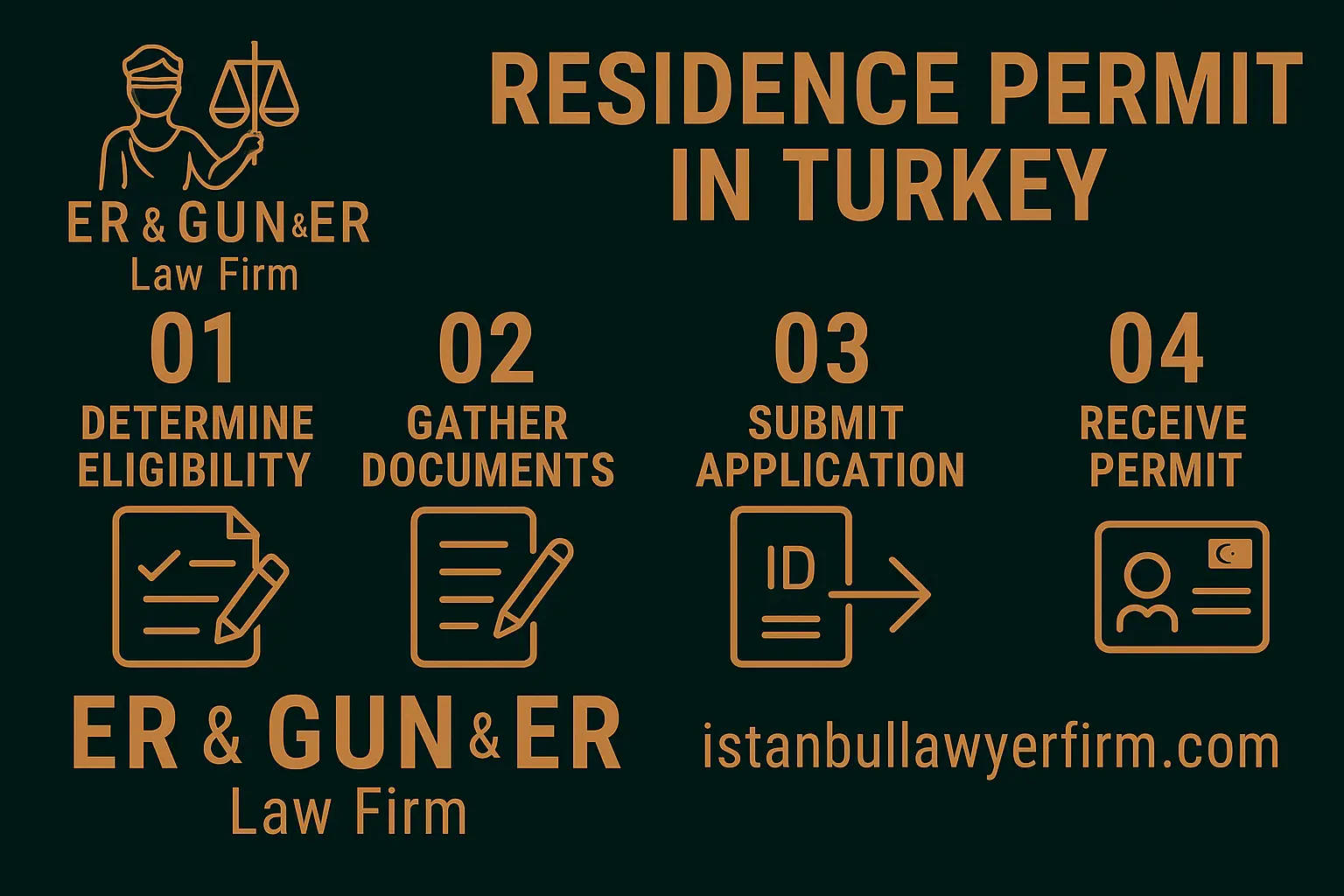
Obtaining and maintaining a residence permit in Turkey operates within a structured framework that combines specialised permit categories, a mandatory online application procedure through the e-İkamet system, documentary requirements under the 1961 Hague Apostille framework, geographic restrictions under the kapalı mahalle (closed neighborhood) regime, integrated compliance obligations, and multiple appellate pathways. The primary statute is Law No. 6458 (Yabancılar ve Uluslararası Koruma Kanunu, YUKK), administered through Göç İdaresi Başkanlığı (Presidency of Migration Management — restructured from the earlier Göç İdaresi Genel Müdürlüğü) with the operational interface through provincial migration management directorates (İl Göç İdaresi Müdürlükleri). The framework that governs day-to-day filings includes m.21 (entry and 90-day filing window), m.31 (short-term residence including the m.31/1-j property ownership pathway), m.33 (short-term duration), m.34-35 (family residence), m.38-39 (student residence), m.41-42 (long-term residence requiring eight years continuous residence), m.46 (humanitarian residence), m.53 (deportation framework with a 15-day appeal period under m.53/3), and m.99 (address reporting within 20 business days). This guide describes how the procedure works in practice for foreign clients in 2026, addressed to investors, prospective long-term residents, family-route applicants, students, and non-resident foreigners planning Turkish relocation. The framework evolves periodically; verify the current position with qualified Turkish counsel before initiating any specific application.
Effective immigration positioning requires coordination across permit category selection, e-İkamet system navigation, documentary discipline (apostille and sworn translation), geographic analysis under the kapalı mahalle framework, deadline management across multiple parallel timelines, and integrated compliance maintenance supporting both immediate approval and longer-horizon residency continuity — including the eight-year long-term residence pathway under YUKK m.42 and the five-year citizenship pathway under TVK m.11. The body of this guide walks through the permit category architecture, the e-İkamet application procedure, the documentary discipline, permit card collection and compliance maintenance, renewal and work permit coordination, rejection defence under the standard 60-day appeal framework (distinct from the 15-day deportation appeal framework), the long-term residence and citizenship pathway distinction, and permit revocation defence. For procedural orientation on adjacent topics, the resources on residence permit applications in Turkey for expats, residence permit extension in Turkey, and Turkish citizenship legal representation can be read alongside this material.
YUKK Law No. 6458 permit categories and strategic selection
The YUKK framework establishes structured residence permit categories, each producing specific eligibility requirements, duration provisions, and substantive limitations affecting both immediate application strategy and longer-horizon residency positioning. The short-term residence permit (kısa dönem ikamet izni) under YUKK m.31 covers multiple sub-categories: m.31/1-a (research), m.31/1-b (commercial purposes), m.31/1-c (training), m.31/1-d (educational programmes), m.31/1-e (medical treatment), m.31/1-f (judicial or administrative process participation), m.31/1-g (tourism), m.31/1-h (cultural or scientific activities), m.31/1-i (Turkish-language education), m.31/1-j (property ownership / taşınmaz sahibi olma), m.31/1-k (commercial connection or investment), m.31/1-l (Turkish-origin descendants), and m.31/1-m (humanitarian considerations). The duration framework under m.33 establishes a maximum two-year duration for short-term permits with structured renewal possibilities. The family residence permit (aile ikamet izni) under m.34-35 supports family members of Turkish nationals or qualifying foreign-resident sponsors with up to three-year duration. The student residence permit (öğrenci ikamet izni) under m.38-39 supports attendance at accredited Turkish educational institutions. The long-term residence permit (uzun dönem ikamet izni) under m.41-42 supports permanent residency with a structured eight-year continuous-residence prerequisite. The humanitarian residence permit (insani ikamet izni) under m.46 addresses specific humanitarian considerations.
The optimal permit category depends on the applicant's substantive circumstances, intended Turkish activities, and longer-horizon objectives. Pre-application category analysis substantially affects both immediate approval prospects and longer-horizon residency positioning. The standard procedure considers the substantive eligibility match between the applicant's specific circumstances and the available categories; the duration analysis where category selection affects both initial permit duration and renewal possibilities; the convertibility analysis where some categories support easier transition to long-term residence under YUKK m.42 (eight years) or citizenship under TVK m.11 (five years); the documentary burden which varies substantially between categories; and the broader integration with parallel frameworks including work permit coordination under Law No. 6735 (Uluslararası İşgücü Kanunu), family-member residency coordination, and broader compliance positioning.
The property ownership pathway (taşınmaz sahibi olma) under YUKK m.31/1-j operates as one of the most popular foreign-investor routes. The substantive ownership requirement obliges the applicant to own qualifying immovable property in Turkey with documentary support including current Tapu (title deed) and ownership-verification documentation through Tapu Müdürlüğü and TAKBİS (Tapu ve Kadastro Bilgi Sistemi). The 2022 regulatory changes established structured minimum-value requirements. The kapalı mahalle (closed neighborhood) framework, effective 1 July 2022, establishes geographic restrictions on foreign residence permit applications in an initial list of 1,336 neighborhoods plus subsequent additions where foreign-population density exceeds 20%. Property-based applicants under m.31/1-j cannot obtain residence permits based on property located in kapalı mahalle neighborhoods. The m.31/1-j residence permit pathway is distinct from the Turkish Citizenship by Investment (CBI) programme under TVK m.12 (with its USD 400,000 real estate threshold under the 13 June 2022 Council of Ministers decision) — these are separate programmes producing different outcomes (residence versus citizenship). Further analysis of the property-based pathway is available in the resource on legal residence through real estate purchase.
Application procedure: e-İkamet and Göç İdaresi coordination with YUKK m.21 ninety-day filing
Residence permit applications operate through the structured e-İkamet system (accessible at e-ikamet.goc.gov.tr) administered through Göç İdaresi Başkanlığı, with the operational interface through İl Göç İdaresi Müdürlükleri. Applicants create user accounts on the e-İkamet platform, complete the structured online application form with substantive eligibility information, upload required documentary support in specified formats, and receive a scheduled appointment for biometric submission at the appropriate provincial directorate based on the applicant's declared residence address. The biometric appointment includes fingerprint capture, photograph confirmation, and document verification, with original documents reviewed against the previously uploaded copies. The İl Göç İdaresi Müdürlüğü evaluates the application against the substantive YUKK requirements and produces an approval, denial, or supplementary documentation request. Approved permits are produced as residence permit cards and delivered through PTT (Posta ve Telgraf Teşkilatı) to the registered address or made available for collection at designated offices.
The YUKK framework imposes strict timing requirements affecting application prospects. Under m.21, applicants must typically complete the e-İkamet application within 90 days of Turkish entry under tourist visa or visa-exemption status. Applications filed beyond this period face structured procedural complications including potential overstay assessment. The applicant's Turkish entry timestamp (passport entry stamp) operates as the trigger for the 90-day calculation; for nationalities with visa-exemption agreements, the 90-day calculation runs from initial entry with supporting passport-stamp documentation. Renewal applications can typically be filed up to 60 days before current permit expiry through the e-İkamet system, supporting continuous residency positioning without procedural gaps. Pre-application preparation — documentary preparation, translation completion, and apostille coordination preceding Turkish arrival where possible — is the single most effective intervention to manage the 90-day window. Specific procedural requirements and platform behaviour vary by authority and over time; confirm the current framework with qualified Turkish counsel before initiating an application.
Foreign applicants typically benefit from legal representation through Turkish counsel under power of attorney supporting application preparation, e-İkamet navigation, and broader Göç İdaresi coordination. The power of attorney (vekaletname) is prepared under the framework of Law No. 1512 (Notarlık Kanunu) with notarisation requirements. Foreign-issued powers of attorney require apostille certification under the 1961 Hague Convention and subsequent Turkish translation through a sworn translator (yeminli tercüman) with notary verification. Turkish counsel can manage the substantive application preparation and platform navigation, although biometric submission generally requires the applicant's personal appearance at the İl Göç İdaresi Müdürlüğü appointment. The resource on residence permit applications in Turkey for expats covers the broader e-İkamet system framework.
Documentary discipline: financial proof, health insurance, and 1961 Hague Apostille coordination
Residence permit applications require structured documentary support with specific formatting and authentication requirements affecting both filing acceptance and substantive evaluation. The core documentary set includes a valid passport (with remaining validity beyond the requested permit duration), Turkish entry-stamp documentation, biometric photographs meeting specified formatting standards, residence address documentation (typically lease agreement, title deed, or hosting documentation), private health insurance documentation meeting Göç İdaresi-approved standards, financial-resources documentation supporting the applicant's ability to maintain Turkish residence, and structured supplementary documentation depending on the specific permit category. Under the 1961 Hague Convention on Apostille, foreign-source documents require apostille certification from the issuing jurisdiction's competent authority. For documents from non-Convention jurisdictions, consular legalisation through Turkish consular offices applies instead. All foreign-language documents require Turkish translation through a sworn translator (yeminli tercüman) with subsequent notary certification. Pre-filing review of the documentary package for completeness and accuracy before e-İkamet submission is the standard approach in our practice.
Financial-resources documentation supports the application by demonstrating lawful resources for Turkish stay without creating undeclared-employment narratives. The supporting evidence typically includes bank statements demonstrating account-holder identification and continuity of funds, savings evidence, sponsor support with documented relationship, scholarship evidence for student applicants, and family-status support linked to a principal applicant's resources where applicable. The objective is a source-access-continuity chain rather than isolated point-in-time evidence. Foreign-language financial documents require sworn translation with key heading translation while preserving original numerical content. Large recent deposits benefit from documentary explanation supporting the broader source-of-funds narrative. Applicants holding work permits under Law No. 6735 align their support evidence with payroll evidence supporting integrated work-residence positioning. Applicants without work permit authorisation should avoid presenting employment-pattern documents that suggest unauthorised work under non-work residence categories.
Valid health insurance operates as a structural prerequisite for most residence permit categories under YUKK. YUKK m.31 and following articles typically require applicants to demonstrate valid Turkish health insurance coverage, either through private health insurance (özel sağlık sigortası) meeting Göç İdaresi-approved standards or through the general health insurance regime under SGK (Sosyal Güvenlik Kurumu / Social Security Institution) where applicable to specific employment-based residence scenarios under Law No. 6735. Eligible private health insurance policies must meet specific structural requirements including minimum coverage limits, structured benefit categories, and Turkish-territory coverage scope. Not all online-purchased policies meet Göç İdaresi-approved standards; pre-purchase verification supports both regulatory compliance and substantive coverage adequacy. Insurance documents should show policyholder identity, coverage dates, and the insured person's name exactly as in the passport. Coverage must continue throughout the residence permit period with appropriate documentation for renewals.
Permit card collection, holder rights, and compliance maintenance under YUKK m.99
Approved residence permits face structured delivery procedures with specific documentary positioning supporting effective use of the granted permit. Göç İdaresi communicates approval through structured channels with delivery instructions for permit card collection. Residence permit cards are typically delivered through PTT to the registered residence address or designated pickup location. Applicants should review the issued card for accurate residency type, dates, personal data, and any specific endorsements; misprints or errors should be corrected immediately upon receipt by re-engaging the İl Göç İdaresi Müdürlüğü. The approved card grants legal residency for its validity period, structured access to healthcare, education, and limited work rights depending on permit type, with broader integration with the Yabancı Kimlik Numarası (foreign ID number, 99XXX format) supporting comprehensive Turkish-administrative positioning.
Residence permit holders receive structured rights with corresponding compliance obligations. The substantive rights include legal residency for the permit's validity period, structured healthcare access, education access, banking relationship establishment, property acquisition rights subject to broader regulatory frameworks, and category-specific work rights where applicable. The obligation framework includes continuing eligibility maintenance for the substantive permit category, address registration compliance under YUKK m.99, insurance coverage maintenance, and broader compliance positioning supporting permit validity throughout the residency period. Unauthorised activities — including unauthorised employment under non-work permits, false documentation, and prohibited geographic relocation under kapalı mahalle scenarios — may produce structured permit complications. The residence permit operates within the broader Turkish administrative framework affecting tax positioning, social security positioning, and broader legal status.
Address-related compliance operates through structured procedural mechanics with specific timing discipline affecting both residence permit validity and broader compliance positioning. Under YUKK m.99, foreign nationals must report address changes to the İl Göç İdaresi Müdürlüğü within 20 business days (yirmi iş günü) of the change. The reporting obligation covers both initial address registration following permit issuance and subsequent address changes throughout the residency period. Reporting proceeds through the e-Devlet / e-İkamet platform or in-person İl Göç İdaresi Müdürlüğü submission with documentary support. Failure to comply with the 20-business-day reporting requirement may produce administrative penalties and broader residence permit complications. The reporting integrates with the broader Adres Kayıt Sistemi (AKS, Address Registration System) under Law No. 5490 (Nüfus Hizmetleri Kanunu) administered through Nüfus ve Vatandaşlık İşleri Genel Müdürlüğü (NVİGM). Address changes to kapalı mahalle locations may produce structured restrictions affecting permit validity, and moves between provinces may produce specific procedural requirements affecting provincial directorate jurisdiction. Specific procedural requirements vary by authority and over time.
Renewal, status conversion, and work permit coordination under Law No. 6735
Residence permit renewal operates through structured procedural mechanics requiring continued substantive eligibility, supplemental documentary support, and timing discipline affecting both renewal success and broader residency continuity. The renewal applicant must demonstrate continuing satisfaction of the original permit category's substantive requirements with documentary support. Renewal applications can typically be filed up to 60 days before permit expiry through the same e-İkamet system as initial applications. The supplemental documentation typically includes updated residence verification, current financial-resources documentation, updated health insurance documentation, and broader supporting materials. Renewal applications in kapalı mahalle locations face structured analysis with potential complications affecting renewal prospects, and structured pre-renewal review supports both immediate renewal success and broader longer-horizon residency positioning.
Transitions between residence permit categories (status conversion) operate through structured procedural mechanics with specific documentation and timing coordination. The conversion-eligibility analysis examines whether the applicant's current circumstances support transition to a different category — for example, transitioning from short-term residence under m.31 to family residence under m.34-35 following marriage to a Turkish national, or transitioning between m.31 sub-categories where circumstances change. Conversion typically requires fresh substantive eligibility documentation for the target category alongside continuity documentation linking the prior permit period. The application should be filed with timing that supports continuous lawful basis without procedural gaps. Göç İdaresi evaluates the conversion application against the target category's substantive requirements, and potential rejection scenarios produce the broader rejection-defence pathway under İYUK m.7.
Work-related residence positioning operates through coordination between the work permit framework under Law No. 6735 (Uluslararası İşgücü Kanunu) administered through Çalışma ve Sosyal Güvenlik Bakanlığı (Ministry of Labour and Social Security) and the YUKK residence permit framework. Foreign nationals seeking employment in Turkey must obtain a çalışma izni (work permit) through structured employer-sponsored application. A valid çalışma izni produces residence-eligibility supporting Turkish residence without a separate ikamet izni in many cases under YUKK provisions. Work permit positioning produces SGK (Sosyal Güvenlik Kurumu) registration supporting both immediate employment and longer-horizon residency continuity for purposes of long-term residence under YUKK m.41-42 and citizenship under TVK m.11. The documentary discipline includes employer documentation (Ticaret Sicil Gazetesi for employer companies, employer SGK registration verification, employment contract), employee documentation (apostilled credentials with sworn translation, criminal record documentation), and broader supporting materials.
Rejection defence and Idare Mahkemesi appeals under IYUK Law No. 2577 m.7 (sixty-day filing, not fifteen)
Residence permit rejections produce structured response pathways through both administrative review within Göç İdaresi and subsequent judicial review through İdare Mahkemesi (administrative court). The procedural framework requires disciplined response within strict deadlines that must not be confused with other immigration timelines. The first step is substantive evaluation of the rejection's specific grounds. Typical grounds include documentary inadequacy, address-registration mismatch, insurance coverage gaps, identity-continuity issues, category mismatch, kapalı mahalle violation, criminal record concerns, public security considerations under YUKK m.7, prior immigration violation history, and financial-resources inadequacy. The formal decision notice and proof of notification become essential evidentiary documents for subsequent procedural response, and pathway analysis examines whether immediate administrative reconsideration, fresh application under a different category, or judicial review through court appeal best serves the applicant's circumstances.
Two distinct filing-period frameworks operate within Turkish immigration procedural law, and the distinction has substantial implications for procedural timing strategy. The standard residence permit rejection appeal framework proceeds through İdare Mahkemesi (administrative court of first instance) under Law No. 2577 (İdari Yargılama Usulü Kanunu, İYUK), with a 60-day filing period under İYUK m.7 from notification of the adverse decision applicable to residence permit denials, revocations (other than deportation), and similar standard administrative decisions. The deportation (sınırdışı etme) appeal framework under YUKK m.53/3, by contrast, applies a specific 15-day filing period for İdare Mahkemesi appeals. The shorter timeline reflects the more serious enforcement implications of deportation decisions. The two timeframes must not be confused: applying the 15-day deportation timeline to a standard residence permit rejection produces unnecessary procedural rush, while applying the 60-day standard timeline to a deportation decision produces missed-deadline procedural failure. The specific decision type — residence permit rejection versus deportation decision — determines the applicable filing period.
Adverse İdare Mahkemesi decisions face structured further appeal options through Bölge İdare Mahkemesi (regional administrative court) and Danıştay (Council of State), supporting comprehensive judicial review across multiple appellate levels. The intermediate appeal (istinaf) framework operates through Bölge İdare Mahkemesi where adverse first-instance decisions face appellate review. The cassation framework (temyiz) operates through Danıştay where exceptional cases meeting specific procedural and substantive thresholds support further review. The Constitutional Court individual application (AYM bireysel başvuru) framework under Law No. 6216 articles 45-49 applies where ordinary remedies are exhausted and the case involves alleged violation of fundamental rights protected by the Anayasa or the European Convention on Human Rights. The European Court of Human Rights (AİHM) framework applies where domestic remedies are exhausted and the case involves alleged Convention violations. The stay-of-execution (yürütmenin durdurulması) framework under İYUK m.27 supports stay orders preventing immediate enforcement during pending review, with documentary support of urgency and irreparable harm. The resource on residence permit extension in Turkey covers the broader rejection defence framework.
Long-term residence under YUKK m.41-42 (eight years) and citizenship under TVK Law No. 5901 m.11 (five years)
Long-term residence (uzun dönem ikamet izni) under YUKK m.41-42 and Turkish citizenship under TVK m.11 operate as distinct procedural pathways with different residence-period requirements that must not be confused. The long-term residence framework under YUKK m.42 requires eight years of continuous Turkish residence (sekiz yıl kesintisiz) through valid residence permits, absence of social-assistance dependency during the last three years, sufficient and regular income supporting the applicant and dependents, valid health insurance, absence of public order or public security threats, and Bakanlık (Ministry) approval through structured discretionary review. The long-term residence permit operates as permanent (süresiz) without renewal requirements, supporting long-term residency stability. Long-term permit holders receive enhanced rights including visa-exempt entry across multiple categories, simplified administrative positioning, and broader residency integration.
Turkish citizenship operates through Law No. 5901 (Türk Vatandaşlığı Kanunu, TVK) with structured pathways producing different eligibility requirements and procedural mechanics — and, importantly, different residence-period requirements distinct from the YUKK m.41-42 long-term residence framework. The general pathway (genel yoldan vatandaşlık) under TVK m.11 requires five years of continuous Turkish residence (beş yıl kesintisiz) prior to application — substantially shorter than the YUKK m.41-42 eight-year long-term residence requirement — with additional substantive requirements including good moral conduct, sufficient Turkish-language capability, sufficient and regular income, and absence of public order or public security threats. The exceptional citizenship pathway (istisnai vatandaşlık) under TVK m.12 supports accelerated routes including the Turkish Citizenship by Investment programme, where qualifying investments (real estate at the USD 400,000 threshold under the 13 June 2022 Council of Ministers decision, fixed bank deposit at USD 500,000, and other qualifying categories) support exceptional citizenship without the standard five-year residence requirement. The marriage pathway (evlilik yoluyla vatandaşlık) under TVK m.16 supports Turkish-spouse marriages with three years of continuous marriage and broader substantive requirements. The formal citizenship application proceeds through Nüfus ve Vatandaşlık İşleri Genel Müdürlüğü (NVİGM).
Effective long-term Turkish residency planning benefits from integration of residence permit positioning, long-term residence pathway analysis, and citizenship pathway selection — with clear understanding of which pathway serves the applicant's specific circumstances. The TVK m.11 citizenship five-year pathway suits applicants prioritising full Turkish nationality acquisition with the five-year continuous residence prerequisite. The YUKK m.42 long-term residence eight-year pathway suits applicants prioritising permanent residency without nationality acquisition. Applicants meeting the five-year TVK m.11 threshold may pursue citizenship without first acquiring long-term residence under YUKK m.42. The residence permit positioning during years 1-5 must support both immediate residency and longer-horizon TVK m.11 eligibility, including continuous residence verification, supporting documentation preservation, and broader substantive eligibility maintenance. Some applicants benefit from pursuing both long-term residence (under YUKK m.42 after eight years) and citizenship (under TVK m.11 after five years) where strategic considerations support multiple pathway pursuit. The resource on Turkish citizenship legal representation covers the broader citizenship framework. This page describes our general approach; confirm the current legal position on any specific matter through a consultation.
Permit revocation and sınırdışı etme defence under YUKK m.53 with fifteen-day appeal period
Residence permits face structured revocation grounds under YUKK with specific procedural pathways producing material implications for affected applicants. The substantive revocation grounds include overstaying beyond the permit's validity period without timely renewal, providing false information during application or renewal, criminal activity producing public order or public security concerns under YUKK m.7, fundamental change in circumstances eliminating substantive eligibility for the permit category (for example, divorce affecting family residence positioning), employment activity inconsistent with the permit category, and broader compliance failures. Pre-revocation analysis supports proactive measures including voluntary departure, rectification of permit discrepancies, supplementary documentation provision, and structured Göç İdaresi engagement where permit preservation remains possible. Revocation scenarios benefit from comprehensive documentary preservation supporting both immediate response and the broader appellate framework.
Deportation (sınırdışı etme) decisions operate under YUKK m.53 with structured procedural mechanics and a specific appellate timeline distinct from standard residence permit appeals. Göç İdaresi can issue deportation decisions on grounds including public order or public security concerns under YUKK m.7, criminal conviction with substantive immigration-relevant elements, persistent overstaying scenarios, and the specific grounds enumerated in the substantive framework. The 15-day appeal period under YUKK m.53/3 applies: deportation decisions face İdare Mahkemesi appeal within 15 days of notification, with the shorter timeline (compared to the standard 60-day İYUK m.7 framework for residence permit denials) reflecting the more serious enforcement implications. An appeal filed within the 15-day period may produce automatic stay of deportation execution pending court review, providing critical procedural protection during the appeal period. The procedural pathway proceeds through İdare Mahkemesi with subsequent Bölge İdare Mahkemesi istinaf and Danıştay temyiz where applicable. Constitutional Court individual application under Law No. 6216 articles 45-49 applies where fundamental rights are involved, and European Court of Human Rights review may apply where domestic remedies are exhausted.
Revocation and deportation scenarios produce strategic considerations beyond the immediate appeal framework, with broader recovery analysis supporting longer-horizon Turkish-residency restoration where applicable. Post-revocation applicants may pursue fresh residence permit applications subject to specific waiting periods and substantive requirements depending on the underlying revocation grounds. Some revocation or deportation scenarios produce Turkish-entry restrictions affecting future applications, with appeal pathways available through structured procedural mechanics. Post-revocation applicants benefit from comprehensive documentary preparation addressing the underlying revocation grounds with structured rectification evidence supporting future eligibility. Reapplication timing should account for both substantive eligibility renewal and broader Turkish-administrative goodwill restoration. Revocation or deportation scenarios may produce home-country immigration implications requiring coordinated response, and revocation-recovery operates within the foreign national's overall international residency positioning.
Frequently asked questions
- What law governs residence permits in Turkey? Law No. 6458 (Yabancılar ve Uluslararası Koruma Kanunu, YUKK) administered through Göç İdaresi Başkanlığı with operational interface through İl Göç İdaresi Müdürlükleri. YUKK m.31-46 establishes the residence permit categories.
- What permit categories exist? Under YUKK: short-term residence (kısa dönem, m.31, including m.31/1-j property ownership), family residence (aile, m.34-35), student residence (öğrenci, m.38-39), long-term residence (uzun dönem, m.41-42 requiring eight years continuous residence), and humanitarian residence (insani, m.46).
- How do I apply? Applications proceed through the e-İkamet system at e-ikamet.goc.gov.tr — Turkey's official online residence permit application platform. Applicants create user accounts, complete the online form, upload required documents, and receive a biometric appointment at the appropriate İl Göç İdaresi Müdürlüğü.
- What is the application deadline? Under YUKK m.21, applicants typically must complete the e-İkamet application within 90 days of Turkish entry under tourist visa or visa-exemption status. Renewal applications can typically be filed up to 60 days before current permit expiry.
- What documents need apostille and translation? Foreign-source documents require apostille certification under the 1961 Hague Convention from the issuing jurisdiction's competent authority. All foreign-language documents require Turkish translation through a sworn translator (yeminli tercüman) with subsequent notary certification. Common documents include birth certificates, marriage certificates, criminal record documentation, and financial-resources documentation.
- What is the kapalı mahalle framework? Effective 1 July 2022, neighborhoods with foreign-population density exceeding 20 percent are designated as kapalı mahalle (closed neighborhood), restricting new foreign residence permit applications in those neighborhoods. Initial designation covered 1,336 neighborhoods with subsequent additions. Property-based applicants under YUKK m.31/1-j cannot obtain new permits based on property in kapalı mahalle locations.
- How does address change reporting work? Under YUKK m.99, foreign nationals must report address changes to the İl Göç İdaresi Müdürlüğü within 20 business days (yirmi iş günü) of the change. Failure to comply may produce administrative penalties and permit complications. Reporting integrates with the Adres Kayıt Sistemi (AKS) under Law No. 5490 administered through NVİGM.
- What is the appeal deadline if my application is rejected? The standard residence permit rejection appeal period through İdare Mahkemesi is 60 days under Law No. 2577 (İYUK) article 7 from notification of the adverse decision. This is distinct from the 15-day appeal period under YUKK m.53/3 applicable specifically to deportation decisions — the two timeframes must not be confused. Further review proceeds through Bölge İdare Mahkemesi (istinaf) and Danıştay (temyiz).
- What about deportation appeals? Deportation (sınırdışı etme) decisions under YUKK m.53 face a specific 15-day appeal period under m.53/3 — substantially shorter than the standard 60-day İYUK m.7 framework. An appeal filed within the 15-day period may produce automatic stay of deportation execution pending court review.
- How is health insurance coordinated? YUKK m.31 and following articles typically require valid Turkish health insurance, either through private insurance meeting Göç İdaresi-approved standards or through SGK general insurance where applicable under Law No. 6735. Not all online-purchased policies meet the standards.
- How do work permits coordinate with residence? Under Law No. 6735 (Uluslararası İşgücü Kanunu) administered through Çalışma ve Sosyal Güvenlik Bakanlığı, foreign nationals seeking Turkish employment must obtain a çalışma izni through structured employer-sponsored application. Valid çalışma izni produces residence-eligibility supporting Turkish residence without a separate ikamet izni in many cases.
- What is the long-term residence requirement? Under YUKK m.42, long-term residence requires eight years of continuous Turkish residence (sekiz yıl kesintisiz) through valid residence permits, plus substantive criteria including absence of social-assistance dependency (last three years), sufficient and regular income, valid health insurance, absence of public order or public security threats, and Bakanlık approval. The permit is permanent (süresiz) without renewal.
- What is the citizenship residence requirement? Turkish citizenship under TVK Law No. 5901 m.11 (general pathway) requires five years of continuous Turkish residence (beş yıl kesintisiz) — substantially shorter than the YUKK m.42 eight-year long-term residence requirement. The two pathways are distinct. Additional pathways include TVK m.12 (exceptional, including CBI with USD 400,000 real estate threshold) and TVK m.16 (marriage, with three years continuous marriage).
- Can permits be revoked? Yes. Under YUKK, residence permits face revocation for grounds including overstaying, false information, criminal activity, fundamental change in eligibility, and broader compliance failures. Deportation decisions under YUKK m.53 face 15-day appeal periods under m.53/3. The appellate framework includes İdare Mahkemesi, Bölge İdare Mahkemesi istinaf, Danıştay temyiz, Constitutional Court individual application, and AİHM where applicable.
- Does ER&GUN&ER Law Firm advise on residence permit matters? Yes. The firm advises foreign nationals, foreign families, foreign legal counsel, employers, family offices, and corporate-relocation clients on Turkish residence permit matters, including permit category selection across YUKK m.31-46, e-İkamet application coordination, documentary discipline including 1961 Hague Apostille and sworn translation, property-based residence under m.31/1-j with kapalı mahalle framework analysis, work permit coordination under Law No. 6735, address change reporting under m.99, rejection defence including İYUK m.7 sixty-day appeals (distinct from the YUKK m.53/3 fifteen-day deportation appeal framework) with subsequent appellate review, long-term residence pathway under m.41-42, citizenship transition under TVK m.11, m.12, and m.16, and deportation defence under m.53 — with English-language client communication and bilingual documentation throughout each engagement.
Author: Mirkan Topcu is an attorney registered with the Istanbul Bar Association (Istanbul 1st Bar), Bar Registration No: 67874. His practice focuses on cross-border and high-stakes matters where evidence discipline, procedural accuracy, and risk control are decisive.
He advises foreign nationals, families, foreign legal counsel, employers, family offices, and multinational corporate-relocation participants on Turkish residence permit matters under Law No. 6458 (YUKK) administered through Göç İdaresi Başkanlığı and İl Göç İdaresi Müdürlükleri. His advisory work covers permit category selection analysis across the m.31-46 categories, e-İkamet platform navigation, documentary discipline including 1961 Hague Apostille coordination and sworn translation, property-based residence analysis under m.31/1-j with kapalı mahalle status verification, family residence coordination under m.34-35, student residence coordination under m.38-39, work permit coordination under Law No. 6735 (Uluslararası İşgücü Kanunu) with SGK registration, address change coordination under m.99 with the 20-business-day timeline, rejection defence including İdare Mahkemesi appeals under İYUK m.7 (60-day filing for residence permit decisions, distinct from the 15-day deportation appeal framework under YUKK m.53/3), appellate coordination through Bölge İdare Mahkemesi istinaf, Danıştay temyiz, Constitutional Court individual application under Law No. 6216 articles 45-49, and AİHM application, long-term residence pathway analysis under YUKK m.41-42 (eight years continuous residence), citizenship transition strategy under Law No. 5901 (TVK) with pathway analysis (m.11 five-year general, m.12 exceptional / CBI, m.16 marriage) through NVİGM, and deportation defence under YUKK m.53 with the 15-day appeal framework. Foreign clients are advised in English as a matter of standard practice, with engagement agreements, document summaries, strategic communications, and matter updates produced in English alongside the Turkish-language work product produced for Turkish authorities.
Education: Istanbul University Faculty of Law (2018); Galatasaray University, LL.M. (2022). LinkedIn: Profile. Istanbul Bar Association: Official website.