

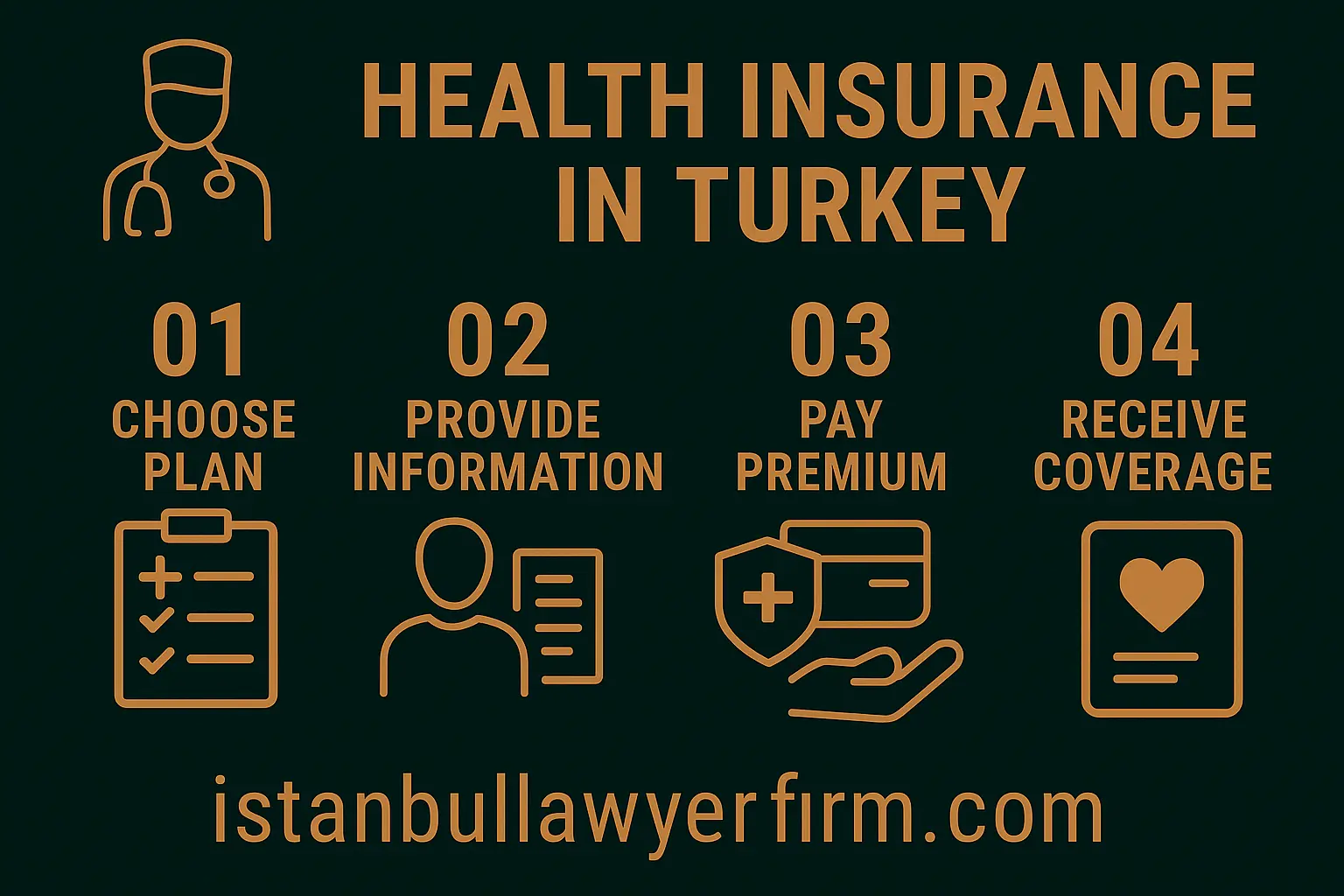
Health insurance in Turkey operates on two parallel tracks that rarely intersect in the way foreign residents expect: the public social security system (SGK — Sosyal Güvenlik Kurumu) which covers Turkish citizens and qualifying foreign workers through employer contributions and premium payments, and the private health insurance market which covers everyone else—including the large and growing population of foreign residents who are not integrated into the SGK system. The mandatory health insurance requirement for Turkish residence permits adds a third dimension: foreign nationals applying for a residence permit must demonstrate valid health insurance coverage for the duration of the permit, but the specific coverage standards, the accepted insurance types, and the practical consequences of different insurance arrangements vary in ways that are rarely explained clearly at the application stage. The result is that many foreign residents in Turkey are either over-insured (paying for redundant coverage), under-insured (holding policies that do not meet their actual needs), or technically non-compliant in ways they are not aware of. Understanding how the Turkish health system works—the public hospitals, the university hospitals, the private hospitals, the reimbursement chains, the co-payment structures, and the language barriers—is as important as understanding which insurance policy to hold, because having the right insurance and knowing how to use it in a Turkish healthcare setting are two different skills. This guide addresses both: how health insurance in Turkey works at the system level, and what foreign residents, expatriates, work permit holders, and tourists specifically need to know to be adequately covered and legally compliant during their time in Turkey.
The Turkish public health system (SGK)
A lawyer in Turkey advising on the public health system must explain that the SGK (Sosyal Güvenlik Kurumu) is the state institution that administers Turkey's universal health coverage system, collecting contributions from employers and employees and providing healthcare access through contracted public and private providers. Turkish citizens who are formally employed, self-employed and making SGK contributions, or registered as dependents of an SGK contributor have access to SGK-covered healthcare at state hospitals (devlet hastanesi), university hospitals (üniversite hastanesi), and contracted private hospitals at defined co-payment rates. The Green Card (Yeşil Kart) system provided free healthcare to low-income Turkish citizens who could not afford SGK premiums—it has been substantially integrated into the general health system, though aspects remain for qualifying populations. Practice may vary by authority and year — check current guidance on the current SGK premium rates, co-payment structures, and contracted provider list from the SGK's official website at sgk.gov.tr.
An Istanbul Law Firm advising on SGK coverage for foreign workers must explain that a foreign national who works in Turkey under a valid Turkish work permit and whose employer registers them with SGK is entitled to the same SGK health coverage as a Turkish employee—they access public and contracted hospitals, pay the same co-payment rates, and can register dependents under the same rules. This is the cleanest health coverage situation for a foreign worker in Turkey: mandatory, employer-funded, and providing access to the full SGK provider network. The complication arises when the employment relationship ends—SGK coverage continues for a defined period after employment termination (typically a few months), after which the former employee must either make voluntary SGK contributions or obtain private health insurance to maintain legal compliance and practical coverage. The work permit Turkey framework—covering the employment authorization that triggers SGK registration—is analyzed in the resource on work permit Turkey. Practice may vary by authority and year — check current guidance on the current SGK coverage continuation rules following employment termination and on the voluntary SGK premium payment option for foreign nationals.
A Turkish Law Firm advising on voluntary SGK enrollment for foreign residents must explain that foreign nationals who are legally resident in Turkey but not employed under a Turkish work permit can make voluntary SGK premium payments to access the public health system. This option is available to foreign nationals who hold a valid Turkish residence permit, have been resident in Turkey for more than one year, and meet the current eligibility conditions for voluntary SGK enrollment. The voluntary premium amount is set by the government and is significantly lower than private health insurance premiums for comparable coverage—making it an attractive option for long-term foreign residents who qualify. The key practical limitation is that voluntary SGK enrollment does not happen automatically and requires a formal application to the SGK with supporting documentation. Practice may vary by authority and year — check current guidance on the current voluntary SGK enrollment eligibility conditions for foreign residents and on the current monthly premium amounts from the SGK before comparing this option with private health insurance.
Private health insurance options
A law firm in Istanbul advising on private health insurance Turkey options must explain that Turkey has a well-developed private health insurance market offering a range of products from comprehensive inpatient and outpatient coverage to basic hospitalization-only policies. The major Turkish insurance companies—including Anadolu Sigorta, Allianz Turkey, Mapfre, Generali, and others—offer individual and group private health insurance plans with varying coverage scopes, premium levels, deductibles, and provider networks. International health insurance providers such as Cigna, Bupa, and AXA also offer Turkey-inclusive plans that provide broader international coverage alongside Turkish private hospital access. The practical difference between Turkish local private insurance and international health insurance matters primarily for foreign residents who travel frequently or who may need to seek medical care outside Turkey. Practice may vary by authority and year — check current guidance on the current private health insurance products available in Turkey and on the specific coverage terms applicable to foreign nationals, as some Turkish insurers apply different terms or premiums to non-citizen applicants.
An English speaking lawyer in Turkey advising on how Turkish private health insurance works in practice must explain the provider network dimension—which is critical and often poorly understood by newcomers. Most Turkish private health insurance policies operate on a network model: the insurer has contracted with specific private hospitals, clinics, and doctors, and the insured person receives cashless treatment at these contracted providers. Going outside the network means paying upfront and claiming reimbursement—which involves navigating a Turkish-language reimbursement process that can take weeks. Major private hospital chains in Istanbul (such as Acıbadem, Memorial, Medipol, American Hospital) are typically in the networks of multiple insurers, but smaller private clinics and specialist practices may not be. Before purchasing any private health insurance in Turkey, verifying which specific hospitals and clinics are in the network—not just which cities are covered—is essential. Practice may vary by authority and year — check current guidance on the network composition of any specific policy before purchase, as provider networks change and a hospital that was in-network when the policy was purchased may have left the network by the time care is needed.
A Turkish Law Firm advising on the pre-existing condition dimension of Turkish private health insurance must explain that Turkish private insurers are permitted to exclude pre-existing medical conditions from coverage—conditions that existed before the insurance application or that were diagnosed within a waiting period after the policy start date may be subject to permanent exclusion or a waiting period before coverage applies. A foreign resident who has a chronic condition, a history of cancer, heart disease, diabetes, or another significant medical history should carefully review the exclusion terms of any policy before purchasing and should specifically disclose all relevant medical history in the application—non-disclosure that is discovered at the time of a claim can result in claim denial and policy cancellation. Practice may vary by authority and year — check current guidance on the current Turkish insurance law provisions governing pre-existing condition exclusions and on any recently enacted consumer protection regulations that limit or require disclosure of exclusion terms at the point of sale.
Health insurance for residence permits
A Turkish Law Firm advising on the health insurance residence permit Turkey requirement must explain that a valid health insurance policy covering the duration of the residence permit application is a mandatory document in the Turkish residence permit application process for most permit categories. Without a qualifying health insurance document, the residence permit application is incomplete and will not be processed. The health insurance submitted with a residence permit application must meet the minimum coverage standards established by Turkish immigration regulations—it must be valid in Turkey, must cover the applicant's full permit period, and must meet minimum inpatient coverage thresholds. Practice may vary by authority and year — check current guidance on the current minimum health insurance coverage requirements for residence permit applications from the Directorate General of Migration Management (DGMM) at goc.gov.tr before purchasing any policy specifically for residence permit purposes.
A law firm in Istanbul advising on which health insurance types are accepted for residence permit applications must explain that the DGMM accepts several categories: Turkish private health insurance policies issued by companies licensed by the Turkish Insurance and Private Pension Regulation and Supervision Agency (SEDDK); SGK coverage where the applicant is enrolled; and in some cases, international health insurance policies from recognized providers that specifically confirm coverage in Turkey. Policies purchased in the applicant's home country that do not specifically reference Turkey or that are travel insurance products (designed for short-term travelers) are typically not accepted. A foreign national who submits a residence permit application with a travel insurance policy instead of a genuine health insurance policy risks application rejection—and a renewal application submitted with an expired or non-compliant policy creates a compliance gap that can complicate renewal processing. Practice may vary by authority and year — check current guidance on the current DGMM acceptance criteria for health insurance in residence permit applications and on any recently changed requirements for specific permit categories.
An English speaking lawyer in Turkey advising on the cost of health insurance for residence permit purposes must explain that the cost varies significantly depending on the applicant's age, the coverage level, the insurer, and the permit duration. Young applicants (under 40) can typically obtain compliant residence permit health insurance from Turkish insurers for a few hundred dollars per year. Older applicants—particularly those over 60 or 65—face substantially higher premiums, and some Turkish insurers decline to offer policies above certain age thresholds. For older foreign residents who cannot obtain affordable Turkish private insurance, voluntary SGK enrollment (where eligible) or international health insurance plans may provide more cost-effective compliant coverage. The Turkish citizenship options framework—relevant for long-term residents who may qualify for citizenship and therefore access to SGK as citizens—is analyzed in the resource on Turkish citizenship options. Practice may vary by authority and year — check current guidance on the current age-based pricing and eligibility rules from multiple Turkish insurers before purchasing a residence permit health insurance policy.
How hospitals work in Turkey
A Turkish Law Firm advising on navigating hospitals in Turkey must explain that Turkey has three categories of hospitals that foreign residents encounter: public state hospitals (devlet hastanesi) which are SGK-contracted and provide heavily subsidized care to SGK enrollees but can involve long waiting times; university hospitals (üniversite hastanesi) which combine teaching functions with patient care and are also SGK-contracted; and private hospitals (özel hastane) which offer faster access, better amenities, and English-speaking staff at significantly higher costs that may or may not be covered by insurance. A foreign resident who goes to a state hospital without SGK coverage will be treated as a self-pay patient and billed at rates that, while lower than private hospital rates, are still significant for major procedures. Practice may vary by authority and year — check current guidance on the current self-pay patient rates at Turkish state hospitals and on the current SGK co-payment structure for enrollees.
A law firm in Istanbul advising on using private hospitals with Turkish private insurance must explain the admission process that most insured foreign patients encounter. When a privately insured patient presents at a contracted private hospital, the hospital's insurance desk (sigorta birimi) verifies the coverage by contacting the insurer directly or through an online verification system—this is the "provision" (provizyon) process. The provision confirms coverage and may specify any co-payment (katılım payı) the patient must make. If the provision is approved, the patient receives care and the hospital bills the insurer directly for covered amounts. If the provision is denied—because the treatment is excluded, because the patient is outside the network, or because of a policy issue—the patient must decide whether to pay out of pocket or seek care elsewhere. Having the insurer's 24-hour assistance line number saved before any hospital visit is practical preparation that many foreign residents neglect until they need it. Practice may vary by authority and year — check current guidance on the current provision process at major Istanbul private hospitals and on the specific co-payment amounts applicable under your specific policy.
An English speaking lawyer in Turkey advising on emergency care for foreign nationals must explain that Turkish hospitals are legally required to provide emergency stabilization regardless of insurance status or payment capacity—a foreign tourist or resident who arrives at a Turkish emergency room in a life-threatening condition will be treated regardless of whether they have insurance or the funds to pay. However, once stabilized, the self-pay billing for uninsured emergency care in Turkey can be substantial, and a foreign national who receives significant emergency treatment without insurance faces a meaningful financial obligation. For non-emergency care, uninsured foreign nationals are expected to pay before or at the time of treatment. Travel insurance with emergency medical evacuation coverage is the standard recommendation for tourists who will be in Turkey for short periods without full health insurance coverage. Practice may vary by authority and year — check current guidance on the current Turkish legal framework for emergency care obligations and on the billing practices for uninsured patients at specific hospital types.
Health insurance for tourists
A Turkish Law Firm advising on health insurance Turkey tourist options must explain that Turkey does not require tourists to hold health insurance as a visa condition for most nationalities—visitors from visa-exempt countries and most visa-on-arrival nationalities can enter Turkey without demonstrating health insurance. However, this does not mean that medical care for tourists is free: an uninsured tourist who needs medical care in Turkey will be billed as a self-pay patient, and the costs for hospitalization, surgery, or specialist treatment can be substantial even in the public system. Travel insurance with medical coverage is not legally required but is strongly advisable for any tourist visiting Turkey, particularly for activities that carry injury risk or for visitors with pre-existing health conditions. Practice may vary by authority and year — check current guidance on the current visa conditions and health insurance requirements applicable to nationals of your specific country entering Turkey.
A law firm in Istanbul advising on what travel insurance for Turkey should cover must explain that a policy appropriate for a Turkish visit should include: emergency medical treatment with no sublimit that would be insufficient for serious hospitalization; emergency medical evacuation back to the home country where Turkish treatment is not adequate; repatriation of remains in case of death; and ideally, coverage for adventure activities if the visitor plans hiking, skiing, or water sports. Standard "travel insurance" policies that primarily cover trip cancellation and lost luggage with only minimal medical coverage are not adequate protection for a medical emergency in Turkey. The medical coverage limit on the policy should be at minimum €30,000—€50,000, with higher limits recommended for longer visits or older travelers. Practice may vary by authority and year — check current guidance on the current minimum coverage amounts recommended by Turkish healthcare providers for self-pay foreign patients requiring significant treatment.
An English speaking lawyer in Turkey advising on Schengen insurance validity in Turkey must clarify a common misunderstanding: Schengen travel insurance (the insurance required for Schengen area visa applications) is not designed for and typically not valid in Turkey. Turkey is not part of the Schengen area, and a visitor who holds Schengen insurance from a previous EU visa application cannot rely on it for medical coverage during a Turkish visit. Similarly, a credit card's built-in travel insurance often has low medical coverage limits and significant exclusions that make it inadequate for Turkish medical emergencies. Purpose-purchased travel insurance that specifically lists Turkey as a covered destination is the appropriate coverage for tourist visits. Practice may vary by authority and year — check the specific policy documentation of any insurance you intend to rely on during a Turkish visit to confirm that Turkey is explicitly covered and that the medical coverage limits are adequate.
Work permit and employer coverage
A Turkish Law Firm advising on health insurance Turkey work permit holders must explain that the standard situation for a foreign national working in Turkey under a formal work permit is SGK enrollment through the employer. Turkish labor law requires employers to register their employees with SGK and make the required employer-side contributions—for a foreign worker, this obligation is identical to the obligation for Turkish employees. An employer who fails to register a foreign employee with SGK is violating Turkish labor law and creating exposure for both the employer and the employee (who is uninsured during the unregistered period). A foreign worker who suspects their employer has not registered them with SGK should specifically request confirmation of their SGK registration number (SGK sicil numarası) and can verify their enrollment status through the e-Devlet portal. Practice may vary by authority and year — check current guidance on the current SGK employer registration obligations for foreign employees and on the legal remedies available to a foreign employee whose employer has failed to register them.
A law firm in Istanbul advising on supplementary private health insurance for SGK-enrolled foreign workers must explain that while SGK provides the mandatory baseline coverage, many foreign workers and their employers purchase supplementary private health insurance to provide access to a wider range of private hospitals, faster appointment availability, English-language medical services, and broader coverage for outpatient care and specialist visits that may involve co-payments under SGK. This supplementary insurance is not legally required—it is a benefit choice—but for foreign workers accustomed to private healthcare in their home countries, it significantly improves the practical healthcare experience in Turkey. Negotiating supplementary private health insurance as part of the employment package is common among international companies operating in Turkey. Practice may vary by authority and year — check current guidance on the current interaction between SGK coverage and supplementary private insurance and on any coordination of benefits rules that apply when a patient has both SGK enrollment and private insurance.
An English speaking lawyer in Turkey advising on health coverage during the work permit application period—before the work permit is approved and SGK registration occurs—must explain that a foreign national who has applied for a work permit but who has not yet received approval and been formally registered with SGK is technically in a gap period for health coverage. If they hold a residence permit, they may have private health insurance satisfying the residence permit requirement, but this may not be the same policy as will be provided by the employer. Coordinating the transition from residence permit health insurance to employer SGK coverage—and ensuring there is no coverage gap during the transition—requires specific attention. The work permit Turkey framework is analyzed in the resource on work permit for foreigners in Turkey. Practice may vary by authority and year — check current guidance on the current work permit processing timelines and on the health coverage arrangements available during the application period.
Dental and specialist coverage
A Turkish Law Firm advising on dental and specialist coverage in Turkey must explain that dental care and specialist consultations are the two areas where the gap between public SGK coverage and private insurance is most pronounced in practical terms. SGK covers basic dental procedures at state dental clinics (ağız ve diş sağlığı merkezleri) but the quality, availability, and scope of SGK dental coverage is significantly more limited than what foreign residents are accustomed to in most Western countries. Private dental care in Turkey—available at private dental clinics and private hospital dental departments—is of high quality and relatively affordable compared to European and North American prices, but it is largely out-of-pocket or covered only by specific dental add-on policies. Practice may vary by authority and year — check current guidance on the current SGK dental coverage scope and on the private dental insurance add-on products available from Turkish insurers.
A law firm in Istanbul advising on specialist access must explain that the SGK system uses a referral structure—patients are typically expected to present first at a family doctor (aile hekimi) who provides a referral to a specialist, rather than booking directly with a specialist at a state hospital. Private health insurance typically allows direct specialist booking without a referral requirement, which is a significant practical advantage for foreign residents who want efficient access to specialist care. At major Istanbul private hospitals, it is possible to book directly with English-speaking specialists in most major medical fields. The practical experience of navigating specialist care in Turkey—from finding the right specialist to understanding the appointment and billing process—is one of the areas where newly arrived foreign residents most benefit from guidance from other long-term expats or from their employer's HR department. Practice may vary by authority and year — check current guidance on the current SGK referral requirements and on the direct specialist access available under specific private insurance policies.
An English speaking lawyer in Turkey advising on mental health coverage in Turkey must explain that mental health services are covered by both SGK and private health insurance, but the practical availability and quality of English-language mental health care in Turkey is more limited than in major Western cities. Private therapy in English is available in Istanbul from a range of practitioners, but private health insurance coverage for outpatient mental health therapy is often limited in the number of sessions covered or in the reimbursement rates per session. For foreign residents who anticipate needing mental health support during their time in Turkey, specifically reviewing the mental health coverage terms of any policy—number of sessions, therapist qualification requirements, reimbursement rates—is important before purchase. Practice may vary by authority and year — check current guidance on the current private insurance coverage terms for mental health services in Turkey and on any recently expanded SGK coverage for mental health conditions.
Making a claim and patient rights
A Turkish Law Firm advising on the health insurance claim process in Turkey must explain that the claim process differs substantially between in-network and out-of-network care. For in-network care at a contracted private hospital, the provision (provizyon) obtained at admission effectively handles the claim on the spot—the hospital bills the insurer and the patient pays only the co-payment amount if any. For out-of-network care or care received abroad, the patient pays the full cost upfront and then submits a reimbursement claim to the insurer with original invoices, medical reports in Turkish (or with certified translation), and the insurer's claim form. Reimbursement processing times in Turkey range from a few weeks to several months depending on the insurer and the complexity of the claim. Practice may vary by authority and year — check current guidance on the current claim submission procedures and processing timelines for your specific insurer and on the documentation format required for reimbursement claims.
A law firm in Istanbul advising on patient rights in Turkish healthcare must explain that Turkey enacted a Patient Rights Regulation that establishes rights for all patients—Turkish citizens and foreign nationals—including the right to be informed about their diagnosis and treatment options, the right to consent to or refuse treatment, the right to seek a second opinion, the right to access their own medical records, and the right to complain about the quality of care received. The Patient Rights Unit (Hasta Hakları Birimi) at each hospital is the first point of contact for formal complaints about care quality. A foreign patient who believes their care was inadequate, that a medical error occurred, or that their patient rights were violated has access to the complaint mechanism regardless of their nationality or language. The medical malpractice health tourists Turkey framework—covering legal remedies when medical care goes wrong—is analyzed in the resource on medical malpractice health tourists Turkey. Practice may vary by authority and year — check current guidance on the current patient rights complaint procedures in Turkey and on the legal remedies available when those rights are violated.
An English speaking lawyer in Turkey advising on insurance disputes—where a claim is denied or underpaid—must explain that Turkish insurance law provides specific dispute resolution mechanisms for policyholders who disagree with their insurer's claims decisions. The Insurance Arbitration Commission (Sigorta Tahkim Komisyonu) provides a free or low-cost alternative dispute resolution mechanism for insurance disputes below a defined threshold. For larger disputes, the policyholder can file a civil lawsuit against the insurer in the Turkish courts. A foreign national whose health insurance claim in Turkey has been denied or significantly underpaid should not simply accept the denial—Turkish insurance law provides substantive protections for policyholders, and the insurer's stated reason for denial may not withstand legal scrutiny. Practice may vary by authority and year — check current guidance on the current Insurance Arbitration Commission procedures and on the complaint thresholds applicable to health insurance disputes in Turkey.
Practical steps for new arrivals
A Turkish Law Firm developing a practical health insurance guide for foreign nationals arriving in Turkey must structure the approach by arrival category. For those arriving on a work permit: confirm with your employer that SGK registration has been completed and obtain your SGK number; verify that you can access the SGK system through the e-Devlet portal; assess whether supplementary private insurance is provided as part of your package and if not, whether it is worth purchasing independently. For those arriving on a residence permit without work authorization: purchase Turkish private health insurance meeting the DGMM's minimum requirements before submitting your residence permit application; verify that the policy specifically confirms coverage validity for Turkish residence permit purposes; and assess whether the policy provides adequate practical coverage for your healthcare needs or whether you need a more comprehensive policy beyond the residence permit minimum. Practice may vary by authority and year — check current guidance on the current minimum coverage requirements and on the accepted insurance types from the DGMM before purchasing any residence permit health insurance.
For tourists planning an extended visit: purchase dedicated travel insurance with medical coverage specifically listing Turkey before departure; confirm the policy's medical coverage limit is adequate for serious hospitalization; save the insurer's emergency assistance number in your phone before arrival; and familiarize yourself with the location of the nearest private hospital with English-speaking staff in the area you will be staying. For those with pre-existing conditions: disclose all medical history accurately in any insurance application—non-disclosure is not a valid strategy and creates claim denial risk; specifically ask about the pre-existing condition exclusion terms before purchasing; and if no Turkish insurer will provide adequate coverage, explore international health insurance plans that may have different underwriting criteria. A best lawyer in Turkey addressing health insurance legal questions notes that most health insurance questions are practical rather than legal—but legal counsel becomes relevant when a residence permit is rejected due to insurance documentation issues, when an employer fails to register an employee with SGK, when a significant insurance claim is denied, or when medical malpractice is suspected. The Istanbul Bar Association at istanbulbarosu.org.tr provides resources for finding qualified practitioners. Practice may vary by authority and year — check current guidance before making any health insurance decisions for Turkey.
Turkish lawyers advising foreign nationals on health insurance in Turkey consistently identify the same three practical priorities that make the difference between adequate and inadequate coverage: first, confirm that your policy is accepted by the DGMM if you have a residence permit—a policy that looks comprehensive but fails the residence permit test creates an immediate administrative problem; second, verify the provider network before you need care rather than after—a policy with an excellent coverage scope but a thin network in your city is a practical failure; and third, understand the claim process in advance—knowing whether your hospital visit will be cashless through the provision system or whether you will need to pay and claim reimbursement determines how you should manage your finances around any medical event. The insurance law Turkey framework—covering broader insurance rights and dispute resolution—is analyzed in the resource on insurance litigation rights Turkey. Practice may vary by authority and year — check current guidance on all applicable requirements from the DGMM, SGK, and your specific insurer before finalizing any health insurance arrangement in Turkey.
Author: Mirkan Topcu is an attorney registered with the Istanbul Bar Association (Istanbul 1st Bar), Bar Registration No: 67874. His practice focuses on cross-border and high-stakes matters where evidence discipline, procedural accuracy, and risk control are decisive.
He advises individuals and companies across Immigration and Residency, Commercial and Corporate Law, and cross-border documentation matters where procedural accuracy and evidence discipline are decisive.
Education: Istanbul University Faculty of Law (2018); Galatasaray University, LL.M. (2022). LinkedIn: Profile. Istanbul Bar Association: Official website.