

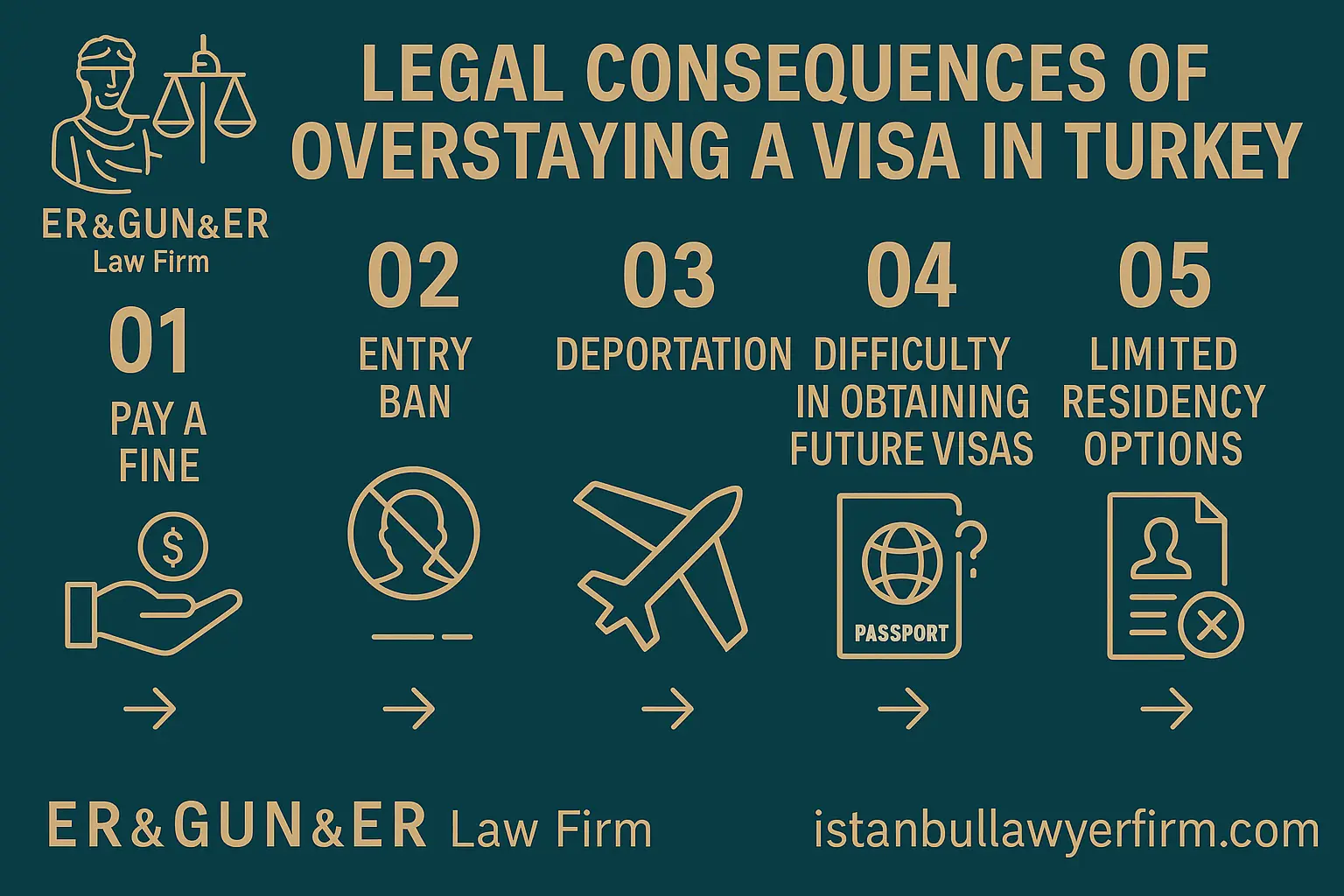
Visa overstay (vize ihlali) in Türkiye produces serious legal consequences including administrative fines, entry bans (tahdit kodları — restriction codes), deportation (sınır dışı etme), and residence permit implications. Foreign nationals — tourists, students, digital nomads, expatriates, business travelers — benefit from understanding the framework substantively rather than relying on fragmentary information. Even one-day overstay produces specific administrative consequences with substantive implications for future Turkish entry and broader international travel mobility. The framework's complexity produces meaningful value from substantive engagement before exit attempts or upon discovery of overstay status.
The substantive law operates through Yabancılar ve Uluslararası Koruma Kanunu (Foreigners and International Protection Code, YUKK, Law No. 6458) of 4 April 2013 (Resmi Gazete 11 April 2013 No. 28615) governing comprehensive foreigner framework with Article 9 girişe izin verilmeyecek yabancılar (entry refusal grounds) including specific overstay-related grounds, Article 10 giriş yasağı (entry ban) framework with up to 5-year ban under Article 10/1 and up to 10-year ban under Article 10/4 for specific aggravated scenarios, Article 13 entry ban appeal framework, Articles 30-34 residence permit (ikamet izni) framework, Articles 52-60 sınır dışı etme (deportation) framework with Article 53 deportation order procedural framework, Article 54 deportation grounds, Article 56 gönüllü geri dönüş (voluntary return) framework, Article 57 idari gözetim (administrative detention) framework; YUKK Yönetmelik (Implementing Regulation) supporting operational framework; 5682 sayılı Pasaport Kanunu of 15 July 1950 (Resmi Gazete 24 July 1950 No. 7564) governing passport-related framework; and 2577 sayılı İdari Yargılama Usulü Kanunu (Administrative Procedure Code) governing administrative court appeal framework.
The institutional architecture spans Göç İdaresi Başkanlığı (Presidency of Migration Management — GİB, formerly Göç İdaresi Genel Müdürlüğü until 2021 reorganisation) under İçişleri Bakanlığı (Ministry of Interior) administering immigration framework; İl Göç İdaresi Müdürlükleri (Provincial Migration Directorates) administering provincial-level operations including residence permit applications, entry ban appeals, deportation procedures; Sınır Kapıları (Border Gates) operated by Emniyet Genel Müdürlüğü with overstay detection at exit; İdare Mahkemesi (Administrative Court) for entry ban and deportation order appeals; Bölge İdare Mahkemesi (Regional Administrative Court) for İstinaf appeal framework; Danıştay (Council of State) for cassation review; Cumhuriyet Başsavcılığı for criminal aspects where applicable; Türk konsoloslukları abroad supporting consular framework; and ÇASGB (Çalışma ve Sosyal Güvenlik Bakanlığı — Ministry of Labour and Social Security) for work permit-related matters.
YUKK 6458 Framework: Visa Overstay Architecture
Yabancılar ve Uluslararası Koruma Kanunu (YUKK) framework establishes comprehensive substantive architecture for foreigner status in Türkiye including overstay consequences. Foreign nationals benefit from understanding framework substantively because piecemeal understanding produces strategic missteps in adverse scenarios.
YUKK Article 9 establishes substantive grounds for entry refusal (girişe izin verilmeyecek yabancılar). Article 9/1 enumerates specific entry refusal categories including: prior overstay (vize, vize muafiyeti veya ikamet izni süresini ihlal edenler — those violating visa, visa exemption, or residence permit duration); national security threats; public order threats; specific other substantive grounds. The framework's structure produces specific consequences for prior overstay history affecting future Turkish entry attempts.
YUKK Article 10 establishes substantive entry ban (giriş yasağı) framework. Article 10/1 supports entry bans up to 5 years for specific scenarios including overstay violations. Article 10/4 supports extended entry bans up to 10 years for specific aggravated scenarios involving public order, public security, or public health threats. Article 10/2 establishes specific procedural framework. The framework's structure produces case-specific outcomes based on overstay severity, frequency, and specific other substantive factors.
Tahdit kodu (entry ban code) framework operates as practical implementation of Article 10. Specific codes including V-69, V-71, V-77 (and others — specific code framework varies by current implementation) categorise specific entry ban grounds with specific duration framework. Substantive understanding of specific tahdit kodu category supports strategic appeal framework. Article 13 framework supports appeal of specific entry ban codes through specific procedural framework.
YUKK Articles 30-34 establish ikamet izni (residence permit) framework. Article 30 short-term residence permits typically up to 2 years renewable. Article 31 family residence permits supporting specific family scenarios. Article 32 student residence permits. Article 33 humanitarian residence permits. Article 34 long-term residence permits typically requiring 8+ year continuous Turkish residence. Overstay scenarios produce specific implications across all residence permit categories including renewal denial, cancellation, and specific other consequences.
YUKK Articles 52-60 establish sınır dışı etme (deportation) framework supporting comprehensive deportation procedures. Article 52 establishes deportation principle. Article 53 establishes deportation order procedural framework with specific procedural protections. Article 54 enumerates specific deportation grounds including: violations of Türkiye Cumhuriyeti laws producing serious public order or public security threats; specific YUKK Article 9 entry refusal grounds; specific other substantive grounds. Article 55 establishes specific exemptions from deportation including: specific health considerations; specific family scenarios; specific other humanitarian grounds.
YUKK Article 56 establishes gönüllü geri dönüş (voluntary return) framework supporting alternative to forced deportation. Voluntary return typically produces reduced consequences compared to forced deportation including: shorter or no entry ban; preserved future visa eligibility; reduced administrative complications. Strategic voluntary return engagement supports specific scenarios where deportation otherwise likely.
YUKK Article 57 establishes idari gözetim (administrative detention) framework supporting detention pending deportation procedures. Substantive content includes: maximum 6-month detention typically with specific extension framework; specific procedural protections; specific judicial review framework. Strategic counsel engagement essential for substantive detention scenarios.
Procedural framework throughout YUKK supports substantive procedural protections. Substantive content includes: written notification of administrative decisions; specific appeal procedures; specific timeline frameworks; specific judicial review framework. Substantive engagement with procedural framework supports specific outcomes.
YUKK Yönetmelik (Implementing Regulation) supports operational framework with specific procedural detail. Substantive content addresses: detailed procedural framework for residence permit applications; entry ban appeal procedural detail; deportation procedural detail; specific other operational substantive content. Counsel familiarity with regulatory detail supports substantive engagement.
International framework integration produces specific scenarios. EU Readmission Agreement (Türkiye-EU 2013) framework supporting specific scenarios; specific bilateral readmission agreements with various countries; specific other international framework. Substantive understanding of international framework supports specific scenarios.
Categories of Overstay: Substantive Distinctions
Overstay category framework produces specific substantive distinctions affecting consequences and remedies. Foreign nationals benefit from understanding category distinctions producing strategic framework awareness.
Visa overstay (vize ihlali) category covers individuals overstaying specific visa duration. Substantive scenarios include: short-term visa overstay (typically 30 or 90-day visa); single-entry vs multiple-entry visa specific framework; specific consequence framework based on visa type and overstay duration.
Visa exemption overstay (vize muafiyeti süresini aşma) covers individuals from visa-exempt countries overstaying their permitted exemption period. Substantive content includes: typically 90 days within 180-day period for most visa-exempt nationalities (specific period varies by country bilateral framework); substantive consequence framework similar to visa overstay; specific procedural framework.
E-visa overstay (e-vize süresini aşma) covers individuals from countries requiring e-visa overstaying their granted period. Substantive consequence framework similar to other overstay categories with specific procedural framework. E-visa typically 30 or 90 days subject to specific country framework.
Residence permit (ikamet izni) overstay produces more serious framework. Substantive content includes: significantly more serious consequence framework compared to short-term visa overstay; specific implications for residence permit renewal; specific deportation framework where applicable; specific other substantive content. Strategic counsel engagement particularly important for residence permit overstay scenarios.
Work permit (çalışma izni) overstay produces additional framework complications. Substantive content includes: combined immigration consequence framework alongside labour law violations; SGK (Sosyal Güvenlik Kurumu) framework implications; employer liability framework; specific other substantive content. Coordinated counsel engagement essential combining immigration and employment counsel.
Student permit (öğrenci ikamet izni) overstay produces specific scenarios. Substantive content includes: academic enrolment implications; future student visa eligibility implications; YÖK (Yükseköğretim Kurulu — Council of Higher Education) framework where applicable; specific other substantive content.
Family permit (aile ikamet izni) overstay produces specific framework. Substantive content includes: family unity considerations; specific protection scenarios under YUKK humanitarian framework; specific other substantive content.
Overstay duration framework produces specific consequence variation. Substantive consequence varies based on overstay duration: brief overstays (typically days to a few weeks) produce administrative fine framework with potentially limited entry ban; extended overstays (months) produce escalating fine framework with longer entry ban probability; very extended overstays (over 1 year) produce most severe framework including deportation likelihood.
Voluntary disclosure framework produces specific scenarios. Foreigners discovering own overstay status who voluntarily approach Göç İdaresi Müdürlüğü typically face less severe consequences compared to discovery at exit point or through enforcement. Strategic voluntary disclosure engagement supports specific scenarios.
Force majeure scenarios produce specific framework. Substantive scenarios producing potential overstay justification include: serious medical conditions preventing travel; flight cancellations producing exit delays; natural disasters; specific other extraordinary circumstances. Strategic documentation framework supports force majeure arguments.
Bureaucratic delay scenarios produce specific framework. Substantive scenarios producing potential mitigation include: residence permit renewal applications pending at expiration; specific other administrative delays beyond applicant control. Documentation of pending applications supports specific mitigation arguments.
Penalty Framework: Administrative Fines and Calculation
Administrative fine framework operates through specific calculation methodology with substantive content varying by overstay duration and specific category. Foreign nationals benefit from understanding fine calculation framework supporting strategic engagement.
Fine calculation methodology operates through base fee plus per-day component. Substantive structure typically includes: base administrative fee independent of overstay duration; per-day fee multiplied by overstay duration; specific other calculation factors. Specific amounts subject to current annual framework with periodic updates through Göç İdaresi Başkanlığı.
Fine collection framework operates primarily at exit points. Substantive procedural content includes: payment at airport, land border, or seaport during exit attempt; specific payment methods including TRY cash and credit card commonly accepted; receipt issuance supporting subsequent procedural use. Strategic preparation including fine estimate and payment readiness supports smooth exit.
Failure to pay framework produces specific consequences. Substantive content includes: automatic entry ban generation; potential immediate detention pending payment in specific scenarios; specific other consequences. Strategic compliance with payment requirement essential.
Receipt framework supports subsequent procedural use. Substantive content includes: payment receipt with specific procedural information; specific receipt retention recommended for subsequent visa applications and entry ban appeals; specific other procedural content.
Currency and payment framework produces specific operational considerations. Substantive content includes: TRY (Turkish Lira) primary payment currency; foreign currency typically not accepted at most exit points; specific credit card framework; specific other payment substantive content.
Combined consequence framework produces compound impact. Substantive content includes: administrative fine plus potential entry ban for specific scenarios; specific aggravation framework for repeated overstays; specific other compound consequence content.
Fine appeal framework operates through specific procedural pathway. Substantive content includes: written objection procedure; supporting documentation framework; specific timeline framework; specific other procedural content. Strategic appeal engagement supports specific scenarios where fine calculation disputed.
Fine reduction scenarios produce specific framework. Substantive content includes: voluntary disclosure framework potentially supporting reduced fine; force majeure documentation supporting fine reduction; specific other mitigation substantive content. Strategic mitigation engagement supports specific scenarios.
Multiple overstay scenarios produce specific framework. Substantive content includes: aggravated fine calculation for repeat offenders; specific other compound penalty content. Strategic counsel engagement particularly important for repeat overstay scenarios.
Visa-specific fine variation produces specific scenarios. Substantive content varies by specific visa type: tourist visa typically lowest base fee; work permit substantively higher fees; specific other visa-specific framework.
Penalty framework annual updates produce specific operational considerations. Substantive content includes: periodic fee updates through Göç İdaresi Başkanlığı; specific implementation timeline; specific other regulatory substantive content. Current verification of specific fee amounts supports accurate strategic engagement.
Entry Ban (Tahdit Kodu) Framework Under YUKK Article 10
Entry ban (giriş yasağı) framework under YUKK Article 10 operates through specific tahdit kodu (restriction code) implementation producing substantial substantive impact on future Turkish entry. Foreign nationals benefit from understanding framework substantively because entry ban implications extend beyond immediate Turkish denial to broader travel mobility.
YUKK Article 10/1 establishes general entry ban framework. Substantive content supports entry bans up to 5 years for specific scenarios including overstay violations. Specific duration determination operates through case-specific analysis considering: overstay duration; overstay frequency; specific aggravating or mitigating factors; specific other substantive content.
YUKK Article 10/4 establishes extended entry ban framework. Substantive content supports entry bans up to 10 years for specific aggravated scenarios involving public order, public security, or public health threats. Specific scenario analysis essential for understanding applicable framework.
Tahdit kodu (restriction code) framework operates as operational implementation. Specific codes categorise specific ban grounds with substantive duration framework. Common codes include: V-69 specific category framework; V-71 specific category framework; V-77 specific category framework; specific other codes — current code framework subject to specific implementation. Substantive understanding of assigned specific tahdit kodu supports strategic appeal framework.
Code-specific consequence framework produces specific outcomes. Different tahdit kodu categories produce different substantive consequence frameworks: specific durations; specific appeal frameworks; specific other substantive content. Strategic counsel engagement supports proper code analysis.
Entry ban discovery framework operates through specific scenarios. Substantive content includes: notification at exit point with specific procedural framework; subsequent discovery upon attempted re-entry; written notification through specific procedural framework. Strategic awareness of specific notification framework supports response timing.
Entry ban duration framework varies by case-specific factors. Substantive content includes: brief overstays producing shorter ban duration (commonly 3-12 months); extended overstays producing longer ban duration (commonly 1-5 years); specific aggravated scenarios producing maximum duration; specific other substantive content.
Entry ban scope framework produces specific operational content. Substantive content includes: prohibition on entering Türkiye for specific period; specific exception framework for emergency scenarios; specific other substantive content.
Schengen and international impact produces specific scenarios. Türkiye is not party to Schengen Information System (SIS) supporting direct data sharing — Turkish entry bans do not automatically appear in Schengen database. However, indirect impact through visa application disclosure requirements, specific bilateral information sharing, and similar substantive content produces meaningful international consequences. Strategic disclosure framework essential for future visa applications elsewhere.
Future visa application framework produces specific implications. Substantive content includes: disclosure requirement on most international visa applications regarding prior visa violations or entry bans; specific Schengen visa application framework requiring full disclosure; specific UK, US, Canada, Australia visa application disclosure frameworks; specific other international visa framework. Strategic disclosure with substantive explanation supports specific application scenarios.
Entry ban removal pathway operates through specific procedural framework. Substantive content includes: YUKK Article 13 appeal framework; specific procedural framework; specific timeline considerations; specific other substantive content. Strategic engagement supports specific removal scenarios.
Voluntary return impact on entry ban produces specific framework. Substantive content includes: voluntary return under Article 56 typically produces reduced entry ban or no entry ban; specific procedural framework; specific other substantive content. Strategic voluntary return engagement supports specific scenarios.
Deportation impact on entry ban produces specific framework. Substantive content includes: forced deportation typically producing standard 5-year entry ban under Article 10/1; specific aggravated scenarios producing extended bans under Article 10/4; specific other substantive content.
Exit Procedure and Border Encounter Framework
Exit procedure framework at Turkish borders produces specific procedural content where overstay involved. Foreign nationals benefit from understanding framework supporting strategic preparation for exit attempts.
Border control framework operates through Emniyet Genel Müdürlüğü Sınır Kapıları (Border Gates) coordination with Göç İdaresi systems. Substantive procedural content includes: passport scanning at exit; automatic overstay detection through electronic system; specific procedural pathway for overstay encounters; specific other substantive content.
Initial encounter framework produces specific procedural pathway. Substantive content includes: officer notification of overstay status; specific calculation of overstay duration; specific notification of fine amount and entry ban implications; specific other procedural content.
Fine payment framework at border supports immediate resolution of administrative fine component. Substantive content includes: payment kiosks or office at major exit points; specific payment methods accepted; receipt issuance; specific procedural framework. Strategic preparation including TRY cash readiness supports smooth payment.
Entry ban issuance framework operates at specific procedural stage. Substantive content includes: automatic system-generated entry ban for specific overstay durations; specific written notification at exit; specific other procedural content. Strategic awareness of automatic ban issuance supports preparation.
Documentation request framework supports specific scenarios. Substantive content includes: officer request for supporting documentation regarding overstay reasons (medical records, flight cancellation evidence, similar); specific procedural framework for review; specific other substantive content. Strategic documentation preparation supports specific scenarios.
Detention scenario framework produces specific procedural content. Substantive content includes: brief detention scenarios pending procedural processing; extended detention through YUKK Article 57 framework where applicable; specific procedural protections; specific other substantive content. Strategic counsel engagement essential for detention scenarios.
Voluntary return framework at border supports specific scenarios. Substantive content includes: YUKK Article 56 voluntary return procedural framework; specific procedural content; specific other substantive content. Strategic engagement supports specific border encounter scenarios.
Communication with consulate framework supports specific scenarios. Substantive content includes: Vienna Convention on Consular Relations Article 36 (Türkiye party since 1976) consular notification framework; specific consular notification rights; specific other procedural content. Strategic consular engagement supports substantive scenarios.
Language barrier framework produces specific operational considerations. Substantive content includes: limited Turkish proficiency producing communication difficulties; sworn interpreter (yeminli tercüman) framework where available; specific other substantive content. Strategic preparation including key Turkish phrases or interpreter availability supports smooth procedural engagement.
Appeal preparation framework at border supports specific scenarios. Substantive content includes: documentation preparation supporting subsequent appeal; specific receipt retention; specific other procedural content. Strategic preparation supports subsequent appeal framework engagement.
Companion travel scenarios produce specific framework. Substantive content includes: family member coordination during procedural processing; specific other multi-traveler scenarios; specific other substantive content.
Subsequent travel impact framework produces specific scenarios. Substantive content includes: connecting flight implications; specific subsequent travel consequences; specific other substantive content. Strategic flight scheduling considering potential procedural delay supports specific scenarios.
Administrative Appeal Pathways: İl Göç İdaresi and İdare Mahkemesi
Appeal framework supports challenge of administrative decisions including entry bans, deportation orders, and residence permit denials. Foreign nationals benefit from understanding framework substantively because appeal effectiveness depends on procedural compliance and substantive analysis.
Administrative appeal framework under YUKK Article 13 operates through İl Göç İdaresi Müdürlüğü (Provincial Migration Directorate) for entry ban matters. Substantive content includes: written appeal submission with specific procedural framework; supporting documentation framework; specific timeline requirements; specific other procedural content.
Substantive grounds framework supports specific appeal scenarios. Substantive content includes: procedural defects in original decision; substantive errors in fact-finding; force majeure circumstances justifying overstay; bureaucratic delay scenarios beyond applicant control; medical emergency scenarios; specific other substantive content.
Documentation framework supports substantive appeal. Substantive content includes: medical records for health-based appeals; flight documentation for travel disruption appeals; embassy correspondence; specific other supporting documentation; sworn translation where applicable. Comprehensive documentation framework essential for substantive appeal effectiveness.
Timeline framework produces specific procedural requirements. Substantive content includes: specific appeal timeline from decision notification (typically short period requiring prompt action); specific procedural deadlines throughout; specific other timeline content. Strategic prompt action essential.
Administrative court framework under İdare Mahkemesi operates through 2577 sayılı İdari Yargılama Usulü Kanunu (Administrative Procedure Code) framework. Substantive content includes: judicial review of administrative decisions; specific procedural framework; specific timeline framework typically 60 days from administrative decision; specific other substantive content.
İdare Mahkemesi appeal framework supports substantive judicial review. Substantive content includes: filing through specific procedural framework; substantive analysis by court; specific judgment framework; specific other substantive content. Strategic counsel engagement essential for substantive İdare Mahkemesi proceedings.
Yürütmenin durdurulması (suspension of execution) framework supports interim relief. Substantive content includes: request alongside main appeal supporting interim suspension of administrative decision; substantive prerequisites including likelihood of success and irreparable harm; specific procedural framework. Strategic suspension request supports specific scenarios where immediate enforcement would cause irreparable harm.
Bölge İdare Mahkemesi (Regional Administrative Court) framework supports İstinaf appeal. Substantive content includes: appeal of İdare Mahkemesi decisions through specific procedural framework; substantive review framework; specific timeline framework; specific other substantive content.
Danıştay (Council of State) framework supports cassation review. Substantive content includes: appeal of Bölge İdare Mahkemesi decisions for specific scenarios; specific procedural framework; specific other substantive content. Danıştay engagement typically reserved for specific scenarios involving substantive legal questions.
Specific appeal scenario framework produces case-specific outcomes. Substantive content includes: medical-based appeals (typically high success rate with comprehensive documentation); bureaucratic delay appeals; specific aggravated scenarios; specific other substantive content. Substantive analysis produces case-specific outcomes.
Cross-border appeal coordination supports specific scenarios. Substantive content includes: foreign nationals appealing from abroad through specific procedural framework; vekaletname (Power of Attorney) coordination through Turkish consulate or apostilled foreign notary under 1961 Hague Apostille Convention plus Turkish sworn translation; specific other substantive content.
Successful appeal framework produces specific outcomes. Substantive content includes: entry ban removal with specific procedural framework; subsequent re-entry capability; specific other substantive content. Strategic post-success engagement supports re-entry preparation.
Unsuccessful appeal framework produces specific scenarios. Substantive content includes: continued entry ban; alternative pathway exploration including waiting for ban expiration, alternative migration pathways, specific other substantive content; specific other procedural content.
Deportation (Sınır Dışı Etme) Framework Under YUKK Articles 52-60
Deportation framework under YUKK Articles 52-60 produces serious consequences for severe overstay scenarios and specific other substantive grounds. Foreign nationals benefit from understanding framework substantively because deportation produces both immediate and long-term consequences requiring strategic engagement.
YUKK Article 52 establishes deportation principle supporting specific framework. Substantive content includes: deportation as specific administrative measure for foreigners falling within Article 54 grounds; specific procedural framework; specific other substantive content.
YUKK Article 53 establishes deportation order procedural framework. Substantive content includes: written notification requirement; specific procedural protections including legal counsel access; appeal pathway through İdare Mahkemesi within 7 days; specific other procedural content. Strategic prompt counsel engagement essential.
YUKK Article 54 enumerates substantive deportation grounds. Substantive content includes: violations under Article 9 entry refusal grounds including overstay scenarios; serious public order, public security, or public health threats; specific other substantive grounds. Strategic understanding of specific applicable ground supports targeted defense.
YUKK Article 55 establishes specific exemptions from deportation. Substantive content includes: serious health risks where deportation would cause substantial medical harm; specific family scenarios involving Turkish citizen family members; victims of human trafficking under specific framework; specific other exemption grounds. Strategic engagement with applicable exemption supports specific defense scenarios.
YUKK Article 56 establishes gönüllü geri dönüş (voluntary return) framework. Substantive content includes: voluntary departure typically with reduced consequences; specific procedural framework; potentially shorter or no entry ban; specific other substantive content. Strategic voluntary return engagement supports specific scenarios where deportation otherwise likely.
YUKK Article 57 establishes idari gözetim (administrative detention) framework. Substantive content includes: detention pending deportation procedures; maximum 6-month standard detention with specific extension framework up to 12 months total; specific procedural protections; judicial review framework; specific other substantive content. Strategic counsel engagement essential for substantive detention scenarios.
Detention conditions framework produces specific operational considerations. Substantive content includes: specific facility framework; communication framework with consulate, family, counsel; specific other operational substantive content.
Geri Gönderme Merkezi (Removal Centre) framework operates as primary detention facility. Substantive content includes: specific facilities operated by Göç İdaresi Başkanlığı; specific operational framework; specific procedural framework; specific other substantive content.
Appeal framework against deportation order operates through İdare Mahkemesi within 7-day timeline under YUKK Article 53/3. Substantive content includes: prompt appeal essential given short timeline; substantive grounds analysis; supporting documentation framework; specific procedural content. Strategic counsel engagement immediately upon deportation order receipt essential.
Yürütmenin durdurulması (execution suspension) framework supports interim relief during deportation appeal. Substantive content includes: suspension request alongside main appeal; substantive prerequisites; specific procedural framework. Strategic suspension request frequently essential preventing deportation execution during appeal.
European Court of Human Rights (ECtHR) framework produces specific scenarios. Substantive content includes: ECHR Article 3 framework supporting specific deportation challenges (torture/inhuman treatment risk); ECHR Article 8 framework supporting family unity arguments; specific other Convention framework; ECtHR Rule 39 interim measures framework. Strategic ECtHR engagement supports specific scenarios meeting Convention prerequisites.
Refugee and asylum framework produces specific deportation exemptions. Substantive content includes: 1951 Refugee Convention non-refoulement principle (Türkiye party); specific YUKK international protection framework; specific UNHCR coordination; specific other substantive content. Strategic engagement with international protection framework essential for applicable scenarios.
Cross-border deportation coordination produces specific scenarios. Substantive content includes: home country acceptance framework; emergency travel document coordination through home country consulate; specific transit arrangements; specific other operational content.
Residence Permit Implications and Rehabilitation Framework
Residence permit framework integration with overstay scenarios produces specific implications affecting both current permit status and future application eligibility. Foreign nationals benefit from understanding framework substantively for both prevention and remedial scenarios.
Active permit overstay framework produces specific implications. Substantive content includes: residence permit expiration without renewal application creating overstay status; specific procedural framework for permit-overstay scenarios; specific consequence framework; specific other substantive content.
Pending renewal scenarios produce specific framework. Substantive content includes: renewal application filed before permit expiration typically supporting continued legal status; specific procedural framework supporting status during pending application; specific other substantive content. Strategic prompt renewal application essential before permit expiration.
Renewal denial framework produces specific scenarios. Substantive content includes: residence permit renewal denial creating overstay risk if applicant remains; specific appeal framework through İl Göç İdaresi; subsequent İdare Mahkemesi appeal pathway; specific other substantive content.
Cancellation framework produces specific scenarios. Substantive content includes: residence permit cancellation by Göç İdaresi for specific grounds; specific procedural framework; specific appeal framework; specific other substantive content.
Overstay impact on future permit applications produces specific framework. Substantive content includes: prior overstay typically considered in future application analysis; specific other substantive content; specific mitigation framework where applicable. Strategic overstay resolution before future application essential.
Long-term residence permit (uzun dönem ikamet izni) under YUKK Article 34 framework produces specific implications. Substantive content includes: 8+ year continuous Turkish residence requirement; overstay scenarios potentially disrupting continuity calculation; specific other substantive content.
Citizenship application implications produce specific framework. Substantive content includes: Turkish citizenship through residence requires specific continuous residence; overstay history potentially affecting citizenship eligibility; specific TVK 5901 framework integration; specific other substantive content. Strategic overstay resolution before citizenship application essential.
Family permit implications produce specific framework. Substantive content includes: family permit holders facing specific scenarios where principal permit holder overstays; specific dependent permit consequences; specific other substantive content.
Work permit implications produce specific framework. Substantive content includes: work permit framework integration with residence permit; overstay scenarios affecting both immigration and labour status; SGK framework implications; specific other substantive content. Coordinated immigration and employment counsel essential.
Student permit implications produce specific framework. Substantive content includes: student permit overstay affecting academic enrollment; specific YÖK framework where applicable; specific other substantive content.
Rehabilitation framework supports specific scenarios. Substantive content includes: post-overstay strategic engagement supporting subsequent migration eligibility; specific procedural framework; specific waiting period considerations; specific other substantive content. Strategic rehabilitation engagement supports long-term mobility framework.
Alternative migration pathway framework produces specific scenarios. Substantive content includes: alternative visa categories where overstay history affects standard pathways; humanitarian residence permit framework under specific conditions; family reunification pathways; specific other alternative substantive content. Strategic alternative pathway analysis supports specific scenarios.
Documentation framework for rehabilitation supports substantive scenarios. Substantive content includes: comprehensive documentation of overstay resolution including fine payment receipts, appeal outcomes, specific other substantive content; specific other rehabilitation documentation. Strategic documentation framework supports substantive subsequent applications.
Cross-Border and Future Visa Considerations
Cross-border and future visa framework addresses substantive impact of Turkish overstay on broader international mobility. Foreign nationals benefit from understanding framework substantively because Turkish overstay implications extend beyond Türkiye.
Schengen visa application framework produces specific scenarios. Substantive content includes: Schengen visa application includes specific disclosure requirements regarding prior visa violations; substantive disclosure of Turkish overstay typically required; specific impact analysis; specific other substantive content. Strategic substantive disclosure with explanatory framework supports application analysis.
UK visa application framework produces specific scenarios. Substantive content includes: UK visa application specific disclosure requirements; specific scrutiny framework for prior violations; specific other substantive content. Strategic substantive engagement supports specific scenarios.
US visa application framework produces specific scenarios. Substantive content includes: US visa application Form DS-160 specific disclosure requirements regarding prior visa violations; specific 9 FAM framework analysis; specific other substantive content. Strategic substantive engagement essential.
Canada visa application framework produces specific scenarios. Substantive content includes: Canadian visa application specific disclosure requirements; IRCC framework analysis; specific other substantive content.
Australia visa application framework produces specific scenarios. Substantive content includes: Australian visa application specific disclosure; specific public interest criterion framework; specific other substantive content.
Schengen Information System (SIS) framework clarification produces specific awareness. Türkiye is not party to SIS supporting direct database sharing. Turkish entry bans do not automatically appear in SIS. However, applicants must disclose prior visa violations on most applications, producing indirect impact through application disclosure framework rather than direct database matching.
Bilateral information sharing framework produces specific scenarios. Substantive content includes: specific bilateral agreements supporting limited information sharing for specific scenarios; specific other framework. Strategic understanding supports specific application scenarios.
Future Turkish entry framework produces specific scenarios. Substantive content includes: post-ban-expiration entry capability typically restored; specific subsequent application procedural framework; specific other substantive content.
Turkish citizenship by investment alternative pathway produces specific scenarios. Substantive content includes: TVK 5901 Article 11 framework supporting Turkish citizenship through investment regardless of prior overstay history typically; specific procedural framework; specific other substantive content. Strategic citizenship by investment engagement supports specific applicants where standard residence pathway disrupted.
Mavi Kart framework produces specific scenarios. Substantive content includes: TVK 5901 Article 28 framework supporting former Turkish citizens; specific substantive content; specific other framework. Strategic Mavi Kart engagement supports specific applicants.
Residence in third country framework produces specific scenarios. Substantive content includes: alternative jurisdiction residence pathways supporting specific applicants where Turkish framework disrupted; specific procedural framework; specific other substantive content. Strategic alternative jurisdiction engagement supports specific scenarios.
Family unity framework produces specific scenarios. Substantive content includes: family unity considerations for applicants with Turkish citizen family members; specific YUKK family permit framework; specific other substantive content. Strategic family unity engagement supports specific scenarios.
Long-term planning framework supports comprehensive engagement. Substantive content includes: post-overstay long-term mobility planning; specific timeline frameworks for ban expiration and rehabilitation; specific other substantive content. Strategic long-term planning supports comprehensive future mobility.
Counsel Engagement Across Overstay Resolution Lifecycle
Counsel engagement across overstay resolution lifecycle benefits from substantive expertise integrating YUKK 6458 framework, residence permit framework, deportation framework, administrative appeal framework, and cross-border coordination where applicable. The framework's complexity produces meaningful value from professional support throughout the lifecycle. A Turkish Law Firm experienced in immigration matters approaches the engagement substantively rather than treating overstay as routine administrative matter.
Pre-engagement strategic assessment establishes substantive baseline. Foreign nationals discovering overstay status, facing imminent overstay risk, or planning Turkish travel with prior overstay history benefit from comprehensive immigration assessment. Substantive analysis across YUKK 6458 framework, current immigration status, prior history, specific other substantive content produces baseline assessment supporting strategic engagement.
Pre-overstay prevention engagement supports specific scenarios. Substantive content includes: residence permit renewal application coordination before expiration; specific extension procedures; alternative pathway engagement where current pathway producing risk; specific other substantive content. Strategic prevention frequently more effective than post-overstay remediation.
Active overstay scenario engagement addresses immediate substantive matters. Substantive content includes: voluntary disclosure framework engagement under specific procedural framework; documentation preparation supporting substantive engagement; specific other procedural content. Strategic immediate engagement supports specific scenarios.
Border encounter support engagement addresses pre-departure scenarios. Substantive content includes: pre-departure consultation supporting border procedural framework; documentation preparation including fine payment readiness, supporting documentation for force majeure or bureaucratic delay arguments; specific other substantive content.
Fine payment coordination supports specific scenarios. Substantive content includes: fine calculation analysis; payment procedural framework; receipt retention coordination; specific other substantive content.
Entry ban appeal engagement addresses ban removal pursuit. Substantive content includes: YUKK Article 13 framework engagement; documentation preparation including supporting evidence framework; substantive grounds analysis; İl Göç İdaresi appeal coordination; subsequent İdare Mahkemesi appeal pathway through 2577 sayılı İdari Yargılama Usulü Kanunu framework; Bölge İdare Mahkemesi İstinaf framework; Danıştay cassation framework where applicable; specific other substantive content.
Deportation defense engagement addresses substantive scenarios. Substantive content includes: YUKK Article 53 7-day appeal framework with prompt counsel engagement; substantive grounds analysis under Articles 54-55 framework; YUKK Article 56 voluntary return framework where strategically applicable; YUKK Article 57 administrative detention framework engagement where applicable; ECtHR framework engagement where Convention framework applicable including Rule 39 interim measures; refugee and asylum framework engagement under 1951 Refugee Convention non-refoulement framework where applicable; specific other substantive content. Coordinated counsel engagement essential for substantive deportation scenarios.
Administrative detention engagement addresses specific procedural scenarios. Substantive content includes: YUKK Article 57 framework engagement with maximum 6-month standard with specific extension framework; specific procedural protections; consular notification under Vienna Convention on Consular Relations Article 36 framework; counsel access framework; judicial review framework; specific other substantive content.
Residence permit coordination supports specific scenarios. Substantive content includes: residence permit renewal coordination; cancellation appeal framework; specific other substantive content. Coordinated counsel engagement supports comprehensive immigration framework.
Future visa application support addresses substantive subsequent scenarios. Substantive content includes: explanatory documentation preparation supporting subsequent visa applications; substantive disclosure framework engagement; specific other substantive content.
Cross-border coordination supports substantive scenarios. Substantive content includes: vekaletname (Power of Attorney) coordination through Turkish consulate abroad without apostille requirement or foreign notary with apostille under 1961 Hague Apostille Convention (Türkiye party since 1985) plus Turkish sworn translation; foreign jurisdiction counsel coordination for parallel proceedings; specific other substantive content.
Family unity engagement addresses specific family scenarios. Substantive content includes: family unity considerations under YUKK family permit framework; specific exemption analysis under Article 55; specific other substantive content.
Citizenship by investment alternative engagement addresses specific scenarios. Substantive content includes: TVK 5901 Article 11 framework engagement supporting specific applicants where standard residence pathway disrupted; specific procedural framework; specific other substantive content.
Long-term mobility planning addresses substantive long-term scenarios. Substantive content includes: post-overstay long-term planning; specific timeline frameworks; alternative jurisdiction engagement where applicable; specific other substantive content. Strategic long-term planning supports comprehensive future mobility.
Frequently Asked Questions
- What is the framework for visa overstay? Yabancılar ve Uluslararası Koruma Kanunu (YUKK, Law No. 6458) of 4.4.2013 (RG 11.4.2013 No. 28615). Article 9 entry refusal grounds including prior overstay. Article 10 entry ban (giriş yasağı) framework: Article 10/1 up to 5 years; Article 10/4 up to 10 years for aggravated public order/security/health threats. Article 13 appeal framework. Articles 30-34 residence permit framework. Articles 52-60 deportation (sınır dışı etme) framework.
- What constitutes overstay? Remaining in Türkiye beyond authorised duration of: visa (vize), visa exemption (vize muafiyeti — typically 90 days within 180 days for visa-exempt nationalities), e-visa (e-vize — typically 30 or 90 days), or residence permit (ikamet izni). Even one-day overstay creates technical violation with potential consequences.
- What administrative fines apply? Calculation through base fee plus per-day component. Specific amounts subject to current annual framework with periodic updates through Göç İdaresi Başkanlığı. Payment typically at exit point in TRY through cash or credit card. Receipt retention essential for subsequent procedural use including future visa applications and entry ban appeals.
- What about entry bans? YUKK Article 10/1 supports up to 5 years; Article 10/4 up to 10 years for aggravated scenarios. Implementation through tahdit kodu (restriction code) framework with specific codes (V-69, V-71, V-77, others) categorising specific ban grounds. Specific duration determination through case-specific analysis. Appeal framework under YUKK Article 13.
- What courts handle appeals? İl Göç İdaresi Müdürlüğü (Provincial Migration Directorate) for initial administrative appeal under YUKK Article 13. İdare Mahkemesi (Administrative Court) for judicial review under 2577 sayılı İdari Yargılama Usulü Kanunu typically within 60-day timeline from administrative decision. Bölge İdare Mahkemesi (Regional Administrative Court) for İstinaf appeal. Danıştay (Council of State) for cassation review.
- What about deportation? YUKK Articles 52-60. Article 53 deportation order procedural framework with 7-day appeal timeline. Article 54 deportation grounds. Article 55 exemptions including health, family, trafficking victim scenarios. Article 56 voluntary return (gönüllü geri dönüş) typically with reduced consequences. Article 57 administrative detention (idari gözetim) maximum 6 months with extension framework up to 12 months total.
- What about administrative detention? YUKK Article 57 framework. Maximum 6-month standard detention with specific extension framework reaching 12 months total. Geri Gönderme Merkezi (Removal Centre) facilities operated by Göç İdaresi Başkanlığı. Procedural protections including consular notification under Vienna Convention on Consular Relations Article 36, counsel access, judicial review framework. Strategic counsel engagement essential.
- Can entry ban be removed? Yes, through YUKK Article 13 appeal framework. Grounds include: procedural defects in original decision; substantive errors in fact-finding; force majeure circumstances; bureaucratic delays beyond applicant control; medical emergencies. Documentation framework essential including hospital records, flight cancellation evidence, embassy correspondence, sworn translation. Strategic appeal supports specific scenarios.
- What about Schengen impact? Türkiye is NOT party to Schengen Information System (SIS) supporting direct database sharing — Turkish entry bans do not automatically appear in SIS. However, indirect impact through application disclosure requirements: Schengen visa applications, UK, US, Canada, Australia visa applications include specific disclosure regarding prior visa violations. Strategic substantive disclosure with explanatory framework essential.
- What about residence permit overstay? Significantly more serious framework than short-term visa overstay. Substantive content includes: pending renewal application framework supporting continued legal status; renewal denial creating overstay risk; cancellation framework; specific deportation likelihood for extended scenarios. Strategic prompt action essential including renewal before expiration where possible.
- What about voluntary return? YUKK Article 56 framework supporting voluntary departure typically with reduced consequences compared to forced deportation: shorter or no entry ban; preserved future visa eligibility; reduced administrative complications. Strategic voluntary return engagement supports specific scenarios where deportation otherwise likely. Coordination with İl Göç İdaresi Müdürlüğü essential.
- What about future Turkish citizenship? TVK 5901 Article 11 (citizenship by investment) typically supports applications regardless of prior overstay history through specific investment categories. TVK Article 12 (acquisition through marriage) and Article 11 standard residence pathway face specific scrutiny for overstay history. Strategic citizenship by investment engagement supports specific applicants where standard pathway disrupted.
- What about health-based scenarios? YUKK Article 55 framework provides specific exemptions including: serious health risks where deportation would cause substantial medical harm. Strategic engagement with comprehensive medical documentation supports specific scenarios. Hospital records, physician statements, treatment plan documentation, sworn translation framework support substantive engagement.
- What about humanitarian residence permit? YUKK Article 33 humanitarian residence permit (insani ikamet izni) framework supports specific exceptional scenarios. Substantive grounds include: serious health considerations; specific family scenarios; victims of human trafficking; specific other humanitarian scenarios. Strategic engagement with applicable framework supports specific scenarios.
- Where does ER&GUN&ER Law Firm support these matters? As a Turkish Law Firm experienced in immigration matters, support across overstay resolution lifecycle: Pre-Engagement Strategic Assessment under Yabancılar ve Uluslararası Koruma Kanunu (Law No. 6458) of 4 April 2013 (RG 11.4.2013 No. 28615) framework with Article 9 entry refusal grounds Article 10 entry ban framework Article 13 appeal framework Articles 30-34 residence permit framework Articles 52-60 deportation framework with Article 53 procedural framework Article 54 grounds Article 55 exemptions Article 56 voluntary return Article 57 administrative detention; Pre-Overstay Prevention Engagement including residence permit renewal coordination before expiration extension procedures alternative pathway engagement; Active Overstay Scenario Engagement including voluntary disclosure framework documentation preparation İl Göç İdaresi Müdürlüğü coordination; Border Encounter Support including pre-departure consultation documentation preparation including fine payment readiness force majeure documentation bureaucratic delay documentation Sınır Kapıları (border gate) procedural awareness; Fine Payment Coordination including fine calculation analysis payment procedural framework receipt retention coordination; Entry Ban Appeal Engagement under YUKK Article 13 framework documentation preparation supporting evidence framework substantive grounds analysis İl Göç İdaresi appeal coordination İdare Mahkemesi appeal pathway through 2577 sayılı İdari Yargılama Usulü Kanunu framework with 60-day timeline yürütmenin durdurulması (execution suspension) framework Bölge İdare Mahkemesi İstinaf framework Danıştay cassation framework; Deportation Defense Engagement under YUKK Article 53 7-day appeal framework with prompt counsel engagement substantive grounds analysis under Articles 54-55 YUKK Article 56 voluntary return framework strategic engagement YUKK Article 57 administrative detention framework engagement ECtHR framework engagement where Convention framework applicable including ECHR Article 3 (torture/inhuman treatment risk) ECHR Article 8 (family unity) Rule 39 interim measures; Administrative Detention Engagement under YUKK Article 57 framework with consular notification under Vienna Convention on Consular Relations Article 36 (Türkiye party since 1976) counsel access judicial review framework Geri Gönderme Merkezi (Removal Centre) framework engagement; Refugee and Asylum Framework Engagement under 1951 Refugee Convention non-refoulement framework where applicable specific YUKK international protection framework UNHCR coordination; Residence Permit Coordination including residence permit renewal coordination cancellation appeal framework YUKK Article 33 humanitarian residence permit framework where applicable specific other substantive content; Future Visa Application Support including explanatory documentation preparation supporting subsequent visa applications substantive disclosure framework engagement specific Schengen UK US Canada Australia application support; Cross-Border Coordination including vekaletname coordination through Turkish consulate abroad without apostille requirement or foreign notary with apostille under 1961 Hague Apostille Convention (Türkiye party since 1985) plus Turkish sworn translation foreign jurisdiction counsel coordination for parallel proceedings; Family Unity Engagement under YUKK family permit framework Article 55 exemption analysis specific other substantive content; Citizenship by Investment Alternative Engagement under TVK 5901 Article 11 framework where standard residence pathway disrupted; Long-Term Mobility Planning including post-overstay long-term planning specific timeline frameworks alternative jurisdiction engagement where applicable; coordination with foreign jurisdiction counsel for parallel proceedings sworn translators (yeminli tercüman) for documentary translation Turkish consulates for consular services medical professionals for health-based defense scenarios; integrated multi-disciplinary engagement across substantive immigration law under YUKK 6458, residence permit framework under Articles 30-34, deportation framework under Articles 52-60, administrative detention framework under Article 57, administrative procedure under 2577 sayılı İdari Yargılama Usulü Kanunu, citizenship framework under TVK 5901 where alternative pathway considered, international human rights framework under ECHR, Vienna Convention consular framework, Hague Apostille Convention, refugee framework under 1951 Convention, family law framework where applicable, and cross-border coordination dimensions throughout the overstay resolution lifecycle from pre-engagement strategic assessment through pre-overstay prevention active overstay scenario border encounter support fine payment entry ban appeal deportation defense administrative detention residence permit coordination future visa application support cross-border coordination family unity engagement citizenship by investment alternative engagement to long-term mobility planning where applicable.
Author: Mirkan Topcu is an attorney registered with the Istanbul Bar Association (Istanbul 1st Bar), Bar Registration No: 67874. His practice at this Turkish Law Firm focuses on cross-border and high-stakes matters where evidence discipline, procedural accuracy, and risk control are decisive.
He advises foreign nationals facing visa overstay scenarios, expatriates managing residence permit complications, business travelers facing border issues, students managing student permit complications, individuals facing deportation proceedings, and persons managing complex cross-border immigration scenarios across Turkish immigration engagements under Yabancılar ve Uluslararası Koruma Kanunu (Foreigners and International Protection Code, YUKK, Law No. 6458) of 4 April 2013 (Resmi Gazete 11 April 2013 No. 28615) comprehensive framework with Article 9 girişe izin verilmeyecek yabancılar (entry refusal grounds) including specific overstay-related grounds, Article 10 giriş yasağı (entry ban) framework with Article 10/1 up to 5-year ban Article 10/4 up to 10-year extended ban for aggravated public order/security/health threats Article 10/2 procedural framework, Article 11 vize muafiyeti (visa exemption) framework, Articles 11-19 visa framework, Article 13 entry ban appeal framework supporting substantive procedural protections, Articles 20-29 entry/exit framework, Articles 30-34 ikamet izni (residence permit) framework with Article 30 short-term residence permits Article 31 family residence permits Article 32 student residence permits Article 33 humanitarian (insani) residence permits Article 34 long-term residence permits, Articles 52-60 sınır dışı etme (deportation) framework with Article 52 deportation principle Article 53 deportation order procedural framework with 7-day appeal timeline Article 54 substantive deportation grounds Article 55 deportation exemptions including health family trafficking victim scenarios Article 56 gönüllü geri dönüş (voluntary return) framework Article 57 idari gözetim (administrative detention) framework with maximum 6-month standard with extension framework reaching 12 months total Article 58 detention review framework Articles 59-60 procedural framework; YUKK Yönetmelik (Implementing Regulation) supporting operational framework with detailed procedural content; Pasaport Kanunu (Law No. 5682) of 15 July 1950 framework where applicable; 2577 sayılı İdari Yargılama Usulü Kanunu (Administrative Procedure Code) framework supporting administrative court appeal pathway with 60-day timeline yürütmenin durdurulması (execution suspension) framework specific other procedural content; tahdit kodu (entry ban code) framework with V-69 V-71 V-77 and other codes categorising specific ban grounds; Türk Vatandaşlığı Kanunu (TVK, Law No. 5901) Article 11 citizenship by investment framework where alternative pathway considered Article 28 Mavi Kart framework; Vienna Convention on Consular Relations 1963 (Türkiye party since 1976) Article 36 consular notification framework; 1961 Hague Apostille Convention (Türkiye party since 1985) document authentication framework; 1951 Refugee Convention non-refoulement framework where applicable; European Convention on Human Rights framework with ECHR Article 3 (torture/inhuman treatment) ECHR Article 8 (family unity) framework; ECtHR procedural framework including Rule 39 interim measures; institutional coordination including Göç İdaresi Başkanlığı (GİB — Presidency of Migration Management formerly Göç İdaresi Genel Müdürlüğü until 2021 reorganisation) under İçişleri Bakanlığı, İl Göç İdaresi Müdürlükleri (Provincial Migration Directorates) for provincial-level operations including residence permit applications entry ban appeals deportation procedures, Sınır Kapıları (Border Gates) operated by Emniyet Genel Müdürlüğü, Geri Gönderme Merkezleri (Removal Centres) for administrative detention, İdare Mahkemesi (Administrative Court) for entry ban and deportation order appeals, Bölge İdare Mahkemesi (Regional Administrative Court) for İstinaf appeal framework, Danıştay (Council of State) for cassation review, Cumhuriyet Başsavcılığı for criminal aspects where applicable, Türk konsoloslukları (Turkish consulates) supporting consular framework, Çalışma ve Sosyal Güvenlik Bakanlığı (ÇASGB) for work permit-related matters, UNHCR coordination for refugee and asylum scenarios; Power of Attorney (vekaletname) coordination through Turkish consulate abroad without apostille requirement or foreign notary with apostille under 1961 Hague Apostille Convention plus Turkish sworn translation enabling representation across pre-engagement strategic assessment pre-overstay prevention active overstay scenario border encounter support fine payment entry ban appeal deportation defense administrative detention residence permit coordination future visa application support cross-border coordination family unity engagement citizenship by investment alternative engagement and long-term mobility planning; coordination with foreign jurisdiction counsel for parallel proceedings, sworn translators (yeminli tercüman) for documentary translation, Turkish consulates for consular services, medical professionals for health-based defense, family law specialists for family unity scenarios, education specialists for student permit scenarios, employment counsel for work permit scenarios, citizenship counsel for citizenship by investment alternative engagement, public relations support for high-profile scenarios; integrated multi-disciplinary engagement across substantive immigration law under YUKK 6458, residence permit framework under Articles 30-34, deportation framework under Articles 52-60, administrative detention framework under Article 57, administrative procedure under 2577 sayılı İdari Yargılama Usulü Kanunu, citizenship framework under TVK 5901 where alternative pathway considered, international human rights framework under ECHR, Vienna Convention consular framework, Hague Apostille Convention, refugee framework under 1951 Convention, family law framework where applicable, and cross-border coordination dimensions throughout the overstay resolution lifecycle from pre-engagement strategic assessment through pre-overstay prevention active overstay scenario border encounter support fine payment entry ban appeal deportation defense administrative detention residence permit coordination future visa application support cross-border coordination family unity engagement citizenship by investment alternative engagement to long-term mobility planning supporting comprehensive overstay resolution.
Education: Istanbul University Faculty of Law (2018); Galatasaray University, LL.M. (2022). LinkedIn: Profile. Istanbul Bar Association: Official website.