

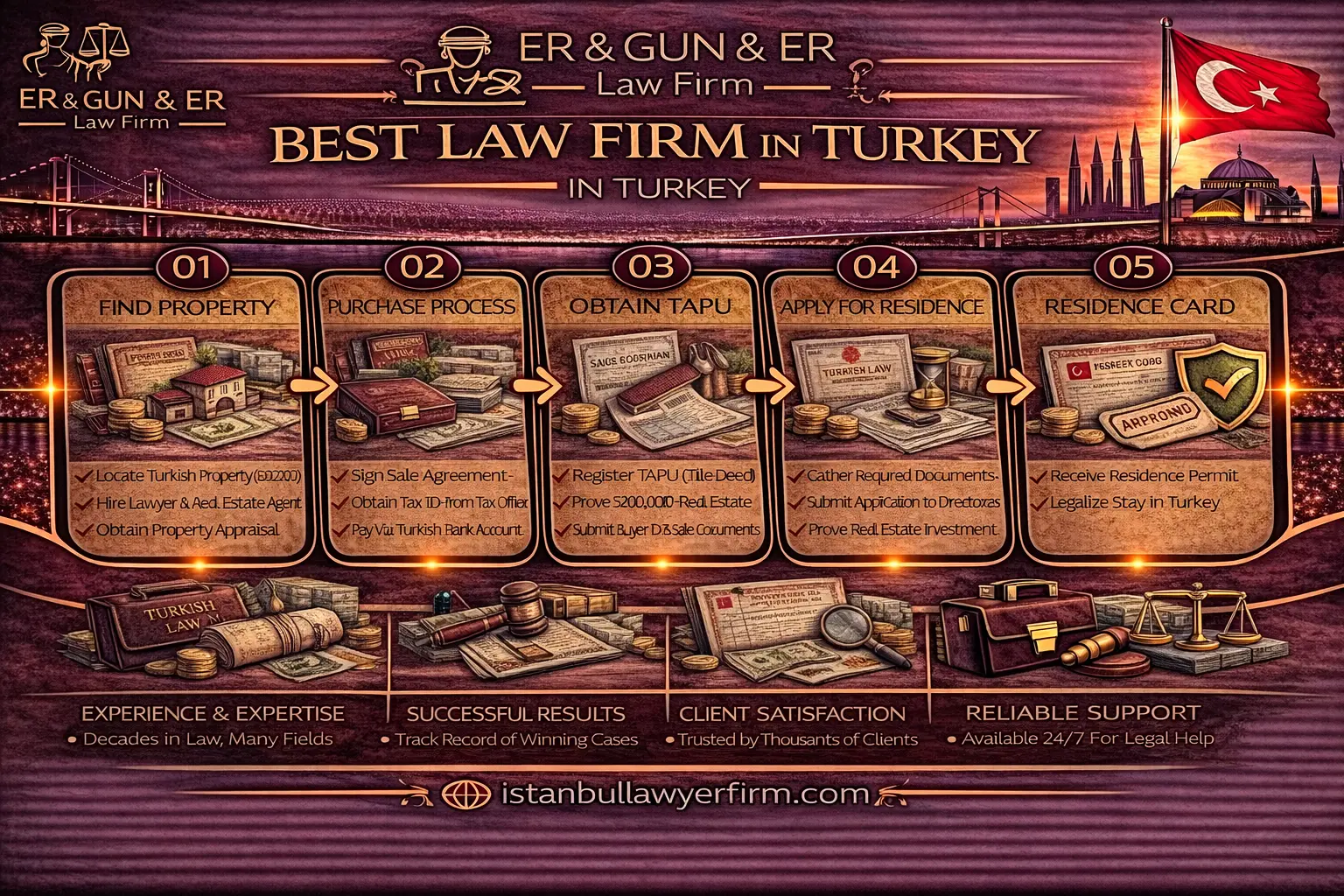
When someone searches for the best law firm in Turkey, the underlying need is almost always about reducing risk — not about collecting names. The right firm for any specific legal matter is the one that can scope the work precisely, verify the facts with primary documentation, execute the required proceedings without procedural errors, and communicate outcomes clearly across languages and time zones. Rankings, referral lists, and marketing materials are useful as an initial filter but are not a substitute for a matter-specific evaluation. The evaluation criteria that actually predict performance are: bar membership and licensing verification; written conflict of interest clearance; a scoped engagement letter with defined deliverables; demonstrated experience with the specific practice area and the specific court or registry involved; cross-border coordination capability where relevant; evidence discipline in how documents are obtained, organized, and presented; and fee transparency tied to specific milestones rather than vague estimates. This guide explains how to apply each criterion when evaluating and selecting legal representation in Turkey. Practice may vary by authority and year — verify current Turkish Bar Association licensing requirements and professional conduct standards directly before relying on any information in this guide.
What "best" should mean — fit, process, and measurable criteria
An English speaking lawyer in Turkey advising foreign clients on law firm selection must explain that "best" is a claim about fit for a specific legal risk, not a universal quality ranking — and the only way to evaluate fit is through matter-specific criteria rather than through brand recognition. The questions that determine fit include: Can the firm staff your specific practice area with attorneys who have direct experience in that area rather than general knowledge? Does the firm have established relationships with the specific registries, courts, and regulatory authorities involved in your matter? Can the firm provide a first-week plan — a specific list of the documents it will verify, the registries it will check, and the initial analysis it will deliver — before you commit to the engagement? A firm that can answer these questions specifically and in writing demonstrates the process maturity that predicts reliable performance; a firm that responds with generalities has not yet engaged with your actual legal problem. Practice may vary by authority and year — verify current Turkish court and registry practice in the specific area before evaluating any firm's stated experience.
An Istanbul Law Firm advising on evaluation methodology must explain that the most reliable evaluation method is process testing rather than credential review — specifically, presenting the firm with a concrete, bounded legal question from your matter and evaluating whether the response is evidence-led, realistic about limitations, and specific about next steps. A firm that is genuinely competent in a practice area will ask for primary documents before forming an opinion, will identify the specific information gaps that prevent a definitive answer, will distinguish between what can be proven and what is disputed, and will explain what happens under both favorable and unfavorable factual scenarios. A firm that produces a confident comprehensive opinion without asking for the underlying documents first has either made unstated assumptions or has produced a generic document rather than tailored advice. The evaluation conversation should therefore begin with the firm asking you questions, not with the firm presenting its credentials. Practice may vary — verify current Turkish legal professional conduct rules regarding opinion specificity and the standard for disclosing assumptions before any engagement decision.
A lawyer in Turkey advising on the "Istanbul best law firm" search filter must explain that geographic concentration in Istanbul reflects the concentration of large transactions, international corporate clients, and major commercial disputes in Turkey's financial and commercial center — and for matters that require regular attendance at Istanbul's commercial courts, land registries, or trade registry offices, Istanbul-based counsel has practical advantages. However, geography is a secondary criterion, not a primary one — a firm based in Istanbul that does not have experience with your specific practice area provides less value than a firm in another city that does. For matters involving courts or registries in other Turkish cities, the Istanbul-based firm's ability to coordinate local correspondent counsel — its supervision model, communication protocol, and accountability structure for correspondent work — is the relevant capability to test. For cross-border matters, the time zone coverage, English-language capability, and international document management systems matter more than physical location. Practice may vary — verify the firm's correspondent network and supervision model for matters outside Istanbul before any engagement decision. Practice may vary — check current guidance before acting on any information on this page.
Licensing, conflict checks, and professional ethics verification
An Istanbul Law Firm advising on the mandatory preliminary verification steps must explain that the first step before sharing any sensitive documents or facts with a Turkish law firm is confirming that the specific individuals who will work on your matter are licensed attorneys (avukat) admitted to the relevant bar association — and that the work they are being asked to do falls within the scope of their licensed authority. Bar association membership verification is publicly accessible through the Turkish Bar Association (Türkiye Barolar Birliği) and through the relevant city bar association's website — and the attorney's bar registration number, current active status, and bar admission date can be confirmed through these public records. The verification should specifically confirm the name of the attorney who will sign court submissions, represent the client at hearings, and provide formal legal opinions — because in Turkish legal practice, law firm employees who are not licensed attorneys cannot perform reserved legal activities such as signing court petitions, attending court hearings as counsel, or providing formal legal opinions. Practice may vary by authority and year — verify current Turkish Bar Association bar membership verification procedures and the specific reserved legal activities restricted to licensed attorneys before any engagement where the performing attorney's licensing is material.
A law firm in Istanbul advising on conflict of interest check procedures must explain that a written conflict of interest clearance should be obtained before you share any confidential information about your matter — including the identity of counterparties, the nature of the transaction or dispute, and the commercial details. The conflict check must identify: any prior or current representation of the counterparties or their affiliates; any prior advisory relationship with the company itself that created confidential information potentially relevant to the new matter; any personal relationships between firm attorneys and counterparty principals; any financial interest in entities that are parties to the matter; and any third-party referral arrangements that could create incentive conflicts. A law firm that takes a conflict check seriously will provide a written confirmation of the check's scope and its conclusions, will name the specific individuals and entities checked, and will explain how any potential conflict was analyzed and resolved. A firm that provides only verbal assurances or that treats the conflict check as a formality is not providing adequate protection. Practice may vary — verify current Turkish Bar Association conflict of interest rules and the specific screening methodology required for different types of potential conflicts before relying on any conflict clearance in a sensitive matter.
A Turkish Law Firm advising on data protection and document security ethics must explain that professional ethical obligations in Turkish legal practice include specific obligations regarding client document confidentiality, data security, and the handling of original documents — and evaluating a law firm's ethics includes evaluating its document management practices. Key questions include: whether the firm uses encrypted communication channels for sensitive documents; how the firm controls third-party vendor access (translators, investigators, experts) who may receive client-confidential documents; whether the firm has a written confidentiality undertaking with all vendors; how the firm maintains chain of custody for original documents and certified copies; and whether the firm can demonstrate a coherent document management system rather than relying on email chains and unstructured file storage. In cross-border matters specifically, document security becomes particularly important because documents are transmitted across systems and jurisdictions — and a firm that treats document security as optional rather than as a professional obligation creates avoidable risk for its clients. Practice may vary — verify current Turkish data protection law (KVKK) obligations applicable to law firm document management and the specific client data handling standards expected under Turkish professional conduct rules before any engagement where document security is a concern. Practice may vary — check current guidance before acting on any information on this page.
Scope definition and practice area matching
An English speaking lawyer in Turkey advising on scope definition must explain that the single most important document in any law firm engagement is the written scope of work — the specific definition of what the firm will do, what it will deliver, what falls within its engagement, and what falls outside it. A law firm engagement without a written scope is structurally similar to a construction contract without specifications: both parties may have different understandings of what was agreed, billing disputes become inevitable, and the quality of the output cannot be evaluated against any defined standard. The written scope should define: the specific legal questions being addressed; the specific deliverables (written opinions, drafted contracts, filed applications, court appearances, or combinations of these); the specific geographic scope and the courts or registries involved; the communication cadence and reporting obligations; and the specific decision points at which you will authorize additional work before it proceeds. A firm that resists a written scope proposal is signaling that it prefers the ambiguity — which consistently benefits the firm rather than the client. Practice may vary by authority and year — verify current Turkish Bar Association engagement letter requirements and the specific scope documentation standards applicable to different types of legal work before any engagement decision.
A lawyer in Turkey advising on practice area matching must explain that Turkish law firms — like law firms in most jurisdictions — vary significantly in their depth of specialization within broad practice area categories, and the evaluation must be at the sub-specialization level rather than at the broad category level. A firm that describes itself as a "corporate law firm Turkey" may have genuine transactional M&A depth but limited corporate governance or restructuring experience; a firm that describes itself as a "commercial litigation lawyer Turkey" may have deep experience in contract disputes but limited experience in intellectual property or competition litigation; a firm that describes itself as handling "real estate lawyer Turkey for foreigners" may have strong residential conveyancing experience but limited experience in commercial real estate or real estate project finance. The evaluation question is always: does the firm have direct, recent experience with the specific type of work your matter requires — not whether it can handle the category generically. Ask for anonymized examples of similar completed matters at the relevant practice area level, and evaluate the examples based on process discipline rather than claimed outcomes. Practice may vary — verify current Turkish professional conduct rules on attorney advertising and the specific testimonial and experience claim standards applicable to law firm marketing before relying on any firm's published experience claims.
An Istanbul Law Firm advising on the engagement letter as a selection tool must explain that the quality of the engagement letter a firm proposes is itself an evaluation criterion — because the engagement letter's quality reflects the firm's organizational discipline, its client relationship standards, and its commitment to written accountability. A well-drafted engagement letter for a Turkish legal matter should define: the specific legal scope of work and any express exclusions; the billing basis (hourly, fixed, milestone-based, or hybrid), the billing period, and the fee estimate with stated assumptions; how third-party costs (notary fees, translation fees, court filing fees, expert fees) are handled and approved; the communication protocol including reporting cadence, the primary contact attorney, and emergency escalation procedures; the document management and confidentiality obligations; the conflict check conclusions; the termination procedure and post-termination document handling; and the dispute resolution mechanism for fee disputes between the firm and the client. A firm that produces an engagement letter meeting these standards without being asked demonstrates the professional discipline that predicts reliable matter execution. Practice may vary — verify current Turkish Bar Association engagement letter standards and fee agreement requirements before any engagement involving significant legal fees. Practice may vary — check current guidance before acting on any information on this page.
Corporate, M&A, and commercial transaction capability
A Turkish Law Firm advising on evaluating corporate transaction capability must explain that M&A and corporate transaction work in Turkey requires coordinated competence across multiple overlapping legal disciplines — Turkish Commercial Code (TTK) corporate law, contract drafting and negotiation, merger control clearance before the Competition Authority (Rekabet Kurumu), sector-specific regulatory approvals (BDDK for banking, EPDK for energy, BTK for telecommunications), employment law obligations triggered by share or asset transfers, tax structuring, and in cross-border transactions, private international law and foreign judgment recognition questions. A firm that can genuinely manage all of these workstreams under a single coordinated engagement — rather than outsourcing them to uncoordinated specialists — provides significantly better value in complex M&A. The evaluation question is not whether the firm "does M&A" but whether it has a structured multi-workstream transaction management methodology: does it use a closing checklist that tracks all pending conditions; does it maintain a consistent document numbering and version control system; does it have a clear responsibility matrix for who handles each workstream; and can it demonstrate experience coordinating with foreign counsel on cross-border deal structures. Practice may vary by authority and year — verify current Turkish Competition Authority notification threshold requirements and the specific sector-specific regulatory approval procedures applicable to your transaction before any M&A capability evaluation.
An English speaking lawyer in Turkey advising on contract drafting quality evaluation must explain that the quality of Turkish contract drafting is evaluable through specific, objective criteria rather than through subjective impressions — and these criteria can be tested before engagement through a sample contract review or a drafting assignment. Key quality indicators include: whether the firm uses Turkish mandatory law provisions accurately without citing statutory provisions that do not exist or mischaracterizing their effect; whether the firm structures risk allocation clauses that are actually enforceable under Turkish contract law (TBK) rather than borrowed from foreign law templates that may be modified by Turkish mandatory rules; whether the firm identifies the specific Turkish Consumer Protection Law (TKHK) or Turkish Commercial Code provisions that affect specific clause categories; whether the firm creates multilingual contracts with internal consistency between language versions and a clear governing language designation; and whether the firm documents the negotiating history and alternative positions in a systematic archive that can be used in interpretation disputes. A firm that simply translates foreign template contracts without adapting them to Turkish mandatory law creates documents that may be unenforceable at critical provisions. Practice may vary — verify current Turkish contract law mandatory provision standards applicable to the specific contract type before any contract drafting engagement evaluation.
A lawyer in Turkey advising on due diligence quality evaluation must explain that the quality of legal due diligence in Turkish transactions is measured by its completeness and its risk-specificity — not by its length. A Turkish legal due diligence exercise should produce a risk matrix that: identifies specific identified legal risks with their specific legal basis (the TTK provision, the regulatory requirement, or the contractual obligation that creates the risk); distinguishes between deal-breaker risks (those that make the transaction impossible or highly inadvisable at any price) and priced risks (those that can be addressed through price adjustment, escrow, or contractual indemnity); identifies specific remediation steps available for each identified risk; and specifically identifies the items that cannot be verified in the available timeframe and what the materiality consequence of that gap is. A due diligence report that runs hundreds of pages but produces no actionable risk matrix provides less value than a focused 30-page report that gives the buyer a clear picture of the specific risks and how they affect the transaction economics. Practice may vary — verify current Turkish registry, regulatory, and court information access procedures and the specific due diligence inquiry mechanisms available for different asset categories before any due diligence capability evaluation. Practice may vary — check current guidance before acting on any information on this page.
Commercial litigation, arbitration, and enforcement capability
An Istanbul Law Firm advising on commercial litigation capability evaluation must explain that effective commercial litigation in Turkey requires a specific combination of procedural fluency, evidence management discipline, and expert coordination capability — and these can be evaluated through specific process questions rather than through outcome claims. Key evaluation questions include: does the firm draft its own court submissions (dilekçe, cevap dilekçesi, beyan dilekçesi) in-house or outsource to document preparation services; does the firm have attorneys who regularly appear at commercial court hearings rather than sending non-lawyer staff; does the firm understand the Turkish commercial court bilirkişi (expert witness) appointment system and how to effectively challenge inadequate expert reports; does the firm maintain an organized exhibit system that matches court submission expectations; and does the firm have experience with interim measures applications (ihtiyati haciz and ihtiyati tedbir) under the time-sensitive standards that these applications require? A litigation team that cannot perform all of these functions in-house is dependent on coordination that creates execution risk. Practice may vary by authority and year — verify current Turkish commercial court procedural expectations and the specific evidence presentation standards at the relevant court before any litigation capability evaluation.
A law firm in Istanbul advising on arbitration and alternative dispute resolution capability must explain that arbitration capability — particularly for international commercial arbitration — requires specific knowledge beyond general litigation competence. Key evaluation criteria include: whether the firm has experience with institutional arbitration rules (ICC, ISTAC, LCIA, or others) and understands the procedural differences between institutional and ad hoc proceedings; whether the firm can draft arbitration clauses that are enforceable in practice, including proper designation of the seat, the governing law, the language, and the institutional rules; whether the firm can manage interim relief applications to Turkish courts in support of pending arbitration; whether the firm can prepare and examine expert witnesses effectively in arbitral proceedings; and whether the firm has experience recognizing and enforcing foreign arbitral awards in Turkey (or resisting recognition where grounds exist) under the New York Convention and the International Arbitration Law (Law No. 4686). Practice may vary — verify current Turkish International Arbitration Law requirements and the specific ISTAC and ICC procedural standards applicable to Turkish-connected arbitration before any arbitration capability evaluation.
An English speaking lawyer in Turkey advising on enforcement capability evaluation must explain that the ability to enforce judgments and arbitral awards — both domestically and cross-border — is a distinct capability from obtaining favorable decisions, and it must be separately evaluated. For domestic Turkish enforcement, the firm should demonstrate familiarity with: asset identification through enforcement office (icra müdürlüğü) inquiry systems and e-Devlet integrated database tools; the specific enforcement procedures for different asset categories (bank accounts, real estate, vehicles, company shares); the timing of enforcement actions relative to litigation strategy; and the management of enforcement oppositions (itiraz) and related litigation. For cross-border enforcement, the firm should demonstrate familiarity with: Turkey's bilateral enforcement treaties and the private international law recognition requirements (tenfiz) for foreign judgments; the MLAT framework for criminal asset recovery; and the specific foreign jurisdiction procedures that apply to Turkish judgment or award enforcement in key markets. Practice may vary — verify current Turkish enforcement law procedures and the specific bilateral treaty framework applicable to enforcement in the relevant foreign jurisdiction before any enforcement capability evaluation. Practice may vary — check current guidance before acting on any information on this page.
Cross-border coordination, language capability, and international clients
A Turkish Law Firm advising on cross-border coordination capability must explain that effective cross-border legal coordination requires several specific competencies that go beyond general legal knowledge — and these competencies can be evaluated through specific questions and capability tests. The core cross-border competencies include: the ability to prepare Turkish documents in a format that is recognizable and usable in foreign legal systems (properly authenticated, apostilled, and translated); the ability to interpret foreign documents (corporate resolutions, powers of attorney, contracts, and court orders) and determine their legal effect under Turkish law; the ability to coordinate with foreign counsel without creating inconsistent legal positions across jurisdictions; the ability to manage international power of attorney chains that allow transactions to close when principals are not physically in Turkey; and the ability to produce reporting and documentation that can be reviewed and approved by foreign corporate boards and compliance teams. A firm that lacks any of these competencies creates procedural delays and errors in cross-border work that are expensive and sometimes irreversible. Practice may vary by authority and year — verify current Turkish notary and apostille requirements for cross-border document authentication and the specific foreign document recognition standards at Turkish registries before any cross-border engagement decision.
An Istanbul Law Firm advising on English-language legal capability evaluation must explain that "English speaking" as a law firm characteristic has a wide spectrum — from conversational English used for client communication to legal-grade English used for drafting contracts, legal opinions, and court submissions — and the specific capability required depends on how English will be used in your matter. For matters where English will be used only for client communication, many Turkish attorneys have sufficient English proficiency. For matters where English is the language of the governing contract or the legal opinion, or where English-language submissions will be made in foreign proceedings, the firm needs attorneys with legal-grade written English that correctly captures Turkish legal concepts without creating translation errors that affect legal meaning. The evaluation test for legal-grade English capability is specific: ask the firm to produce a short English-language legal summary of a specific Turkish legal issue relevant to your matter, and evaluate whether the summary correctly identifies the relevant Turkish statutory provisions, correctly characterizes their effect, and uses appropriate English legal terminology without confusing Turkish law concepts with equivalent-seeming concepts from common law or other civil law systems. Practice may vary — verify current Turkish professional conduct rules on attorney communication obligations and the specific disclosure requirements applicable to attorneys who practice in multiple languages before any cross-border engagement.
A lawyer in Turkey advising on foreign investor legal services must explain that the most common failure mode in legal services for foreign investors in Turkey is the gap between the investor's expectations (shaped by their home jurisdiction's legal practice) and the realities of Turkish legal process — and a law firm serving foreign investors effectively must bridge this gap through proactive communication rather than simply executing Turkish procedure without translation. Specific bridging obligations include: explaining Turkish mandatory law provisions that operate differently from how the investor's home jurisdiction treats equivalent questions (for example, how Turkish employment law's mandatory minimum conditions affect contract drafting, or how Turkish real estate law's mandatory registry requirements affect title transfer); explaining what Turkish procedural timelines actually depend on (which are court-controlled, which are registry-controlled, and which are party-controlled) rather than providing optimistic calendar estimates; and explaining which aspects of the Turkish legal framework are non-negotiable (statutory requirements) versus which are default rules that can be modified by contract. Practice may vary — verify current Turkish mandatory law provisions applicable to foreign investor transactions in the specific sector and transaction type before any foreign investor advisory engagement. Practice may vary — check current guidance before acting on any information on this page.
Real estate, immigration, and permit services
An Istanbul Law Firm advising on real estate legal service evaluation must explain that real estate legal services for foreign buyers in Turkey involve a specific set of mandatory steps — including land registry (tapu sicili) title verification, encumbrance search, zoning and construction permit confirmation, and for foreign nationals, confirmation of any applicable purchase restrictions for their nationality under the Land Registry Law — that must be completed before any purchase commitment is made. The quality differentiator in real estate legal services is the completeness and accuracy of the pre-purchase due diligence rather than the speed of the transaction closing. Key evaluation questions include: does the firm obtain and analyze the full land registry abstract (tapu kaydı) including historical entries; does the firm check the municipal zoning plan (imar planı) for the property; does the firm verify that the construction permit (inşaat ruhsatı) and occupancy permit (yapı kullanma izni) exist and match the physical structure; does the firm check for any pending litigation, attachment annotations, or creditor claims against the property; and does the firm verify the seller's legal authority to sell, including whether the seller is an individual or a company and whether any corporate approvals are required. Practice may vary by authority and year — verify current land registry title search procedures and the specific encumbrance and restriction categories that require search at different registries before any real estate due diligence capability evaluation.
A law firm in Istanbul advising on immigration permit service evaluation must explain that immigration legal services in Turkey are procedurally intensive and highly document-specific — and the evaluation should focus on the firm's procedural discipline and documentation management capabilities rather than its general legal knowledge. Key evaluation questions include: does the firm maintain current checklists of the specific documents required for each permit category and nationality combination, and how recently were those checklists verified; does the firm manage permit renewal calendars proactively so renewals are initiated before permit expiry rather than reactively after; does the firm maintain a documentation archive that makes future applications (renewals, category changes, family member additions) consistent with prior submissions; does the firm understand the specific documentation requirements for address registration (adres tescili) and health insurance (genel sağlık sigortası) that must accompany permit applications; and does the firm understand the consequence of overstay — including entry ban risk under YUKK and the specific challenge procedures available — so clients can make informed decisions about timing? Practice may vary — verify current Turkish immigration authority (GİGM) documentation requirements for the specific permit category and applicant nationality before any immigration service evaluation.
An English speaking lawyer in Turkey advising on work permit legal services must explain that work permits (çalışma izni) for foreign employees of Turkish companies involve a mandatory employer-side application through the YAYBÜS system and a set of employer eligibility conditions under the International Workforce Law (Law No. 6735) that many foreign-owned companies in Turkey initially fail to satisfy — specifically, the condition that the company have at least five Turkish SGK-registered employees for each foreign employee permit (the 1:5 ratio). Law firms advising on work permits should demonstrate specific knowledge of: the YAYBÜS system application process and the document upload requirements; the employer eligibility analysis — including how to address ratio compliance issues for recently established or small Turkish companies; the work permit categories (ordinary work permit, independent work permit, permit exempt from application) and the conditions for each; the interaction between work permits and residence permits, including how work permit holders satisfy their residence permit obligation; and the specific continuation requirements (address changes, salary changes, employer changes) that require work permit updating. Practice may vary — verify current Law No. 6735 implementation standards and YAYBÜS application requirements before any work permit service evaluation. Practice may vary — check current guidance before acting on any information on this page.
Evidence discipline, fee transparency, and team structure
A Turkish Law Firm advising on evidence discipline as an evaluation criterion must explain that a law firm's evidence discipline — specifically, how it organizes, preserves, and presents documentary evidence — is a strong predictor of its overall quality and reliability across practice areas. The core evidence discipline capabilities include: the ability to identify the specific documents that are decisive for a legal argument and to focus collection efforts on those documents rather than accumulating everything available; the ability to maintain a numbered exhibit index that maps each exhibit to the specific legal element it establishes; the ability to obtain and preserve certified copies of key documents in a form that is immediately usable in court proceedings; the ability to manage digital evidence with appropriate metadata preservation and chain of custody documentation; and the ability to maintain a clean version control system for drafted documents so that the executed version, the negotiation drafts, and the final clean version are clearly distinguished. A firm that manages evidence as a side activity — filed inconsistently across email threads, shared drives, and individual attorneys' computers — creates execution risk that eventually surfaces as a missed argument or an admissibility problem. Practice may vary by authority and year — verify current Turkish court evidentiary standards for different evidence types and the specific exhibit format requirements at the relevant court before any evidence discipline capability evaluation.
An Istanbul Law Firm advising on fee transparency standards must explain that fee transparency in Turkish legal engagements requires specific commitments from the firm — not just a general willingness to discuss costs. The transparency standards include: a written engagement letter that defines the billing basis (hourly, fixed, or milestone-based) with the specific rates or fixed amounts; a budget estimate tied to defined scope assumptions, with a clear protocol for what happens when scope expands; a commitment to provide periodic billing summaries that itemize work by task rather than providing aggregate hours without description; a clear policy on how third-party costs (notary fees, court filing fees, translation fees, travel expenses, and expert fees) are handled — specifically, whether they require advance approval before being incurred; and a commitment to flag budget overrun early in writing rather than presenting a large unexpected invoice after the fact. Fee disputes between clients and attorneys are among the most common sources of professional dissatisfaction in legal engagements — and a firm that resists written fee commitments is signaling a preference for ambiguity that consistently disadvantages the client. Practice may vary — verify current Turkish Bar Association fee agreement requirements and the specific mandatory disclosure obligations applicable to attorney billing practices before any engagement decision.
A lawyer in Turkey advising on team structure and accountability evaluation must explain that the question of who will actually work on your matter — rather than who presented at the pitch meeting — is among the most practically significant selection questions and among the most commonly misunderstood. In Turkish law firms, as in most jurisdictions, the senior partner who pitched the engagement may not be the primary attorney handling day-to-day work, reviewing drafts, or attending hearings. The evaluation should specifically address: which attorney will be the day-to-day matter manager; which attorney will review and sign all court submissions and formal opinions; how the firm's internal review process works before documents are sent to the client or filed with the court; what happens if the primary attorney is unavailable due to illness or conflict; and what the client's escalation path is if work quality is unsatisfactory. These questions should be answered specifically and in writing in the engagement letter or in an attachment to it. A firm that cannot or will not commit these answers to writing is signaling that team structure and accountability are managed informally — which creates execution risk when the informal relationships change. Practice may vary — verify current Turkish professional conduct rules on attorney supervisory responsibility and the specific co-counsel arrangements that are permitted before any team structure evaluation. Practice may vary — check current guidance before acting on any information on this page.
Engagement process — from scoping to closing
An Istanbul Law Firm advising on the correct engagement process must explain that a well-structured legal engagement in Turkey follows a specific sequence of steps — and a firm's willingness to follow this sequence rather than shortcutting to fee-generating work is itself a quality indicator. The sequence begins with a scoping conversation that identifies the specific legal questions, the available documents, the decision deadline, and the key parties — without requiring you to share confidential documents before the conflict check is complete. After the scoping conversation, the firm conducts a written conflict check using the party names provided and produces a written clearance or a conflict disclosure. Once the conflict check is cleared, the engagement letter is issued with the scope, billing terms, communication protocol, and document management obligations defined in writing. Only after the engagement letter is signed and a retainer (if required) is paid should the client provide the full confidential document set and the detailed facts. This sequence protects both parties — the client is protected because the conflict check and written scope are established before sensitive information is shared; the firm is protected because the engagement terms are documented before work begins. Practice may vary by authority and year — verify current Turkish Bar Association engagement formality requirements and the specific retainer and advance payment rules applicable to attorney engagements before any engagement process decision.
A law firm in Istanbul advising on matter management during the engagement must explain that matter management during a Turkish legal engagement — particularly for complex or long-duration matters — requires systematic oversight to prevent the most common failure modes: missed deadlines (for court filings, registry applications, and administrative notifications), communication gaps (where clients do not have current status information for ongoing matters), and scope drift (where work expands beyond the engagement letter without formal re-scoping and budget revision). The specific matter management practices that prevent these failure modes include: a matter timeline maintained from the first day of engagement that tracks all known deadlines with buffer periods; regular status updates (at minimum monthly for ongoing matters, more frequent for active litigation or pending applications) that report specifically on what was done since the last update, what is pending, what decisions are required from the client, and what the next steps and their timing are; a change order process for scope expansions that requires written client approval before additional work is undertaken; and a closing confirmation process when each deliverable is completed that confirms the client has received and reviewed the deliverable. Practice may vary — verify current Turkish court and registry deadline calendar requirements and the specific consequences of missed procedural deadlines before any matter management structure is designed.
A best lawyer in Turkey managing a legal matter to closure must explain that closing a legal engagement properly — including delivering a final closing binder, confirming all pending matters are resolved or transferred, and archiving the file in a way that supports future use — is a professional obligation that distinguishes disciplined firms from those that simply stop working when the immediate task is complete. The closing deliverables for a well-managed Turkish legal engagement should include: a closing report summarizing all actions taken, all documents filed or delivered, all decisions made, and all remaining open questions or compliance obligations; a complete document binder with all key documents organized by category and numbered to correspond to the matter timeline; certified copies of all filings and registry confirmations; a compliance calendar for any ongoing obligations (permit renewals, corporate filing deadlines, regulatory reporting) that arise from the work completed; and clear instructions on how the client can obtain the file if they change counsel or if the attorney leaves the firm. A firm that delivers these closing materials demonstrates that it treats the end of the engagement as a professional responsibility rather than simply as the point when billing stops. Practice may vary — verify current Turkish Bar Association file retention requirements and the specific obligation to provide a file copy to clients upon request before any closing process design. Practice may vary — check current guidance before acting on any information on this page.
How ER&GUN&ER works and what our mandates involve
An English speaking lawyer in Turkey managing an ER&GUN&ER mandate begins with the same three-step preliminary procedure for every new engagement: a written conflict check using the names of all parties and key individuals before sensitive facts are shared; a scoped engagement letter that defines the specific deliverables, billing basis, communication protocol, and document management obligations before work begins; and a first-week plan that lists the specific documents to be verified, the registries or courts to be checked, and the initial analysis to be delivered within the first week of the engagement. These three steps are mandatory regardless of the urgency of the matter — because the consequences of a conflict that surfaces mid-engagement or a fee dispute that arises from undefined scope are more disruptive than the one or two days required to complete the preliminary process properly. For cross-border mandates, the first-week plan also includes the identification of which documents require apostille, certified translation, or foreign legal authentication, and the logistical plan for obtaining them within the matter timeline.
ER&GUN&ER advises Turkish and international clients across the full range of legal service areas where the criteria described in this guide apply — Turkish and cross-border corporate and M&A transactions, commercial litigation and arbitration, asset seizure and enforcement proceedings, criminal defense for companies and foreign nationals, real estate transactions and due diligence, immigration and work permit applications, employment law compliance, tax dispute representation, international contract drafting and negotiation, and data protection compliance. We work in English throughout all international mandates and coordinate with foreign counsel through a structured coordination protocol that maintains consistent factual positions and document management across jurisdictions. Our billing model is scoped and milestone-based for defined project work and hourly for ongoing advisory relationships, with written scope and budget commitments provided in the engagement letter. For the Turkish commercial litigation framework — covering the specific process for commercial disputes — see the resource on commercial litigation in Turkey. For the real estate due diligence framework — see the resource on real estate due diligence for foreigners in Turkey. Practice may vary — check current guidance before acting on any information on this page.
Frequently Asked Questions
- What should "best law firm in Turkey" actually mean? It should mean best fit for your specific legal risk — a firm with direct, demonstrated experience in your specific practice area and jurisdiction, a process-driven approach that starts with verifying facts rather than assuming them, and a written scope and engagement letter that creates accountability. It should not mean the largest firm, the most marketed firm, or the firm that appears most frequently in rankings that are not based on practice-specific evaluation criteria.
- How do I verify that a Turkish attorney is licensed? Bar association membership and active license status can be verified through the Turkish Bar Association (Türkiye Barolar Birliği) and the relevant city bar association's public records. Ask the attorney for their name and bar registration number in writing, then verify these details against the bar association's published records. Confirm specifically that the attorney handling your matter is licensed — not just that the firm employs licensed attorneys generally. Practice may vary — verify current bar association verification procedures.
- When should I request a conflict check and what should it cover? Request a written conflict check before sharing any confidential information — including the names of counterparties, the nature of the matter, and the commercial details. The check should cover: prior or current representation of counterparties or their affiliates; prior advisory relationships that created relevant confidential information; financial interests in matter parties; referral arrangements creating incentive conflicts; and personal relationships between firm attorneys and counterparty principals. A written conflict clearance should be provided before engagement begins.
- What should an engagement letter for Turkish legal work include? The specific scope of work and express exclusions; the billing basis with specific rates or fixed amounts; how third-party costs are handled and approved; the communication protocol including reporting cadence and emergency escalation; document management and confidentiality obligations; the conflict check conclusions; the termination procedure; and the fee dispute resolution mechanism. An engagement without a written scope creates billing disputes and quality measurement problems.
- How do I evaluate a firm's commercial litigation capability in Turkey? Key questions: does the firm draft court submissions (dilekçe, cevap dilekçesi) in-house; does it have attorneys who regularly attend commercial court hearings; does it understand the bilirkişi (court expert) system and how to challenge inadequate expert reports; does it maintain an organized exhibit system; and does it have experience with interim measures applications under the time-sensitive standards applicable to ihtiyati haciz and ihtiyati tedbir? Ask for an anonymized process description of a recent similar matter.
- What should I test to evaluate cross-border capability? Ask the firm to explain specifically how it handles apostille and certified translation logistics; how it manages power of attorney chains for parties who cannot travel to Turkey; how it coordinates with foreign counsel without creating inconsistent legal positions; and how it produces reporting that can be approved by a foreign corporate board. The specific capability test is whether the firm can describe its document authentication workflow step by step.
- How should fee transparency be structured for Turkish legal engagements? The engagement letter should define the billing basis (hourly, fixed, or milestone) with specific rates or amounts; provide a budget estimate tied to stated scope assumptions; commit to advance approval before third-party costs are incurred; require periodic itemized billing summaries; and define a process for addressing scope expansions before they generate additional fees. A firm that resists written fee commitments creates the conditions for fee disputes.
- What questions should I ask about team structure and accountability? Which attorney will be the day-to-day matter manager; which attorney will sign all court submissions and formal opinions; how does the firm's internal review process work before documents are filed; what is the client's escalation path if work quality is unsatisfactory; and what happens if the primary attorney is unavailable? These commitments should be stated in the engagement letter or a written attachment to it.
- How do I evaluate real estate legal due diligence capability? Ask whether the firm obtains and analyzes the full land registry abstract including historical entries; verifies municipal zoning status; confirms construction and occupancy permits match the physical structure; checks for litigation, attachment, or creditor annotations; and verifies the seller's legal authority to sell. A real estate due diligence report should produce a written risk matrix identifying specific identified risks and specific remediation options, not a general summary of findings.
- What makes immigration permit services reliable versus unreliable? Reliable immigration services involve: current checklists specific to the applicant's nationality and permit category; proactive renewal calendar management; a documentation archive ensuring consistency across applications; specific knowledge of address registration and health insurance requirements; and clear explanation of overstay risk and the available challenge procedures. Unreliable services involve generic advice, vague timelines, and reactive management — filing renewals only after clients discover their permits have expired.
- How should evidence be managed during a Turkish legal matter? A disciplined law firm maintains: a numbered exhibit index mapping each document to the specific legal element it establishes; certified copies of key documents in court-ready form; digital evidence with metadata preservation and chain of custody documentation; a clean version control system distinguishing executed versions from negotiation drafts; and a secure document portal with access logs. Evidence managed through email chains and unstructured shared folders creates admissibility and privilege problems that surface at critical moments.
- Can I expect a closing deliverable at the end of a Turkish legal engagement? A well-managed engagement should produce: a closing report summarizing actions taken, documents filed, and decisions made; a complete document binder organized by category; certified copies of all filings and registry confirmations; a compliance calendar for ongoing obligations arising from the work; and instructions for accessing the file if counsel changes. A firm that simply stops billing without delivering closing materials is not providing complete professional service.
- What is the correct sequence for starting a new legal engagement in Turkey? (1) Scoping conversation identifying the legal questions and key parties; (2) Written conflict check using party names provided — before sensitive documents are shared; (3) Engagement letter issued with scope, billing terms, and communication protocol; (4) Engagement letter signed and retainer (if required) paid; (5) Full confidential document set and detailed facts provided; (6) First-week plan delivered identifying documents to verify, registries to check, and initial analysis to complete. Firms that skip this sequence create conflict and scope disputes.
- How do I evaluate whether a firm can handle my cross-border M&A transaction? Ask whether the firm has a structured multi-workstream transaction management methodology — a closing checklist, document version control, and responsibility matrix for corporate, tax, employment, IP, and regulatory workstreams. Ask how the firm coordinates with foreign counsel and maintains consistent legal positions across jurisdictions. Ask for a description of how a recent comparable transaction was managed, specifically how closing conditions were tracked and how last-minute issues were resolved. Practice may vary — verify applicable regulatory approval requirements.
- Do you represent clients on both sides of disputes and both sides of transactions? We represent both plaintiffs and defendants in commercial litigation and arbitration, both buyers and sellers in transactions, and both Turkish and foreign parties in cross-border matters. The conflict check procedure identifies when we cannot represent a party because of a prior or current relationship on the other side, and in those cases we provide a clear conflict disclosure and decline the engagement. We do not represent opposing parties in the same matter. Conflict check procedures are applied at matter intake and updated when new parties are identified during the matter.
Author: Mirkan Topcu is an attorney registered with the Istanbul Bar Association (Istanbul 1st Bar), Bar Registration No: 67874. His practice focuses on cross-border and high-stakes matters where evidence discipline, procedural accuracy, and risk control are decisive.
He advises Turkish and international clients across Turkish and Cross-Border Corporate and M&A Transactions, Commercial Litigation and Arbitration, Asset Seizure and Enforcement, Criminal Defense, Real Estate Transactions and Due Diligence, Immigration and Work Permits, Employment Law Compliance, Tax Dispute Representation, International Contract Drafting and Negotiation, and Data Protection Compliance matters where procedural precision, cross-border coordination, and evidence discipline are decisive.
Education: Istanbul University Faculty of Law (2018); Galatasaray University, LL.M. (2022). LinkedIn: Profile. Istanbul Bar Association: Official website.