

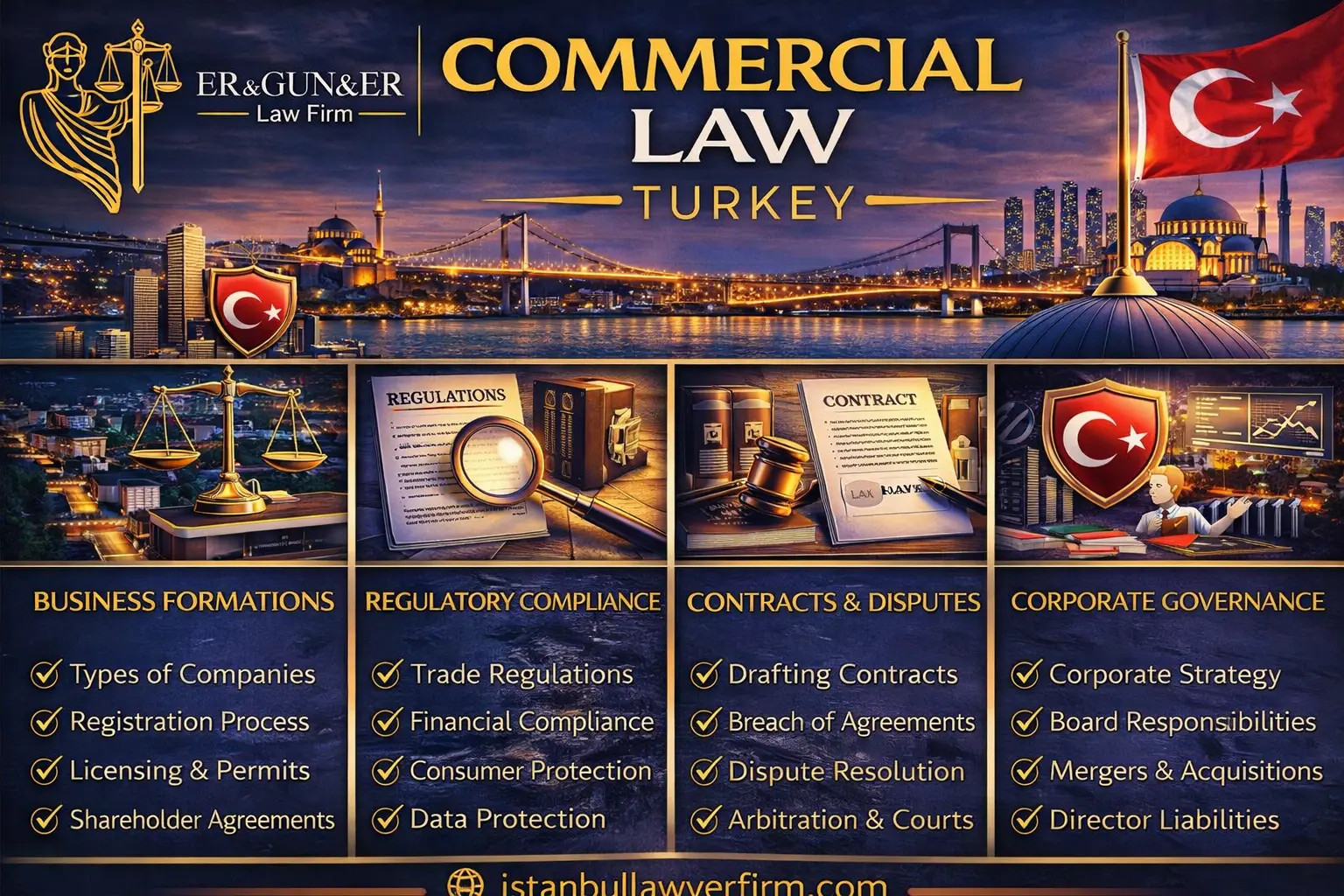
Business and commercial law Turkey is a contract-and-evidence driven system in which the quality of the documentation underlying every commercial relationship—whether a supply agreement, a distribution contract, a shareholders' agreement, or a loan instrument—determines the enforceability of every obligation and the available remedies when performance fails. The Turkish Commercial Code and the Turkish Code of Obligations together form the substantive legal framework for commercial transactions, and these codes establish default rules that apply wherever the parties have not specifically addressed an issue in their contract—which means that an inadequately drafted contract frequently produces default outcomes that neither party intended. The authority dimension of Turkish commercial practice receives far less attention from foreign counterparties than it deserves: a contract signed by a person who lacks binding authority for the Turkish company is not binding on that company, and the authority analysis depends on both the company's articles of association and the signatures registered in the Trade Registry, both of which must be verified before relying on any commercial commitment. Payment security is not a default—it must be specifically negotiated and structured into the commercial relationship, and a creditor who relies on general contractual payment terms without independent payment security will typically discover this limitation at the worst possible moment, when the debtor is already insolvent or has already transferred their assets. Enforcement planning—the anticipation of how a favorable judgment or award will be collected from a recalcitrant debtor—must be built into the commercial strategy before the dispute arises, not improvised after a judgment is obtained, because the effectiveness of collection depends entirely on the assets available and the speed with which those assets are secured. Cross-border commercial parties face additional documentation disciplines—apostille, certified translation, choice of law, and enforcement recognition analysis—that purely domestic transactions do not require and that are most efficiently managed when addressed proactively in the transaction structure rather than reactively in the litigation phase.
Commercial law scope Turkey
A lawyer in Turkey advising on the scope of business and commercial law Turkey must explain that Turkish commercial law is primarily governed by the Turkish Commercial Code (TCC, Law No. 6102), whose full text is accessible at Mevzuat, supplemented by the Turkish Code of Obligations (TBK, Law No. 6098), accessible at Mevzuat. The Turkish Commercial Code 6102 business law framework governs the formation, operation, and dissolution of commercial companies, the conduct of merchants and commercial enterprises, commercial contracts with specific statutory treatment—including agency, distribution, transportation, insurance, and negotiable instruments—and the insolvency and restructuring framework applicable to commercial debtors. The Turkish Code of Obligations commercial contracts framework covers the general rules applicable to all types of contracts—including formation, validity, performance, breach, termination, and damages—and applies to commercial contracts wherever the TCC does not provide a more specific rule. The practical scope of these two codes together means that virtually every commercial decision a business makes in Turkey—entering a contract, appointing a representative, distributing products, extending credit, or resolving a dispute—is governed by one or both of these legislative frameworks, and the commercial lawyer advising on any of these decisions must understand how the applicable rules interact with the parties' specific commercial objectives. Practice may vary by authority and year — check current guidance on the current Turkish Commercial Code and Code of Obligations provisions applicable to the specific transaction type before finalizing any commercial arrangement in Turkey. For the full procedural framework, see our pillar guide on company formation in Turkey.
An Istanbul Law Firm advising on the scope of Turkish commercial law for a foreign company doing business Turkey legal framework must help clients understand that the Turkish commercial law system is a civil law system with codified statutory rules rather than a common law system with judge-made precedent, and that this structural difference has significant practical implications for how contracts should be drafted and how disputes will be resolved. In a civil law system like Turkey's, the statutory default rules apply wherever the contract is silent, and these defaults are not always the rules that foreign companies—accustomed to negotiating everything explicitly in their contracts—would have chosen if they had known the defaults applied. A contract that is adequate under English law or New York law—because it addresses comprehensively all the issues that the parties' legal traditions consider important—may be inadequate under Turkish law if it fails to address the specific statutory defaults that the TCC and TBK create for the particular contract type. The specialized courts of first instance (asliye ticaret mahkemeleri—commercial courts of first instance) handle commercial disputes in Turkey's major commercial centers, and the specialized expertise of these courts in commercial matters creates a different litigation environment from general civil courts. The Mevzuat official portal at mevzuat.gov.tr provides access to all applicable Turkish commercial legislation and is the essential starting point for any Turkish commercial law research. Practice may vary by authority and year — check current guidance on the current competent court designations for specific categories of commercial disputes and on any recent changes to the Turkish Commercial Code or Code of Obligations that may affect the specific transaction type.
A Turkish Law Firm advising on the regulatory dimensions of commercial operations in Turkey must address the sector-specific regulatory requirements that overlay the general commercial law framework—because while the TCC and TBK govern the general commercial relationship, many industries are subject to specific licensing requirements, market entry restrictions, pricing regulations, or product-specific compliance obligations that must be met independently of the general commercial framework. A foreign company doing business Turkey legal framework that operates in a regulated sector—financial services, pharmaceuticals, food and beverage, telecommunications, energy, or healthcare—must simultaneously comply with the general commercial law requirements and the sector-specific regulatory requirements, and the failure to meet either set of requirements can create both civil liability and regulatory sanctions. The commercial lawyer advising a regulated business in Turkey must either have sector-specific regulatory expertise or must coordinate effectively with regulatory specialists to ensure that the commercial arrangements are structured to comply with all applicable frameworks simultaneously. The broad commercial law framework for managing disputes and enforcing commercial rights is analyzed throughout this article, while sector-specific regulatory analysis requires specific guidance tailored to the applicable industry. Practice may vary by authority and year — check current guidance on the current sector-specific regulatory requirements applicable to the client's industry before finalizing any commercial arrangement that involves a regulated market or product category.
Contract lifecycle discipline
A law firm in Istanbul advising on commercial contract drafting Turkey must help companies understand that the contract lifecycle—from pre-contractual negotiation through performance and potential dispute—is a continuous risk management exercise, and that the investment in disciplined contract management at each stage consistently produces better outcomes than reactive legal intervention after problems arise. The pre-contractual stage—which in Turkish law is governed by the good faith principle and by the TBK's provisions on culpa in contrahendo (liability for breach of pre-contractual obligations)—requires companies to be disciplined about what commitments they make during negotiations, because representations made in term sheets, letters of intent, or email negotiations may create binding obligations or may establish the basis for a misrepresentation claim if they prove inaccurate. The negotiation and drafting stage requires specific attention to the interplay between the explicitly agreed terms and the Turkish statutory default rules that will fill any gaps in the contract, and a commercially aware drafting approach addresses both the parties' specific intentions and the default rules they wish to modify or exclude. The execution stage—where the contract is signed by authorized representatives of both parties—requires verification of signatory authority through the specific mechanisms discussed in the following section, because a contract signed by an unauthorized person is binding on neither party's company. Practice may vary by authority and year — check current guidance on the current Turkish legal treatment of pre-contractual representations and on the specific requirements for creating a binding letter of intent or memorandum of understanding under Turkish law.
The performance monitoring stage of the contract lifecycle—the period during which each party performs their obligations and the other party monitors and responds to performance—is the stage at which most commercial disputes could be prevented through proactive communication and documentation, but where most companies invest the least legal resources. A company that monitors the counterparty's performance systematically—tracking deliveries, payments, quality compliance, and any contractual condition—is positioned to identify performance issues early and to issue contractual notices that preserve its legal position before the breach has become too serious to remedy. A company that fails to track performance systematically and discovers a material breach only after it has accumulated over multiple periods is in a weaker legal position than one that identified the breach promptly—because the delay may create arguments of acquiescence or waiver, because evidence of the breach may be less clear after time has passed, and because the accumulated harm may be more difficult to quantify and prove. The notice and communication protocol within a commercial contract—specifying how notices must be given, who must receive them, what form they must take, and what consequences attach to proper and improper notice—is one of the most practically important provisions in any Turkish commercial contract and must be drafted with precision. Practice may vary by authority and year — check current guidance on the current Turkish Code of Obligations provisions on notice requirements in commercial contracts and on the consequences of inadequate notice in different types of commercial breach scenarios.
A commercial lawyer Turkey advising on the dispute and termination stage of the contract lifecycle must help clients understand that the management of a commercial dispute in Turkey—from the first identification of a problem through resolution—requires disciplined evidence management that mirrors the pre-dispute documentation discipline. When a dispute arises, the first legal task is assembling the complete documentary record of the commercial relationship: all versions of the contract (including any amendments, side letters, or supplementary agreements), all performance records (invoices, delivery confirmations, acceptance certificates, payment records), all communications between the parties about the disputed issues (emails, letters, WhatsApp records), and all third-party records relevant to the dispute (insurance certificates, shipping documents, customs records). This documentary assembly is most efficiently done at the time the dispute first arises—before evidence is lost, before memories fade, and before the counterparty has the opportunity to organize their own position—rather than reactively during the litigation preparation phase. The business and commercial law Turkey framework provides specific rights at each stage of the dispute lifecycle, including the right to interim protection through precautionary attachment and preliminary injunctions, the right to specific performance of commercial obligations, and the right to damages calculated in accordance with the specific rules applicable to the type of breach, and exercising each of these rights effectively requires prompt and strategic action. Practice may vary by authority and year — check current guidance on the current Turkish civil procedure rules applicable to evidence management and preservation in commercial disputes and on any specific preservation steps recommended before initiating formal proceedings.
Authority and signatures
A Turkish Law Firm advising on authority and signature discipline in Turkish commercial contracting must explain that the authority of a person to bind a Turkish company by their signature is determined by two parallel sources: the company's articles of association (şirket ana sözleşmesi), which define the scope of authority that different company organs and officers hold; and the company's Trade Registry registration, which records the specific persons who are authorized to represent the company and whether they can bind the company with a single signature or only jointly with one or more other authorized persons. A contract signed by a person who holds a representative title—"General Director," "CEO," "Country Manager"—but who is not registered as an authorized signatory in the Trade Registry, or who is registered only as a joint signatory but has signed alone, is not binding on the Turkish company. The Trade Registry records are publicly accessible and must be verified before relying on any commercial commitment made by a Turkish counterparty—because the counterparty cannot later claim that the company is bound by an unauthorized signature, but a creditor who accepts an unauthorized signature without verification has limited recourse. The Turkish Commercial Code 6102 business law framework establishes the specific rules governing company representation for each type of Turkish company—anonim şirket (joint stock company), limited şirket (limited liability company), and others—and the applicable rules for each type must be understood and applied consistently. Practice may vary by authority and year — check current guidance on the current Trade Registry procedures for verifying the authority of Turkish company representatives and on any recent changes to the representation rules applicable to specific company types under the Turkish Commercial Code.
An English speaking lawyer in Turkey advising on authority for foreign company representatives in Turkey must address the specific documentation required to establish that a foreign company's representative is authorized to bind the foreign company in a Turkish commercial transaction. A foreign company that enters a commercial transaction in Turkey through a Turkish agent or representative must ensure that the representative's authority is clearly documented through a notarized and apostilled power of attorney that specifically identifies the scope of the authority granted—the specific types of transactions the representative may conclude, any monetary thresholds on their authority, and the duration of the authority. A power of attorney that is too broad—purporting to grant unlimited authority—may be challenged on the ground that specific types of transactions (real estate acquisition, assumption of significant financial obligations) require separately executed authorizations under Turkish law or under the law of the country where the power was granted. A power of attorney that is too narrow—failing to specifically include the type of transaction being concluded—may leave the transaction unenforceable as against the foreign company. The notarization and apostille requirements for foreign powers of attorney vary depending on the country of origin, and practice may vary by authority and year — check current guidance on the current Turkish notarial acceptance standards for foreign powers of attorney and on any apostille or legalization requirements applicable to powers of attorney from specific countries before relying on such authority.
A law firm in Istanbul advising on electronic signatures and digital contracts in Turkish commercial practice must address the increasingly common scenario where commercial contracts are concluded through electronic means rather than through physically signed paper documents. Turkish law—specifically the Electronic Signature Law (Law No. 5070) and its interaction with the TCC and TBK—recognizes electronic signatures and electronically concluded contracts, but the specific requirements for electronic signature validity and the specific categories of contracts that cannot be concluded electronically (those required to be in specific notarial or formal form) must be understood before relying on electronic contracting as a substitute for paper documentation in Turkish commercial practice. A contract that is required by Turkish law to be in a specific form—notarial form, written form with specific content requirements, or registered form—is not validly concluded merely by electronic means, and the failure to observe the required form results in an invalid and unenforceable contract regardless of the parties' intent. The increasing use of digital contract platforms—DocuSign, Adobe Sign, and similar tools—in international commercial practice creates specific validation questions when the contracts involve Turkish parties, because the equivalence of these platforms' signature methods with legally recognized electronic signatures in Turkey requires specific assessment. Practice may vary by authority and year — check current guidance on the current Turkish legal requirements for electronic contracts and the specific categories of commercial agreement that currently require a specific formal or notarial form under Turkish law.
Corporate governance essentials
A Turkish Law Firm advising on corporate governance Turkey commercial dimensions must help companies understand that the Turkish Commercial Code's corporate governance framework—governing the organization and operation of Turkish commercial companies—is significantly more detailed and prescriptive than many foreign investors expect, and that compliance with the governance framework is a continuous operational obligation rather than a one-time setup task. The Turkish Commercial Code 6102 business law provisions on corporate governance establish specific requirements for the composition and operation of boards of directors (yönetim kurulu) in anonim şirketler—including the minimum number of directors, the qualifications required for independent directors (where applicable), the voting procedures for board decisions, the keeping of board minutes, and the documentation of conflict-of-interest situations. The annual general meeting (genel kurul) requirements—the agenda, the notice and invitation process, the quorum requirements, the voting procedures, and the documentation of decisions—are equally specific and require careful management to ensure that each general meeting produces valid decisions that can withstand challenge by minority shareholders. The Turkish Capital Markets Board (SPK) imposes additional corporate governance requirements on listed companies that go beyond the TCC's requirements, and companies that are not listed but that have significant capital market activity—bond issuance, securities offering—may also be subject to SPK oversight. Practice may vary by authority and year — check current guidance on the current TCC corporate governance requirements applicable to the specific type of Turkish company and on any SPK guidelines applicable to the company's specific activities.
An English speaking lawyer in Turkey advising on the corporate governance dimensions of a Turkish subsidiary or joint venture established by a foreign parent company must address the specific challenges that arise when the Turkish subsidiary's governance framework must accommodate both the TCC's mandatory requirements and the parent company's own corporate governance policies and reporting requirements. A foreign parent that imposes its home-country corporate governance model on its Turkish subsidiary—without adapting it to comply with the TCC's mandatory requirements—creates a situation where the subsidiary's governance structure is internally inconsistent and potentially non-compliant with Turkish law, creating both regulatory risk and governance disputes. The integration of the Turkish TCC requirements into the parent company's governance framework requires specific legal analysis that identifies both the mandatory requirements that cannot be modified by the articles of association and the optional requirements where the articles can adapt the default rules to the parent company's preferred governance model. The shareholder agreement (pay sahipleri sözleşmesi or hissedarlar sözleşmesi) between the foreign investor and the Turkish co-shareholder in a joint venture is the primary governance instrument for managing the relationship between the shareholders at the level above the TCC's mandatory provisions, and the interaction between the shareholder agreement and the articles of association requires careful drafting to ensure that the two documents are consistent. Practice may vary by authority and year — check current guidance on the current Turkish requirements for shareholder agreements in Turkish companies and on the specific provisions that can and cannot be addressed in a shareholders' agreement rather than in the articles of association.
The foreign company doing business Turkey legal framework for corporate record-keeping and compliance must be understood by every foreign investor operating through a Turkish entity, because the Turkish Commercial Code imposes specific record-keeping and reporting obligations on all commercial companies that must be actively maintained rather than completed once at incorporation. Turkish companies must maintain specific commercial books—the journal (yevmiye defteri), the general ledger (defteri kebir), the inventory book (envanter defteri), and, for capital companies, the share ledger (pay defteri)—each with specific content requirements, and these books must be kept in accordance with Turkish accounting standards and maintained in Turkey in Turkish. The annual financial statements must be prepared in accordance with Turkish accounting standards (or TFRS for companies required to use them), audited where required, approved by the general assembly, and submitted to the relevant tax and trade registry authorities within the applicable deadlines. A foreign investor that relies on its global consolidated financial reporting and neglects the Turkish subsidiary's specific legal reporting obligations creates regulatory risk that can include administrative fines, director liability, and complications with banking and commercial relationships that depend on the Turkish company's compliance status. Practice may vary by authority and year — check current guidance on the current Turkish commercial record-keeping requirements and deadlines applicable to the specific type of company and on any recent changes to Turkish financial reporting standards.
Shareholder disputes basics
A law firm in Istanbul advising on the basics of shareholder dispute resolution Turkey must explain that shareholder disputes in Turkish companies arise most commonly from three structural sources: disagreements about the exercise of management authority—where the majority uses its board control to take decisions that the minority considers harmful; disputes about distributions—where the majority retains profits indefinitely rather than declaring dividends; and disputes about exit—where a minority shareholder cannot find a buyer for their shares and cannot force the majority to buy them out. The Turkish Commercial Code's minority protection provisions address each of these structural conflicts through specific mechanisms: the right of the minority to challenge specific board or general assembly decisions in court; the right to request the appointment of an independent auditor; and, in extreme cases, the right to seek judicial dissolution of the company where the continued operation of the company causes serious harm to the minority. The shareholder agreement—where one exists—is the primary tool for addressing these structural conflicts before they become disputes, and a well-drafted shareholder agreement that anticipates the specific conflict scenarios likely to arise in the particular partnership creates both substantive protections and procedural mechanisms for resolving disputes without litigation. Practice may vary by authority and year — check current guidance on the current Turkish Commercial Code minority protection provisions applicable to the specific type of company involved in the dispute and on any recent judicial decisions affecting the scope of minority shareholder rights in Turkish commercial litigation.
The shareholder dispute resolution Turkey framework through litigation involves specific procedural choices that must be assessed at the outset: whether to challenge a specific board or general assembly decision through an annulment action (iptal davası); whether to seek damages from directors for breach of their fiduciary duties; whether to request the appointment of a special auditor; or whether to seek judicial dissolution or forced buyout. Each of these remedies has specific substantive and procedural requirements under the Turkish Commercial Code, and the choice among them must be based on a realistic assessment of what the disputing shareholder wants to achieve, what evidence is available, and what the realistic likelihood of success for each remedy is given the specific facts. An annulment action against a general assembly decision—the most commonly pursued shareholder dispute remedy—must be filed within the statutory deadline from the date of the challenged decision, and a claim filed after this period will typically be dismissed as time-barred regardless of the substantive merits. A best lawyer in Turkey advising on a shareholder dispute will identify all available legal remedies at the outset and will develop a combined strategy that addresses both the immediate dispute and the longer-term governance relationship. Practice may vary by authority and year — check current guidance on the current statutory time limits applicable to specific shareholder dispute remedies and on the specific requirements for each type of shareholder claim under the Turkish Commercial Code.
An English speaking lawyer in Turkey advising a foreign investor on a Turkish joint venture shareholder dispute must address the specific additional dimensions that arise from the foreign investor's cross-border position—the difficulty of obtaining effective discovery from a Turkish co-shareholder, the enforceability of any shareholder agreement dispute resolution clause (whether arbitration or Turkish court), and the practical options for exiting the investment if the dispute cannot be resolved. A foreign investor who holds a minority stake in a Turkish company and who is dissatisfied with the majority's management faces limited practical options under Turkish law if the majority's conduct, while commercially unfavorable, does not rise to the specific level of legal misconduct that the TCC's minority protection provisions address. The most practically effective remedy in a minority position dispute—and the one most worth negotiating into the shareholder agreement before the dispute arises—is a put option that gives the minority investor the right to require the majority to buy their shares at a predetermined price or a price determined through a specified valuation mechanism. The interaction between the shareholder agreement's dispute resolution provisions and the Turkish Commercial Code's mandatory provisions on shareholder rights requires specific analysis to ensure that any agreed dispute resolution mechanism is enforceable under Turkish law. Practice may vary by authority and year — check current guidance on the current Turkish enforcement of foreign investor put options and drag-along and tag-along rights in Turkish company shareholder agreements and on any recent developments affecting the enforceability of these contractual rights.
Commercial terms and pricing
A Turkish Law Firm advising on commercial terms and pricing in Turkish commercial contracts must explain that the Turkish Code of Obligations governs the general framework for price determination, price adjustment, and the consequences of price disputes in commercial contracts, while the Turkish Commercial Code provides specific rules for commercial price arrangements in specific contract types. The Turkish Code of Obligations commercial contracts framework establishes that contracts where the price has not been explicitly determined are valid if the price can be determined from the nature of the contract or from the circumstances, and that in commercial relationships the standard market price at the time and place of performance applies as a default where no specific price has been agreed. The practical consequence is that commercial contracts in Turkey should always specify the exact price or the exact mechanism for price determination—and should address what happens when that mechanism cannot produce a definitive result—because the statutory default mechanism may produce outcomes that neither party anticipated. Inflation adjustment clauses are particularly important in Turkish commercial contracts given the history of Turkish Lira inflation, and a fixed-price contract expressed in Turkish Lira without any inflation adjustment mechanism will see the real value of the price erode over a multi-year contract term unless the parties have included a specific adjustment mechanism. Practice may vary by authority and year — check current guidance on the current Turkish legal standards for price adjustment clauses and on the specific indexation mechanisms that Turkish courts currently enforce in long-term commercial contracts.
An Istanbul Law Firm advising on foreign currency pricing in Turkish commercial contracts must explain the regulatory framework governing foreign currency contracts in Turkey, which has evolved significantly in recent years and which now imposes restrictions on the use of foreign currency in certain categories of domestic contracts. Turkish regulations have at various times restricted or conditioned the use of foreign currency—or foreign currency-indexed pricing—in contracts between Turkish residents, particularly in real estate, employment, and certain service contracts, and the regulatory status of any proposed foreign currency pricing arrangement must be verified before the contract is concluded. For international commercial contracts—where at least one party is a foreign entity—the foreign currency pricing restrictions typically do not apply or apply in more limited form, and the choice of contract currency is primarily a commercial and risk-management decision rather than a regulatory one. The currency risk management dimension of Turkish commercial contracts—deciding how to allocate the exchange rate risk between Turkish Lira and the payment currency—is one of the most important commercial decisions in any multi-year international contract with Turkish counterparties, because exchange rate movements can fundamentally change the economics of the transaction for either party. Practice may vary by authority and year — check current guidance on the current Turkish regulatory framework for foreign currency contracts between Turkish entities and on any recent changes to the restrictions applicable to specific categories of domestic commercial contract.
The tax dimension of commercial pricing in Turkey—specifically the VAT (KDV) and withholding tax implications of different pricing structures—must be addressed as part of the commercial contract analysis rather than as a separate tax exercise, because the tax treatment of a payment directly affects the net economics of the transaction for both parties. A service contract between a foreign service provider and a Turkish company that does not address the withholding tax applicable to the service payment will typically result in the Turkish company deducting withholding tax from the payment before remittance, reducing the amount received by the foreign provider below the contracted price. The VAT treatment of a supply of goods versus a supply of services, the reverse charge mechanism applicable to digital services from foreign providers, and the specific reduced or zero VAT rates applicable to certain goods and services are all pricing-relevant tax dimensions that must be understood and addressed in the contract's pricing and payment provisions. A contract that specifies a payment amount "inclusive of all taxes and duties" without specifically identifying which taxes and duties are included—and whether the amount is sufficient to cover all applicable Turkish taxes—creates an ambiguity that frequently generates disputes when the parties' interpretations of the inclusive tax provision differ. Practice may vary by authority and year — check current guidance on the current Turkish VAT and withholding tax rates and on any recent changes to the tax treatment of specific categories of commercial payments.
Payment security tools
A Turkish Law Firm advising on payment security in Turkish commercial transactions must explain the range of security instruments available under Turkish law and the practical considerations that determine which instrument is most appropriate for a specific commercial relationship. The primary payment security instruments available in Turkish commercial practice include: the promissory note (bono), which is a negotiable instrument that creates an independent payment obligation enforceable without needing to litigate the underlying commercial dispute; the bank guarantee (banka teminat mektubu), which requires a Turkish or foreign bank to pay the beneficiary upon demand, providing security that is independent of the debtor's financial condition; the mortgage (ipotek), which provides security over real property and allows the creditor to force the sale of the mortgaged property in the event of default; the pledge (rehin), which provides security over movable assets; and the personal guarantee (kefalet), which makes the guarantor personally liable for the debtor's obligations. Each security instrument has specific creation formalities, priority rules, and enforcement procedures under Turkish law, and the choice among them must account for the counterparty's asset profile, the duration and value of the commercial relationship, and the practical enforceability of each instrument in the specific situation. Practice may vary by authority and year — check current guidance on the current Turkish legal requirements for creating each category of security instrument and on the specific enforcement procedures applicable to each under Turkish execution law.
The promissory note (bono) is the most widely used payment security instrument in Turkish commercial practice because its enforcement through the Turkish execution system is faster and simpler than the enforcement of a court judgment based on the underlying commercial claim. A creditor who holds a properly completed Turkish promissory note can initiate enforcement proceedings through the execution office (icra müdürlüğü) by presenting the note directly—without first obtaining a court judgment—and the debtor who wishes to contest the enforcement must file an objection within a short statutory period and bear the burden of proving their objection. This enforcement advantage makes the promissory note a very valuable tool in Turkish commercial practice, but it requires that the note be properly completed—with the correct amount, date, maturity, and signatures—because an improperly completed note loses its negotiable instrument status and falls back to being ordinary documentary evidence of a debt. The enforcement proceedings Turkey commercial framework through which promissory notes are enforced is analyzed in the resource on enforcement proceedings in Turkey. Practice may vary by authority and year — check current guidance on the current Turkish requirements for valid promissory note completion and on the specific execution office procedures applicable to promissory note enforcement in the relevant jurisdiction.
A law firm in Istanbul advising on the use of bank guarantees in Turkish international commercial transactions must explain the specific types of bank guarantee available—the on-demand guarantee (ilk talep garantisi), the conditional guarantee, and the standby letter of credit—and the practical differences between them that affect their value as payment security. An on-demand guarantee is payable by the issuing bank upon the beneficiary's demand, without requiring proof of the underlying commercial obligation's default—making it the strongest payment security from the creditor's perspective because it does not depend on a dispute about whether the underlying obligation has been breached. A conditional guarantee is payable only upon satisfaction of specified conditions—typically presentation of specified documents—which provides greater protection to the debtor against wrongful calls but also makes the guarantee somewhat less effective as immediate security in the event of an undisputed default. The precautionary attachment Turkey commercial framework—which allows a creditor to freeze a debtor's assets before obtaining a judgment—is an important complementary tool in situations where bank guarantee coverage is insufficient to fully secure the credit exposure. The resource on precautionary attachment in Turkey provides the detailed procedural framework applicable to commercial asset-freezing applications. Practice may vary by authority and year — check current guidance on the current Turkish legal framework for bank guarantee disputes and on the interaction between bank guarantee enforcement and the underlying commercial dispute in Turkish courts.
Supply and distribution risks
An English speaking lawyer in Turkey advising on distribution agreement Turkey law dimensions must explain that Turkish distribution relationships—whether structured as exclusive or non-exclusive distribution agreements, as franchise arrangements, or as reseller agreements—are governed by a combination of Turkish Commercial Code provisions (where specific statutory rules exist for certain distribution types) and Turkish Code of Obligations general contract rules (where specific statutory provisions do not apply). The distribution agreement Turkey law framework does not include a single comprehensive distribution law, and the rights and obligations of the distributor and the supplier are primarily determined by the specific terms of their written agreement supplemented by the applicable TCC and TBK rules. A distribution agreement that is not comprehensive—that fails to address key issues such as territory, exclusivity, minimum purchase obligations, pricing and discount structures, intellectual property license scope, termination triggers, and post-termination obligations—will be interpreted by Turkish courts using the good faith principle and the statutory defaults applicable to the nearest analogous contract type, which may produce outcomes that neither party anticipated. The minimum purchase obligation and its enforcement mechanism—what happens if the distributor falls below the minimum; whether the supplier has the right to terminate for below-minimum performance; and what damages are available in that event—is one of the most commercially important provisions in any distribution agreement and must be drafted with specific attention to Turkish enforcement reality. Practice may vary by authority and year — check current guidance on the current Turkish judicial approach to minimum purchase obligation enforcement in distribution agreements and on the specific evidence required to establish below-minimum performance in a Turkish court.
A Turkish Law Firm advising on the supply agreement dimension of the supplier-distributor relationship must address the specific Turkish legal rules applicable to delayed delivery, defective goods, and supply chain disruptions—because the rights of the buyer and the obligations of the seller in these situations are determined by Turkish law unless the contract specifically adopts a different framework (such as CISG, where applicable). Turkish Code of Obligations commercial contracts provisions on goods sales establish specific rules for the buyer's inspection obligations—the obligation to inspect goods promptly upon delivery and to give notice of defects within a reasonable time—that determine whether the buyer retains its remedies for defective goods. A buyer who fails to inspect goods promptly and to give notice of discovered defects within the applicable period may lose its right to claim for defects that could have been discovered through prompt inspection, even if the defects were material. The force majeure provisions of Turkish commercial contracts—which the COVID pandemic period made practically important in ways that had not been anticipated by many standard contract templates—must specifically identify the force majeure events, the notice obligations, the duration of excuse, and the parties' rights during and after a force majeure period, because the Turkish Code of Obligations' general provisions on force majeure and frustration may not produce the outcome the parties intend. Practice may vary by authority and year — check current guidance on the current Turkish judicial approach to force majeure clauses in supply agreements and on the specific criteria that Turkish courts currently apply to assess whether a claimed force majeure event satisfies the statutory conditions.
The termination dimension of supply and distribution agreements requires specific legal analysis in Turkey because certain long-term distribution relationships may trigger mandatory indemnity obligations when terminated—particularly where the Turkish distributor has invested significantly in developing the market and has made significant goodwill contributions. The commercial agency Turkey rights framework—discussed in detail in the following section—provides the strongest distributor protection for agents who have developed customer relationships on behalf of the supplier, but even non-agency distributors who have made documented contributions to market development may argue for equitable treatment in a termination scenario. The preparation for termination—assembling the evidence of the grounds for termination, giving the required notice period, managing the transition to a new distributor or direct sales model, and documenting the post-termination obligations—requires legal guidance that begins before the termination notice is given, not after the counterparty has challenged the termination. The commercial litigation Turkey courts dimension of distribution and supply disputes is analyzed in the resource on commercial litigation in Turkey. Practice may vary by authority and year — check current guidance on the current Turkish legal position on mandatory compensation obligations upon termination of long-term distribution relationships and on the evidence required to establish the market development contributions that trigger these obligations.
Commercial agency and dealers
A best lawyer in Turkey advising on commercial agency Turkey rights must explain that Turkish commercial agents—persons who permanently and independently represent a merchant in concluding contracts—enjoy specific statutory protections under the Turkish Commercial Code that significantly limit the supplier's freedom to terminate the agency relationship without compensation. The TCC establishes specific rules for commercial agency relationships including: the agent's right to commission on all transactions concluded with customers the agent introduced or developed, even after the agency terminates; the agent's right to a customer indemnity (müşteri tazminatı) on termination of the agency relationship where the principal benefits from the customers the agent developed after the relationship ends; and specific minimum notice periods for termination that apply regardless of any shorter period agreed in the contract. These statutory protections are mandatory—they cannot be excluded or reduced by contract—and a principal who designs an agency agreement without understanding these protections may find that the actual cost of terminating the agency relationship is substantially higher than the contractual termination mechanism appears to provide. The commercial agency Turkey rights framework applies specifically to "commercial agents" in the technical TCC sense—persons who permanently and independently represent the principal—and does not automatically apply to distributors who purchase and resell goods on their own account, though the boundary between agency and distribution is not always clear and requires case-by-case analysis. Practice may vary by authority and year — check current guidance on the current Turkish Commercial Code provisions on commercial agency and on the specific criteria Turkish courts use to distinguish commercial agents (who enjoy statutory protections) from independent distributors (who generally do not).
An English speaking lawyer in Turkey advising on the dealer relationship—where the Turkish party purchases goods from the foreign supplier and resells them in Turkey, taking title to the goods and bearing the commercial risk of the resale—must explain that the dealer relationship in Turkish law is primarily governed by the contract between the parties and by the general TCC and TBK commercial rules, rather than by a specific statutory dealer protection framework comparable to the commercial agency regime. The absence of a comprehensive dealer protection statute in Turkey means that the supplier has significantly more flexibility in designing the dealer relationship than it would have in an agency relationship—but this flexibility must be used constructively rather than exploitatively, because Turkish courts apply the good faith principle to fill gaps in commercial contracts and may impose obligations on a supplier who deals with a long-term dealer in a manner that violates good faith standards even if no specific statutory protection applies. The distribution agreement's exclusivity provisions—whether the dealer has an exclusive territory, whether the supplier may sell directly within the dealer's territory, and whether the dealer may carry competing products—are the most commercially important provisions from the dealer's perspective and must be drafted with precision to eliminate ambiguity. A distribution agreement Turkey law analysis that covers the exclusivity dimension, the territory definition, the performance benchmarks, and the termination triggers together produces the most reliable legal foundation for the commercial relationship. Practice may vary by authority and year — check current guidance on the current Turkish judicial approach to exclusive distribution agreements and on the specific provisions that Turkish courts currently enforce or limit in dealer relationship contracts.
A Turkish Law Firm advising on the transition from a commercial agent or dealer to a different distribution model—direct sales, e-commerce, or a different distributor—must help clients understand that the transition creates specific legal risks that must be managed proactively. The transition away from an existing commercial agent triggers the mandatory customer indemnity obligation, and the supplier must assess this indemnity before making the transition decision rather than treating it as a dispute to be resolved after the fact. The transition away from an existing exclusive dealer—even where no specific dealer protection law applies—creates potential claims under the TBK's good faith provisions and the TCC's unfair competition provisions, particularly where the dealer has made documented investments in building the market based on the supplier's implicit or explicit commitments about the duration of the relationship. The evidence management for a transition situation requires assembling all communications that might be characterized as commitments to the current distributor about the duration or continuity of the relationship, assessing whether those communications created enforceable expectations, and addressing those expectations either through negotiation or through a carefully managed termination process. The commercial litigation Turkey courts framework for resolving disputes arising from distributor transitions is analyzed in the resource on commercial litigation in Turkey. Practice may vary by authority and year — check current guidance on the current Turkish treatment of equitable dealer claims arising from transition situations and on the specific legal basis on which Turkish courts have recognized claims by former dealers against suppliers who transitioned to alternative distribution models.
Data and confidentiality clauses
An Istanbul Law Firm advising on data and confidentiality clauses in Turkish commercial contracts must explain that commercial confidentiality obligations in Turkey arise from two parallel legal frameworks: the contractual framework established by the specific confidentiality provisions of the commercial agreement, and the statutory framework established by the Turkish Commercial Code's provisions on trade secrets and the Turkish Personal Data Protection Law (KVKK) for confidentiality obligations that involve personal data. A confidentiality clause that is well-drafted for the specific commercial context—identifying with precision what constitutes confidential information, what obligations the receiving party owes in relation to that information, what exceptions apply (public domain, prior disclosure, legally compelled disclosure), and what remedies are available for breach—provides a much stronger basis for enforcement than a generic non-disclosure clause that does not address the specific information shared in the particular commercial relationship. The Turkish Commercial Code's trade secret provisions—which provide statutory protection for information that has genuine commercial value from its secrecy and has been protected by the holder through reasonable measures—supplement but do not replace the contractual confidentiality framework, and a business that relies exclusively on statutory trade secret protection without contractual confidentiality agreements provides less certainty and less deterrence than one that has both. Practice may vary by authority and year — check current guidance on the current Turkish Commercial Code and KVKK provisions applicable to commercial confidentiality in specific business contexts and on any recent legislative developments affecting trade secret protection in Turkey.
A Turkish Law Firm advising on the KVKK (Personal Data Protection Law) dimension of commercial data sharing must help companies understand that commercial contracts frequently involve the sharing or processing of personal data—customer lists, employee information, sales data linked to identifiable individuals—and that this data sharing must comply with the KVKK's requirements regardless of the commercial nature of the relationship in which it occurs. The KVKK requires that personal data be processed on a specific legal basis—of which contractual necessity and legitimate business interest are the most commonly applicable in commercial contexts—and that any cross-border transfer of personal data (from Turkey to a foreign country) meet the KVKK's specific transfer conditions, including the adequacy level of the destination country or the existence of adequate safeguards. A commercial contract that involves the processing of personal data should include a data processing agreement (DPA) that specifies the nature of the data, the processing purpose, the retention period, the security measures, and the parties' respective roles as data controller and data processor, because the failure to document the data processing arrangement in accordance with KVKK requirements creates regulatory exposure for both parties. The confidentiality and data protection dimensions of commercial contracts interact significantly in practice, because the obligation to keep commercial information confidential and the obligation to protect personal data in accordance with KVKK standards require similar but not identical compliance measures and documentation. Practice may vary by authority and year — check current guidance on the current KVKK requirements applicable to commercial data sharing arrangements and on the specific conditions for cross-border personal data transfers in commercial contexts.
The specific confidentiality challenges arising in the context of joint ventures, mergers and acquisitions due diligence, and licensing negotiations—where significant confidential information must be shared before any binding commercial agreement is concluded—require targeted non-disclosure agreements (NDAs) that are specifically calibrated for these pre-contractual contexts. A pre-deal NDA in a Turkish commercial context must address the specific types of information being shared—financial data, technical data, customer data, employee data—and must establish clear return or destruction obligations for shared information if the transaction does not proceed. The relationship between the NDA and the subsequent transaction agreement—and specifically whether the NDA's confidentiality obligations are superseded or supplemented by the transaction agreement's own confidentiality provisions—must be clearly addressed to prevent ambiguity about which obligations govern what information after the transaction closes. The enforcement of NDA breaches in Turkish commercial practice requires specific remedies—injunction, damages, return of information—and the NDA must specifically provide for these remedies, because the Turkish Code of Obligations' general breach remedies may not be fully adequate for the harm caused by an unauthorized disclosure of sensitive commercial information. Practice may vary by authority and year — check current guidance on the current Turkish enforcement of NDA confidentiality obligations and on the specific evidence required to establish damages for unauthorized disclosure of confidential commercial information.
Termination and damages logic
A best lawyer in Turkey advising on commercial contract termination and damages under Turkish law must explain that the Turkish Code of Obligations establishes the general framework for contract termination—distinguishing between rescission (fesih) that applies prospectively from the termination date and annulment (iptal) that applies retroactively to the formation of the contract—and that the appropriate termination mechanism depends on the type of contract and the nature of the breach. A Turkish commercial contract can be terminated for material breach—where the breaching party's non-performance is serious enough to justify the innocent party's refusal to continue the relationship—but the determination of what constitutes material breach sufficient to justify termination without notice requires analysis of the specific contract type, the TCC and TBK rules applicable to that type, and any contractual definition of material breach included in the parties' agreement. The damages available upon termination for breach under Turkish law include both the expectation damages (positive interest damages, müsbet zarar)—the loss of the benefit the innocent party would have received if the contract had been performed—and the reliance damages (negative interest damages, menfi zarar)—the costs incurred in reliance on the contract that cannot be recovered because the contract was not performed. The choice between claiming expectation damages and reliance damages, and the evidence required to establish each, must be assessed in the specific context of the breach and the innocent party's financial position. Practice may vary by authority and year — check current guidance on the current Turkish judicial approach to damages calculation in commercial contract breach cases and on the specific evidence types that Turkish courts currently accept for quantifying expectation and reliance losses.
An English speaking lawyer in Turkey advising on liquidated damages and penalty clauses in Turkish commercial contracts must explain the Turkish Code of Obligations' distinction between ceza şartı (penalty clause)—where the parties have specified a predetermined consequence for breach—and tazminat (compensatory damages)—where the innocent party must prove actual loss to recover damages. The Turkish Code of Obligations permits parties to agree on a specific monetary consequence for breach, and the Turkish courts' approach to enforcing these clauses—whether they treat them as minimum recovery provisions, as ceiling provisions, or as exclusive remedies—depends on the specific language of the clause and its relationship to the general damages provisions of the contract. A penalty clause that appears to provide an exclusive remedy for breach—limiting the innocent party's recovery to the specified penalty amount regardless of the actual loss—may be modified by a Turkish court if the penalty is grossly disproportionate to the actual harm, because Turkish law gives courts limited discretion to reduce manifestly excessive penalties even where the parties have expressly agreed on the amount. The interaction between a penalty clause for specific performance failures and the innocent party's right to terminate the contract and claim full expectation damages—whether the penalty and termination are alternative remedies or can be combined—must be explicitly addressed in the contract to avoid uncertainty. Practice may vary by authority and year — check current guidance on the current Turkish judicial approach to penalty clauses in commercial contracts and on the specific circumstances in which Turkish courts currently exercise their authority to reduce manifestly excessive contractual penalties.
A Turkish Law Firm advising on the post-termination obligations dimension of commercial contract law must help companies understand that the termination of a commercial contract does not immediately extinguish all of the parties' obligations to each other—the surviving obligations, including confidentiality, non-competition, return of property, and settlement of outstanding accounts—continue after the main contractual relationship ends and may be enforceable for significant periods. A non-competition clause in a commercial contract—restricting one party from competing with the other for a specified period after termination—is enforceable in Turkish commercial law where it is reasonable in scope (geographic extent, duration, and activities restricted) and adequately compensated, but the specific enforceability conditions and their interaction with Turkish competition law must be assessed for each specific restriction. The post-termination account settlement—establishing the final financial position between the parties after termination, including any outstanding invoices, deposits, security instruments, and mutual claims—is a practically important process that frequently generates disputes if not specifically addressed in the contract and managed carefully through the termination process. The damages for wrongful termination—where a party terminates a contract without adequate legal basis—include both the direct contractual damages and, in some cases, the consequential losses that the wrongfully terminated party can establish resulted from the disruption to their business. Practice may vary by authority and year — check current guidance on the current Turkish legal standards for wrongful termination damages in commercial contracts and on any specific documentation required to preserve and quantify these claims effectively.
Litigation and interim relief
A law firm in Istanbul advising on commercial litigation Turkey courts must explain that Turkish civil procedure—governed by the Code of Civil Procedure (HMK, Law No. 6100), accessible at Mevzuat—establishes the procedural framework for commercial dispute resolution through the Turkish court system, and that understanding the procedural mechanics is as important as understanding the substantive commercial law for achieving effective outcomes. Turkish commercial courts operate through a structured multi-stage proceeding that includes the pre-trial hearing (ön inceleme), the evidence stage (tahkikat), and the oral argument hearing (sözlü yargılama), and effective participation in each stage requires advance preparation of the specific evidence and arguments to be presented at that stage. The mandatory mediation requirement applicable to certain commercial disputes—which requires the parties to attempt mediation before a civil court filing can be made—has created an additional preliminary stage that must be completed with the correct documentation before the court proceeding can be initiated. Commercial litigation in Turkey benefits significantly from expert evidence—bilirkişi reports—which Turkish courts rely heavily upon in assessing technical, financial, and industry-specific questions, and the management of the expert evidence process requires both technical preparation and procedural expertise. Practice may vary by authority and year — check current guidance on the current mandatory mediation requirements applicable to specific categories of commercial disputes and on the procedural timelines applicable to commercial court proceedings in the relevant jurisdiction.
The interim injunction Turkey commercial dispute mechanism—allowing a party to obtain emergency court orders preventing specific conduct by the counterparty before the main dispute is resolved—is one of the most strategically important tools in Turkish commercial litigation and requires immediate action when the circumstances justify its use. The Turkish civil procedure framework provides for two categories of interim measures: precautionary attachment (ihtiyati haciz), which allows a creditor to freeze specific assets of the debtor before obtaining a judgment; and preliminary injunction (ihtiyati tedbir), which allows a party to obtain a court order preventing specific conduct—such as continuing a breach of contract, making specific payments to third parties, or disposing of specific assets. The standards for obtaining each type of interim measure differ: precautionary attachment is available on the basis of a credible monetary claim and requires the applicant to establish the prima facie existence of the claim and the risk that the debtor's assets will be concealed or dissipated; preliminary injunction requires the applicant to establish that without the injunction they will suffer irreparable harm and that their underlying claim has a prima facie basis. An English speaking lawyer in Turkey advising on the strategic use of interim measures in commercial disputes will recommend the appropriate measure based on the specific nature of the dispute and will prepare the application to meet the specific standards applicable to each measure type. Practice may vary by authority and year — check current guidance on the current Turkish civil court standards for both precautionary attachment and preliminary injunction applications in commercial disputes and on the security deposit requirements that courts typically impose as a condition of granting each type of interim relief.
A Turkish Law Firm advising on arbitration versus court litigation for Turkish commercial disputes must help clients make an informed choice between the two primary dispute resolution pathways available for significant commercial disagreements. Arbitration—through institutional arbitration under the rules of ISTAC (Istanbul Arbitration Centre), ICC, or other established institutions, or through ad hoc arbitration—offers the potential advantages of confidentiality, selection of arbitrators with specific commercial expertise, and a final and binding award that may be more efficiently enforced internationally than a Turkish court judgment. Turkish court litigation—which produces an enforceable judgment through the state court system—is typically faster for disputes where enforcement will occur in Turkey against Turkish assets, and is generally less expensive for lower-value or less complex disputes where the cost of arbitration would be disproportionate to the amount at stake. The arbitration clause in a Turkish commercial contract must be specifically drafted to be enforceable under Turkish law and under the procedural rules of the chosen arbitral institution, and a poorly drafted arbitration clause—one that is ambiguous about the institution, the seat, the number of arbitrators, or the governing law—may produce as much litigation about the validity and scope of the arbitration clause as about the underlying dispute. Practice may vary by authority and year — check current guidance on the current Turkish legal framework for domestic and international arbitration agreements and on any recent developments affecting the enforcement of arbitration awards in Turkey.
Debt collection and enforcement
A Turkish Law Firm advising on debt collection Turkey commercial claims must explain that the Turkish enforcement and bankruptcy system—governed by the Execution and Bankruptcy Law (İİK, Law No. 2004), accessible at Mevzuat—provides multiple debt collection routes with different procedural requirements, timelines, and strategic advantages depending on the nature of the debt and the documentation available. The most rapid enforcement route for commercial debt claims supported by a promissory note or other negotiable instrument is the ilamsız icra (non-judgment enforcement) proceeding, which allows the creditor to initiate enforcement by presenting the negotiable instrument directly to the execution office without first obtaining a court judgment. The debtor who wishes to contest this enforcement must file a written objection within a short statutory period—the specific period is established by the İİK and practice may vary by authority and year — check current guidance on the current objection periods applicable to different categories of enforcement application. Where the debtor files an objection, the creditor must either pursue a court action to annul the objection (itirazın iptali davası) or a court action to remove the objection (itirazın kaldırılması), each of which has different procedural requirements and evidentiary standards. Practice may vary by authority and year — check current guidance on the current Turkish enforcement office procedures for initiating commercial debt enforcement and on the specific documentation requirements for each category of enforcement application.
The enforcement proceedings Turkey commercial framework for collecting on a court judgment—where the creditor has obtained a final court decision ordering the debtor to pay—is the ilamlı icra (judgment enforcement) proceeding, which is initiated by presenting the enforceable judgment copy to the execution office. The execution office issues a payment order (icra emri) to the debtor, and if the debtor does not comply within the specified period, the execution office can proceed to identify and seize the debtor's assets—bank accounts, vehicles, real property, commercial receivables, and business inventory—through a combination of official record queries and field investigations. The asset identification process—which requires the execution office to query multiple official databases including the tax authority, the land registry, the vehicle registry, and bank deposit information—is a critical component of commercial debt collection, and the quality of the asset information available determines whether the collection effort is practically productive. A creditor who initiates enforcement proceedings without adequate advance intelligence about the debtor's asset position may incur enforcement costs in pursuit of a judgment that turns out to be practically uncollectable because the debtor has no accessible Turkish assets. The detailed enforcement proceedings framework is analyzed in the resource on enforcement proceedings in Turkey. Practice may vary by authority and year — check current guidance on the current Turkish execution office procedures for asset identification and seizure in commercial debt enforcement proceedings.
The precautionary attachment Turkey commercial mechanism—the ihtiyati haciz—is one of the most valuable pre-judgment debt security tools available in Turkish commercial practice and should be considered at the earliest stage of any significant commercial dispute where the debtor's assets may be at risk of dissipation. A precautionary attachment application allows a creditor who has a credible monetary claim—supported by sufficient evidence to establish the prima facie existence of the claim and the specific amount—to freeze specific identified assets of the debtor before obtaining a court judgment, preventing the debtor from transferring or encumbering those assets while the litigation proceeds. The assets most effectively targeted through precautionary attachment in Turkish commercial disputes include bank accounts (where the attachment is implemented by notifying the relevant banks), real property (where the attachment is recorded at the land registry), vehicles (where the attachment is recorded at the vehicle registry), and commercial receivables (where the attachment is notified to the debtor's customers). The detailed procedures and strategic considerations for precautionary attachment applications are analyzed in the resource on precautionary attachment in Turkey. Practice may vary by authority and year — check current guidance on the current Turkish civil court standards for precautionary attachment applications and on the specific evidence and documentation required to support an attachment application against each category of debtor asset.
Insolvency and restructuring
An English speaking lawyer in Turkey advising on insolvency and restructuring in the Turkish commercial context must explain that the Turkish Execution and Bankruptcy Law establishes two parallel tracks for addressing a Turkish company's inability to pay its debts: the bankruptcy proceeding (iflâs), which leads to the company's liquidation and the distribution of its assets to creditors; and the restructuring proceedings (konkordato and the more recently introduced provisions on restructuring plans), which allow a financially distressed company to reach a legally binding arrangement with its creditors to restructure its debts and continue operating. A creditor of a financially distressed Turkish company—or a Turkish company that is itself facing financial difficulty—must understand which track is applicable to their situation and what procedural steps are required at each stage to protect their position. A trade creditor who is owed commercial debt by a Turkish company that is insolvent must act promptly when insolvency signs appear—including filing a creditor claim with the bankruptcy or restructuring authority within the applicable claim registration period—because a creditor who misses the registration period may lose the right to participate in the distribution of the bankrupt estate or the restructuring arrangement. Practice may vary by authority and year — check current guidance on the current Turkish insolvency and restructuring framework applicable to the specific situation of the company and on any recent legislative changes to the Turkish Execution and Bankruptcy Law affecting the insolvency and restructuring procedures.
A Turkish Law Firm advising a foreign creditor on the insolvency of a Turkish debtor must explain that the Turkish insolvency framework applies to the debtor's Turkish assets and to claims against the Turkish debtor, and that the enforcement of foreign insolvency proceedings against Turkish assets—or the recognition of foreign insolvency judgments—requires specific recognition proceedings under Turkish private international law. A foreign company whose Turkish counterparty has entered insolvency proceedings in Turkey must register its claims in the Turkish insolvency proceeding to participate in the distribution, and the foreign creditor's registration requires Turkish legal representation and the submission of authenticated and translated claim documentation within the applicable registration period. The priority of claims in Turkish bankruptcy proceedings—where secured creditors generally have priority over unsecured creditors—means that the security instruments discussed in the payment security section of this article are of practical importance not only for collecting from a solvent debtor but also for determining the creditor's position in an insolvency. The interaction between the Turkish insolvency proceeding and any assets of the Turkish debtor located outside Turkey requires specific analysis of the international insolvency framework and the cooperation between Turkish insolvency authorities and foreign authorities. Practice may vary by authority and year — check current guidance on the current Turkish recognition procedures for foreign insolvency proceedings and on the specific conditions under which Turkish courts recognize and give effect to foreign insolvency judgments.
The restructuring track in Turkish insolvency law—the konkordato proceeding—provides a financially distressed but viable Turkish company with a court-supervised mechanism for reaching a binding restructuring arrangement with its creditors. During the konkordato process, the court appoints commissioners who monitor the debtor's operations and assess the viability of the proposed restructuring plan, and the debtor is protected from individual creditor enforcement actions (with limited exceptions) while the restructuring is being assessed and voted on by creditors. A creditor facing a Turkish debtor who has filed for konkordato must understand the specific rights available during the process—including the right to vote on the proposed plan, the right to challenge the plan if it unreasonably discriminates against specific creditor classes, and the right to receive the treatment specified in the approved plan if the majority votes for adoption. The intercreditor dynamics in a konkordato—where different categories of creditors (secured, unsecured, preferential) have different rights and different economic interests in the outcome—require strategic advice from counsel experienced in Turkish insolvency practice. Practice may vary by authority and year — check current guidance on the current Turkish konkordato procedure and on the specific rights and obligations of creditors in each phase of the restructuring process.
Cross-border transactions
A Turkish Law Firm advising on cross border contract Turkey choice of law dimensions must explain the Turkish private international law framework—established in the Law on Private International Law and International Civil Procedure (MÖHUK)—that determines which country's law governs an international commercial contract where the parties have not explicitly chosen a governing law. Turkish private international law generally gives effect to the parties' explicit choice of governing law in international commercial contracts—a foreign law may be chosen to govern a contract between a Turkish party and a foreign counterparty—subject to the limitation that the application of the chosen foreign law cannot violate Turkish public policy or specific mandatory rules of Turkish law that the parties cannot contract away regardless of their choice of law. A Turkish mandatory rule that cannot be excluded by choice of law selection is known as a doğrudan uygulanan kural—a directly applicable rule—and its application means that certain Turkish law provisions will override the chosen foreign law even where both parties have agreed to that foreign law. The practical implication for foreign companies negotiating with Turkish counterparties is that the Turkish mandatory rules—which may include consumer protection provisions, employee protection provisions, and specific commercial law protections—create a floor of rights that applies regardless of the contract's governing law choice. Practice may vary by authority and year — check current guidance on the current Turkish private international law provisions applicable to commercial contract choice of law and on the specific Turkish mandatory rules that currently override foreign law choices in particular commercial contexts.
An Istanbul Law Firm advising on the foreign company doing business Turkey legal framework must address the specific forms of legal presence available to a foreign company in Turkey—branch office, liaison office, wholly-owned subsidiary, joint venture, and representative office—and the different legal, tax, and operational consequences of each form. A foreign company that conducts business in Turkey through a branch office establishes a Turkish presence that creates direct Turkish tax and regulatory obligations for the foreign company, while one that operates through a wholly-owned subsidiary creates a separate Turkish legal entity that bears those obligations directly. The choice among these forms of presence has significant commercial law implications: a branch office cannot hold certain types of property in its own name, while a subsidiary can; a liaison office is restricted from engaging in commercial activities for which a fee is charged, while a branch or subsidiary can engage in full commercial operations. The registration of a foreign company's Turkish presence—whether as a branch, liaison office, or subsidiary—requires specific documentation from the foreign company's home country that must be apostilled and translated, and the ongoing compliance obligations differ significantly among the different presence forms. The shareholder agreement Turkey commercial framework for joint ventures with Turkish partners must address not only the governance issues discussed above but also the specific regulatory and commercial constraints applicable to the particular business sector and presence form chosen. Practice may vary by authority and year — check current guidance on the current Turkish Ministry of Trade and Trade Registry procedures for establishing different forms of foreign company presence in Turkey and on any recent changes to the regulatory requirements applicable to foreign investment in specific sectors.
A law firm in Istanbul advising on the documentation and authentication requirements for cross-border Turkish commercial transactions must explain that transactions involving foreign parties—whether the transaction itself is cross-border or whether one party simply has a foreign domicile—require specific documentary steps that purely domestic transactions do not need. Documents issued in a foreign country for use in Turkey—powers of attorney, company certificates, financial statements, court decisions—typically require either apostille authentication (where the issuing country is a party to the Hague Apostille Convention) or consular legalization (where it is not), and these authentication requirements must be satisfied before the documents will be accepted by Turkish authorities. Certified Turkish translations of foreign documents—by a sworn translator (yeminli tercüman) recognized by the relevant Turkish authority—are required for all foreign-language documents used in Turkish legal proceedings, and the quality of the translation is a critical component of the document's evidentiary value. The Istanbul Bar Association at istanbulbarosu.org.tr provides resources for identifying qualified commercial lawyers in Istanbul who can manage the documentation requirements for cross-border Turkish transactions. Practice may vary by authority and year — check current guidance on the current Turkish authentication requirements for specific categories of foreign documents and on any recent changes to the apostille or legalization procedures applicable to documents from specific countries.
Practical risk-control roadmap
A Turkish Law Firm developing a practical risk-control roadmap for a foreign company's Turkish commercial operations must begin with a comprehensive legal and regulatory assessment that addresses: the applicable legal framework for the specific business activities; the corporate structure and governance requirements for the chosen form of Turkish presence; the contract framework for the principal commercial relationships (customer agreements, supplier agreements, distributor and agent appointments); the payment security arrangements for material commercial credit exposures; and the dispute resolution and enforcement strategy for commercial claims. This assessment must be completed before the commercial operations begin—not after the first dispute arises—because the protective measures available before a dispute are far more cost-effective than those available after. The legal framework assessment should specifically identify the Turkish mandatory provisions that apply to the business and that cannot be excluded by contract, so that the commercial arrangements can be structured in compliance with those provisions from the outset. A best lawyer in Turkey advising on this assessment will develop a clear map of the applicable law, the mandatory provisions, the optional provisions, and the areas where the parties' contractual freedom can be used to create a more favorable framework than the statutory defaults. Practice may vary by authority and year — check current guidance on the current Turkish regulatory and commercial law framework applicable to the specific business activities before finalizing any commercial risk-control strategy.
An English speaking lawyer in Turkey managing the contract risk-control component of the roadmap must help the company design a contract framework that addresses the full range of commercial risks—performance risk, payment risk, intellectual property risk, confidentiality risk, and dispute risk—in a comprehensive and consistent manner across all the company's Turkish commercial relationships. The contract risk-control framework should include: a standard terms and conditions document for the company's Turkish commercial transactions, adapted to comply with Turkish mandatory consumer and commercial protection provisions; a template service or supply agreement for material commercial relationships, specifically addressing the Turkish law issues identified in the legal assessment; a payment security protocol that specifies the security instruments required for credit exposures above defined thresholds; a contract review and approval protocol that ensures all material contracts are reviewed by qualified Turkish legal counsel before execution; and a contract management system that tracks performance obligations, payment terms, and renewal or termination dates. The shareholder dispute resolution Turkey framework and corporate governance dimensions analyzed earlier in this article are equally important components of the contract risk-control framework for companies with Turkish partnership or joint venture structures. Practice may vary by authority and year — check current guidance on the current Turkish commercial law requirements applicable to standard terms and conditions and on any mandatory provisions that must be included in standard commercial contracts with Turkish counterparties.
A Turkish Law Firm completing the practical risk-control roadmap must address the enforcement preparedness dimension—the advance planning required to ensure that any favorable commercial outcome (a contract right, a judgment, or an arbitral award) can be practically implemented when needed. The enforcement preparedness assessment covers: the identification and assessment of the commercial counterparty's Turkish asset position before any significant credit or contractual exposure is accepted; the establishment of appropriate security instruments as part of the initial commercial relationship rather than as an afterthought when payment problems first appear; the maintenance of relationships with Turkish enforcement counsel who can initiate rapid enforcement action when needed; and the monitoring of the counterparty's financial condition throughout the commercial relationship to identify early warning signs of financial distress that should trigger protective action. The ongoing monitoring and contract management function—tracking performance, managing correspondence, and maintaining records—produces the documentary foundation that makes enforcement both possible and efficient when a dispute arises, and this function must be maintained continuously rather than activated only when problems appear. The commercial litigation, enforcement proceedings, and precautionary attachment frameworks analyzed in this article and in the related resources on commercial litigation in Turkey, enforcement proceedings in Turkey, and precautionary attachment in Turkey together provide the enforcement toolkit that completes the practical risk-control roadmap for business and commercial law Turkey operations. Practice may vary by authority and year — check current guidance on any recent legislative or judicial developments in Turkish commercial law—including amendments to the Turkish Commercial Code or Code of Obligations, new enforcement procedures, or significant court decisions affecting commercial dispute resolution—before implementing any aspect of this article's general analysis in a specific current business situation.
Author: Mirkan Topcu is an attorney registered with the Istanbul Bar Association (Istanbul 1st Bar), Bar Registration No: 67874. His practice focuses on cross-border and high-stakes matters where evidence discipline, procedural accuracy, and risk control are decisive.
He advises individuals and companies across Sports Law, Criminal Law, Arbitration and Dispute Resolution, Health Law, Enforcement and Insolvency, Citizenship and Immigration (including Turkish Citizenship by Investment), Commercial and Corporate Law, Commercial Contracts, Real Estate (including acquisitions and rental disputes), and Foreigners Law. He regularly supports corporate clients on governance and contracting, shareholder and management disputes, receivables and enforcement strategy, and risk management in Turkey-facing transactions—often in matters involving foreign shareholders, investors, or cross-border documentation.
Education: Istanbul University Faculty of Law (2018); Galatasaray University, LL.M. (2022). LinkedIn: Profile. Istanbul Bar Association: Official website.