

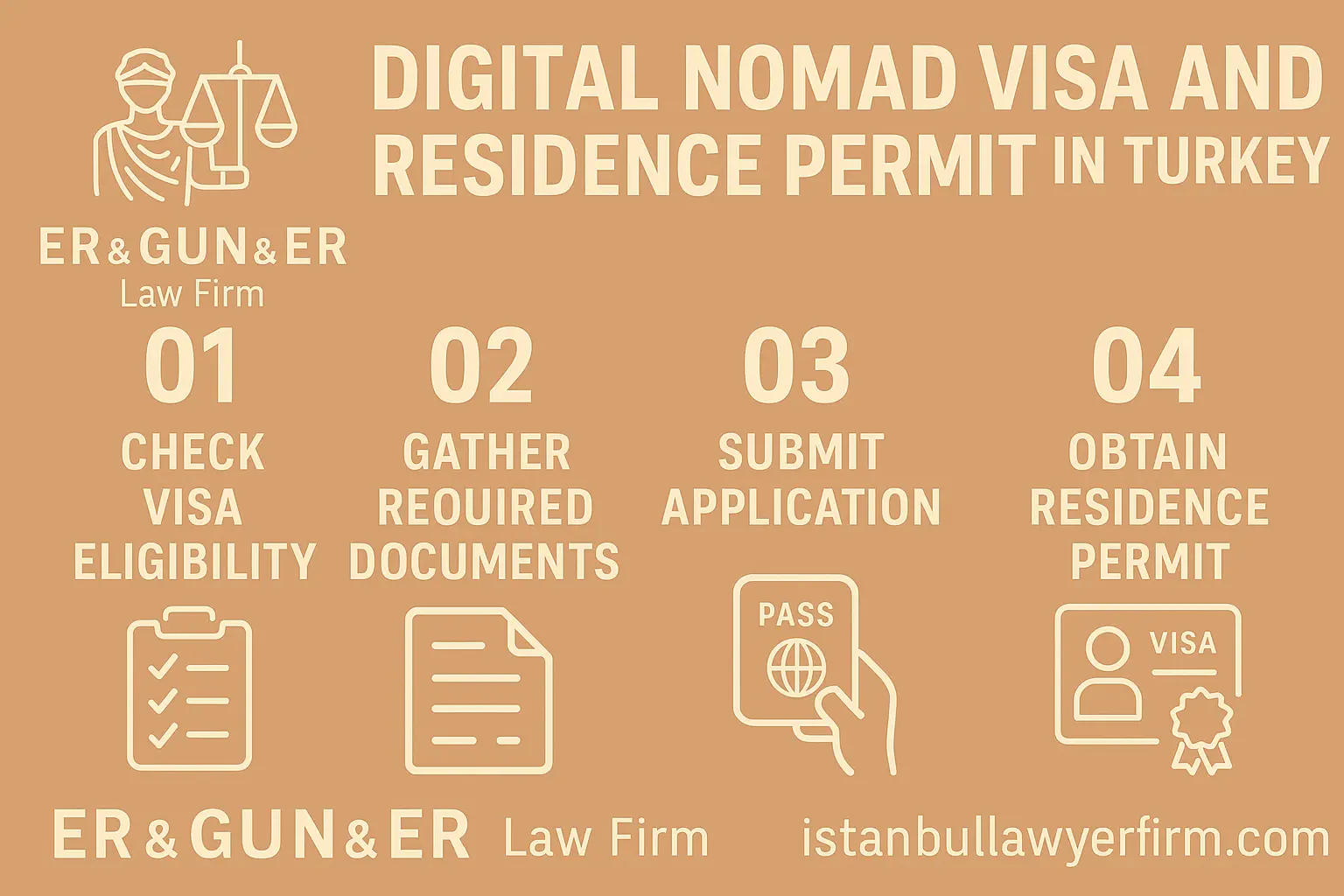
A lawyer in Turkey who advises remote professionals on digital nomad residence understands that Turkey's growing appeal as a base for location-independent workers—offering a combination of European accessibility, competitive cost of living, a vibrant urban culture and a well-developed digital infrastructure—is accompanied by a legal and regulatory framework that requires careful navigation if remote professionals are to achieve stable, compliant long-term residence rather than cycling through tourist entry periods with the recurring legal uncertainty that informal arrangements create. An Istanbul Law Firm that advises digital nomads and remote professionals on Turkish residence provides comprehensive legal support spanning the complete residence lifecycle: assessing eligibility for the most appropriate visa and residence permit category based on the specific professional and income profile of each client; preparing complete, professionally formatted visa applications that satisfy Turkish consular requirements and reduce rejection risk; managing the transition from initial visa entry to formal residence permit with the Provincial Directorate of Migration Management; advising on the tax residency implications and income reporting obligations that arise from extended Turkish residence; ensuring healthcare insurance compliance with the specific coverage requirements that residence permit applications require; drafting and reviewing remote work agreements and service contracts that create legally sound documentation of foreign income without inadvertently creating Turkish employment obligations; advising on banking setup and financial reporting obligations for digital professionals receiving international income; and planning the long-term residence pathway from initial digital nomad permit through potential transitions to investment-based, work permit or citizenship-qualifying residence categories. A Turkish Law Firm with experience advising the growing international remote professional community in Turkey brings practical knowledge of how Provincial Directorates process residence permit applications for remote workers, what income and employment documentation most effectively satisfies immigration authorities' requirements for self-sufficient foreign workers, and what tax authority positions affect remote professionals' obligations as they approach and exceed the Turkish tax residency threshold. An English speaking lawyer in Turkey who advises international remote workers provides the bilingual legal support that enables professionals who do not speak Turkish to navigate each stage of the visa and residence process with accurate legal understanding rather than reliance on informal advice from non-legal sources that may be out of date or inapplicable to the client's specific nationality or income structure. Practice may vary by authority and year — verify current visa categories available to digital nomads, current residence permit requirements for remote workers, and current Provincial Directorate application procedures before finalizing any application strategy.
Visa Application Process and Entry Requirements
A lawyer in Turkey who advises on visa applications for digital nomads explains that Turkey does not currently operate a formally branded "digital nomad visa" as a distinct statutory category in the manner that some countries have introduced—but that remote professionals from many countries can legally enter Turkey on tourist or short-stay visas and transition to longer-term residence permit status that accommodates remote work for foreign employers or clients, with the specific visa type and entry pathway depending on the applicant's nationality, the countries for which Turkey offers e-Visa access or visa-on-arrival, and the applicant's specific income and employment profile. An Istanbul Law Firm that advises on visa application strategy for remote professionals helps each client identify the most appropriate entry pathway: nationals of countries benefiting from Turkish e-Visa access can enter on e-Visas typically permitting stays of up to 90 days in a 180-day period, providing time to establish the residence permit application needed for longer stays; nationals requiring advance consular visa applications must prepare comprehensive application packages demonstrating the purpose of stay, financial self-sufficiency and ties to home country that support the consular officer's assessment; and applicants with specific professional profiles—entrepreneurs, investors or professionals with pre-established Turkish business relationships—may have access to specific long-stay visa categories that the Turkish consular network issues for documented business purposes. Turkish lawyers advising on visa application preparation help clients assemble the documentation packages that most effectively demonstrate eligibility for the requested visa category: bank statements demonstrating adequate financial resources for the proposed stay duration; employment contracts, client agreements or platform income documentation demonstrating foreign-source remote income; health insurance documentation meeting Turkish requirements for the requested stay period; accommodation documentation confirming a Turkish address for the stay; and where applicable, professional credentials or client relationship letters that support the characterization of the applicant as a genuine remote professional rather than an employment seeker. Practice may vary by authority and year — verify current visa category options for your specific nationality, current e-Visa and visa-on-arrival eligibility, and current consular application requirements before preparing any visa application for Turkish entry.
An Istanbul Law Firm that manages consular visa applications for digital nomads explains that the quality and completeness of the visa application package significantly affects processing time and approval probability—because consular officers reviewing large volumes of applications make rapid assessments based on the clarity and completeness of the documentation presented, and applications that are well-organized, include all required documents with accurate translations, and present a coherent and credible account of the applicant's plans and financial situation receive more favorable assessment than applications that require supplementary information requests that delay processing. Turkish lawyers preparing consular visa applications for remote professionals implement a systematic documentation review before submission: verifying that all required documents are present and current as of the application date; ensuring that all foreign-language documents are accompanied by sworn Turkish translations produced by certified translators; confirming that financial documentation demonstrates the specific income levels and stability that satisfy the visa category's financial sufficiency requirements; and preparing cover letters or explanatory statements that provide context for any aspects of the application that might not be immediately self-explanatory from the supporting documents alone. An English speaking lawyer in Turkey who manages consular visa applications for international clients provides bilingual guidance throughout the application preparation process—explaining Turkish consular requirements in the client's language, coordinating the assembly of documentation from the client's home country and current location, and preparing application materials that present the client's profile as clearly and persuasively as possible within the documentary formats that Turkish consular practice expects.
A Turkish Law Firm that advises on post-arrival visa management explains that digital nomads who enter Turkey on tourist or short-stay visas and intend to apply for longer-term residence permits should initiate the residence permit application process promptly after arrival rather than waiting until the final weeks of the entry visa—because Provincial Directorate application processing times can extend over several weeks, and applications initiated close to visa expiry may not complete processing before the initial visa expires, creating a period of irregular status that can complicate the residence permit decision. An English speaking lawyer in Turkey who manages the transition from entry visa to residence permit for remote professional clients monitors the specific processing timelines at the Provincial Directorate handling the client's application and provides accurate timeline guidance that enables clients to initiate residence applications with sufficient advance time—rather than relying on optimistic processing time assumptions that may prove incorrect in periods of elevated application volumes.
Obtaining and Renewing Residence Permits
A lawyer in Turkey who advises on residence permits for digital nomads and remote professionals explains that the short-term residence permit (kısa dönem ikamet izni) is the primary Turkish residence status available to remote professionals who do not have a Turkish employment relationship but wish to reside in Turkey for longer than the tourist visa permits—requiring applicants to demonstrate the financial self-sufficiency, health insurance coverage and Turkish address registration that the Provincial Directorate of Migration Management evaluates when assessing whether the applicant has adequate means for the requested residence period without requiring Turkish employment income. An Istanbul Law Firm that manages short-term residence permit applications for remote professionals prepares each application to address every required element with documentation of appropriate quality: a complete application through the e-ikamet system with accurate data entry and fee payment; a current, valid health insurance policy that meets the minimum coverage requirements specified in YUKK implementing regulations for the proposed residence period; financial documentation demonstrating monthly income and bank account balances adequate to cover the applicant's Turkish living expenses without requiring Turkish employment, typically requiring bank statements showing consistent income flows from foreign employment or client contracts and an overall account balance reflective of financial stability; a Turkish address registration document (Yerleşim Yeri Belgesi) from the applicant's Turkish municipality confirming residential registration at the proposed Turkish address; and a biometric appointment at the Provincial Directorate where the applicant's photograph and fingerprints are recorded. Turkish lawyers managing residence permit applications for remote professionals coordinate each stage of the application to ensure that the required documentation is complete before the biometric appointment date—preventing the delays and potential permit refusals that result from incomplete documentation identified at the appointment stage when there is insufficient time to gather missing materials before the appointment cannot be rescheduled. Practice may vary by authority and year — verify current short-term residence permit application requirements, current financial sufficiency documentation standards, current health insurance coverage requirements, and current biometric appointment procedures before preparing any residence permit application.
An Istanbul Law Firm that manages residence permit renewals for long-term remote professional residents explains that renewal applications must be submitted before the current permit expires—with Turkish immigration regulations specifying that renewal applications should be submitted within the permit's validity period, typically requiring initiation at least 60 days before expiry to ensure adequate time for documentation assembly and Provincial Directorate processing within the validity period. Turkish lawyers managing permit renewals implement systematic renewal planning for clients approaching expiry: generating renewal reminders when permits reach the 90-day pre-expiry point; preparing updated financial documentation including recent bank statements, current income contracts and updated health insurance certificates that reflect the applicant's continued eligibility for the permit category; reviewing whether any circumstances have changed since the original permit application that might affect renewal eligibility or require a different permit category; and coordinating the e-ikamet renewal application and biometric appointment with the Provincial Directorate within the timeline that ensures renewal completion before the current permit expires. An English speaking lawyer in Turkey who manages permit renewals for international clients provides renewal tracking services—maintaining permit expiry calendars for each client, generating advance renewal alerts, coordinating documentation assembly and submission without requiring the client to independently track Turkish immigration regulatory requirements—enabling remote professionals to focus on their work while their Turkish immigration compliance is managed by qualified legal counsel.
A Turkish Law Firm that advises on permit category transitions for remote professionals explains that as remote professionals' circumstances change—including transitions from employed remote worker to self-employed freelancer, from short-term visitor to long-term resident approaching investment or citizenship qualification thresholds, or from individual nomad to family unit requiring family reunification permits for a spouse or children—the appropriate residence permit category may change, and proactive legal advice about these transitions prevents the gaps in lawful status that can arise from failing to update permit categories promptly when the underlying qualifying circumstances change. An English speaking lawyer in Turkey who advises on permit category planning for remote professionals assesses each client's evolving circumstances annually—evaluating whether the current permit category remains optimal given the client's income structure, residency duration and long-term Turkish integration intentions—and providing strategic advice about permit transitions that should be planned in advance rather than reactive responses to changed circumstances after the appropriate transition window has passed.
Tax Obligations and Financial Compliance
A lawyer in Turkey who advises on tax obligations for remote professionals in Turkey explains that the fundamental tax question for digital nomads—whether extended Turkish residence creates Turkish income tax liability on global or Turkish-source income—depends on whether the remote professional qualifies as a Turkish tax resident, which Turkish tax law determines primarily based on the "habitual abode" concept under which individuals who maintain their center of living activities in Turkey for 183 days or more in a calendar year become subject to Turkish income tax on their worldwide income, making tax residency threshold management a practical planning consideration for remote professionals who want to avoid unexpected Turkish tax obligations on their complete foreign-source income. An Istanbul Law Firm that advises on tax planning for remote professionals in Turkey helps clients understand the specific facts that affect tax residency determination: not only the number of days spent in Turkey in each calendar year but also the circumstances of the Turkish residence—whether it has the character of a permanent rather than temporary abode, whether the professional's primary economic interests are in Turkey or abroad, and how any applicable bilateral tax treaty between Turkey and the professional's home country defines and allocates residence for treaty purposes. Turkish lawyers advising on tax residency planning for remote professionals help clients whose Turkish stays are approaching the 183-day threshold understand the available planning options: maintaining stays below the threshold through deliberate travel scheduling during the year; applying treaty tie-breaker rules available in applicable tax treaties that may allocate residence away from Turkey even where Turkish domestic law's habitual abode test would otherwise be satisfied; or accepting Turkish tax residency while minimizing the additional tax cost through treaty exemptions, foreign tax credits and deductions available under Turkish income tax law for foreign-source income that has already been taxed in another jurisdiction. Practice may vary by authority and year — verify current Turkish tax residency rules and their interaction with applicable bilateral tax treaties, current Turkish income tax rates and available deductions for foreign-source income, current reporting obligations for Turkish tax residents with foreign income, and current tax authority compliance requirements before designing any tax planning strategy for extended Turkish residence.
An Istanbul Law Firm that advises on income reporting and tax compliance for remote professionals in Turkey explains that remote professionals who become Turkish tax residents must file annual income tax returns with the Turkish Revenue Administration disclosing their worldwide income from all sources—including foreign employment salaries, freelance and consulting fees from foreign clients, platform income, investment income and any Turkish-source income—and calculating Turkish income tax based on the applicable rates after applying available treaty exemptions, deductions and foreign tax credits that reduce double taxation on income that has been taxed in both Turkey and another jurisdiction. Turkish lawyers managing tax compliance for remote professional clients coordinate the income documentation and return preparation process: organizing the foreign income records—pay stubs, platform income statements, client invoices and bank statements—that document the income that must be reported; calculating the tax impact of any applicable treaty provisions and identifying the specific treaty articles most favorable to the client's situation; and preparing the annual return in compliance with Turkish filing deadlines and formatting requirements. An English speaking lawyer in Turkey who manages Turkish tax compliance for international remote professionals coordinates the Turkish tax compliance with the client's home country tax obligations—ensuring that the Turkish return is consistent with the home country return and that the application of treaty provisions is handled consistently in both jurisdictions rather than creating unintended contradictions that attract tax authority attention in both countries.
A Turkish Law Firm that advises on VAT and business tax obligations for self-employed remote professionals explains that remote professionals who operate as self-employed freelancers or through individual entrepreneurship (şahıs işletmesi) in Turkey—issuing invoices from a Turkish tax registration for services delivered to foreign clients—face VAT and income tax filing obligations that differ from the obligations of remote workers who receive employment income from a foreign employer without any Turkish business registration. An English speaking lawyer in Turkey who advises on business tax obligations for self-employed remote professionals helps clients understand whether establishing formal Turkish business registration is advantageous or disadvantageous given their specific income structure and client base—because the formal Turkish business registration that enables official Turkish invoicing also creates VAT registration, monthly VAT filing, quarterly provisional tax filing and annual income tax obligations that simple foreign employment income does not create. Clients who benefit most from Turkish business registration are those delivering services primarily to Turkish clients who require Turkish invoices for their own VAT recovery purposes, while clients delivering services exclusively to foreign clients with no Turkish business connection often prefer to maintain their foreign business structure and receive Turkish residence as financially self-sufficient individuals without Turkish business registration.
Healthcare, Social Security and Compliance
A lawyer in Turkey who advises on healthcare compliance for remote professionals in Turkey explains that the short-term residence permit application requires the applicant to demonstrate health insurance coverage for the entire requested residence period—with Turkish immigration regulations specifying coverage requirements that include both inpatient and outpatient medical care, minimum coverage amounts adequate for the Turkish healthcare market, and for some insurance products, specific territorial validity requirements confirming that the policy covers medical events occurring in Turkey specifically rather than only in other countries. An Istanbul Law Firm that advises on healthcare insurance selection for remote professional clients helps applicants identify insurance products that satisfy Turkish immigration health insurance requirements: international health insurance policies issued by recognized international insurers that confirm Turkish territorial coverage and meet minimum coverage amount thresholds specified by Turkish immigration authorities; Turkish private health insurance policies issued by Turkish insurers that by definition satisfy Turkish territorial coverage requirements and are structured to satisfy immigration compliance standards; and for remote professionals planning multi-year Turkish residence, longer-duration insurance products that provide coverage continuity across permit renewals without requiring annual policy changes that create gap risk. Turkish lawyers reviewing insurance documentation for permit applications confirm that each specific policy's terms satisfy the specific requirements of the applicable permit category—because insurance products marketed as "international health insurance" vary widely in their Turkish territorial coverage, coverage amount adequacy and documentation of coverage that can be submitted in immigration applications. Practice may vary by authority and year — verify current health insurance coverage requirements for short-term residence permits, current minimum coverage amounts specified by migration regulations, and current Provincial Directorate standards for insurance documentation format before selecting any health insurance product for residence permit purposes.
An Istanbul Law Firm that advises on voluntary Turkish public health insurance (SGK) registration for long-term remote professional residents explains that remote professionals who plan multi-year Turkish residence may find it beneficial to register as voluntary SGK contributors—accessing the Turkish public healthcare system and building Turkish social security contribution history that may become relevant if they later transition to Turkish employment or Turkish citizenship. Turkish lawyers advising on SGK voluntary registration help remote professionals understand the contribution calculation methodology and the specific coverage benefits that SGK voluntary registration provides compared with private insurance alternatives—enabling informed decisions about whether the SGK contribution cost and administrative requirements justify the coverage benefits relative to private insurance options for their specific health profile and Turkish healthcare utilization needs. An English speaking lawyer in Turkey who advises on social security planning for long-term Turkish resident remote professionals assesses the interaction between Turkish voluntary SGK contributions and the remote professional's home country social security system—particularly where bilateral totalization agreements between Turkey and the professional's home country may create rules about which country's social security system applies to self-employed or remotely working individuals during their Turkish residence period.
A Turkish Law Firm that advises on healthcare access and continuity for long-term Turkish resident remote professionals explains that maintaining uninterrupted health insurance coverage throughout the Turkish residence period is a both a practical and a legal necessity—because residence permit applications and renewals require current insurance documentation covering the full requested period, and gaps in coverage that arise from policy lapses, annual renewal delays or transitions between providers can create both practical healthcare access interruptions and immigration compliance issues at permit renewal. An English speaking lawyer in Turkey who manages healthcare compliance for remote professional clients implements proactive insurance renewal tracking alongside permit renewal tracking—alerting clients to insurance policy expiry dates well in advance of permit renewal deadlines and coordinating insurance renewal or replacement policy selection in time to ensure continuous coverage documentation is available when permit renewal applications are submitted.
Remote Work Agreements and Employment Law Compliance
A lawyer in Turkey who advises on remote work agreements for digital nomads explains that the legal structure of a remote professional's income-generating activities—whether they operate as an employee of a foreign employer, as a self-employed freelancer delivering services to foreign clients, or as a business owner through a Turkish or foreign company entity—affects both the documentation available to support visa and residence permit applications and the tax and regulatory obligations that arise from the Turkish residence. An Istanbul Law Firm that advises on remote work legal structure helps remote professionals understand the distinct legal and administrative profiles of each structure: foreign employment income where the professional remains on a foreign employer's payroll while residing in Turkey creates the clearest income documentation for immigration purposes but may create complex tax coordination questions between the Turkish and foreign tax systems if Turkish tax residency is triggered; self-employed freelancing where the professional delivers services to multiple foreign clients under service agreements creates a more complex income documentation picture for immigration purposes but may be more favorable from a Turkish tax perspective where the professional has not established Turkish business registration; and Turkish company establishment where the professional incorporates a Turkish entity through which services are invoiced creates Turkish business registration obligations, corporate tax filing requirements and VAT obligations that add administrative complexity but may provide business registration documentation beneficial for certain visa and banking purposes. Turkish lawyers advising on remote work legal structure help clients select the structure most appropriate to their specific circumstances rather than defaulting to the most administratively simple arrangement regardless of whether it optimally serves the client's immigration, tax and banking objectives. Practice may vary by authority and year — verify current Turkish regulatory framework for remote work income structures, current tax treatment of each income structure category, and current banking requirements for each structure before selecting any remote work legal structure for Turkish residence.
An Istanbul Law Firm that drafts service agreements for self-employed remote professionals based in Turkey explains that well-drafted service agreements serve multiple simultaneous purposes for remote professionals in Turkey: providing the income documentation that visa and residence permit applications require to demonstrate foreign-source self-employment income; creating the contractual framework that defines the professional's services, deliverables, payment terms and intellectual property arrangements in a manner that is enforceable in both Turkish and foreign legal proceedings if disputes arise; and establishing through clear contractual language that the professional is delivering services as an independent contractor rather than as an employee whose work creates Turkish employment relationship obligations for the foreign client. Turkish lawyers drafting service agreements for remote professional clients address each of these functions: income documentation is served through clear identification of the parties, service scope, payment amounts and payment schedule that enables immigration authorities to understand the income stream; contractual protection is served through comprehensive terms covering deliverable specifications, quality standards, revision procedures, termination rights and dispute resolution that protect the professional's interests in client relationships; and independent contractor status is served through clear contractual language establishing that the professional provides services using their own methods, equipment and business organization without the direction and control that would characterize an employment relationship. An English speaking lawyer in Turkey who drafts bilingual service agreements for remote professionals operating from Turkey prepares agreements in both English and Turkish versions that are legally consistent, using terminology appropriate to each legal system rather than literal translations that may be legally inaccurate in one or both legal contexts.
A Turkish Law Firm that advises on intellectual property provisions in remote work agreements for digital professionals explains that remote professionals in technology, creative, marketing and consulting fields whose work product involves intellectual property creation—including software development, content creation, design work, data analysis methodology and consulting framework development—must ensure that their service agreements clearly address the allocation of intellectual property rights between the professional and the client in a manner consistent with both Turkish intellectual property law and the law applicable to the client relationship. An English speaking lawyer in Turkey who advises on intellectual property provisions in international service agreements for remote professionals helps clients understand the specific Turkish legal framework for copyright, software rights and related intellectual property as it applies to work created by independent contractors—advising on whether work-made-for-hire concepts from the client's home jurisdiction apply in the Turkish legal context, and drafting assignment and license provisions that achieve the parties' intended IP allocation under the law applicable to each jurisdiction where the agreement may be enforced.
Banking, Financial Reporting and Visa Transitions
A lawyer in Turkey who advises on banking for digital nomads in Turkey explains that establishing a Turkish bank account provides significant practical benefits for remote professionals resident in Turkey—including access to Turkish payment infrastructure, ability to receive Turkish lira income, local bill payment convenience and the bank account documentation that residence permit applications and tax filings may require—while also creating Turkish financial regulatory obligations that remote professionals must understand and satisfy. An Istanbul Law Firm that advises on banking setup for remote professional clients helps individuals navigate the Turkish bank account opening process: identifying banks with experience serving foreign resident clients and with English-language customer service capabilities that reduce language barrier friction in account management; preparing the documentation that Turkish banks require for foreign resident account opening, including valid passport, Turkish residence permit or address documentation, Turkish tax identification number and where required by specific banks, income documentation or professional profile information; and advising on account types—including multi-currency accounts that facilitate management of foreign income received in multiple currencies alongside Turkish lira expenses. Turkish lawyers advising on banking compliance for remote professionals help clients understand the specific financial reporting obligations that arise from Turkish bank accounts and Turkish tax residency: the requirements for reporting foreign bank accounts in Turkish income tax returns; Turkish foreign exchange regulation compliance for large international transfers; and the documentation that banks may request to support large international transfers for AML compliance purposes. Practice may vary by authority and year — verify current Turkish banking requirements for foreign resident account opening, current financial reporting obligations for Turkish tax resident remote professionals, and current foreign exchange regulation requirements before establishing any Turkish banking arrangements.
An Istanbul Law Firm that advises on longer-term visa transitions for digital nomad residents explains that remote professionals who have established Turkish residence and wish to transition to longer-term or more permanent status have multiple pathway options depending on their personal and professional circumstances: the Turkish citizenship by investment program available to foreign nationals who make qualifying investments in Turkey—including real estate purchases above specified value thresholds, capital investments in Turkish businesses, employment creation in Turkey and bank deposit placements—that provides a pathway to full Turkish citizenship with Turkish passport rights; the long-term residence permit available to foreign nationals who have maintained lawful continuous Turkish residence for specified periods that provides near-permanent residence status without requiring investment; and work permit status that would be relevant for remote professionals who transition from working for foreign employers to working for Turkish employers or establishing Turkish businesses with operational activities. Turkish lawyers advising on visa transition planning for remote professional residents help clients assess eligibility for each available pathway based on their residence duration, investment capacity, professional qualifications and long-term Turkish integration intentions—developing multi-year planning frameworks that identify the most appropriate pathway and the specific steps needed to satisfy eligibility requirements within the client's target timeline. An English speaking lawyer in Turkey who advises on long-term pathway planning for international remote professionals provides the strategic counsel that enables clients to make informed decisions about Turkish life planning with accurate understanding of each pathway's requirements, timeline, benefits and limitations rather than relying on social media information or peer accounts that may reflect outdated or jurisdiction-specific circumstances not applicable to the client's specific situation.
A Turkish Law Firm that advises on emergency legal support for digital nomads in Turkey explains that even well-prepared remote professionals can encounter unexpected immigration challenges—including permit application delays that extend beyond current visa validity, health insurance coverage gaps that affect permit compliance, employment or income changes that affect eligibility for the current permit category, and entry or re-entry complications that arise from prior visa violations or immigration code issues. An English speaking lawyer in Turkey who provides emergency immigration support for remote professional clients maintains the operational readiness to respond to immigration emergencies with the speed that time-sensitive situations require: filing urgent extension applications to protect lawful status during permit processing delays; preparing emergency documentation packages that address newly identified permit compliance issues; advising on entry options available to clients who need to leave and return to Turkey during pending applications; and representing clients in administrative proceedings before Provincial Directorates or administrative courts when permit decisions need to be formally challenged. The best lawyer in Turkey for digital nomad residence matters combines immigration law expertise with practical knowledge of the Turkish administrative systems through which remote professionals' visa and residence permit applications are processed—enabling advice and representation that produce the most efficient and successful outcomes across the range of immigration situations that long-term Turkish residence inevitably generates over time.
Integration, Lifestyle Planning and Community
A lawyer in Turkey who advises on practical integration for remote professionals explains that achieving a successful digital nomad residence in Turkey involves dimensions beyond legal compliance—including practical daily life setup that requires navigating Turkish administrative systems, understanding local commercial and social norms, and establishing the physical and community infrastructure that makes extended Turkish residence genuinely productive rather than merely legally permissible. An Istanbul Law Firm that advises on practical integration for international remote professionals helps clients navigate the administrative setup that underpins daily Turkish life: residential address registration with the relevant municipality (nüfus müdürlüğü) that creates the official address record needed for residence permit applications, driver's license exchanges and other administrative purposes; utility service connection and management including electricity, natural gas, water and telecommunications services that in Turkey require address registration documentation and in some cases Turkish language interaction with service providers; mobile telecommunications registration including the device and SIM registration that Turkey requires for mobile devices used in Turkey after a specified period of Turkish presence; and local municipal service registration including access to local government services relevant to everyday life in the Turkish municipality where the professional resides. Turkish lawyers advising on administrative integration coordinate these practical setup requirements with the immigration compliance activities—ensuring that address registration is completed in time to produce the documentation needed for residence permit applications, and that utility and telecommunications setup uses the correct identification documentation for each provider's requirements. Practice may vary by authority and year — verify current Turkish municipal registration requirements, current device and SIM registration requirements for foreign residents, and current utility connection documentation requirements before completing any administrative integration setup.
An Istanbul Law Firm that advises on professional integration for remote professionals based in Turkey explains that remote professionals who establish longer-term Turkish residence frequently explore opportunities to expand their professional activities beyond purely remote foreign work—including collaborating with Turkish professionals and companies on projects that leverage their international expertise and Turkish local presence, establishing Turkish business relationships that could provide a stable client base if their primary foreign employment changes, or launching entrepreneurial ventures that combine their professional skills with the Turkish market opportunities that their residence enables. Turkish lawyers advising on professional integration opportunities help remote professionals evaluate the specific Turkish regulatory implications of each professional expansion: consulting arrangements with Turkish companies that create Turkish-source income may affect tax residency calculations and create Turkish withholding tax obligations for the Turkish client; Turkish company establishment enables full participation in the Turkish commercial ecosystem but creates ongoing administrative obligations; and technical contractor arrangements structured through foreign entities may provide Turkish income without formal Turkish business registration obligations but require careful structuring to avoid inadvertently creating Turkish permanent establishment exposure. An English speaking lawyer in Turkey who advises on professional integration for international remote professionals provides the comparative analysis that enables clients to select the professional expansion model most appropriate for their specific skills, income objectives and Turkish administrative capacity—rather than defaulting to the most familiar structure from their home jurisdiction without understanding the specific Turkish implications of that choice.
A Turkish Law Firm that advises on community integration and social registration for long-term remote professional residents explains that remote professionals who establish multi-year Turkish residence benefit from accessing the community registration opportunities that Turkish local administrative systems provide: Turkish driving license conversion for those holding valid foreign driving licenses, enabling full local mobility without the limitations of foreign license use; registration with local professional associations or chambers of commerce that may be available to foreign residents in some professional categories; access to local cultural and civic organizations that facilitate meaningful community integration beyond the expatriate professional community; and for those approaching long-term residence permit eligibility, the continuous residence documentation practices that demonstrate genuine Turkish integration rather than merely administrative presence for permit renewal purposes. An English speaking lawyer in Turkey who advises on community integration for international remote professional clients helps clients understand which community registration and integration opportunities are available to foreign residents without Turkish citizenship—providing accurate information that distinguishes between programs and services genuinely accessible to foreign residents and those restricted to Turkish citizens, enabling clients to invest their integration effort in opportunities that are actually available to them.
Emergency Legal Support and Long-Term Residency Risk Planning
A lawyer in Turkey who advises on immigration emergency response explains that remote professionals who have established Turkish residence and invested in building a Turkish life—with established clients, accommodation, banking and community relationships—face disproportionate disruption when unexpected immigration challenges arise, making emergency legal support capability an important component of any serious long-term Turkish residence strategy rather than an afterthought addressed only when a crisis has already developed. An Istanbul Law Firm that provides emergency immigration support for remote professional clients maintains operational readiness to respond at speed to immigration emergencies: urgent permit extension filings that protect lawful status when processing delays threaten to extend beyond current permit validity; emergency health insurance replacement arrangements when existing coverage lapses or becomes inadequate at a permit renewal juncture; urgent status documentation when clients need to demonstrate lawful Turkish residence for banking, employment or other purposes during pending permit transitions; and diplomatic consular coordination when immigration complications arise for clients of nationalities where consular assistance may supplement the legal proceedings. Turkish lawyers managing immigration emergencies for remote professional clients combine the legal action needed to protect the client's Turkish status with the communication needed to ensure the client and their international support network understand what is happening, what is being done and what the realistic outcome scenarios are—because the anxiety of an immigration uncertainty is substantially reduced when clients have accurate, current legal assessment rather than uncertainty-amplified speculation about the worst possible outcome. Practice may vary by authority and year — verify current emergency application procedures for status protection during permit processing delays, current Provincial Directorate procedures for urgent permit situations, and current administrative court emergency application procedures before developing any emergency immigration response plan.
An Istanbul Law Firm that advises on long-term residency risk planning for remote professionals explains that the most resilient Turkish residence strategy anticipates the regulatory and personal circumstance changes that are likely to affect long-term residents and builds adaptability into the legal framework rather than optimizing for current circumstances without regard for how those circumstances may change. Turkish lawyers advising on long-term residency risk planning help clients develop residence strategies that address several categories of foreseeable risk: income structure changes—planning for the possibility that the current foreign employment or client relationships may end, and identifying the income documentation alternatives and permit category fallbacks available if primary income changes; regulatory environment changes—monitoring Turkish immigration regulatory developments and preparing for adjustments to residence permit requirements, income thresholds or healthcare coverage standards that may affect current arrangements; personal circumstance changes—planning for the possible marriage, family formation, health events and professional transitions that may alter the most appropriate Turkish residence category over the client's residence timeline; and bilateral treaty changes—monitoring the evolution of bilateral tax treaties and social security totalization agreements between Turkey and the client's home country that may affect the tax and social security implications of extended Turkish residence. An English speaking lawyer in Turkey who provides long-term residency risk planning for international remote professionals conducts annual residence strategy reviews that assess the client's current residence arrangements against the most likely changes in each risk category—enabling proactive adjustments to the residence strategy before risk materializes into crisis rather than reactive responses to changed circumstances after the available options have been reduced by delayed action. The best lawyer in Turkey for digital nomad residence matters combines practical knowledge of the Turkish administrative systems that remote professionals navigate daily with strategic legal counsel on the long-term residence architecture that supports sustainable, legally sound Turkish residence across the full range of personal and professional circumstances that remote professionals face over multi-year Turkish residence periods.
A Turkish Law Firm that advises on comprehensive risk documentation for remote professional residents explains that proactive documentation of residence compliance—maintaining organized records of permit validity periods, income documentation, health insurance coverage, tax filings and banking compliance throughout the Turkish residence—provides both practical utility in interactions with Turkish administrative authorities and evidentiary protection if the accuracy of any compliance claim is later questioned. An English speaking lawyer in Turkey who manages compliance documentation for long-term remote professional clients implements systematic documentation practices: secure digital filing of all immigration documents including visas, permits and correspondence with immigration authorities; organized financial records demonstrating income continuity and bank compliance throughout each permit period; chronological health insurance documentation demonstrating continuous coverage without gaps; tax filing archives organized by tax year with supporting income and payment documentation; and a compliance timeline that traces the client's complete Turkish immigration history in a format that can be quickly produced for any administrative or judicial examination of the client's Turkish residence compliance. These comprehensive compliance archives serve immediate practical purposes—enabling efficient permit renewals from well-organized documentation rather than scrambling to locate required documents before application deadlines—while building the long-term evidentiary record that protects clients in the unlikely but consequential event that their Turkish compliance history is formally examined.
Frequently Asked Questions
- Does Turkey have a formal digital nomad visa category? Turkey does not currently operate a formally branded "digital nomad visa" as a distinct statutory category. Remote professionals from eligible countries typically enter on tourist or short-stay visas and transition to short-term residence permits that accommodate remote work for foreign employers or clients. The specific entry pathway depends on the applicant's nationality, income profile and planned residence duration. Verify current visa category options with qualified Turkish immigration counsel before planning any Turkish residence. Practice may vary by authority and year.
- What financial documentation is needed for a short-term residence permit? Short-term residence permit applications require demonstration of financial self-sufficiency for the requested residence period without Turkish employment income. Typically required documentation includes recent bank statements showing consistent income flows from foreign employment or freelance contracts, an adequate overall account balance, and income documentation such as employment contracts, client service agreements or freelance platform income statements. Specific income level requirements are assessed by Provincial Directorates based on the proposed residence duration and current cost of living standards. Practice may vary by authority and year.
- When does extended Turkish residence trigger Turkish income tax liability? Turkish tax law applies a 183-day threshold under the habitual abode concept—individuals who maintain Turkey as their center of living activities for 183 or more days in a calendar year generally become Turkish tax residents subject to income tax on worldwide income. Applicable bilateral tax treaties between Turkey and the professional's home country may provide tie-breaker rules that override Turkish domestic law's residency determination. Tax planning for approaching the 183-day threshold requires qualified Turkish tax legal advice specific to your nationality and treaty position. Practice may vary by authority and year.
- What health insurance is required for a Turkish residence permit? Short-term residence permit applications require health insurance coverage for the full requested residence period with Turkish territorial validity and coverage amounts adequate for the Turkish healthcare market. Accepted insurance types include international health insurance policies with confirmed Turkish coverage and Turkish private health insurance policies. Provincial Directorates review insurance documentation at the application stage and may reject policies with insufficient coverage scope or amount. Verify current coverage requirements with qualified counsel before selecting insurance for permit purposes. Practice may vary by authority and year.
- Can remote professionals work for Turkish clients or Turkish companies on a short-term residence permit? Short-term residence permits based on financial self-sufficiency do not authorize employment by Turkish employers or delivery of services primarily to Turkish clients in ways that create Turkish employment or business tax obligations without proper Turkish business registration. Remote professionals who transition from exclusively foreign-source income to income from Turkish clients or Turkish employment need to assess whether a different permit category or business registration is required. This analysis depends on the specific nature and extent of Turkish client relationships. Practice may vary by authority and year.
- How should freelance service agreements be structured for immigration documentation purposes? Service agreements submitted as income documentation for immigration purposes should clearly identify the parties, describe the services and deliverables with sufficient specificity to demonstrate genuine professional activity, specify payment amounts and schedules that demonstrate consistent income flow, and establish the independent contractor nature of the relationship rather than an employment relationship that would create different immigration obligations. Agreements with multiple clients that collectively demonstrate the income level required for permit applications are preferable to single-client relationships that create dependency risk. Professional legal review of service agreements for both immigration documentation adequacy and contractual protection is recommended.
- What are the tax implications of Turkish business registration for a self-employed remote professional? Establishing Turkish individual entrepreneurship registration (şahıs işletmesi) or a Turkish company creates Turkish business tax obligations including VAT registration and monthly filing, quarterly provisional income tax filing, annual income tax return filing, and in some cases additional regulatory registrations. Business registration enables official Turkish invoicing which is necessary when serving Turkish clients with VAT recovery needs but creates administrative obligations that simple foreign employment income does not generate. Whether registration is beneficial depends on the professional's specific client mix and income structure. Practice may vary by authority and year.
- Can remote professionals bring family members to Turkey? Yes. Remote professionals holding valid Turkish residence permits may apply for family reunification residence permits for spouses and dependent children meeting Turkish immigration law family reunification requirements. Family reunification permits require documentation of the primary permit holder's residence permit validity, the family relationship, the family's health insurance coverage, and financial resources adequate to support the family unit. Application procedures and specific requirements should be verified with qualified immigration counsel. Practice may vary by authority and year.
- Is voluntary SGK registration beneficial for remote professionals in Turkey? Voluntary SGK registration provides access to Turkish public healthcare services and builds Turkish social security contribution history potentially relevant for future Turkish employment or citizenship applications. Whether voluntary SGK registration is more beneficial than private health insurance depends on the comparison of SGK contribution costs with private insurance premium costs, the specific healthcare access patterns of the individual, and the relevance of Turkish contribution history to the individual's long-term Turkish integration plans. Applicants should also consider bilateral totalization agreement provisions between Turkey and their home country that may affect which country's social security system applies. Practice may vary by authority and year.
- How far in advance should residence permit renewal be initiated? Permit renewal applications should typically be initiated at least 60 days before the current permit's expiry to allow adequate time for documentation assembly and Provincial Directorate processing within the validity period. Processing times vary by Provincial Directorate and period—submitting well before the 60-day mark in periods of high application volume or during school year start-up periods provides additional buffer against unexpected processing delays. Your immigration lawyer should track your permit expiry and generate renewal reminders at appropriate advance intervals. Practice may vary by authority and year.
- What pathways exist from digital nomad residence to longer-term Turkish status? Remote professionals with established Turkish residence may access several longer-term status pathways: Turkish citizenship by investment through qualifying real estate purchase, capital investment, bank deposit or employment creation that meets current threshold requirements; long-term residence permit after qualifying continuous lawful Turkish residence; and work permit status if transitioning to Turkish employment or establishing an operationally active Turkish business. Each pathway has specific eligibility requirements, investment thresholds, residency duration requirements and application procedures that should be assessed with qualified Turkish immigration counsel based on individual circumstances. Practice may vary by authority and year.
- How is Turkish banking set up for remote professionals? Turkish bank accounts for foreign resident remote professionals typically require a valid passport, Turkish residence permit or address documentation, and Turkish tax identification number as minimum documentation. Some banks require income documentation or professional profile information for international transfers or multi-currency accounts. Selecting a bank with experience serving the international resident professional community and with English-language customer service capabilities reduces account management friction. Large international transfers may require AML documentation. Tax identification numbers should be obtained before attempting account opening. Practice may vary by authority and year.
- What happens if my residence permit is delayed beyond my visa validity? If a residence permit application is pending and the underlying entry visa expires during processing, qualified legal counsel should file a documentary protection of lawful status pending the permit decision—utilizing the administrative procedures available under Turkish immigration law that protect applicants who have filed complete residence permit applications before their visas expired. Avoiding this situation through early application initiation is strongly preferable to relying on post-expiry protection, but where it occurs, immediate legal consultation is essential to protect lawful status during the processing period. Practice may vary by authority and year.
- Can I leave and re-enter Turkey while my residence permit is being processed? Leaving Turkey during a pending residence permit application can affect the application's status and may create complications upon re-entry depending on the visa available for re-entry and the specific stage of the application processing. Clients who need to travel outside Turkey during pending permit applications should consult with their immigration lawyer before departing to understand the specific implications for their application and to plan the most appropriate approach for maintaining continuous legal status across the travel period. Practice may vary by authority and year.
- Does ER&GUN&ER Law Firm advise remote professionals on Turkish digital nomad residence? Yes. ER&GUN&ER Law Firm provides comprehensive legal advisory for remote professionals seeking Turkish residence including visa strategy and application preparation, residence permit application and renewal management, tax residency analysis and compliance planning, health insurance selection and compliance management, remote work agreement drafting and review, banking setup coordination, business registration assessment, family reunification permit applications, long-term pathway planning and emergency immigration support—with bilingual English-Turkish legal services throughout each engagement.
Author: Mirkan Topcu is an attorney registered with the Istanbul Bar Association (Istanbul 1st Bar), Bar Registration No: 67874. His practice focuses on cross-border and high-stakes matters where evidence discipline, procedural accuracy, and risk control are decisive.
He advises individuals and companies across Immigration and Residency, Real Estate Law, Tax Law, and cross-border documentation matters where procedural accuracy and evidence discipline are decisive.
Education: Istanbul University Faculty of Law (2018); Galatasaray University, LL.M. (2022). LinkedIn: Profile. Istanbul Bar Association: Official website.