

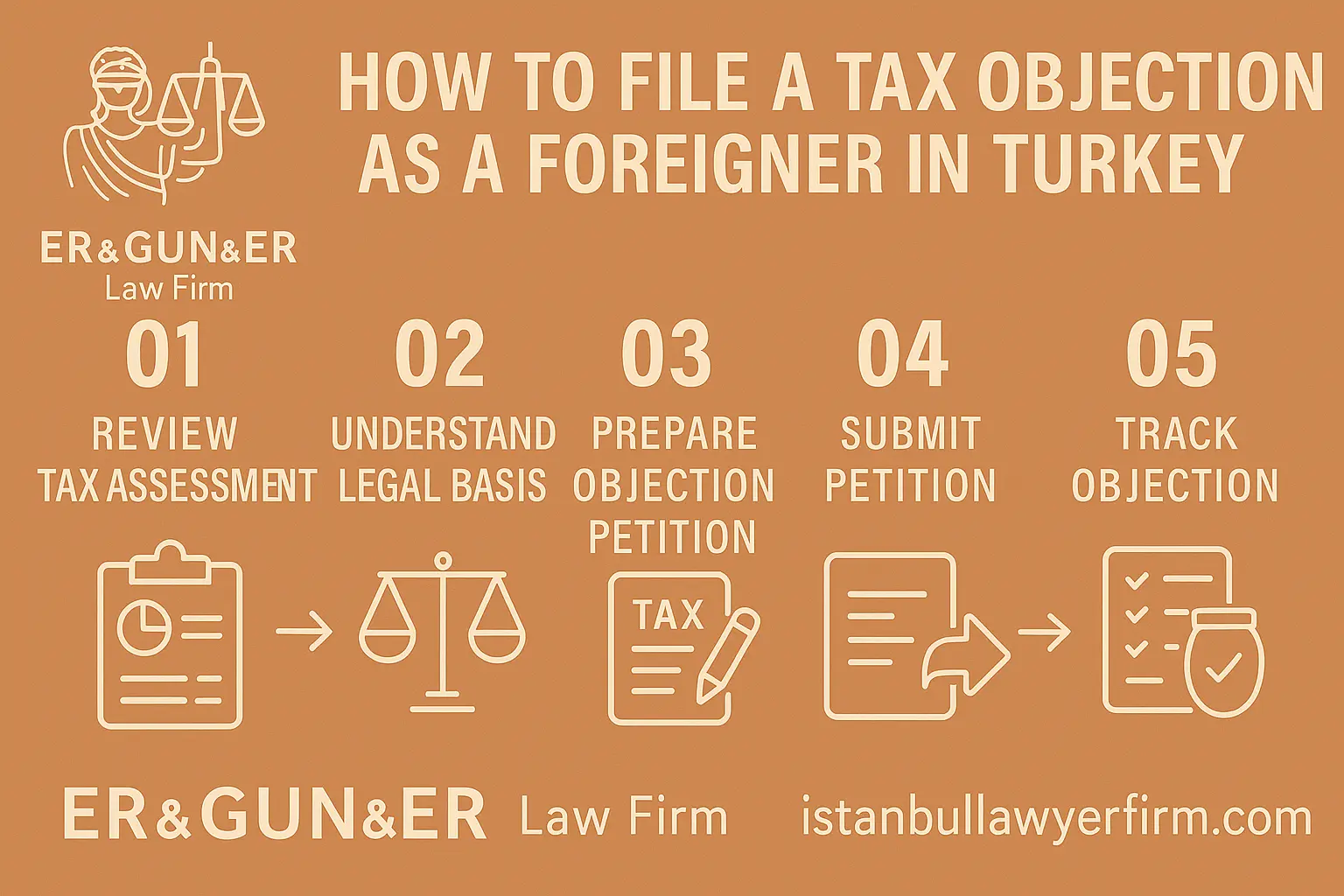
Challenging a Turkish tax assessment requires choosing the correct procedural path among several distinct mechanisms under the Tax Procedure Law (Law No. 213, the "VUK") of 4 January 1961 and the Administrative Procedure Code (Law No. 2577, the "İYUK") of 6 January 1982. The principal administrative remedies are: tax error correction under VUK Articles 116-126 (vergi hatalarının düzeltilmesi) for clear arithmetic, classification, or factual errors; reconciliation under VUK Articles 24-25 (uzlaşma) for negotiated settlement of contested assessments; penalty reduction under VUK Article 376 (cezalarda indirim) for 50% reduction in exchange for prompt payment and waiver of litigation; voluntary disclosure under VUK Article 371 (pişmanlık ve ıslah) for complete penalty waiver where disclosure precedes audit; and the complaint procedure under VUK Articles 124-125 (şikayet yolu) for escalation after rejection of correction requests. Each remedy has specific eligibility conditions, procedural deadlines, and substantive consequences.
Where administrative remedies fail or are unavailable, judicial review proceeds under İYUK before the Tax Court (Vergi Mahkemesi) within 30 days of notification under İYUK Article 7. Appeals from Tax Court decisions go to the Regional Administrative Court (Bölge İdare Mahkemesi) under İYUK Article 45, and second-tier appeals (temyiz) lie with the Council of State (Danıştay) under İYUK Article 46 for matters above the cassation threshold or involving questions of legal principle. Filing a Tax Court action does not automatically suspend collection under the Law on the Collection Procedure of Public Receivables (Law No. 6183, the "AATUHK"); a separate motion for stay of collection (yürütmenin durdurulması) under İYUK Article 27 must typically be filed and granted to halt enforcement during litigation. Constitutional Court individual application (bireysel başvuru) under Article 148/3 of the Constitution and Law No. 6216 Article 47/5 is available after exhaustion of ordinary remedies where fundamental rights are alleged to have been violated. ER&GUN&ER Law Firm advises Turkish and foreign taxpayers on selecting the optimal procedural path, preparing administrative correction requests, negotiating reconciliation, structuring voluntary disclosure under VUK Article 371, and litigating tax disputes through the Tax Court, Regional Administrative Court, and Council of State. Practice may vary by authority and year — check current guidance.
Tax Error Correction Under VUK Articles 116-126
The administrative correction procedure (vergi hatalarının düzeltilmesi) under VUK Articles 116-126 is the principal mechanism for resolving clear factual or computational errors without litigation. Under VUK Article 117, "tax error" (vergi hatası) covers two principal categories: calculation errors (hesap hataları) under VUK Article 117(1) — including incorrect tax base computation, incorrect tax amount, multiple assessment of the same tax, and similar mathematical or applied-rate errors; and taxation errors (vergilendirme hataları) under VUK Article 117(2) — including assessment against a wrong taxpayer (mükellefiyet hatası), assessment of the wrong tax type (vergi nev'i hatası), assessment for a wrong tax period or item (mevzu hatası), and assessment after the statute of limitations has expired (tarh zamanaşımı hatası).
The correction request (düzeltme talebi) is filed with the Tax Office (Vergi Dairesi) that issued the assessment under VUK Article 122, with no formal filing fee and using simple petition format. The Tax Office reviews the request and either accepts the correction, partially adjusts the assessment, or rejects the request. Acceptance results in revised assessment with refund of overpaid amounts under VUK Article 121. Rejection or partial adjustment is communicated through formal notification, opening the next procedural step under VUK Articles 124-125 (the complaint procedure) or judicial review under İYUK. The correction procedure is particularly valuable because: it carries no filing fee or substantial cost; it can be filed at any time within the statute of limitations under VUK Article 114 (5 years for assessment, with extensions in specific circumstances); and a successful correction avoids the formal litigation track entirely. Practice may vary by authority and year — check current guidance.
The complaint procedure (şikayet yolu) under VUK Articles 124-125 provides administrative escalation after the Tax Office rejects a correction request. The complaint is filed with the Ministry of Treasury and Finance (Hazine ve Maliye Bakanlığı) — specifically the Revenue Administration's Central Authority for matters within its jurisdiction — within 30 days of the rejection notification. The Ministry reviews the matter de novo and issues a final administrative decision. If the complaint is also rejected, the taxpayer retains the right to challenge the final administrative decision in the Tax Court within 30 days under İYUK Article 7 — meaning the correction-complaint-litigation sequence ultimately preserves all judicial remedies if administrative resolution is not achieved. Strategic use of the correction-complaint sequence is particularly valuable for clear errors where litigation cost would be disproportionate, and it can also serve as a preliminary step before complex litigation by establishing the administrative position on record.
Reconciliation Under VUK Articles 24-25
Reconciliation (uzlaşma) under VUK Articles 24-25 is the principal pre-litigation negotiated settlement mechanism in Turkish tax practice. Two reconciliation tracks operate: pre-assessment reconciliation (tarhiyat öncesi uzlaşma) under VUK Article 25 (Ek Madde 11 in the original numbering), available before the formal tax assessment is issued — typically initiated within 30 days of the Tax Audit Report (Vergi İnceleme Raporu); and post-assessment reconciliation (tarhiyat sonrası uzlaşma) under VUK Article 24 (Ek Madde 1-9), available within 30 days of receiving the formal tax assessment notice. Pre-assessment reconciliation is the more strategic choice for substantial cases because it allows resolution before the assessment becomes formal, often achieving better outcomes through dialogue with the auditor and the Reconciliation Commission.
Reconciliation Commissions (Uzlaşma Komisyonları) operate at multiple levels: Provincial Reconciliation Commissions handle matters below specified monetary thresholds (which are adjusted periodically through general communiqués); the Central Reconciliation Commission within the Revenue Administration handles larger matters and matters specifically referred upward. The Commission composition includes Tax Office representatives and senior Revenue Administration officials, with the taxpayer (and counsel) attending in person to present arguments and negotiate the settlement. Reconciliation outcomes typically achieve settlements in the range of 10-50% of the originally proposed tax and penalty amounts, depending on the strength of the legal arguments, the reasonableness of the original taxpayer position, the quality of documentation, and the willingness of the Commission to compromise. Practice may vary by authority and year — check current guidance.
The reconciliation outcome, once accepted by both sides, is binding and non-appealable — the taxpayer waives the right to litigate the reconciled items in exchange for the negotiated settlement. The reconciled tax must be paid within strict deadlines (typically one month for the first instalment with possibility of instalment plan), and failure to pay invalidates the reconciliation and reinstates the original assessment. The strategic decision between reconciliation and litigation requires comparative analysis of: the legal merits of the dispute (strong legal positions favour litigation; weak or fact-intensive positions favour reconciliation), the quality of factual documentation (strong documentation supports both paths; weak documentation strongly favours reconciliation), the cost-benefit of penalty exposure (reconciliation typically eliminates or substantially reduces penalty), the timeline (reconciliation resolves in months; litigation in years), and the cash flow implications of payment timing. Skilled tax counsel can often achieve substantially better outcomes through reconciliation than through unprepared or unsupported litigation, particularly for fact-intensive disputes where the Reconciliation Commission's discretion can be most effectively engaged.
Penalty Reduction Under VUK Article 376
Penalty reduction under VUK Article 376 (cezalarda indirim) provides a 50% reduction in the imposed tax penalty in exchange for prompt payment and waiver of judicial challenge. The mechanism operates simply: within 30 days of receiving the assessment notice, the taxpayer files a Form Petition declaring acceptance of the assessment and requesting the Article 376 reduction; pays the originally assessed tax in full plus 50% of the originally assessed penalty within the same 30-day period (with possibility of instalment plan in specific circumstances); and waives the right to file Tax Court action against the assessment or to pursue further administrative remedies on the same items. The penalty reduction is automatic upon proper filing and payment — there is no discretion or negotiation involved.
VUK Article 376 is most valuable in practice for assessments where: the substantive tax liability is correctly assessed (or where the cost of disputing it would exceed the realistic recovery); the legal merits of challenge are weak; the cash flow allows immediate payment; and the taxpayer prefers immediate resolution to multi-year uncertainty. The 50% penalty saving can be substantial — in standard cases, the tax penalty under VUK Article 344 equals the unpaid tax amount, so Article 376 achieves a 50% reduction on what is effectively a doubling of the tax burden. For penalties reaching three times the tax in vergi kaçakçılığı (tax evasion) cases under VUK Article 359, the Article 376 50% reduction has corresponding magnified impact. Practice may vary by authority and year — check current guidance.
VUK Article 376 cannot be combined with reconciliation under VUK Articles 24-25 (the taxpayer chooses one path), with pişmanlık ve ıslah under VUK Article 371 (which eliminates penalty entirely but requires pre-audit voluntary disclosure), or with judicial challenge under İYUK (Article 376 expressly requires waiver of judicial remedies). The strategic choice among these mechanisms depends on the specific facts: VUK Article 371 is the optimal choice if the disclosure precedes audit and the taxpayer can self-identify the issue; reconciliation under VUK Articles 24-25 is the optimal choice for contested assessments with negotiation potential and willingness to engage the Commission; VUK Article 376 is the optimal choice for accepted assessments with weak legal merits and cash flow capacity for prompt payment; and judicial challenge under İYUK is the optimal choice for legally meritorious disputes warranting full litigation. ER&GUN&ER Law Firm assists clients in evaluating the comparative cost-benefit of each path based on the specific assessment facts and the broader business context.
Tax Court Litigation Under İYUK Law 2577
Tax Court (Vergi Mahkemesi) is the first-instance specialised administrative court for tax disputes, operating under the Administrative Procedure Code (Law No. 2577, the "İYUK") of 6 January 1982. The Tax Court has exclusive jurisdiction over disputes regarding tax assessment, collection, penalties, refund denials, and other administrative actions of the Revenue Administration under VUK Article 378 framework. The lawsuit is filed within 30 days of notification of the disputed tax assessment or administrative decision under İYUK Article 7 — this deadline is jurisdictional and cannot be extended absent specific statutory grounds. The petition must contain the disputed amount, the legal grounds for challenge, supporting evidence references, and the specific relief sought.
Tax Court procedure operates primarily through documentary evidence and written submissions under İYUK procedural framework, with limited oral hearing components compared to civil litigation. The Tax Court reviews factual and legal issues de novo, applying substantive Turkish tax law (VUK, GVK, KVK, KDV, and applicable secondary legislation) and procedural rules. Expert reports (bilirkişi raporları) commissioned by the court are common in technical disputes involving transfer pricing, valuation, or accounting interpretation under HMK Articles 266-287 framework applied through İYUK referral provisions. The court issues a written judgment (karar) typically within 12-24 months of filing, with longer periods for complex matters or where expert reports are required. Practice may vary by authority and year — check current guidance.
Strategic Tax Court litigation involves several decisions that significantly affect outcomes. The legal arguments must balance: substantive law arguments (statutory interpretation, treaty application, constitutional dimensions); procedural defect arguments (violations of VUK due process during audit, incorrect application of audit standards under VUK Articles 134-141, defective notification under VUK Articles 93-109); factual disputes about the underlying transactions (typically requiring documentary evidence and expert support); and constitutional dimensions (due process, retroactive law application, proportionality of penalty). Evidence presentation under İYUK procedural framework is principally documentary — sworn translations under HMK Article 223 by translators registered with Turkish notaries are required for foreign-language documents, and apostille legalisation under the Hague Apostille Convention 1961 (Türkiye party since 1985 through Law No. 6303) for foreign public documents. Counsel coordination between tax lawyers managing legal strategy and tax accountants or financial experts managing technical arguments is critical for effective presentation in technical cases.
Stay of Collection Under İYUK Article 27
Filing a Tax Court lawsuit under İYUK Article 7 does not automatically suspend collection of the disputed tax under AATUHK collection framework. The Revenue Administration retains the right to enforce collection through bank account attachments, real property attachments, and other AATUHK enforcement measures pending the litigation outcome. To halt collection during litigation, the taxpayer must file a separate motion for stay of execution (yürütmenin durdurulması talebi) under İYUK Article 27, which is decided by the Tax Court typically within weeks of filing. The motion must show: that the disputed administrative action is clearly unlawful (açıkça hukuka aykırılık); and that enforcement during litigation would cause damage difficult to compensate later (telafisi güç veya imkânsız zararların doğması).
The standard for stay of execution is genuinely substantive — the Tax Court will scrutinise the merits of the underlying dispute and grant stay only where a prima facie case of unlawfulness is shown alongside the irreparable damage element. For substantial assessments, the standard is more readily met because cash flow disruption from immediate enforcement can demonstrably damage business operations. For smaller assessments or weak cases, stay may be denied and the taxpayer must either pay (potentially under instalment under AATUHK Article 48), provide collateral (bank guarantee, real estate lien, or specified securities under AATUHK), or accept enforcement. The decision on the stay motion is itself appealable to the Regional Administrative Court within strict procedural deadlines. Practice may vary by authority and year — check current guidance.
Strategic management of the stay motion involves careful timing and presentation. The motion is typically filed simultaneously with or shortly after the main lawsuit petition to maximise the protection window. The factual record on irreparable damage should be developed through sworn statements, financial reports demonstrating the impact of enforcement, and where applicable, third-party assessments (lender requirements, supplier relationships, employment implications). The legal record on prima facie unlawfulness should preview the strongest arguments from the main case, recognising that the stay decision is provisional and the merits remain to be fully litigated. For taxpayers with substantial liquidity, providing voluntary collateral (such as bank guarantee under AATUHK framework) can replace the need for stay through obviating enforcement risk to the Treasury, with the collateral released upon successful resolution of the underlying litigation.
Appeals: Regional Administrative Court and Council of State
Appeals from Tax Court decisions proceed through a two-tier appellate structure under İYUK amendments. First-tier appeal (istinaf) lies with the Regional Administrative Court (Bölge İdare Mahkemesi) under İYUK Article 45 for cases below specified financial thresholds or specifically routed to istinaf review. The Regional Administrative Court reviews factual and legal findings de novo, allowing reconsideration of evidentiary determinations and legal interpretations made by the Tax Court. The istinaf petition must be filed within 30 days of notification of the Tax Court decision, with grounds clearly identified and evidence references preserved.
Second-tier appeal (temyiz) lies with the Council of State (Danıştay) under İYUK Article 46 for cases above the cassation threshold (currently around TRY 110,000 indexed annually, subject to periodic adjustment) or involving questions of legal principle. The Danıştay reviews points of law rather than facts, focusing on whether the lower courts correctly applied substantive law and procedural rules. The Danıştay can affirm, reverse, or remand the case for further proceedings consistent with its legal interpretation. Danıştay decisions establish the principal jurisprudence in Turkish tax law, and the published decisions of Danıştay Tax Chambers (Vergi Daireleri) are influential precedent for similar cases. Practice may vary by authority and year — check current guidance.
The full appellate cycle from Tax Court through Regional Administrative Court (or Danıştay) typically takes one to three years, with complex matters extending longer. Strategic decisions throughout the appellate process include: which arguments to preserve and which to drop based on the Tax Court reasoning; whether to file istinaf or seek direct Danıştay review where eligibility exists; how to coordinate with reconciliation possibilities that may remain available in some appellate scenarios; and whether to consider settlement at any appellate stage. The cumulative procedural complexity and timeline cost mean that the initial Tax Court strategy must be designed with the appellate trajectory in mind — preserving evidence properly, framing legal arguments with appellate review in view, and building the documentary record that will support the strongest possible position throughout the appellate cycle.
Constitutional Court Application and ECtHR
Constitutional Court individual application (bireysel başvuru) under Article 148/3 of the Turkish Constitution and Law No. 6216 (Anayasa Mahkemesinin Kuruluşu ve Yargılama Usulleri Hakkında Kanun) Article 47/5 provides a final domestic remedy after exhaustion of ordinary remedies where fundamental rights protected under the Constitution and the European Convention on Human Rights are alleged to have been violated. The application must be filed within 30 days of the final decision in the ordinary judicial chain (typically the Council of State or Regional Administrative Court decision, depending on the case). Tax-related Constitutional Court applications typically invoke: the right to property under Article 35 of the Constitution; the right to fair trial under Article 36; the principle of legality of taxation under Article 73; and the prohibition on retroactive law application.
The Constitutional Court reviews whether the lower court decisions, considered together with the underlying administrative actions, violated the applicant's fundamental rights. If a violation is found, the Constitutional Court can order: monetary compensation; retrial in the lower courts; or specific remedial measures. The Constitutional Court does not function as a fourth-tier appeals court reviewing factual or legal correctness of the lower decisions — its review is limited to the constitutional dimension. Successful tax-related applications are relatively rare but can establish important precedent on fundamental tax law questions including penalty proportionality, due process in audit procedures, and principles of legality. Practice may vary by authority and year — check current guidance.
The European Court of Human Rights (Avrupa İnsan Hakları Mahkemesi, "AİHM") provides a further international remedy after exhaustion of all domestic remedies including Constitutional Court application. ECtHR review under the European Convention on Human Rights focuses on Article 6 (right to fair trial) and Article 1 of Protocol 1 (right to property), with the Court having developed substantial tax-related jurisprudence on penalty disproportionality, retroactive application, and due process violations. ECtHR applications must be filed within four months of the final domestic decision (post-2022 amendment from the previous six-month deadline). The ECtHR avenue is most valuable for principle-driven cases and serious procedural violations, recognising the substantial timeline (often 5-10 years for resolution) and the limited remedies (compensation rather than retrial in domestic courts). Strategic decisions about pursuing Constitutional Court and ECtHR review require comparative analysis of the substantive merits, the precedential value of potential outcomes, the timeline for resolution, and the resource commitment for sustained international litigation.
Voluntary Disclosure Under VUK Article 371
Voluntary disclosure under VUK Article 371 (pişmanlık ve ıslah) operates as a unique mechanism that can render formal objection unnecessary by eliminating the underlying penalty exposure before audit commences. Under VUK Article 371, a taxpayer who discovers an unreported tax liability or filing error can: submit a pişmanlık petition before the Revenue Administration becomes aware of the issue through audit or other means; file the corrected tax return within 15 days of the petition; and pay the original tax liability plus default interest under VUK Article 112 within 15 days of the corrected return. Successful completion of these three steps results in complete waiver of tax penalties under VUK Articles 341-376 that would otherwise apply — making pişmanlık the most effective penalty mitigation mechanism in Turkish tax practice when timing permits.
The eligibility timing is critical: pişmanlık is unavailable once the Revenue Administration has initiated audit (issued an Audit Notice for the specific tax type and period under VUK Article 137) or has otherwise become aware of the issue through external information (third-party reports, FATCA/CRS data, MASAK referrals, or other intelligence). The internal review and decision to file pişmanlık should therefore proceed quickly and confidentially to preserve the option. Strategic use of pişmanlık is particularly valuable for: errors discovered during internal audit or M&A pre-closing tax due diligence; transfer pricing positions identified as potentially overaggressive after subsequent regulatory developments; foreign-source income disclosure where the taxpayer has been advised of full Turkish liability; and similar situations where the taxpayer can self-identify and self-disclose before audit. Practice may vary by authority and year — check current guidance.
Pişmanlık does not provide protection against criminal liability under VUK Articles 359-367 (vergi kaçakçılığı suçları — tax evasion offences) in cases of deliberate evasion involving prohibited acts such as fraudulent records, document forgery, or hiding of records. For such cases, separate effective regret (etkin pişmanlık) provisions under TCK general principles may provide criminal sentence reduction where the taxpayer pays the tax and cooperates with criminal investigation. The interaction between pişmanlık ve ıslah (administrative penalty waiver) and etkin pişmanlık (criminal sentence reduction) requires coordinated analysis where both administrative tax exposure and potential criminal liability are present, with parallel administrative and criminal proceedings managed by coordinated tax counsel and criminal defence counsel.
Statute of Limitations Under VUK Article 114
The statute of limitations for tax assessment under VUK Article 114 (tarh zamanaşımı) is five years from the end of the calendar year in which the taxable event occurred. After the limitations period expires, the Revenue Administration cannot lawfully issue a new tax assessment for that period — making the statute of limitations a fundamental defence in tax disputes. The five-year period applies to most tax types including income tax, corporate tax, VAT, and most penalties. Specific extensions and interruptions apply under VUK in defined circumstances including: customs and excise duties under separate framework; cases where the taxpayer is abroad (extension during absence under VUK Article 102); investigations triggered by mutual administrative assistance under FATCA, CRS, or similar frameworks; and cases involving criminal investigation parallel to civil tax assessment.
Collection limitation (tahsil zamanaşımı) under AATUHK Article 102 operates separately from assessment limitation, governing how long the Revenue Administration has to collect a properly assessed tax. The collection limitation is also five years, calculated from the year following the assessment becoming definitive (typically after exhaustion of administrative challenges or expiry of challenge periods). Both limitations can be interrupted by specific events under AATUHK including formal collection actions, taxpayer acknowledgments, and certain procedural events that restart the period. The interaction between assessment limitation and collection limitation can produce surprising results — a properly assessed tax may become uncollectible if the Revenue Administration delays enforcement, while an unassessed tax may become permanently safe after the assessment limitation expires regardless of collection limitation analysis. Practice may vary by authority and year — check current guidance.
Strategic limitation analysis is critical in tax dispute cases. For older tax periods, the threshold question is whether the assessment limitation has expired — if so, the assessment is invalid regardless of substantive merits. For periods near the limitation expiry, urgency drives both Revenue Administration audit activity and taxpayer defensive positioning. For tax-evasion cases under VUK Article 359 with criminal investigation overlay, the limitation analysis intersects with TCK statute of limitations under TCK Articles 66-68 (typically 8-15 years for major tax evasion offences depending on the prison sentence range). The interaction of these multiple limitation regimes means that comprehensive timing analysis is essential before initiating any tax dispute strategy, with documentation of the relevant limitation periods and any interruptions or extensions maintained as part of the core defence file.
Foreign-Specific Considerations
Foreign taxpayers face specific procedural and substantive considerations in Turkish tax disputes. Procedurally, foreign individuals and foreign-controlled entities have full rights to file all administrative and judicial challenges available under VUK and İYUK on the same terms as Turkish taxpayers under the principle of national treatment confirmed by the Foreign Direct Investment Law (Law No. 4875) Article 3. Representation can proceed through Turkish licensed attorneys (avukat) under Attorneys Act (Law No. 1136), with power of attorney (vekaletname) under TBK Articles 502-514 executed before a Turkish notary or before a Turkish consulate abroad with apostille legalisation under the Hague Apostille Convention 1961 (for documents from Hague countries) or consular legalisation (for non-Hague countries) and sworn translation under HMK Article 223.
Substantively, foreign taxpayers' tax disputes often involve treaty-based arguments under Türkiye's network of over 85 double taxation treaties (DTTs). Common treaty-based dispute themes include: residency tie-breaker disputes under typical OECD Model Article 4 paragraph 2 where dual residency exists between Türkiye and a treaty partner; permanent establishment disputes under typical Article 5 over whether foreign business activities triggered Turkish corporate tax exposure; treaty-reduced withholding rate disputes over withholding tax refund claims where the Turkish payor applied full domestic rates without treaty documentation; and characterisation disputes under typical Articles 7 (business profits) versus 12 (royalties) for cross-border services with significant financial implications. Practice may vary by authority and year — check current guidance.
Mutual Agreement Procedure (MAP) under typical Article 25 of Turkish DTTs provides an alternative or parallel resolution mechanism for treaty-based disputes through competent authority dialogue between Turkish and foreign tax authorities. The MAP request must generally be filed within three years of the first notification of the disputed action under typical Article 25 framework, and Türkiye is signatory to the BEPS Multilateral Instrument (MLI) signed 7 June 2017 which strengthens MAP availability through MLI Article 16 in covered DTTs. Strategic foreign taxpayer dispute resolution often combines parallel domestic litigation under İYUK and MAP under DTT framework — the parallel paths can be coordinated under specific procedural rules to avoid duplication while preserving optimal outcomes. ER&GUN&ER Law Firm coordinates Turkish-side strategy with foreign tax counsel for multinational clients facing tax disputes with cross-border dimensions.
Documentation and Translation Requirements
Comprehensive documentation is the foundation of effective tax dispute resolution under VUK and İYUK procedural frameworks. The core documentation set typically includes: the disputed tax assessment notice or administrative decision; the underlying tax audit report (Vergi İnceleme Raporu) and supporting auditor's working papers where obtainable; the taxpayer's tax returns and schedules for the disputed period; supporting financial records under VUK Article 227 (commercial books, invoices, contracts, bank statements); transfer pricing documentation under KVK Article 13 framework where applicable; treaty residency certificates and similar treaty-based documentation; correspondence with the Revenue Administration during the audit and assessment process; and any prior tax rulings or specific guidance applicable to the disputed transactions.
Foreign-language documents require sworn translations under HMK Article 223 by translators registered with Turkish notaries for use in administrative correction requests, reconciliation submissions, and judicial proceedings. The sworn translation requirement applies to documents the taxpayer wishes to use as evidence — meaning native-Turkish documents do not require translation, but foreign contracts, foreign tax returns, foreign treaty residency certificates, foreign bank statements, and similar documents do. The translation cost can be substantial for complex cross-border disputes, and timely commissioning of translations during the early objection planning prevents bottlenecks at later submission deadlines. Practice may vary by authority and year — check current guidance.
Foreign public documents (such as foreign court orders, foreign administrative decisions, and foreign government-issued certificates) require legalisation in addition to translation. The Hague Apostille Convention 1961 (Türkiye party since 1985 through Law No. 6303) provides the simplified apostille mechanism for documents from Hague member countries — over 120 countries currently. Documents from non-Hague countries require consular legalisation through the Turkish consulate in the issuing country. The legalisation must precede the sworn translation, with the translation covering both the original document and the legalisation stamp to ensure complete record. For complex cross-border disputes with multi-country documentation, planning the legalisation and translation pipeline early — including identifying which documents need legalisation, selecting reliable translators with relevant tax law experience, and managing document custody to avoid loss of originals — is essential for effective dispute prosecution.
Strategic Path Selection
The optimal procedural path among Turkish tax dispute mechanisms depends on the specific dispute facts and broader business considerations. For clear errors (incorrect amounts, wrong taxpayer, wrong tax type), administrative correction under VUK Articles 116-126 is the lowest-cost first step, with potential follow-on through complaint procedure under VUK Articles 124-125 and ultimately Tax Court litigation if administrative resolution fails. For substantive contested assessments where negotiation potential exists, reconciliation under VUK Articles 24-25 is typically the strategic choice, achieving resolution in months rather than years and often substantial settlement reductions. For accepted assessments with weak legal merits, VUK Article 376 50% penalty reduction is the rational choice for taxpayers with cash flow capacity for prompt payment. For pre-audit voluntary disclosure of identified errors, VUK Article 371 pişmanlık ve ıslah is the optimal path, eliminating penalty entirely.
For substantively meritorious disputes where the taxpayer's legal position warrants full litigation, Tax Court action under İYUK Article 7 is the appropriate path despite the timeline and cost. Strategic considerations include: the legal merits and likelihood of success at trial; the precedential value of potential outcome (some cases warrant litigation specifically to establish precedent benefiting future periods or related entities); the cost-benefit including legal fees, expert costs, and management time; the cash flow implications of stay of execution under İYUK Article 27 and potential collateral requirements; and the timing of resolution relative to broader business cycles (M&A transactions, financing, regulatory approvals can be sensitive to outstanding tax disputes). Practice may vary by authority and year — check current guidance.
Combination strategies often produce the best outcomes for complex disputes. Filing administrative correction under VUK Articles 116-126 in parallel with reconciliation discussions under VUK Articles 24-25 preserves both paths while signalling the Tax Office about the substantive arguments. Pursuing pişmanlık under VUK Article 371 for self-identified items while contesting Revenue Administration adjustments through reconciliation or litigation separates the cooperative and adversarial postures appropriately. Coordinating MAP under DTT Article 25 with domestic litigation for cross-border disputes provides parallel resolution channels with different timelines and outcome characteristics. ER&GUN&ER Law Firm assists clients in evaluating the comparative cost-benefit of available paths and structuring combination strategies that maximise overall outcomes across the dispute lifecycle.
Frequently Asked Questions
- What law governs tax procedure in Türkiye? The Tax Procedure Law (Law No. 213, the "VUK") of 4 January 1961, supplemented by the Administrative Procedure Code (Law No. 2577, the "İYUK") of 6 January 1982 for judicial review and the Law on the Collection Procedure of Public Receivables (Law No. 6183, the "AATUHK") for collection enforcement.
- What is the deadline for Tax Court action? 30 days from notification of the disputed tax assessment or administrative decision under İYUK Article 7. This deadline is jurisdictional and cannot be extended absent specific statutory grounds.
- What is administrative correction? Under VUK Articles 116-126 (vergi hatalarının düzeltilmesi), the procedure for resolving clear arithmetic and factual errors. Categories include calculation errors (VUK Article 117(1)) and taxation errors (VUK Article 117(2) — wrong taxpayer, wrong tax type, wrong period, post-limitation assessment).
- What is reconciliation? Under VUK Articles 24-25 (uzlaşma), the principal pre-litigation negotiated settlement mechanism. Pre-assessment reconciliation under Article 25 (within 30 days of Tax Audit Report); post-assessment reconciliation under Article 24 (within 30 days of assessment notice). Settlements typically achieve 10-50% reduction.
- What is the 50% penalty reduction? VUK Article 376 (cezalarda indirim) provides 50% penalty reduction in exchange for: filing acceptance form within 30 days of notification, paying tax in full plus 50% of the penalty within the same period, and waiving judicial challenge on the same items.
- What is voluntary disclosure? Under VUK Article 371 (pişmanlık ve ıslah), filing pişmanlık petition before audit commencement, submitting corrected returns within 15 days, and paying tax plus default interest within 15 days. Results in complete waiver of tax penalties under VUK Articles 341-376.
- What is the complaint procedure? Under VUK Articles 124-125 (şikayet yolu), administrative escalation to the Ministry of Treasury and Finance after the Tax Office rejects an administrative correction request. Filed within 30 days of rejection. Final administrative decision is appealable to Tax Court.
- How does stay of execution work? Filing a Tax Court lawsuit does not automatically suspend collection. A separate motion for stay of execution (yürütmenin durdurulması) under İYUK Article 27 must be filed and granted, requiring proof of clear unlawfulness and irreparable damage from enforcement.
- What appellate courts hear tax cases? First instance: Vergi Mahkemesi (Tax Court). First-tier appeal (istinaf): Bölge İdare Mahkemesi (Regional Administrative Court) under İYUK Article 45. Second-tier appeal (temyiz): Danıştay (Council of State) under İYUK Article 46 for cases above the cassation threshold.
- What is the assessment statute of limitations? Five years from the end of the calendar year in which the taxable event occurred under VUK Article 114 (tarh zamanaşımı). Specific extensions apply for taxpayers abroad (VUK Article 102) and other defined circumstances. Collection limitation under AATUHK Article 102 is also five years, separately calculated.
- Can I file Constitutional Court application? Yes. Under Article 148/3 of the Constitution and Law No. 6216 Article 47/5, individual application is available within 30 days of the final decision in the ordinary judicial chain after exhaustion of remedies, where fundamental rights are alleged to have been violated.
- Is the European Court of Human Rights available? Yes, after exhaustion of all domestic remedies including Constitutional Court application. Filed within four months (post-2022 amendment from six months) of the final domestic decision. Reviews under European Convention Article 6 (fair trial) and Article 1 of Protocol 1 (property rights).
- Are foreign documents usable in tax disputes? Yes, with apostille legalisation under the Hague Apostille Convention 1961 (Türkiye party since 1985, Law No. 6303) for Hague countries, or consular legalisation for non-Hague countries, plus sworn Turkish translations under HMK Article 223 by translators registered with Turkish notaries.
- Is mediation available for tax disputes? No. Turkish tax disputes are not subject to commercial mediation under Mediation Law (Law No. 6325). Tax dispute resolution operates exclusively through the administrative remedies under VUK (correction, reconciliation, penalty reduction, voluntary disclosure, complaint) and judicial review under İYUK. For DTT-based cross-border disputes, MAP under typical DTT Article 25 provides bilateral competent authority resolution.
- Where does ER&GUN&ER Law Firm support tax objection matters? Administrative correction under VUK Articles 116-126; reconciliation under VUK Articles 24-25; penalty reduction under VUK Article 376; voluntary disclosure under VUK Article 371; complaint procedure under VUK Articles 124-125; Tax Court litigation under İYUK; stay of execution under İYUK Article 27; appeals before the Bölge İdare Mahkemesi and Danıştay; Constitutional Court individual application; ECtHR applications; MAP under DTT Article 25 for cross-border disputes; and coordinated criminal tax defence under VUK Articles 359-367 where applicable.
Author: Mirkan Topcu is an attorney registered with the Istanbul Bar Association (Istanbul 1st Bar), Bar Registration No: 67874. His practice focuses on cross-border and high-stakes matters where evidence discipline, procedural accuracy, and risk control are decisive.
He advises Turkish and foreign taxpayers, multinational groups, expatriates, and high-net-worth individuals across Administrative Tax Correction under VUK Articles 116-126, Reconciliation under VUK Articles 24-25, Penalty Reduction under VUK Article 376, Voluntary Disclosure under VUK Article 371, Complaint Procedure under VUK Articles 124-125, Tax Court Litigation under İYUK Law 2577 before the Vergi Mahkemesi, Stay of Execution Motions under İYUK Article 27, Appeals before the Bölge İdare Mahkemesi and Danıştay, Constitutional Court Individual Applications under Law 6216, ECtHR Applications, MAP Procedures under DTT Article 25, and coordinated Criminal Tax Defence under VUK Articles 359-367.
Education: Istanbul University Faculty of Law (2018); Galatasaray University, LL.M. (2022). LinkedIn: Profile. Istanbul Bar Association: Official website.