

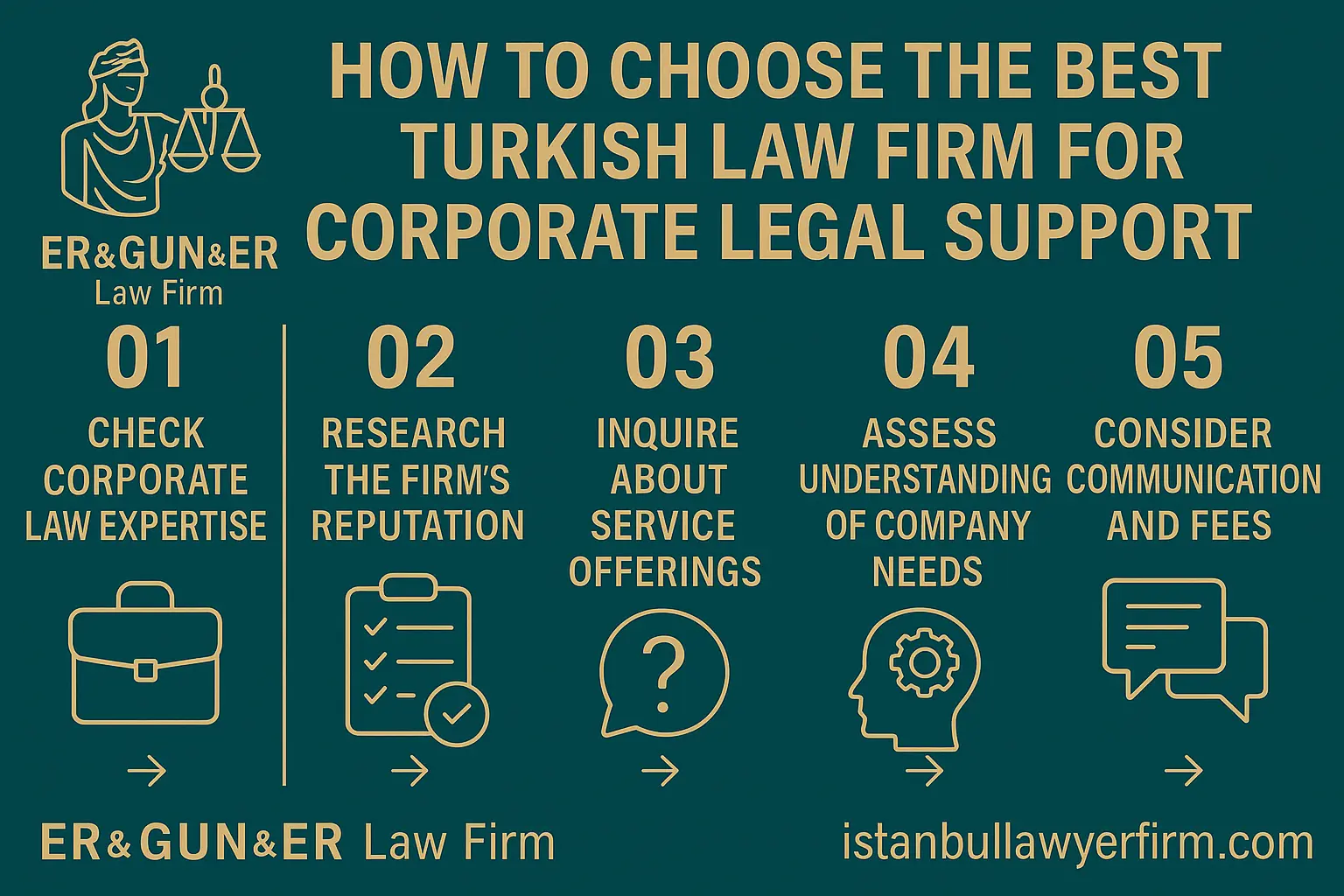
Corporate legal work in Turkey is governed by the Turkish Commercial Code (Türk Ticaret Kanunu, TTK, Law No. 6102), the Turkish Code of Obligations (Türk Borçlar Kanunu, TBK, Law No. 6098), and a growing network of sector-specific regulatory frameworks administered by the Banking Regulation and Supervision Agency (BDDK), the Capital Markets Board (SPK), the Energy Market Regulatory Authority (EPDK), the Telecommunications Authority (BTK), the Competition Authority (Rekabet Kurumu), and the Revenue Administration (Gelir İdaresi Başkanlığı, GİB). Understanding which framework applies to a specific corporate decision — and specifically how that framework interacts with the others that simultaneously apply — is the foundational competency in Turkish corporate legal practice. The TTK framework establishes the entity types available to investors (anonim şirket for joint stock companies, limited şirketi for limited liability companies, adi ortaklık for partnerships, and branch or liaison offices for foreign entities), the mandatory governance rules for each, the minimum capital requirements, the legal requirements for board and management structure, the shareholder rights regime including minority protections, and the specific formalities (notarization, registration, publication) required for corporate actions to be legally effective. This guide explains how these frameworks apply across the most common corporate legal needs — entity selection and formation, governance structuring, commercial contracts, M&A transactions, employment law compliance, and commercial dispute resolution. Practice may vary by authority and year — verify current TTK implementation standards and commercial court practice directly before relying on any information in this guide.
Entity selection and formation under the Turkish Commercial Code
A lawyer in Turkey advising on entity selection for corporate investors must explain that the choice between the two primary Turkish corporate entities — the anonim şirket (AŞ, joint stock company) and the limited şirketi (Ltd. Şti., limited liability company) — has significant implications for governance structure, shareholder liability, capital requirements, share transferability, and access to capital markets that must be evaluated against the investor's specific business objectives before any incorporation decision is made. The AŞ requires a minimum paid-in capital of TRY 250,000 for regular joint stock companies (or TRY 500,000 for non-public AŞ companies with issued bearer shares), allows the issue of multiple classes of shares, can be listed on capital markets, permits more flexible governance through the board of directors (yönetim kurulu) structure, and is the required form for many regulated entities. The Ltd. Şti. requires a minimum capital of TRY 50,000 divided into shares with a minimum par value of TRY 25 each, restricts share transfers without shareholder consent, cannot issue bearer shares or be publicly traded, and is governed by its müdürler (managers) — but is significantly simpler to administer and is the preferred form for most privately held Turkish operating companies. Practice may vary by authority and year — verify current minimum capital requirements and entity-specific regulatory eligibility conditions applicable to the specific sector and investment structure before any entity selection decision. For the full procedural framework, see our pillar guide on company formation in Turkey.
An Istanbul Law Firm advising on the TTK formation procedure must explain that company formation in Turkey requires a specific sequence of steps at multiple institutions — and the sequence must be completed without gaps because incomplete formation creates legal uncertainty about the company's existence and the authority of its representatives. The formation sequence for a new AŞ or Ltd. Şti. involves: preparation and notarization of the articles of association (esas sözleşme) at a Turkish notary public; electronic registration through the MERSIS (Merkezi Sicil Kayıt Sistemi) online platform followed by confirmation at the relevant Turkish Trade Registry Office (Ticaret Sicili Müdürlüğü); payment of the minimum capital to a Turkish bank account in the company's name (for AŞ, 25% of the capital must be paid before registration, with the remainder within 24 months); publication in the Turkish Trade Registry Gazette (Türkiye Ticaret Sicil Gazetesi); and registration with the Tax Administration for tax identification number (vergi kimlik numarası) and VAT purposes. For foreign shareholders, each step requires specific additional documentation — including foreign company apostilled corporate documents, sworn Turkish translations, and special powers of attorney authorizing the Turkish representative to sign on behalf of the foreign shareholder. Practice may vary — verify current MERSIS registration requirements and Trade Registry Office documentation requirements for the specific entity type and foreign shareholder nationality before any formation engagement.
An English speaking lawyer in Turkey advising on branch and liaison office formation for foreign companies must explain that a foreign company wishing to conduct business in Turkey without establishing a Turkish subsidiary has two options — a branch office (şube) and a liaison office (irtibat bürosu) — with fundamentally different legal characteristics and regulatory requirements. A branch office is an extension of the foreign parent company, is subject to Turkish tax on its Turkish-source income, can conduct commercial activities in Turkey on behalf of the parent, and must be registered with the Turkish Trade Registry. A liaison office, by contrast, is specifically prohibited from generating Turkish-source commercial revenue — its permitted activities are limited to market research, customer relations, and similar non-commercial functions — and is registered with the Ministry of Industry and Trade (Sanayi ve Ticaret Bakanlığı) rather than with the Trade Registry. A foreign company that conducts commercial activities through what is registered as a liaison office is exposed to tax authority scrutiny, potential reclassification as a permanent establishment for tax purposes, and administrative sanctions for conducting unauthorized commercial activity. Practice may vary — verify current Turkish tax authority permanent establishment assessment standards and the specific permitted activity scope for liaison offices in Turkey before any branch or liaison office structure decision. The foreign company setup framework is analyzed in the resource on setting up a branch office in Turkey. Practice may vary — check current guidance before acting on any information on this page.
Corporate governance under TTK — board structure, shareholder rights, and mandatory formalities
A Turkish Law Firm advising on AŞ corporate governance must explain that the TTK's governance framework for joint stock companies creates mandatory rules that cannot be contracted around through the articles of association — and understanding which TTK provisions are mandatory (emredici) versus default rules that can be modified is essential for designing a governance structure that works in practice. The mandatory TTK rules for AŞ governance include: the requirement that the board of directors (yönetim kurulu) consist of at least one member (with no maximum); the requirement that board resolutions be documented in written minutes signed by all members present; the requirement that certain fundamental corporate changes (capital increases, articles of association amendments, change of business purpose, dissolution) be approved by the general assembly (genel kurul) with specific voting thresholds; and the specific disclosure and transparency obligations applicable to listed companies. The TTK also includes mandatory minority shareholder protections — shareholders holding 10% or more of the capital (5% for listed companies) have the right to call a general assembly, and courts can appoint independent auditors upon minority shareholder request. Practice may vary by authority and year — verify current TTK mandatory governance provisions and the specific default rule modification options available in articles of association for the specific entity type before any governance design decision.
An Istanbul Law Firm advising on the general assembly formalities must explain that the general assembly is the supreme governance body of both the AŞ and the Ltd. Şti., and the formal requirements for a general assembly to be validly convened and its resolutions to be legally effective are significantly more demanding than many corporate managers assume — particularly for extraordinary decisions that are routinely challenged in Turkish commercial courts. The mandatory formalities include: notice of the general assembly to all shareholders at least two weeks in advance (for ordinary general assemblies) through a method specified in the articles of association and published in the Turkish Trade Registry Gazette for public companies; preparation and distribution of the agenda in advance; presence of a Ministry representative (Bakanlık temsilcisi) for certain listed company decisions and for specific extraordinary decisions at non-listed companies; proper conduct of the vote with individual vote recording where required; preparation of signed minutes (toplantı tutanağı) immediately after the meeting; and registration of certain resolutions with the Trade Registry within the applicable time limit. A general assembly resolution that does not satisfy the mandatory formalities can be challenged in a nullity action (butlan davası) or a cancellation action (iptal davası) at the commercial court. Practice may vary — verify current general assembly formality requirements and the specific Ministry representative requirements applicable to the decision type before any general assembly is convened for a significant corporate decision.
A lawyer in Turkey advising on director authority and liability must explain that Turkish directors (yönetim kurulu üyeleri for AŞ, müdürler for Ltd. Şti.) have both the authority and the personal liability exposure that comes with representing the company — and the boundaries of each must be clearly established in the corporate documents to prevent disputes about authority scope and to protect directors from personal liability for decisions taken within proper authority. Under TTK Article 553, directors who negligently or intentionally cause damage to the company, its shareholders, or its creditors are personally liable for that damage — and the liability is not limited by the corporate form. The specific risk areas for director liability include: transactions with related parties at non-arm's length terms; distribution of dividends without adequate coverage by audited net income; late filing of tax declarations and SGK premium payments (which create direct personal liability under VUK Article 10 and Law No. 5510 Article 88); continuing to operate after insolvency without filing for bankruptcy; and failure to maintain required corporate records. Practice may vary — verify current TTK and Turkish tax law director liability standards applicable to the specific director conduct and decision before any director authority or liability assessment. Practice may vary — check current guidance before acting on any information on this page.
Commercial contract law — TBK framework and corporate contract design
An English speaking lawyer in Turkey advising on Turkish commercial contract law must explain that Turkish contract law is governed primarily by the Turkish Code of Obligations (TBK, Law No. 6098) — a civil law statute with significant differences from common law contract doctrine that create specific risks for parties accustomed to English or US law contracting. The most practically significant differences include: the Turkish doctrine of contractual hardship (aşırı ifa güçlüğü) under TBK Article 138, which allows a court to modify or terminate a contract when changed circumstances make performance excessively burdensome, creating an implied contract modification mechanism that has no direct common law equivalent; the mandatory interest rate regime under TBK and commercial law (TCK) that limits the parties' ability to agree on interest rates exceeding the statutory maximum; the specific format requirements for certain contract types — including notarization requirements for real estate preliminary agreements (gayrimenkul satış vaadi sözleşmesi), the requirement for specific form for guarantee agreements (kefalet sözleşmesi) under TBK Article 583; and the mandatory consumer protection provisions of TKHK (Law No. 6502) that apply to contracts with consumers regardless of the contract's express terms. Practice may vary by authority and year — verify current TBK mandatory provision standards applicable to the specific contract type and the specific mandatory consumer protection provisions applicable before any commercial contract design engagement.
A Turkish Law Firm advising on shareholder agreement design must explain that a well-designed shareholder agreement for a Turkish company must address both the TTK's mandatory corporate governance rules (which the agreement cannot override) and the practical governance questions that the TTK leaves to shareholder discretion — specifically, the decision-making authorities of management versus shareholders, the restrictions on share transfer, the deadlock resolution mechanisms, the exit rights of minority shareholders, and the obligation of the majority to offer the minority liquidity at defined circumstances. Turkish court practice has recognized shareholder agreement provisions on many of these topics — but specific provisions are sometimes challenged on the ground that they conflict with the TTK's mandatory rules, the articles of association, or Turkish public policy. The most commonly contested provisions include drag-along rights that allow the majority to force the minority to sell, squeeze-out mechanisms not authorized by the TTK for non-listed companies, and non-compete obligations with excessively broad scope or duration that Turkish courts have reduced under TBK Article 27's unconscionable terms doctrine. Practice may vary — verify current Turkish commercial court shareholder agreement enforceability standards for the specific provision type and entity structure before any shareholder agreement design engagement.
An Istanbul Law Firm advising on bilingual contract drafting must explain that Turkish law contracts for international transactions are frequently drafted in both Turkish and a foreign language (typically English) — and the language consistency between the two versions is a critical execution risk that is frequently underestimated. The specific risks include: defined terms that have different meanings in the two languages (because the Turkish legal concept and the English legal concept designated by the same translated term have different scope or effect); amounts and dates that appear differently in the two language versions due to formatting conventions (Turkish uses a period as a thousands separator and a comma as a decimal separator — the opposite of English convention); and governing language clauses that are inconsistent with each other or that create ambiguity about which version controls in the event of inconsistency. A well-managed bilingual contract project includes: a single drafting language (typically English for international deals) as the source; a sworn translation (yeminli tercüman) of the Turkish version; a parallel review of both versions by an attorney reading both languages; a defined governing language clause; and a version control system that links each provision in the English version to the corresponding provision in the Turkish version. Practice may vary — verify current Turkish court interpretation standards for bilingual contracts and the specific sworn translation requirements applicable before any bilingual contract project. Practice may vary — check current guidance before acting on any information on this page.
M&A transactions — due diligence, Competition Authority clearance, and closing
A lawyer in Turkey advising on M&A due diligence in Turkey must explain that Turkish legal due diligence for a corporate acquisition requires a systematic review of multiple legal risk categories — and the scope of the review must be matched to the specific risk profile of the target company rather than applied as a generic checklist. The core due diligence categories include: corporate validity (confirming that the target company was properly formed, that all general assembly resolutions amending the articles of association were properly adopted, and that the current capital structure and share ownership are correctly reflected in the Trade Registry); contractual exposure (reviewing material contracts for change of control triggers, automatic termination provisions, assignment restrictions, and significant liability exposure); labor law exposure (reviewing employment contracts for obligations that survive a share transfer, pending labor claims, and SGK premium arrears that become a joint and several liability of a new owner in an asset acquisition); regulatory status (confirming that all required sector licenses are held and are not subject to revocation, transfer restrictions, or pending administrative challenges); and litigation exposure (reviewing all pending and threatened litigation that would survive the acquisition). Practice may vary by authority and year — verify current Turkish M&A due diligence best practices and the specific joint and several liability standards applicable to different acquisition structures before any M&A due diligence engagement.
An Istanbul Law Firm advising on Competition Authority notification must explain that transactions meeting the defined turnover thresholds under the Law on the Protection of Competition (Rekabet Kanunu, Law No. 4054) and the Communiqué No. 2010/4 require mandatory pre-closing notification to and clearance from the Turkish Competition Authority (Rekabet Kurumu) — and closing the transaction before clearance is obtained is a serious violation that can result in fines up to 0.1% of Turkish annual turnover for each day of violation, plus potential unwinding of the transaction. The notification threshold is met when the combined Turkish turnover of the parties exceeds TRY 750 million and each of at least two parties has Turkish turnover exceeding TRY 250 million (as of the most recent threshold update). The filing requires a defined information package including financial data, market definition analysis, and competitive overlap assessment — and the Competition Authority typically issues its clearance decision within 30 calendar days of a complete filing (extendable to 90 days for complex filings requiring Phase 2 review). Practice may vary — verify current Rekabet Kurumu notification threshold amounts and the specific filing package requirements applicable to the transaction structure before any M&A competition law assessment. The corporate transaction framework is analyzed in the resource on mergers and acquisitions in Turkey.
An English speaking lawyer in Turkey advising on transaction closing in Turkey must explain that the closing of a Turkish share acquisition — the actual transfer of the shares from seller to buyer — requires specific formalities under TTK that differ between AŞ and Ltd. Şti. share transfers, and these formalities must be completed correctly for the transfer to be legally effective and for the acquirer to be recognized as a shareholder in the company's records. For a Ltd. Şti. share transfer, TTK Articles 595-596 require: a written share transfer agreement signed before a notary public; a resolution of the existing shareholders approving the transfer (unless the articles of association waive this requirement); and entry of the new shareholder in the company's share transfer register (pay defteri). A Ltd. Şti. share transfer that is not notarized is legally void regardless of payment having been made. For an AŞ share transfer involving registered shares (nama yazılı pay), the transferee must be registered in the share register. A share transfer not registered in the company's share register (pay defteri) does not create shareholder rights against the company even if the transfer agreement itself is valid between the parties. Practice may vary — verify current TTK share transfer formality requirements for the specific entity type and share class before any M&A closing procedure design. Practice may vary — check current guidance before acting on any information on this page.
Employment law compliance for Turkish corporate entities
A Turkish Law Firm advising on Turkish employment law compliance must explain that the Turkish Labor Code (İş Kanunu, Law No. 4857) creates a comprehensive mandatory employment protection framework that significantly limits the parties' ability to contract around its provisions — and many employment clauses that are standard in other jurisdictions are legally ineffective or create unintended consequences in Turkish law. The key mandatory provisions include: the minimum notice period requirements that scale with employee tenure (2 weeks for less than 6 months, 4 weeks for 6-18 months, 6 weeks for 18 months to 3 years, and 8 weeks for over 3 years); the mandatory severance pay (kıdem tazminatı) entitlement of one month's pay for each year of service (capped at a statutory ceiling) for employees who are terminated without just cause or who resign for specific statutory reasons; the restrictive grounds for just cause termination (haklı fesih) that allow immediate termination without notice or severance — which are strictly interpreted by labor courts in favor of employees; and the 5-working-day response period that must be given to employees before termination for behavioral grounds, during which the employee has the right to present a defense. Practice may vary by authority and year — verify current İş Kanunu mandatory provision standards and labor court termination assessment methodology applicable to the specific termination ground before any employment termination decision.
An Istanbul Law Firm advising on SGK social security compliance must explain that the Social Security Institution (Sosyal Güvenlik Kurumu, SGK) compliance obligations create significant personal director liability exposure when they are not met — specifically, Law No. 5510 Article 88 makes company directors jointly and severally personally liable for the company's unpaid SGK premiums where the non-payment results from management failure to make required declarations or payments. This personal liability survives the company's insolvency and can be enforced against the director's personal assets through enforcement proceedings. The SGK premium rates are significant — the combined employer and employee premium rate is approximately 37.5% of the employee's gross salary for most workers (the exact rates depend on the applicable hazard class) — and companies with cash flow difficulties frequently fall behind on SGK premium payments, creating growing director liability exposure. The most common SGK compliance failures include: registering employees late; under-reporting employees' actual working hours or salaries; registering employees under the wrong hazard classification; and failing to register certain categories of workers (particularly part-time, seasonal, or casual workers) who are legally required to be insured. Practice may vary — verify current SGK premium rates and director personal liability standards applicable to the specific employment category before any SGK compliance assessment.
A lawyer in Turkey advising on work permit compliance for foreign employees must explain that employing a foreign national in Turkey without the required work permit (çalışma izni) exposes both the employer and the employee to significant administrative fines under Law No. 6735 and the potential deportation of the foreign employee under YUKK — creating a dual compliance obligation that must be managed as a project rather than as a one-time administrative step. The employer's mandatory obligations include: filing the work permit application through the YAYBÜS system before the foreign employee begins work; satisfying the 1:5 Turkish-to-foreign employee ratio requirement (5 Turkish SGK-registered employees for each foreign employee permit); meeting minimum salary thresholds that vary by occupational category; and notifying the competent authority of any material changes in the employment relationship (position, salary, employer, or work location) that may require permit updating or renewal. A foreign employee working in Turkey without a valid work permit is working illegally regardless of whether they hold a valid residence permit — and the employer's failure to verify and maintain work permit compliance is penalized with fines applied per unauthorized foreign employee. Practice may vary — verify current Law No. 6735 work permit application requirements and the specific YAYBÜS documentation format for the specific occupational category and nationality before any work permit compliance program design. Practice may vary — check current guidance before acting on any information on this page.
Regulatory compliance — trade registry, sector regulators, and ongoing corporate reporting
An English speaking lawyer in Turkey advising on trade registry compliance must explain that Turkish commercial companies have ongoing reporting and registration obligations at the Turkish Trade Registry that go beyond the initial formation registration — and failure to maintain these ongoing registrations creates legal uncertainty about the company's governance and can expose directors to personal liability. The key ongoing trade registry obligations include: registration of all changes to the articles of association within 15 days of the shareholders' approval; registration of all board of directors membership changes; registration of all changes to authorized signatories (imzaya yetkili kişiler) and the scope of their authority as reflected in the signature circular (imza sirküleri); annual ordinary general assembly resolution registration; and capital changes (increases and decreases). The signature circular (imza sirkülesi) — the notarized document that identifies who can sign on behalf of the company and the scope of their signing authority — is the document that Turkish banks, registries, and contracting counterparties use to verify the authority of the person signing on behalf of the company. An outdated signature circular — reflecting former management that has since resigned — creates significant execution risk when the company attempts to complete transactions. Practice may vary by authority and year — verify current Trade Registry registration obligations and deadlines applicable to the specific corporate event before any trade registry compliance assessment.
A Turkish Law Firm advising on Competition Authority compliance must explain that Turkish competition law creates ongoing compliance obligations — beyond the pre-transaction notification requirement — that apply to all companies with significant market presence and specifically to companies in dominant positions. The Law on the Protection of Competition (Rekabet Kanunu, Law No. 4054) prohibits: anticompetitive agreements, concerted practices, and decisions by associations of undertakings (Article 4, equivalent to TFEU Article 101); the abuse of a dominant market position (Article 6, equivalent to TFEU Article 102); and anti-competitive mergers and acquisitions (Article 7). The Competition Authority (Rekabet Kurumu) has active enforcement authority and has imposed significant fines — reaching hundreds of millions of TRY — on companies found to have violated Articles 4 or 6. Key compliance risk areas for corporate clients include: information sharing with competitors (even through industry associations); vertical distribution restrictions that limit retailer pricing or territorial allocation; and unilateral practices by dominant companies (including refusal to deal, margin squeeze, and exclusivity obligations). Practice may vary — verify current Rekabet Kurumu enforcement priorities and the specific competition compliance obligation standards applicable to the specific market position and industry before any competition compliance assessment.
An Istanbul Law Firm advising on KVKK data protection compliance for corporate entities must explain that Turkey's Personal Data Protection Law (KVKK, Law No. 6698) — modeled on the EU GDPR but with specific Turkish implementation requirements — creates compliance obligations for all companies that process personal data of Turkish residents, regardless of where the processing occurs. The key KVKK obligations for corporate entities include: registration in the VERBIS (Veri Sorumluları Sicil Bilgi Sistemi) data controller registry for companies above defined size thresholds; preparation of a Records of Processing Activities (VAME — Veri İşleme Aktiviteleri Matrisi) documenting all data processing activities; implementation of appropriate technical and organizational security measures; providing data subjects with the required privacy notice at the point of data collection; establishing data subject rights response procedures for access, rectification, erasure, and portability requests; implementing KVKK-compliant data transfer mechanisms for cross-border data transfers; and entering into data processing agreements with third-party processors. The KVKK Board has authority to impose administrative fines of up to 1% of the company's annual Turkish turnover for KVKK violations. Practice may vary — verify current KVKK Board guidance and VERBIS registration threshold requirements before any corporate data protection compliance assessment. The data protection framework is analyzed in the resource on personal data protection law in Turkey. Practice may vary — check current guidance before acting on any information on this page.
Commercial dispute resolution — litigation, arbitration, and enforcement
A lawyer in Turkey advising on commercial dispute resolution strategy must explain that the choice between Turkish commercial court litigation, Turkish arbitration, and international arbitration is a decision that must be made at the contract drafting stage — because the choice of dispute resolution mechanism has significant implications for timeline, confidentiality, enforceability, and the ability to obtain interim measures that cannot be easily changed after a dispute has arisen. Turkish commercial court litigation before the asliye ticaret mahkemesi is the default for disputes without an arbitration clause — it is public, conducted entirely in Turkish, subject to the Turkish procedural rules of HMK (which differ significantly from common law discovery and evidence rules), and subject to an appeals process through the regional courts of appeals (Bölge Adliye Mahkemesi) and the Court of Cassation (Yargıtay) that can extend total dispute resolution timelines to four to six years for complex cases. Turkish arbitration under the International Arbitration Law (Law No. 4686) or the ISTAC rules provides a private, potentially faster, and finality-focused alternative that may be preferable for sensitive commercial disputes. International arbitration (ICC, LCIA, or other institutional rules with a foreign seat) provides additional advantages for parties who need a recognized international award enforceable across multiple jurisdictions. Practice may vary by authority and year — verify current Turkish commercial court procedural timelines and the specific arbitration seat implications for international enforceability before any dispute resolution clause design decision.
An Istanbul Law Firm advising on commercial court litigation procedure must explain that Turkish commercial court litigation under HMK operates through a distinct procedural sequence — written pleading exchange, evidence submission, witness and expert examination, and bilirkişi report — that differs fundamentally from common law litigation and creates specific tactical considerations for corporate litigants. The HMK's dilekçeler aşaması (written pleading phase) requires the claimant to file a petition (dava dilekçesi) that must include all factual allegations, all legal arguments, all evidence to be relied upon, and the specific relief requested; the defendant then files a response (cevap dilekçesi) within two weeks (extendable by court order). After the written pleading exchange, the court moves to the substantive hearing phase (tahkikat), which includes examination of witnesses, appointment and reporting of court experts (bilirkişi), and the court's evidence assessment. The bilirkişi expert system is particularly significant — Turkish commercial courts routinely appoint technical experts for financial, accounting, construction, and other technical disputes, and the bilirkişi report substantially influences the outcome. A corporate litigant's ability to effectively challenge bilirkişi methodology through detailed written objections (itiraz layihası) is among the most practically important litigation competencies. Practice may vary — verify current HMK procedural requirements and bilirkişi challenge standards at the specific commercial court before any commercial litigation strategy is designed.
An English speaking lawyer in Turkey advising on interim measures for corporate disputes must explain that Turkish law provides two primary civil interim measure mechanisms — ihtiyati haciz (provisional attachment, under İİK Articles 257-268) for securing monetary claims and ihtiyati tedbir (provisional injunction, under HMK Articles 389-399) for non-monetary equitable relief — that are available before or during the main proceedings and are critical tools for protecting corporate clients' interests in fast-moving commercial disputes. An ihtiyati haciz allows a creditor to freeze the debtor's assets (bank accounts, real estate, receivables) before obtaining a final judgment, preventing asset dissipation during the litigation period. An ihtiyati tedbir allows a court to prohibit specific actions or require specific conduct during the pending proceedings — for example, preventing a shareholder from selling shares in a company that is the subject of a dispute, or preventing the publication of information pending a defamation trial. Both mechanisms can be obtained ex parte (without prior notice to the counterparty) where urgency justifies it, and both require the applicant to provide security (teminat) for the counterparty's potential damages if the measure is ultimately found to have been unjustified. Practice may vary — verify current Turkish court interim measure application requirements and teminat standards at the relevant court before any interim measure application in a corporate dispute. Practice may vary — check current guidance before acting on any information on this page.
IP protection, technology law, and digital corporate compliance
A Turkish Law Firm advising on Turkish IP protection must explain that Turkey's intellectual property framework consists of separate statutory regimes for trademarks (Sınai Mülkiyet Kanunu, Law No. 6769, administered by the Turkish Patent and Trademark Office — TÜRKPATENT), patents and utility models (also under Law No. 6769), copyrights and related rights (Fikir ve Sanat Eserleri Kanunu, FSEK, Law No. 5846, administered by the Ministry of Culture and Tourism), and trade secrets (partially covered under Turkish Commercial Code and unfair competition provisions). Turkey is a member of the Madrid Protocol for international trademark registration, allowing Turkish trademark applications to serve as the basis for international registrations — and is also a party to the Patent Cooperation Treaty (PCT) for patent applications. TÜRKPATENT's trademark examination includes absolute grounds refusal and opposition procedures, with a standard registration timeline of approximately 12-18 months for uncontested applications. Turkish trademark practice requires careful selection of NICE classes and specific goods/services descriptions — overly broad specifications are vulnerable to non-use cancellation (kullanmama nedeniyle iptal) after the five-year non-use period under Law No. 6769 Article 26. Practice may vary by authority and year — verify current TÜRKPATENT trademark registration procedures and opposition deadline standards applicable to the specific trademark category before any Turkish trademark registration strategy.
An Istanbul Law Firm advising on technology law for corporate clients must explain that Turkish technology law has developed rapidly in response to digital commerce and platform economy growth — and corporate clients in the digital sector face a complex compliance landscape that includes KVKK data protection, Law No. 5651 on Internet Regulation (which creates specific content hosting liability rules for Turkish hosting providers and significant platforms), e-commerce law (Law No. 6563, which creates specific disclosure and contract formation requirements for electronic commerce), and the BTK's technical standards for electronic communication and cybersecurity. Large-scale platform operators with significant Turkish user bases (exceeding one million Turkish daily active users) face specific must-carry content removal obligations and Turkish local representative appointment requirements under Law No. 5651 that create additional compliance layers. Companies operating in the fintech space face additional regulatory frameworks administered by BDDK (for payment systems and electronic money institutions) and the Capital Markets Board (SPK) for investment-related fintech. Practice may vary — verify current Law No. 5651 and Law No. 6563 compliance requirements applicable to the specific digital business model and user engagement level before any technology law compliance assessment.
A lawyer in Turkey advising on corporate IP and technology dispute resolution must explain that IP enforcement in Turkey spans civil, criminal, and administrative remedies that must be coordinated based on the specific infringement type and the urgency of the required relief. Civil IP enforcement through the Turkish IP courts (fikrî ve sınai haklar hukuk mahkemesi) allows injunctive relief (ihtiyati tedbir), damages claims, and cessation-of-infringement orders — and the urgency of injunctive relief applications is assessed based on the time between discovering the infringement and filing, making prompt action critical. Criminal enforcement under FSEK (for copyright) and Law No. 6769 (for trademarks and patents) provides criminal sanctions for knowing infringement that can support criminal complaint (şikâyet) or direct criminal denunciation (ihbar) procedures. TÜRKPATENT administrative enforcement allows cancellation of improperly registered trademarks (on invalidation and non-use cancellation grounds) without court proceedings. The coordination between these three enforcement channels — using the administrative channel to challenge the infringing trademark while simultaneously pursuing civil injunctive relief to stop infringing activity — is the most effective IP enforcement strategy in most Turkish infringement scenarios. Practice may vary — verify current Turkish IP court procedural standards and the specific criminal enforcement procedures applicable to the specific IP right category before any IP enforcement strategy is designed. Practice may vary — check current guidance before acting on any information on this page.
How we approach corporate mandates at ER&GUN&ER
An English speaking lawyer in Turkey at ER&GUN&ER managing a corporate client relationship explains that our approach to corporate legal mandates reflects three organizing principles: we distinguish between the client's legal obligations (what Turkish law requires) and the client's legal options (what Turkish law permits), because the most common corporate legal problem is not knowing which is which; we manage corporate matters as ongoing projects rather than one-time transactions, because the ongoing compliance obligations of a Turkish corporate entity require a continuing relationship rather than a transactional engagement; and we communicate all legal assessments in writing with specific statutory citations and specific procedural descriptions rather than verbal assurances, because the value of legal advice is in the specific, verifiable guidance it provides. For foreign corporate clients, we add a fourth principle: we explain the differences between Turkish law treatment of specific issues and the treatment in the client's home jurisdiction when those differences are material to a decision, because the assumption that Turkish law works the same way as familiar jurisdictions is the most common source of avoidable legal error. Each corporate mandate begins with a written scope document and ends with a closing binder that documents all actions taken and identifies all continuing compliance obligations.
ER&GUN&ER advises domestic and international corporate clients across the complete spectrum of Turkish corporate legal needs — entity selection, formation, and MERSIS registration; TTK corporate governance structuring; articles of association and shareholder agreement drafting; general assembly management and Trade Registry compliance; commercial contract drafting, review, and negotiation; M&A due diligence, Competition Authority notification, and closing documentation; employment contract design and SGK compliance; work permit applications and foreign employee compliance; regulatory licensing and sector compliance (BDDK, SPK, BTK, EPDK, Rekabet Kurumu); KVKK data protection compliance; commercial litigation before Istanbul commercial courts; Turkish and international arbitration; IP registration and enforcement; and cross-border corporate transaction coordination with foreign counsel. We work in English throughout all international mandates. For the company formation framework — see the resource on types of companies in Turkey. For the foreign investment legal framework — see the resource on foreign investor company law in Turkey. Practice may vary — check current guidance before acting on any information on this page.
Frequently Asked Questions
- What entity types are available for corporate investors in Turkey? The primary corporate entity types under TTK are the anonim şirket (AŞ, joint stock company — minimum capital TRY 250,000) and the limited şirketi (Ltd. Şti., limited liability company — minimum capital TRY 50,000). AŞ allows multiple share classes, bearer shares, and potential capital market listing; Ltd. Şti. is simpler to administer but restricts share transfers and cannot issue bearer shares. Foreign companies can also operate through a branch office (şube, registered with the Trade Registry) or a liaison office (irtibat bürosu, registered with the Ministry of Industry, restricted to non-commercial activities). Practice may vary — verify current minimum capital requirements.
- What are the mandatory formalities for forming a Turkish company? Formation requires: notarization of the articles of association at a Turkish notary; electronic registration through the MERSIS system and confirmation at the Turkish Trade Registry Office; capital payment to a Turkish bank account (25% of AŞ capital before registration); publication in the Turkish Trade Registry Gazette; and tax authority registration. For foreign shareholders, each step requires apostilled foreign corporate documents, sworn Turkish translations, and a power of attorney for the Turkish representative. Practice may vary — verify current MERSIS and Trade Registry documentation requirements.
- What mandatory shareholder protections does TTK provide for minority shareholders? Shareholders holding 10% or more of capital in a non-listed AŞ (5% in a listed AŞ) have the right to call a general assembly. The TTK also provides minority shareholders with the right to request special audit appointments through courts, the right to cumulative voting for board member elections if requested by 20% of capital (for non-listed companies), and specific information rights. These protections are mandatory and cannot be contracted away in the articles of association. Practice may vary — verify current TTK minority shareholder rights applicable to the specific entity structure.
- What are the mandatory employee rights under Turkish labor law that cannot be contracted around? The İş Kanunu's mandatory provisions include: minimum notice periods scaling from 2 to 8 weeks depending on tenure; mandatory severance pay (kıdem tazminatı) of one month's salary per year of service for qualifying terminations; the requirement to give employees 5 working days to present a defense before behavioral-grounds termination; annual paid leave entitlements; and maximum working hours. These provisions apply regardless of contrary contractual terms. Practice may vary — verify current mandatory employment protection standards applicable to the specific employee category.
- When is Competition Authority notification required for an M&A transaction in Turkey? A transaction requires Rekabet Kurumu notification and clearance before closing when: the combined Turkish turnover of all parties to the transaction exceeds TRY 750 million AND the Turkish turnover of each of at least two parties individually exceeds TRY 250 million. Closing before clearance is obtained can result in daily fines of 0.1% of Turkish annual turnover. Practice may vary — verify current notification threshold amounts (which are periodically updated by the Rekabet Kurumu) before any transaction notification assessment.
- What formalities are required for a Ltd. Şti. share transfer to be legally effective? A Ltd. Şti. share transfer requires: a written transfer agreement signed before a Turkish notary public (un-notarized transfers are void); a shareholder resolution approving the transfer (unless the articles of association waive this requirement); and entry of the new shareholder in the company's share transfer register (pay defteri). A transfer that is not properly notarized is legally void regardless of payment. The new shareholder does not acquire enforceable rights against the company until registered in the share transfer register. Practice may vary — verify current TTK share transfer formality requirements.
- What personal liability do Turkish company directors face for SGK non-payment? Law No. 5510 Article 88 creates direct personal joint and several liability for company directors for the company's unpaid SGK premiums where the failure to pay results from management failure to make required declarations or premium payments. This personal liability survives the company's insolvency and can be enforced against the director's personal assets. The liability extends to all unpaid premiums during the director's tenure. Practice may vary — verify current SGK director liability enforcement standards applicable to the specific director role and employment relationship.
- What is KVKK and what compliance obligations does it create for Turkish companies? KVKK (Law No. 6698) is Turkey's data protection law, modeled on GDPR. Corporate compliance obligations include: VERBIS data controller registry registration for companies above defined thresholds; documenting all data processing activities in a Records of Processing Activities; providing privacy notices at data collection; establishing data subject rights procedures; implementing data security measures; and entering data processing agreements with processors. The KVKK Board can impose fines of up to 1% of annual Turkish turnover for violations. Practice may vary — verify current VERBIS threshold requirements and KVKK Board guidance.
- What is the difference between ihtiyati haciz and ihtiyati tedbir in commercial disputes? Ihtiyati haciz (provisional attachment) under İİK Articles 257-268 is used to freeze the debtor's assets (bank accounts, real estate, receivables) to secure a monetary claim before obtaining a final judgment. Ihtiyati tedbir (provisional injunction) under HMK Articles 389-399 is used for non-monetary equitable relief — prohibiting specific actions or requiring specific conduct during pending proceedings. Both can be obtained ex parte where urgency justifies it, and both require the applicant to provide security (teminat) against the counterparty's potential damages if the measure is ultimately found unjustified. Practice may vary — verify current court standards for each measure type.
- What are the Turkish commercial court's procedural requirements for evidence submission? HMK requires the claimant to submit all evidence it intends to rely upon with the initial petition (dava dilekçesi) and the defendant to submit all evidence with the response (cevap dilekçesi). Evidence submitted late may be excluded unless the party demonstrates it was unable to obtain the evidence earlier. Turkish courts appoint bilirkişi (court experts) for technical matters including accounting, financial, construction, and engineering disputes — and the bilirkişi report significantly influences the outcome. Effectively challenging inadequate bilirkişi methodology through written objections (itiraz layihası) is a critical litigation competency. Practice may vary — verify current HMK evidence submission standards.
- When does Turkish arbitration apply and when is international arbitration preferable? Turkish arbitration under Law No. 4686 (International Arbitration Law) applies where the dispute has an international element — defined broadly to include disputes between parties in different countries or where performance occurs in multiple countries. For domestic disputes, ad hoc arbitration under HMK Articles 407-444 applies. International arbitration (ICC, LCIA, or other institutions with a foreign seat) may be preferable where: the parties need an internationally recognized award enforceable across multiple jurisdictions under the New York Convention; confidentiality is critical; or the matter involves sophisticated international parties who expect international procedural standards. Practice may vary — verify current Law No. 4686 application standards.
- What IP rights protection does Turkey provide and how are they registered? Turkey provides: trademark protection under Law No. 6769 (registered with TÜRKPATENT, valid for 10 years from registration, renewable); patent protection under Law No. 6769 (20-year term); utility model protection under Law No. 6769 (10-year term); copyright protection under FSEK (lifetime plus 70 years, no registration required); and design protection under Law No. 6769. Turkey is a member of the Madrid Protocol for international trademark registration and the PCT for patent applications. TÜRKPATENT processes applications through examination and opposition procedures. Practice may vary — verify current TÜRKPATENT procedural timelines and opposition standards.
- What Law No. 5651 compliance obligations apply to digital platforms with Turkish users? Law No. 5651 (on Internet Regulation) creates specific obligations for large-scale social media and platform providers exceeding 1 million Turkish daily active users — including a Turkish local representative appointment obligation, content removal compliance within defined timeframes, and user data localization requirements. All platforms that host user-generated content in Turkey face potential liability for content that is not removed upon proper court or regulatory order. E-commerce platforms face additional obligations under Law No. 6563, including mandatory pre-contract information disclosure. Practice may vary — verify current Law No. 5651 threshold and compliance requirements applicable to the specific platform type.
- How are SGK premium obligations calculated for foreign employees? Foreign employees working in Turkey under a valid work permit are generally subject to Turkish social security registration and SGK premium payment obligations on their Turkish employment income at the same rates applicable to Turkish employees (currently approximately 37.5% total, split between employer and employee contributions). Exceptions may apply where Turkey has a social security totalization agreement with the employee's home country and the employee can demonstrate active home-country social security coverage. Practice may vary — verify current applicable totalization agreements and SGK exemption documentation requirements for the specific nationality before any foreign employee SGK assessment.
- Do you advise on both Turkish and cross-border corporate matters? Yes — we advise on the full spectrum of Turkish corporate legal matters and coordinate cross-border matters with foreign counsel in the client's home jurisdiction and other relevant jurisdictions. For cross-border M&A, we manage the Turkish side of the transaction (due diligence, Competition Authority notification, closing formalities) while coordinating the overall deal structure with the client's international advisors. For cross-border contracts, we advise on Turkish mandatory law provisions that affect the contract structure and coordinate with foreign counsel on the governing law and dispute forum selection. We work in English throughout all international mandates and maintain consistent factual and legal positions across jurisdictions.
Author: Mirkan Topcu is an attorney registered with the Istanbul Bar Association (Istanbul 1st Bar), Bar Registration No: 67874. His practice focuses on cross-border and high-stakes matters where evidence discipline, procedural accuracy, and risk control are decisive.
He advises domestic and international corporate clients across Turkish Entity Selection and Formation, TTK Corporate Governance Structuring, Articles of Association and Shareholder Agreement Drafting, Trade Registry Compliance, Commercial Contract Drafting and Negotiation, M&A Due Diligence and Closing, Competition Authority Notification, Employment Law and SGK Compliance, Work Permit Applications, Regulatory Licensing (BDDK, SPK, BTK, EPDK, Rekabet Kurumu), KVKK Data Protection Compliance, Commercial Litigation, Turkish and International Arbitration, IP Registration and Enforcement, and Cross-Border Corporate Transaction Coordination matters where procedural precision and regulatory knowledge are decisive.
Education: Istanbul University Faculty of Law (2018); Galatasaray University, LL.M. (2022). LinkedIn: Profile. Istanbul Bar Association: Official website.