

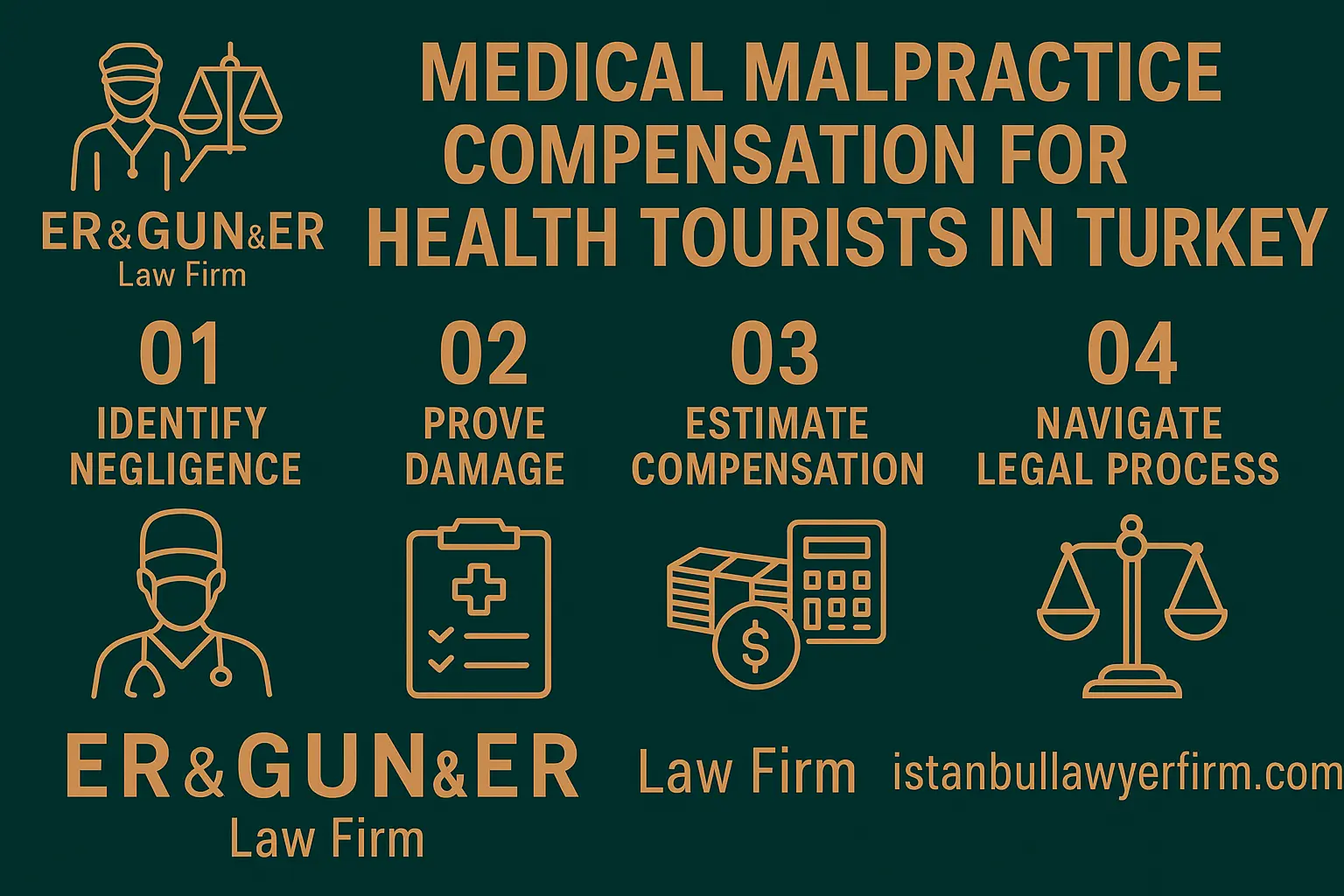
Medical malpractice claims in Turkey by foreign health tourists present a specific legal challenge that differs in important ways from a domestic patient's malpractice claim: the foreign patient typically leaves Turkey within days or weeks of the procedure, may not discover the full extent of the harm until months later when examined by physicians in their home country, must navigate a Turkish legal system conducted in a language they do not read, and must preserve and organize evidence across two jurisdictions while managing an ongoing medical situation. Turkey has become one of the world's most active health tourism destinations—attracting patients primarily for cosmetic surgery, dental procedures, hair transplants, bariatric surgery, and orthopedic treatments—and the combination of high patient volumes, price-competitive private hospital markets, and variable quality controls has generated a significant body of malpractice claims involving foreign nationals. The legal framework governing medical malpractice in Turkey draws on the Turkish Code of Obligations (Türk Borçlar Kanunu, Law No. 6098) for contract and tort liability, the Turkish Civil Procedure Code (HMK, Law No. 6100) for procedural rules, the Patient Rights Regulation (Hasta Hakları Yönetmeliği) for the substantive standard of care, and—where public hospitals are involved—the administrative courts jurisdiction under the Turkish Constitution. Foreign patients have full access to Turkish civil courts and, in consumer claims against private health facilities, to Turkish consumer courts, regardless of their nationality or country of residence. The Turkish Code of Obligations governing medical service contracts is accessible at Mevzuat. This article provides a comprehensive, practice-oriented guide to medical malpractice in Turkey for health tourists, addressed to foreign patients, their families, and legal advisors who need to understand the applicable legal framework, the steps required to preserve a viable claim, and the realistic prospects of recovery.
Legal framework for medical malpractice in Turkey
A lawyer in Turkey advising on the legal framework for medical malpractice must explain that Turkish law recognizes medical malpractice liability under two parallel frameworks that apply depending on whether the relationship between the patient and the treating institution is contractual or tortious. Where the patient entered into a service agreement with a private hospital or clinic—which is the standard situation for health tourists paying out-of-pocket for elective procedures—the claim is primarily a breach of medical service contract (eser sözleşmesi or hizmet sözleşmesi) governed by TBK, combined with a tortious claim for bodily injury under TBK Article 49. Where the treatment was provided by a public hospital or state physician, the claim lies against the State before the administrative courts (idare mahkemeleri) as a claim of public service deficiency (kamu hizmetinin kötü işleyişi), subject to a two-year limitation period running from the date the damage and its cause became known. Practice may vary by authority and year — check current guidance on the current Turkish court jurisdiction rules applicable to mixed private-public treatment situations and on the specific procedural requirements for filing administrative malpractice claims against Turkish state health institutions.
An Istanbul Law Firm advising on the consumer law dimension of health tourism malpractice must explain that foreign patients who receive medical services from Turkish private hospitals and clinics are consumers under the Turkish Consumer Protection Law (Tüketicinin Korunması Hakkında Kanun, Law No. 6502), and their claims can alternatively be pursued before Turkish Consumer Courts (Tüketici Mahkemeleri), which are specialized courts with simplified procedures and lower filing costs than general civil courts. Consumer court jurisdiction is available for claims up to a monetary threshold set annually by the Ministry of Commerce—for claims below this threshold, the Consumer Arbitration Panel (Tüketici Hakem Heyeti) must be used before court filing. For significant malpractice claims exceeding the consumer court monetary threshold, the civil court of first instance (Asliye Hukuk Mahkemesi) has jurisdiction. The consumer court option is particularly relevant for foreign patients with mid-value claims because the procedural simplicity and lower costs make it more accessible than full civil litigation. The consumer protection laws in Turkey framework—covering the full scope of consumer rights in Turkish commercial transactions—is analyzed in the resource on consumer protection laws in Turkey. Practice may vary by authority and year — check current guidance on the current consumer court monetary thresholds and on the specific procedural rules applicable to medical service consumer claims at Turkish consumer courts and arbitration panels.
A Turkish Law Firm advising on the standard of care in Turkish medical malpractice law must explain that Turkish courts assess physician and hospital liability against the standard of the ordinarily skilled practitioner in the relevant specialty (ortalama hekim standardı)—a standard determined by reference to established medical practice, Turkish medical association guidelines, and specialist expert opinion. The standard is not perfection: a bad outcome alone does not establish malpractice. The claimant must demonstrate that the treating physician or hospital deviated from the accepted standard of care applicable to the specific procedure and patient condition, and that this deviation caused the specific injury complained of. Proving causation in Turkish medical malpractice cases is frequently the most difficult element because complex medical conditions, pre-existing risk factors, and statistically expected adverse outcomes can all generate bad results without any professional negligence. Practice may vary by authority and year — check current guidance on the current Turkish medical association clinical guidelines applicable to the specific procedure type and on the evidentiary standards that Turkish courts currently require for establishing causation in multi-factor medical malpractice cases.
Most common health tourism malpractice claims
A law firm in Istanbul advising on the most common malpractice claim categories arising from health tourism in Turkey must explain that cosmetic surgery generates the largest volume of foreign patient malpractice claims by a significant margin—driven by the high volume of rhinoplasty, breast augmentation, liposuction, abdominoplasty, and body contouring procedures performed on foreign patients in Turkish private clinics, and by the specific risks that arise when patients return home within days of complex surgery before complications have fully declared themselves. The most frequently litigated outcomes include: disfiguring surgical scars and wound dehiscence from premature travel or inadequate post-operative care; nerve damage producing permanent numbness or altered sensation; asymmetric results that require corrective procedures abroad at the patient's expense; infection complications that were not recognized or treated before the patient departed Turkey; and cases where the procedure performed differed materially from what was agreed—most often in scope, in technique, or in the implant specifications used. Practice may vary by authority and year — check current guidance on the current Turkish Medical Association ethical guidelines applicable to cosmetic procedures performed on foreign nationals and on the specific documentation standards that Turkish cosmetic surgery clinics are required to maintain for health tourism patients.
An English speaking lawyer in Turkey advising on dental malpractice claims by health tourists must explain that dental procedures—including full-mouth implant placements, veneers, crowns, and orthodontic treatments accelerated for foreign patients on tight timelines—generate the second largest category of health tourism malpractice claims. The specific risks include: implant failures caused by improper site preparation or premature loading; veneer and crown failures caused by inadequate tooth preparation or incorrect bite assessment; permanent nerve damage from implant placement in proximity to the inferior alveolar nerve; and treatment protocols that were accelerated to fit a patient's two-week visit timeline rather than following the medically appropriate timeline for each stage. A significant subset of dental claims involves situations where the patient was not informed of the accelerated nature of the treatment or of the additional risks that acceleration creates—which raises informed consent issues alongside the substantive negligence questions. Practice may vary by authority and year — check current guidance on the current Turkish Dental Association guidelines applicable to accelerated implant and prosthetic treatment protocols for health tourism patients and on the specific pre-procedure disclosure requirements for dental procedures performed on foreign nationals.
A Turkish Law Firm advising on hair transplant malpractice claims must explain that Turkey hosts a large number of unregistered or inadequately supervised hair transplant clinics that perform procedures on foreign patients—often through intermediary agencies that make the booking and collect payment without any direct accountability for the medical outcome. The most common hair transplant malpractice claims involve: permanent scalp scarring from incorrect punch size or technique; follicular unit destruction from improper storage and implantation conditions; infection from non-sterile technique; unnatural hairline design that the patient explicitly rejected; and total graft failure caused by a combination of the above factors. A specific evidentiary challenge in hair transplant cases is establishing the identity and qualifications of the actual technician who performed the grafting—because many Turkish hair transplant operations use unlicensed technicians supervised nominally by a physician who may be present only for the consultation and the first incisions. Practice may vary by authority and year — check current guidance on the current Turkish health ministry regulations governing hair transplant clinic licensing and technician qualification requirements and on the enforcement status of those regulations at the time of the specific procedure.
Preserving evidence: what to do immediately
A lawyer in Turkey advising on evidence preservation for health tourism malpractice claims must explain that the single most important factor distinguishing viable claims from unwinnable ones is the quality and completeness of the evidence secured in Turkey before the patient leaves the country. Medical records in Turkey are the primary evidence, and a patient who leaves without a complete copy of their records may find it impossible to obtain them later—because Turkish private clinics are not legally required to provide records to non-Turkish patients on the same timeline as domestic patients, international record requests can be delayed or resisted, and the records themselves may be altered or become incomplete over time. Every health tourism patient who suspects inadequate care should request a complete copy of all medical records before leaving the treating facility: preoperative assessment, consent forms, operative notes, anaesthesia records, post-operative nursing notes, medication administration records, imaging studies, and any laboratory results. Practice may vary by authority and year — check current guidance on the current Turkish Patient Rights Regulation provisions governing a patient's right to access and copy their medical records and on the specific timeline within which Turkish health facilities are legally required to respond to medical record requests.
An Istanbul Law Firm advising on photographic evidence preservation must explain that contemporaneous photographs taken by the patient or accompanying family members are frequently among the most compelling evidence in Turkish cosmetic and surgical malpractice cases, because they document the condition of the body at specific points in time that the medical records may not capture with equal specificity. Photographs should be taken before the procedure (pre-operative baseline), immediately after (immediate post-operative state), at discharge, and at every subsequent stage of healing and complication development—with metadata preserving the date, time, and location of each image. For patients who have already left Turkey and are experiencing delayed complications or poor outcomes, photographs of the current state of the body part should be taken with a date reference and accompanied by examination reports from physicians in the home country describing what they observe. Practice may vary by authority and year — check current guidance on the current Turkish civil evidence rules governing the admissibility and weight of patient-taken photographs and on any authentication requirements applicable to photographic evidence submitted in Turkish court proceedings.
A Turkish Law Firm advising on the preservation of commercial records related to the treatment must explain that the booking and payment records for health tourism procedures are legally important evidence for several reasons: they establish the contractual relationship between the patient and the treating institution; they document what was promised and at what price; they may establish the intermediary agency's involvement and potential liability; and they provide the reference numbers needed to file insurance and regulatory complaints. Patients should retain all messaging with the clinic or intermediary (WhatsApp, email, online chat transcripts), all payment confirmations and receipts, all promotional materials and written treatment plans provided before or during the consultation, the written consent forms signed before the procedure, and any post-procedure instructions given at discharge. The malpractice claims process Turkey framework—covering the complete claims process for medical negligence—is analyzed in the resource on malpractice claims process Turkey. Practice may vary by authority and year — check current guidance on the current Turkish civil procedure rules governing the use of electronic messaging evidence in contract and tort claims against health facilities.
Informed consent failures
A law firm in Istanbul advising on informed consent claims in Turkish medical malpractice cases must explain that the Turkish Patient Rights Regulation (Hasta Hakları Yönetmeliği) and TBK impose specific obligations on physicians and health facilities to obtain the patient's meaningful informed consent before any procedure—and this obligation is not satisfied by having the patient sign a standard pre-printed form that they have not read or that has not been explained in a language they understand. A foreign health tourist who signed a Turkish-language consent form without receiving an adequate explanation of its contents in a language they understood, and who then suffered an adverse outcome that the form purported to cover, has a viable argument that the informed consent was legally insufficient—because a signature on a document the patient could not read and was not adequately translated does not constitute meaningful legal consent under Turkish law. Practice may vary by authority and year — check current guidance on the current Turkish court standards for assessing the adequacy of informed consent obtained from foreign-language patients and on the specific language accommodation obligations that Turkish health facilities have toward health tourism patients under the Patient Rights Regulation.
An English speaking lawyer in Turkey advising on the scope of the informed consent obligation must explain that Turkish law requires that the patient's consent be informed—meaning that the patient must have been specifically told about the nature of the proposed procedure, the expected risks and benefits, the available alternatives, the probability of success, and the consequences of not proceeding. A consent form that lists surgical risks in small print without specific discussion does not satisfy the informed consent standard if the evidence shows the physician did not specifically discuss the risks with the patient. The standard is particularly demanding in elective cosmetic procedures, where courts have required detailed pre-operative consultation documentation showing that the specific risks of the elected procedure were explained and that the patient had adequate time to reflect before consenting. The informed consent law Turkey framework—covering the complete legal standards for patient consent in Turkish medical practice—is analyzed in the resource on informed consent law Turkey. Practice may vary by authority and year — check current guidance on the current Turkish court decisions addressing informed consent adequacy in cosmetic and elective procedure cases involving foreign patients.
A Turkish Law Firm advising on the translation and language dimension of informed consent for foreign patients must explain that Turkish health facilities that market to foreign patients—particularly those operating through international health tourism agencies—have a heightened obligation to ensure that the consent process is genuinely comprehensible to the foreign patient. A clinic that markets in English, provides English-language promotional materials, communicates pre-procedure through English-speaking coordinators, and then presents Turkish-language consent forms for signature without professional interpretation has created a significant informed consent vulnerability. The consent documentation produced after a malpractice claim may show the patient's signature, but this does not establish meaningful consent if the circumstances show the patient could not have understood what they were signing. We analyze the complete consent process—marketing materials, pre-consultation communications, the consent appointment itself, and the post-signature care—when assessing an informed consent component in a health tourism malpractice claim. Practice may vary by authority and year — check current guidance on the current Turkish health ministry requirements for consent documentation in health tourism procedures and on any specific regulations governing the language standards applicable to consent forms provided to non-Turkish-speaking patients.
The medical expert opinion process
A lawyer in Turkey advising on the role of medical expert opinion in Turkish malpractice litigation must explain that Turkish civil courts do not determine the medical standard of care themselves—they rely on expert opinion (bilirkişi raporu) from physicians qualified in the relevant specialty, typically commissioned either from the Council of Forensic Medicine (Adli Tıp Kurumu) affiliated with the Ministry of Justice, or from university faculty specialists appointed by the court. The expert's mandate is to assess whether the treating physician's conduct met the standard of the ordinarily skilled practitioner in the same specialty under the same circumstances, and to express an opinion on causation—whether the identified deviation from the standard of care was the cause of the specific injury. In Turkish malpractice litigation, the expert's opinion is not binding on the court but is given substantial weight; a court that departs from a well-reasoned expert report must explain its departure in the judgment. Practice may vary by authority and year — check current guidance on the current Turkish civil court procedures for appointing medical experts and on the parties' rights to challenge an expert appointment or to request a supplemental expert opinion in complex malpractice cases.
An Istanbul Law Firm advising on the strategy for managing the medical expert process must explain that the expert appointment is the pivotal moment in most Turkish medical malpractice cases—and how the questions presented to the expert are framed, and the quality of the case materials presented to the expert for review, significantly affects the expert's conclusions. We prepare a comprehensive expert brief for the court-appointed expert that organizes the medical records chronologically, highlights the specific care decisions that we contend were below the standard, summarizes the patient's pre-procedure condition and post-procedure outcome, and identifies the specific clinical literature supporting our position. We simultaneously prepare a written objection process (bilirkişi raporuna itiraz) to address weaknesses in the expert report if the initial report is unfavorable or incomplete. In cases where the court-appointed expert report significantly understates the negligence or mischaracterizes the causation, we request a supplemental expert opinion from a second expert panel. Practice may vary by authority and year — check current guidance on the current Turkish civil procedure rules governing expert objections and supplemental expert requests in medical malpractice proceedings.
A Turkish Law Firm advising on the use of foreign medical expert opinion in Turkish proceedings must explain that while a Turkish court is not required to accept foreign medical expert opinions as binding, a well-prepared foreign expert report describing the patient's condition as observed by treating physicians in their home country is admissible and useful evidence in Turkish malpractice litigation—particularly as supplementary evidence alongside the Turkish court-appointed expert report. The foreign expert report should be specifically commissioned for litigation purposes, should include the physician's qualifications and institutional affiliation, should address the Turkish standard of care question directly rather than only the home country standard, and should be accompanied by an apostilled certification and a sworn Turkish translation to ensure its admissibility. We work with foreign medical experts to structure their reports in a format that is useful in Turkish proceedings rather than in the domestic litigation format they may be accustomed to. Practice may vary by authority and year — check current guidance on the current Turkish court admissibility rules for foreign medical expert reports and on the apostille and translation certification requirements applicable to expert opinion documents from different foreign jurisdictions.
Damages in Turkish malpractice claims
A law firm in Istanbul advising on the categories of damages recoverable in Turkish medical malpractice claims must explain that Turkish law provides for three principal categories of compensation: material damages (maddi tazminat), non-material damages (manevi tazminat), and in specific circumstances, punitive-adjacent provisions under consumer law. Material damages encompass all quantifiable financial losses caused by the malpractice—additional medical treatment costs both in Turkey and abroad for corrective procedures, lost income during the recovery period, travel costs incurred for additional medical consultations, the cost of assistive devices or ongoing care, and the reduction in earning capacity where permanent disability results. Non-material damages (manevi tazminat) compensate for pain, suffering, disfigurement, and loss of quality of life—these are assessed by the court in its discretion based on the severity and permanence of the harm, the patient's age and life circumstances, and the degree of the physician's fault. Turkish courts are generally more conservative in non-material damage awards than some Western jurisdictions, but significant awards are possible in cases of severe and permanent harm. Practice may vary by authority and year — check current guidance on the current Turkish court non-material damage award ranges in cosmetic and general medical malpractice cases involving foreign nationals and on any recent case law changes affecting the calculation of material damages for medical expenses incurred abroad.
An English speaking lawyer in Turkey advising on the recovery of foreign treatment costs as damages must explain that corrective procedures performed abroad after a Turkish malpractice incident are recoverable as material damages if they were medically necessary to address the harm caused by the Turkish malpractice, properly documented with medical records and receipts, and causally connected to the original malpractice rather than to a pre-existing condition or an independent complication. Foreign patients who have undergone corrective surgery in their home country should retain all records of the corrective treatment—the diagnosis that justified the correction, the operative notes from the corrective surgery, the costs incurred, and any post-correction outcomes—because these records form the basis of the foreign treatment expense claim in the Turkish proceedings. The challenge is establishing the causal link between the Turkish procedure and the need for foreign correction, which requires both the medical expert in the Turkish case and ideally the foreign treating physician to confirm the connection. Practice may vary by authority and year — check current guidance on the current Turkish court standards for assessing the recoverability of foreign corrective treatment costs and on the evidentiary requirements for establishing the causal connection between the Turkish malpractice and the foreign treatment necessity.
A Turkish Law Firm advising on the hospital's insurance dimension must explain that Turkish private hospitals and clinics are required to carry professional liability insurance (mesleki sorumluluk sigortası) covering medical malpractice claims—and in practice, Turkish malpractice claims against private facilities are typically defended and settled by the hospital's insurer rather than by the hospital's own resources. This creates a specific dynamic in settlement negotiations: the insurer has financial incentives to settle meritorious claims within the policy limits rather than incur litigation costs and the risk of a court award, but the insurer also has institutional incentives to undervalue the claim. We request disclosure of the relevant insurance policy and coverage limits as part of our pre-litigation preparation, because this information shapes the realistic settlement range and affects whether a court judgment would be fully collectible. The enforcement proceedings Turkey framework—relevant where a malpractice judgment needs to be enforced against a defendant hospital or its insurer—is analyzed in the resource on enforcement proceedings Turkey. Practice may vary by authority and year — check current guidance on the current Turkish mandatory professional liability insurance requirements for private health facilities and on the current minimum coverage amounts required for different types of medical procedures.
Private hospital versus public hospital claims
A lawyer in Turkey advising on the distinction between claims against private and public hospitals must explain that this distinction is jurisdictionally critical — a claim against a private hospital goes to the civil courts (or consumer courts), while a claim against a public hospital or a state-employed physician goes to the administrative courts (idare mahkemeleri), which apply different procedural rules and different substantive standards. Health tourists who receive treatment at university hospitals (which are public institutions), state hospitals (devlet hastanesi), or through public health insurance coverage are in the administrative court track. Health tourists who pay privately at private hospitals, private clinics, or private practice physicians are in the civil court track. A malpractice claim filed in the wrong court will be dismissed on jurisdictional grounds and must be refiled in the correct court—potentially after significant delay. Practice may vary by authority and year — check current guidance on the current Turkish court jurisdiction rules applicable to mixed environments where a foreign patient received treatment at both private and public facilities during the same health tourism episode and on the specific rules for consolidating related claims across the civil and administrative tracks.
An Istanbul Law Firm advising on the administrative court process for public hospital malpractice must explain that the administrative court track has a two-year limitation period running from the date the claimant knew or should have known of the damage and its cause (not from the date of the procedure), and that the claim is filed as an administrative action for damages against the Ministry of Health or the relevant university administration rather than against the individual physician. The standard applied in administrative court malpractice cases is public service deficiency (hizmet kusuru)—the administration's failure to organize and operate the public health service in a way that prevents foreseeable patient harm—which is a somewhat different framing from the civil court's focus on individual physician negligence. The practical implication for health tourists in the public hospital track is that they are suing the Turkish State, which has both the resources to defend thoroughly and the institutional capacity to handle the claim in an organized way. Practice may vary by authority and year — check current guidance on the current administrative court procedures for health tourism malpractice claims and on the specific pre-litigation conciliation requirements, if any, that must be completed before an administrative malpractice lawsuit can be filed.
A Turkish Law Firm advising on the intermediary agency's liability in health tourism malpractice must explain that many health tourists book their procedures through Turkish health tourism intermediary agencies that arrange the hospital placement, coordinate the travel, and sometimes provide their own coordinators or interpreters during the treatment. These agencies occupy a legally complex position: they are not the treating institution and are not licensed health facilities, but they may have made representations about the quality of the facilities, the credentials of the physicians, or the safety of the procedures that induced the patient to choose the specific clinic. Where the agency made material misrepresentations—overstating the physician's experience, concealing negative reviews, misrepresenting the facility's accreditation status—the agency may bear independent liability in tort or under consumer law for the patient's damages, in addition to the liability of the treating facility. We assess the agency's role and representations as part of every health tourism malpractice mandate, because in some cases the agency is a more accessible or more solvent defendant than the treating clinic. Practice may vary by authority and year — check current guidance on the current Turkish court decisions addressing health tourism agency liability for malpractice outcomes and on the specific regulatory framework governing health tourism intermediary agencies in Turkey.
Limitation periods
A law firm in Istanbul advising on limitation periods in Turkish medical malpractice cases must explain that the applicable limitation period depends on the legal basis of the claim and the type of defendant. For civil claims against private health facilities based on contractual liability, the general ten-year limitation period (TBK Article 146) applies, running from the date of the breach—though the more specific two-year tort limitation period (TBK Article 72) may also apply if the claim is characterized in tort rather than contract. For tort claims, the two-year limitation period runs from the date the claimant knew of the damage and the identity of the responsible party—making the discovery of the harm and the identification of its cause the critical starting events rather than the date of the procedure itself. For administrative court claims against public hospitals, the two-year administrative limitation period (İdari Yargılama Usulü Kanunu Article 13) runs from the date of notification of the administrative act or from the date the claimant knew of the damage. Practice may vary by authority and year — check current guidance on the current Turkish court interpretations of the limitation period starting date in delayed-discovery malpractice cases where the harm was not apparent until after the patient returned to their home country and was examined by a local physician.
An English speaking lawyer in Turkey advising on the limitation period risk for health tourism patients must explain that the most significant limitation period risk for foreign patients is the two-year tort limitation period — which can expire before the patient realizes they have a claim if the harm was not immediately apparent, if the patient attributed the poor outcome to expected surgical variation rather than negligence, or if the patient spent significant time seeking non-legal resolution through the clinic directly. A foreign patient who contacts the Turkish clinic about a poor outcome, receives a series of reassuring responses, and then eventually realizes the clinic will not provide a satisfactory remedy may find that the limitation period has run during the period of their informal correspondence with the clinic — because the limitation clock runs from when the patient knew of the harm and its cause, not from when they gave up on informal resolution. We recommend consulting a Turkish malpractice attorney within six months of any suspected malpractice incident, regardless of whether informal resolution seems possible. Practice may vary by authority and year — check current guidance on the current Turkish court case law on limitation period interruption and suspension and on the specific circumstances under which a clinic's correspondence or a voluntary internal review process has been held to interrupt the limitation period.
A Turkish Law Firm advising on limitation period protection measures must explain that the most reliable way to protect a malpractice claim from limitation period expiry is to file a formal legal application with the Turkish court or the relevant administrative authority before the period expires — even if the evidentiary preparation is not yet complete. A lawsuit filing (dava açma) interrupts the limitation period regardless of the state of evidence preparation; a pre-litigation application for conciliation (arabuluculuk) also interrupts or suspends the limitation period from the date of the conciliation application. For health tourists who have not yet assembled all their evidence but who are approaching a limitation deadline, filing a protective lawsuit or initiating compulsory mediation as a placeholder is a standard technique for preserving the claim while the evidence preparation continues. The commercial litigation Turkey framework—covering the procedural steps in Turkish civil court proceedings—is analyzed in the resource on commercial litigation Turkey. Practice may vary by authority and year — check current guidance on the current Turkish mediation law provisions applicable to medical malpractice claims and on whether compulsory mediation is a required pre-condition before filing a malpractice lawsuit against a private health facility.
Compulsory mediation in medical malpractice
A lawyer in Turkey advising on the compulsory mediation requirement in Turkish medical malpractice cases must explain that since 2019, Turkish law has required that parties to commercial and civil disputes, including medical malpractice disputes against private health facilities, attempt mediation before filing a civil lawsuit—and a lawsuit filed without first completing the mediation process will be dismissed on procedural grounds. The compulsory mediation (zorunlu arabuluculuk) process is initiated by the claimant through a formal application to the mediation office at the competent court, after which a licensed mediator is appointed and the parties are invited to attend mediation sessions. If mediation fails or if the respondent fails to attend, the mediator issues a non-settlement certificate (anlaşmazlık tutanağı) which allows the claimant to proceed to court. The mediation period is typically three weeks from the first session, but can be extended by mutual agreement. Practice may vary by authority and year — check current guidance on the current Turkish mandatory mediation requirements applicable to medical malpractice claims against private health facilities and on whether the requirement applies to claims by foreign nationals filed from abroad.
An Istanbul Law Firm advising on the practical value of the mediation process in health tourism malpractice must explain that mediation in Turkish medical malpractice cases can be a valuable settlement opportunity—particularly in cases where the liability is clear, the damages are quantifiable, and the hospital's insurer is motivated to resolve the claim efficiently. Many Turkish private hospitals and their insurers prefer to settle meritorious malpractice claims in mediation rather than to litigate them, because a settlement at mediation avoids the public record of a court judgment, avoids the legal costs of a multi-year litigation, and resolves the claim more quickly than a court proceeding would. For foreign patients, mediation also offers the practical advantage of avoiding the need to participate in a Turkish court proceeding in person or through representation across a significant language and geographic barrier. We prepare a comprehensive mediation position paper—including a medical summary, a damages calculation, and a settlement demand—before attending any mediation session on behalf of a foreign patient. Practice may vary by authority and year — check current guidance on the current Turkish mediation practice in private hospital malpractice cases and on the typical settlement ranges achieved in mediation for different categories of cosmetic and surgical malpractice claims.
A Turkish Law Firm advising on the mediation process for patients who are outside Turkey must explain that a foreign patient's physical presence at the Turkish mediation sessions is not required — the patient can authorize a Turkish attorney to represent them at mediation under a power of attorney, and the mediation can proceed in the patient's absence with the attorney acting as their representative. We manage the complete mediation process for foreign health tourism patients remotely: preparing the mediation application, representing the patient at all sessions, negotiating on the patient's behalf, and—if mediation produces an acceptable settlement—executing the settlement agreement. The mediation settlement agreement, once signed by both parties and certified by the mediator, has the legal force of a court judgment and can be enforced in Turkey as an enforcement title (ilam niteliğinde belge). Practice may vary by authority and year — check current guidance on the current Turkish mediation rules governing attorney representation of absent parties and on the enforcement procedures applicable to certified mediation settlement agreements in Turkish courts.
Filing a malpractice lawsuit
A law firm in Istanbul advising on the malpractice lawsuit process must explain that a Turkish medical malpractice civil lawsuit (tıbbi uygulama hatası davası) is filed at the civil court of first instance (Asliye Hukuk Mahkemesi) or the consumer court in the defendant hospital's location, after completion of the compulsory mediation process. The petition must specifically identify the defendant (hospital, clinic, or physician), the legal basis of the claim (contract, tort, or both), the factual description of the malpractice incident, the damages claimed, and the evidence the claimant intends to rely on. Turkish civil procedure does not provide pre-trial discovery; the parties must identify their evidence at the petition stage and the response stage, and evidence not identified within the statutory deadlines may not be admitted later. The court will appoint a medical expert at an early stage of the proceedings, and the expert appointment process is typically the longest single phase of the case. Practice may vary by authority and year — check current guidance on the current HMK procedural requirements for malpractice lawsuit petitions and on the specific evidentiary submission deadlines applicable to medical malpractice cases at Turkish civil courts.
An English speaking lawyer in Turkey advising on the foreign patient's practical participation in Turkish litigation must explain that a foreign patient's physical presence in Turkey is not required at most stages of the Turkish malpractice proceedings — the lawsuit can be filed, the expert process can be managed, and the hearing can be attended through a Turkish attorney acting under a power of attorney, with the foreign patient participating remotely in strategic decisions. However, there are specific circumstances where the patient's presence or remote testimony may add significant value — particularly if the patient's physical examination by the Turkish court-appointed expert is needed (which can in some cases be arranged in the patient's home country through a commission rogatory) or if the court wishes to hear the patient's direct account of the treatment and its aftermath. We manage all logistical aspects of the Turkish proceedings for foreign patients and maintain regular communication in English throughout the case. Practice may vary by authority and year — check current guidance on the current Turkish civil court procedures for remote patient participation and on the international judicial assistance mechanisms available for taking patient evidence in foreign jurisdictions.
A Turkish Law Firm advising on the enforcement of a Turkish malpractice judgment abroad must explain that a successful Turkish malpractice judgment can in principle be enforced in the patient's home country through that country's foreign judgment recognition and enforcement procedures — though the practicalities depend on whether the patient's home country has a bilateral treaty with Turkey for judgment recognition, and on whether the specific judgment meets the substantive conditions for recognition under the home country's private international law rules. In many cases, it is more practical to enforce the Turkish judgment against Turkish assets of the defendant hospital (which is typically a Turkish entity with Turkish-located assets) through Turkish enforcement proceedings (icra takibi) rather than attempting to enforce across borders. The enforcing foreign awards Turkey framework—covering the recognition of foreign judgments and the enforcement of Turkish judgments abroad—is analyzed in the resource on enforcing foreign awards Turkey. Practice may vary by authority and year — check current guidance on the current Turkish enforcement proceedings applicable to malpractice judgments and on the asset attachment mechanisms available against Turkish hospital defendants.
Regulatory complaints alongside litigation
A lawyer in Turkey advising on regulatory complaints in health tourism malpractice cases must explain that civil litigation for compensation is not the only available remedy—foreign patients also have the right to file regulatory complaints with the Turkish Ministry of Health and with the relevant Provincial Health Directorate (İl Sağlık Müdürlüğü), which have authority to inspect the treating facility, revoke operating licenses, impose administrative fines, and—where criminal conduct is identified—refer the matter to the public prosecutor. A regulatory complaint does not directly produce compensation for the patient, but it can produce an official inspection report that documents deficiencies in the facility's care standards, which is admissible and useful evidence in the civil proceedings. The regulatory process may also produce faster results than litigation in terms of stopping the specific practice that caused harm—which may be important if the patient knows that the same clinic is continuing to perform the same procedure on other patients. Practice may vary by authority and year — check current guidance on the current Turkish Ministry of Health complaint procedures for foreign national health tourism patients and on the typical processing timeline and outcomes of health facility inspections triggered by foreign patient complaints.
An Istanbul Law Firm advising on the Turkish Medical Association (Türk Tabipleri Birliği) complaint process must explain that a patient can also file a professional ethics complaint against the individual physician responsible for the malpractice through the Turkish Medical Association's ethics commission. The Medical Association ethics process is separate from the civil litigation and runs in parallel — its outcome is a professional disciplinary recommendation rather than a compensation award, but a finding of ethical violation against the physician strengthens the civil claim by establishing that the relevant professional body considers the conduct to have been below the expected standard. The Medical Association's ethics commission includes specialists in the relevant fields, and its assessment of the physician's conduct may carry persuasive weight in the subsequent court proceedings even though it is not binding on the civil court. Practice may vary by authority and year — check current guidance on the current Turkish Medical Association ethics complaint procedures and on the typical timeline and outcome formats of ethics investigations against physicians in health tourism malpractice cases.
A Turkish Law Firm advising on criminal complaints in health tourism malpractice cases must explain that where the malpractice involves elements of criminal negligence (taksirle yaralama, TCK Article 89) or fraud (dolandırıcılık, where the physician misrepresented their qualifications or the nature of the procedure), a criminal complaint to the public prosecutor is available alongside the civil claim. A criminal investigation provides access to evidence-gathering tools that are not available in civil proceedings—phone records, bank account data, clinic records that the defendant refuses to disclose voluntarily—and a criminal conviction for negligent injury can significantly strengthen the civil damages claim. The criminal process does not produce direct compensation to the patient, but it can produce evidence that changes the balance of the civil case. We coordinate the criminal complaint and civil litigation strategy carefully to maximize the evidentiary benefit of the criminal investigation while managing the timing and content of disclosures across both proceedings. Practice may vary by authority and year — check current guidance on the current Turkish criminal law provisions applicable to physician negligence and on the procedures for coordinating civil and criminal proceedings arising from the same malpractice incident.
Special considerations for cosmetic surgery claims
A law firm in Istanbul advising on the specific legal features of cosmetic surgery malpractice claims must explain that cosmetic surgery occupies a distinctive position in Turkish malpractice law because the procedure is elective—the patient is not sick and is seeking an improvement in appearance rather than treatment of a pathological condition—which means the standard of care analysis is more demanding and the informed consent requirements are more extensive than for medically necessary procedures. A cosmetic surgeon in Turkey has a heightened duty to inform the patient of the realistic achievable results, the limitations of what can be accomplished given the patient's anatomy, the specific risks of the chosen technique, and the circumstances under which revision surgery might be required. A surgeon who presents only optimistic outcome photographs and does not discuss realistic expectations or known risks has failed the informed consent standard regardless of whether the technical execution of the procedure was competent. Practice may vary by authority and year — check current guidance on the current Turkish Medical Association cosmetic surgery guidelines and on the specific informed consent documentation standards applicable to cosmetic procedures performed on foreign health tourism patients.
An English speaking lawyer in Turkey advising on cosmetic surgery claims involving digital imaging or outcome promises must explain that many Turkish cosmetic surgery clinics provide computer-generated imaging or simulations to show patients what their results might look like—and in some cases these simulations are presented in a way that implies a guaranteed outcome rather than a best-case illustration. Where a Turkish clinic provided digital imaging or specific outcome promises that induced the patient's decision to proceed, and the actual outcome significantly diverges from what was shown or promised, the clinic's pre-operative representations may constitute a contractual warranty or a misrepresentation that grounds a claim independent of the negligence question. The key evidence in these cases is the pre-operative communication material—the digital simulations, the before-and-after galleries presented to the patient, the WhatsApp messages from the clinic coordinator setting expectations, and the written treatment plan. Practice may vary by authority and year — check current guidance on the current Turkish court treatment of pre-operative outcome representations in cosmetic surgery cases and on whether such representations are treated as contractual warranties or as mere illustrative materials without binding legal force.
A Turkish Law Firm advising on the "combined package" cosmetic surgery claims must explain that many health tourists purchase bundled procedure packages—rhinoplasty combined with liposuction, dental work combined with hair transplants, full-body contouring packages including multiple procedures—and malpractice in the context of these packages creates a specific liability analysis, because each procedure within the package may have been performed by a different physician under a single contractual arrangement with the clinic. The clinic bears contractual and supervisory liability for all physicians operating within its facility under its commercial brand, and the patient's contract with the clinic rather than with individual physicians is typically the more reliable basis for a compensation claim—because the clinic as an entity has a defined legal existence, assets, and insurance coverage, while identifying and suing individual physicians raises more complex procedural challenges. Practice may vary by authority and year — check current guidance on the current Turkish court approach to combined package medical procedure liability and on the specific grounds for holding a clinic institutionally liable for the negligence of physicians who operated within its facility but who may have been independent contractors rather than employees.
How we work with health tourism malpractice cases
A best lawyer in Turkey completing a health tourism malpractice mandate must explain that our initial assessment for every foreign patient claim begins with a document review — the medical records from Turkey, the commercial records of the booking and treatment, the photographs, and the subsequent medical records from the home country — before we advise on the viability and the recommended approach. We provide a written assessment within a defined timeframe that addresses: whether the evidence available supports a viable claim under Turkish law; which legal basis (contract, tort, consumer law) provides the most favorable framework; whether the limitation period is at risk and what immediate protective steps are needed; the realistic range of recoverable damages based on comparable Turkish cases; and the recommended procedural strategy — whether to pursue mediation first, file a regulatory complaint in parallel, or proceed directly to litigation. We work with English-speaking clients across all time zones and provide all substantive communications and case updates in English. Practice may vary by authority and year — check current guidance from the relevant Turkish authorities and courts before acting on any assessment, as procedures and case law change and must be verified against current guidance before any application is filed.
ER&GUN&ER manages the complete health tourism malpractice claim process for foreign patients: from the initial evidence preservation advice in the immediate aftermath of the incident, through the mediation or litigation proceedings in Turkey, to the enforcement of any judgment or settlement. For clients who need to obtain Turkish medical records after returning to their home country, we handle the record request process directly with the treating facility and, where necessary, through court-ordered disclosure. The Istanbul Bar Association at istanbulbarosu.org.tr provides resources for identifying qualified practitioners. Practice may vary by authority and year — check current guidance on any recently changed Turkish medical malpractice procedures before acting on any information on this page.
Frequently Asked Questions
- Can a foreign patient sue a Turkish hospital for malpractice? Yes — foreign nationals have full access to Turkish civil courts and consumer courts for malpractice claims against private Turkish health facilities.
- How long do I have to file a malpractice claim in Turkey? For civil claims against private facilities, generally two years from when you knew of the harm and its cause. For public hospital claims, two years under administrative law. Consult a Turkish attorney promptly to preserve your claim.
- Do I need to be in Turkey to file a lawsuit? No — a Turkish attorney can manage the complete proceedings under a power of attorney, with the patient participating remotely in strategic decisions.
- Is mediation required before filing a lawsuit? Yes — compulsory mediation (zorunlu arabuluculuk) must be attempted before a civil malpractice lawsuit can be filed against a private health facility.
- What evidence should I preserve immediately after a bad outcome? All medical records, consent forms, pre-procedure communications, photographs (before, after, and current), payment records, and subsequent treatment records from your home country.
- Can I claim the cost of corrective surgery abroad? Yes — medically necessary corrective procedures abroad that were caused by the Turkish malpractice are recoverable as material damages, provided they are properly documented.
- What if I signed a Turkish consent form I couldn't read? A consent form signed without adequate translation or explanation may be legally insufficient — this is a viable informed consent claim independent of the negligence question.
- Can I also file a complaint with Turkish health authorities? Yes — a Ministry of Health complaint and a Turkish Medical Association ethics complaint can run in parallel with civil litigation and may produce useful evidence.
- Are claims against public hospitals treated differently? Yes — public hospital claims go to the administrative courts (not civil courts) under a different procedural framework and with a two-year administrative limitation period.
- How much compensation can I recover? Recoverable amounts depend on the specific harm, additional treatment costs, lost income, and the court's assessment of non-material damages — Turkish courts are generally more conservative than some Western courts in non-material awards but can make significant awards in severe cases.
Author: Mirkan Topcu is an attorney registered with the Istanbul Bar Association (Istanbul 1st Bar), Bar Registration No: 67874. His practice focuses on cross-border and high-stakes matters where evidence discipline, procedural accuracy, and risk control are decisive.
He advises individuals and companies across Medical Malpractice and Patient Rights, Commercial and Corporate Law, Enforcement and Insolvency, and cross-border documentation matters where procedural accuracy and evidence discipline are decisive.
Education: Istanbul University Faculty of Law (2018); Galatasaray University, LL.M. (2022). LinkedIn: Profile. Istanbul Bar Association: Official website.