

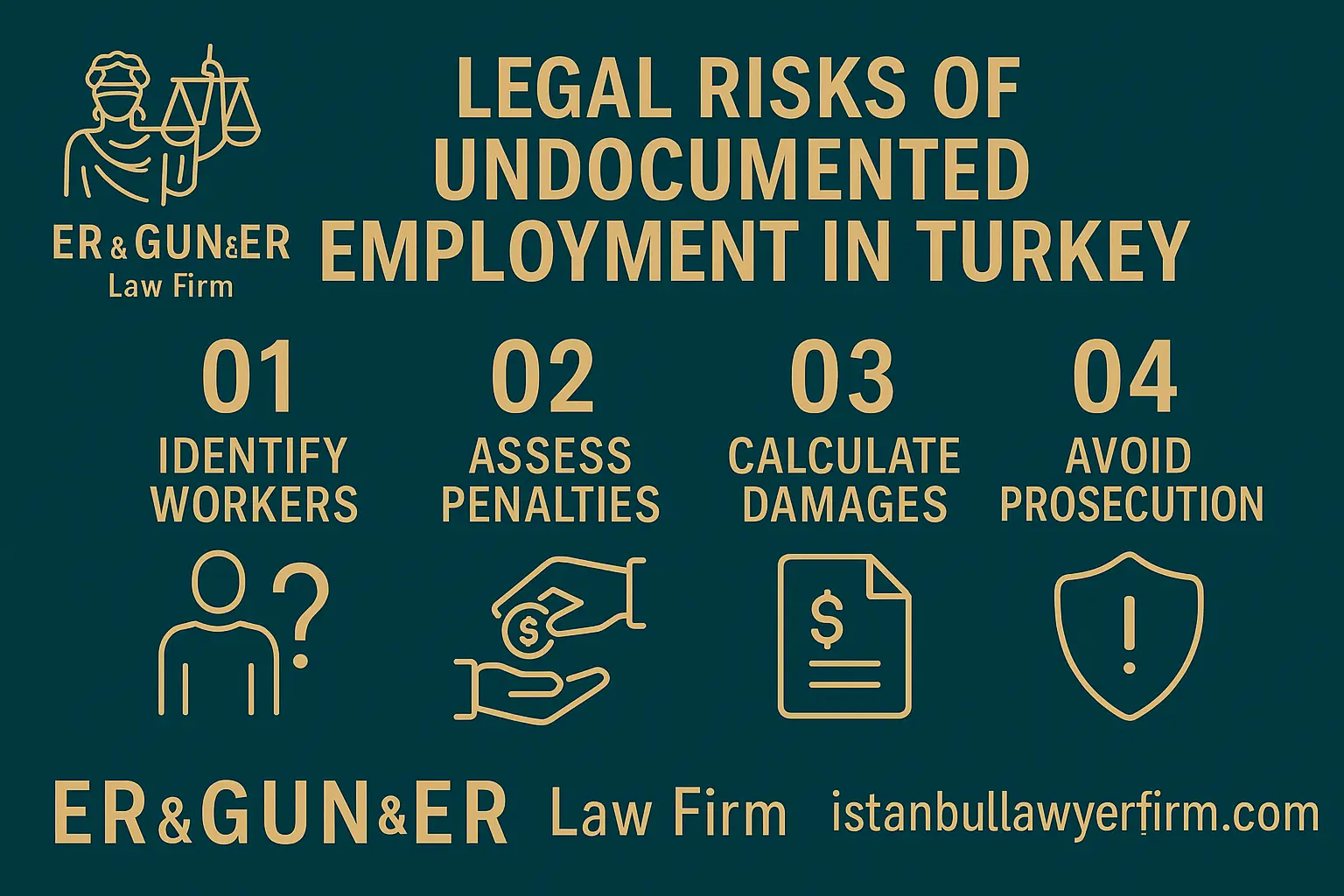
Kayıt dışı istihdam (undocumented employment) enforcement in Türkiye operates through coordinated inspection, prosecution, and litigation pathways producing meaningful exposure for non-compliant employers and substantive remedies for affected workers. Foreign-affiliated employers, multinational subsidiaries, and SMEs face the framework regardless of size or sector. The framework's enforcement architecture combines administrative inspection through SGK and Çalışma ve Sosyal Güvenlik Bakanlığı, criminal referrals through Cumhuriyet Başsavcılığı for severe scenarios, civil litigation through İş Mahkemesi (Labour Court), and immigration enforcement through Göç İdaresi Başkanlığı for foreign worker scenarios.
The substantive framework supporting enforcement includes 4857 sayılı İş Kanunu (Labour Code, Law No. 4857) of 22 May 2003 (Resmi Gazete 10 June 2003 No. 25134) governing employment relationships including Article 2 alt işveren subcontractor framework, Article 8 written contract framework, and substantive worker rights provisions; 5510 sayılı Sosyal Sigortalar ve Genel Sağlık Sigortası Kanunu (Social Insurance Code, Law No. 5510) of 31 May 2006 (Resmi Gazete 16 June 2006 No. 26200) with Article 8 sigortalı işe giriş bildirgesi (1-day pre-commencement notification), Article 86 aylık prim ve hizmet belgesi (APHB monthly notification), and Article 102 administrative fines framework; 1475 sayılı eski İş Kanunu Article 14 kıdem tazminatı (severance pay) framework retained from prior code; 6735 sayılı Uluslararası İşgücü Kanunu (International Labour Force Code, Law No. 6735) of 28 July 2016 (Resmi Gazete 13 August 2016 No. 29800) governing foreign worker employment; 6458 sayılı Yabancılar ve Uluslararası Koruma Kanunu (Foreigners and International Protection Code, YUKK, Law No. 6458) of 4 April 2013 (Resmi Gazete 11 April 2013 No. 28615) governing foreign nationals' status; İş Mahkemeleri Kanunu (Labour Courts Code, Law No. 7036) of 12 October 2017 (Resmi Gazete 25 October 2017 No. 30221) establishing mandatory pre-litigation arabuluculuk (mediation) framework; 5326 sayılı Kabahatler Kanunu (Misdemeanours Code) of 30 March 2005 governing administrative sanctions framework with Sulh Ceza Hakimliği (Magistrates' Criminal Judgeship) review; 213 sayılı Vergi Usul Kanunu (Tax Procedure Code, VUK, Law No. 213) Article 371 pişmanlık voluntary disclosure framework; and 5237 sayılı Türk Ceza Kanunu (TCK, Law No. 5237) frameworks for severe scenarios.
The institutional architecture spans Çalışma ve Sosyal Güvenlik Bakanlığı (Ministry of Labour and Social Security) with iş müfettişleri (labour inspectors); Sosyal Güvenlik Kurumu (SGK) with sosyal güvenlik denetmenleri (social security inspectors) administering inspection and enforcement; İŞKUR (Türkiye İş Kurumu) and provincial Çalışma ve İş Kurumu İl Müdürlükleri; Göç İdaresi Başkanlığı with İl Göç İdaresi Müdürlükleri (Provincial Migration Directorates); İş Mahkemesi (Labour Court) where established, Asliye Hukuk Mahkemesi where Labour Court not established; Yargıtay 9. Hukuk Dairesi (Court of Cassation 9th Civil Chamber) as specialised labour appeal authority; Sulh Ceza Hakimliği (Magistrates' Criminal Judgeship) for administrative sanction review; and Cumhuriyet Başsavcılığı (Public Prosecutor's Office) for criminal referrals.
Forms of Kayıt Dışı İstihdam: Substantive Variations
Kayıt dışı istihdam encompasses multiple substantive variations beyond simple complete non-registration. Foreign-affiliated employers benefit from understanding the spectrum of forms producing potential exposure rather than treating it as single-form concern.
Complete non-registration represents most direct form. Workers performing employment-character work without any SGK registration, written contract, or other documentation produce clear-cut kayıt dışı status. The form typically arises in: family businesses extending operations beyond family members; construction sector with daily worker engagements; service sector cash-payment scenarios; agricultural seasonal work; and similar substantive contexts. Inspection and worker complaint pathways readily identify complete non-registration scenarios.
Underreported wages (eksik ücret bildirimi) produce kayıt dışı element while maintaining surface registration. Worker registered with SGK at lower wage than actually paid produces specific exposure. SGK premium calculation operates on declared wage producing underpayment of premiums; severance and other entitlement calculations operate on declared wage producing worker disadvantage. The form is particularly common in scenarios where actual wages exceed asgari ücret (minimum wage) significantly but registration occurs at minimum wage level.
Sham part-time arrangements (kısmi süreli çalışma simülasyonu) produce specific exposure form. Worker registered as part-time but actually working full-time produces both employment law violation and SGK premium underpayment. Documentation showing full-time presence (timecards, communications, witness testimony) supports challenge of part-time characterisation. The form combines documentation deficiencies with substantive rights violations.
Misclassification as independent contractor (bağımsız çalışan olarak yanlış sınıflandırma) produces structural exposure form. Workers performing employee-character work classified as independent contractors avoid employee protections, SGK premium obligations, and substantive employment law framework. Substantive analysis under İş Kanunu employee criteria including subordination, time/place control, integration into employer organisation, regular wage, and similar substantive content frequently demonstrates actual employee character despite contractual labelling.
Subcontractor (alt işveren) misuse produces specific exposure form under İş Kanunu Article 2. Asıl işveren (principal employer) operating actual employment relationships through subcontractor structures to avoid direct employment obligations face Article 2 challenge. Specific tests including primary business activity, technical specialisation, and substantive separation determine legitimate subcontractor versus disguised employment scenarios.
Daily/casual worker (günlük/arızi işçi) misuse produces another specific form. Workers actually performing continuous regular work registered through daily worker framework rather than continuous employment registration produce specific exposure. SGK Article 5 specific framework for casual workers operates with strict substantive criteria; substantive long-term continuous work falls outside the framework regardless of contractual labelling.
Family member non-registration produces specific scenarios. Family members assisting business operations frequently receive informal compensation without SGK registration. While specific exemptions exist for spousal cooperation and similar narrow categories, substantial family member work in commercial enterprises generally requires SGK registration. Cultural patterns and family business traditions produce frequent substantive non-compliance in this category.
Foreign worker non-permit scenarios produce most severe form. Foreign nationals working without çalışma izni under 6735 framework produce both employment law violation and immigration violation. The combination produces aggregate exposure including 6735 Article 23 administrative penalties, 6458 deportation and entry ban, employer 6735 Article 23 per-worker penalties, and potential TCK Article 79 göçmen kaçakçılığı criminal liability for severe organised scenarios.
Mixed compliance scenarios produce most common practical reality. Most kayıt dışı situations involve combinations of forms — partial registration with underreported wages, some workers registered while others are not, classification disputes alongside documentation gaps, and similar substantive complexity. Comprehensive audit framework supports identification of mixed scenarios with appropriate remediation prioritisation.
SGK Inspection Procedures and Müfettiş Framework
SGK inspection framework operates through specific procedural framework producing substantive exposure for non-compliant employers. Foreign-affiliated employers benefit from understanding inspection procedure and substantive defense framework.
Inspection initiation operates through multiple pathways. Routine inspection programmes covering specific sectors, geographies, or risk categories with periodic targeting. Complaint-based inspections triggered by worker complaints, third-party complaints, or whistleblower reports. Cross-reference inspections triggered by data discrepancies between SGK records, tax records, and similar substantive content. Targeted inspections focused on specific high-risk industries (construction, hospitality, agriculture, similar). The framework's structure produces continuous inspection probability for various scenarios.
Surprise inspection authority under SGK framework permits unannounced inspections without specific notice. Müfettişler (inspectors) attend workplaces without prior notification, conduct on-site review, interview workers, examine documentation, and similar substantive content. The framework's structure produces meaningful inspection unpredictability requiring continuous compliance rather than periodic preparation.
On-site inspection scope includes worker identification (counting and identifying workers physically present), document examination (employment contracts, payroll records, SGK e-Bildirge records, time records), worker interviews (with specific procedural framework on voluntary versus compelled interviews), workplace observation (operational characteristics suggesting unrecorded workers), and similar substantive content. İnspection produces specific findings documented in tutanak (inspection report) with substantive content.
Worker interview framework produces specific substantive content. Workers interviewed during inspection face specific framework on rights including right to legal counsel for substantive questioning beyond basic identification. Workers' statements during inspection produce substantive evidence affecting both employer exposure and worker protection. Specific procedural framework on coercion, voluntariness, and similar substantive content produces interview validity questions.
Document examination scope includes employment contracts where existent, payroll records (bordrolar), SGK e-Bildirge records cross-reference, time records, foreign worker permit documentation, OHS documentation, and similar substantive content. Document gaps including missing contracts, mismatched records, suspicious time patterns, and similar indicators produce specific inspector concerns warranting deeper investigation.
Inspector authority framework includes substantive powers under specific provisions: workplace entry without specific permission during business hours; document examination and copying; worker interview; preliminary penalty issuance for specific violations identified during inspection; referral to additional authorities for specific findings (criminal referrals, tax referrals, immigration referrals); and similar substantive content. The framework's authority structure produces meaningful inspection consequences.
Tutanak (inspection report) operates as primary inspection product. Substantive content documents inspector findings including identified violations, supporting evidence, witness statements, and specific other content. Employer signature on tutanak typically required with employer reservation rights for disputed findings. Tutanak operates as primary basis for subsequent administrative penalty issuance and any criminal referrals.
Post-inspection administrative penalty framework operates through specific procedural pathway. Penalty calculations under SGK Article 102 framework with specific per-violation amounts; penalty notification to employer through specific procedural framework; penalty appeal pathway through 5326 Kabahatler Kanunu framework with Sulh Ceza Hakimliği judicial review; and specific other procedural framework. Aggregate penalty exposure for substantial violations reaches substantial amounts producing meaningful financial pressure.
Pre-inspection compliance preparation supports favourable inspection outcomes. Documentation organisation supporting easy inspector review; worker briefing on inspection procedures; HR personnel preparation for inspector engagement; counsel availability for substantive questions during inspection; and similar preparation supports professional inspection management. Reactive preparation after inspection initiation produces less favourable outcomes than proactive preparation.
Inspection defense engagement begins ideally at inspection notification (where notice provided) or immediately upon inspection initiation. Counsel coordination during on-site inspection supports professional engagement, accurate documentation, and worker rights protection. Post-inspection counsel coordination supports tutanak review, response preparation, and penalty appeal where appropriate.
Tespit Davası and Worker Recognition Lawsuits
Tespit davası (declaratory recognition lawsuit) framework supports worker pursuit of formal recognition for kayıt dışı employment relationship. The framework's substantive content produces substantial recovery pathways for affected workers despite absence of formal documentation.
Substantive prerequisite under İş Mahkemesi tespit davası framework includes demonstration of substantive employment relationship despite documentation absence. Substantive elements include: subordination (employer direction and control); regular work performance; time/place dependency; integration into employer organisation; regular compensation regardless of form (cash, in-kind, similar); and similar substantive content. Demonstration through worker testimony, witness testimony, indirect documentary evidence (bank records, communications, photographs, similar), and SGK inspection findings supports substantive recognition.
Procedural framework under 7036 sayılı İş Mahkemeleri Kanunu (Labour Courts Code) of 12 October 2017 (RG 25 October 2017 No. 30221) requires mandatory pre-litigation arabuluculuk (mediation) before substantive litigation. Worker initiates arabuluculuk through arabuluculuk daire başkanlığı (mediation office) with specific procedural framework. Arabuluculuk session produces either settlement (anlaşma) or non-settlement (anlaşmama) certificate. Non-settlement certificate operates as prerequisite for subsequent litigation.
Arabuluculuk effectiveness produces substantial settlement rate for employment disputes. Approximately 50%+ of employment disputes resolved through arabuluculuk avoiding formal litigation. Settlement frameworks include specific monetary settlements, employment record corrections, retroactive registrations, and similar substantive content. Counsel representation during arabuluculuk produces meaningful negotiation advantage.
Litigation initiation following unsuccessful arabuluculuk operates through standard İş Mahkemesi procedural framework. Filing through İş Mahkemesi where established (major cities) or Asliye Hukuk Mahkemesi where İş Mahkemesi not established. Substantive complaint with employment relationship description, specific claims, supporting evidence, and procedural compliance. Service to defendant through specific procedural framework.
Evidentiary framework supports tespit davası despite formal documentation absence. Worker testimony as primary evidence under İş Hukuku evidentiary flexibility; witness testimony from co-workers, customers, suppliers, and similar substantive content; indirect documentary evidence including bank deposits showing wage payments, telephone records, communications, photographs; SGK inspection findings where applicable; tax records cross-reference; and similar substantive content all support evidentiary framework.
Yargıtay 9. Hukuk Dairesi specialised labour appellate framework produces substantive guidance through case law. The Chamber addresses recurring kayıt dışı recognition scenarios with consistent substantive principles favouring worker recognition where substantive employment relationship demonstrated. Reliance on specific Yargıtay decisions supports substantive arguments alongside statutory framework.
Court findings produce specific recognition outcomes. Recognition of employment relationship with specific start date, end date, employment terms (wage, position, working hours), and similar substantive content. Recognition produces basis for subsequent claims including retroactive SGK registration, severance, overtime, and similar substantive content.
Cumulative claims framework supports comprehensive worker recovery. Tespit davası combined with substantive claims for kıdem tazminatı (severance) under 1475 m.14, ihbar tazminatı (notice indemnity) under İş Kanunu Article 17, fazla çalışma (overtime) under Article 41, hafta tatili (weekly rest) under Article 46, yıllık izin (annual leave) under Articles 53-59, ücret (unpaid wages) under Article 32, and similar substantive content. Aggregate worker recovery for long-term kayıt dışı employees reaches substantial amounts.
Statute of limitations framework produces specific timing considerations. Most employment claims subject to 5-year statute of limitations under TBK general framework; kıdem tazminatı subject to 10-year framework under specific provisions; specific other claim categories with specific frameworks. Kayıt dışı employment scenarios produce extended exposure because workers may pursue claims years after termination particularly where formal documentation absent.
Forensic accountant engagement supports substantial monetary calculations. Wage calculations across kayıt dışı period, overtime calculations, weekly rest and annual leave compensation calculations, severance calculations, and similar substantive calculations frequently require forensic accounting expertise. Court appointment of bilirkişi (expert witness) for substantive calculations operates through specific procedural framework.
Enforcement of judgment framework includes standard execution proceedings under 2004 sayılı İcra ve İflas Kanunu (Enforcement and Bankruptcy Code, Law No. 2004) framework. Asset attachment, salary garnishment, and similar substantive enforcement mechanisms support judgment execution. Employer financial difficulty scenarios produce specific complications requiring specific counsel coordination.
Retroactive SGK Registration and Voluntary Correction
Voluntary correction pathways through retroactive SGK registration and related frameworks support employer-initiated regularisation of kayıt dışı scenarios. The substantive content produces meaningful penalty mitigation alongside compliance restoration.
Retroactive sigortalı işe giriş bildirgesi framework supports late registration of previously undocumented workers. SGK accepts retroactive registration with specific procedural framework. Substantive content includes: backdated entry date reflecting actual employment commencement; retroactive APHB filing for periods between actual commencement and registration; retroactive premium calculation and remittance; specific other substantive content. The framework's structure supports compliance restoration without requiring formal proceedings.
Retroactive premium calculation framework produces specific calculation methodology. Asgari ücret floor for premium calculation where actual wage cannot be definitively established; documented actual wage where evidence supports specific wage levels; risk class application for sector-specific premium rates; and specific other calculation framework. Calculation produces total retroactive premium amount due alongside any applicable interest and late payment charges.
Late payment charges (gecikme zammı) and late payment penalty (gecikme cezası) framework apply to retroactive premium remittance. Calculation produces specific additional amount beyond base premium typically reaching substantial percentage of base premium for extended kayıt dışı periods. Aggregate exposure including base premium, late payment charges, and late penalty produces substantial total liability.
Penalty mitigation through voluntary correction operates through specific framework. SGK penalty framework provides specific reductions for voluntary corrections meeting specific procedural requirements. Pre-inspection voluntary correction typically produces more favourable mitigation than post-inspection voluntary correction. Documentation supporting voluntary nature including timing of correction relative to any inspection, employer-initiated character, and similar substantive content supports mitigation.
Installment framework under specific SGK provisions supports deferred payment of substantial liabilities. Negotiation with SGK supports specific installment structures based on employer financial capacity. Documentation including financial statements, cash flow projections, and similar substantive content supports installment application. Approved installment plans typically include continued ongoing compliance commitments.
VUK Article 371 pişmanlık framework supports tax aspect voluntary disclosure. Stopaj (payroll withholding tax) errors corrected through pişmanlık framework produce substantial penalty mitigation. Procedural framework: voluntary disclosure submitted before specific triggering events including inspection notification; specific procedural compliance with disclosure requirements; payment of corrected tax amount with reduced penalty framework. Aggregate pişmanlık benefits across SGK and tax frameworks produce comprehensive correction pathway.
Documentation framework for retroactive correction includes: workers' actual employment dates (start and ongoing); actual wage levels supported by available evidence; positions and working hours; subcontractor relationships and similar substantive content where applicable; foreign worker status documentation; and similar substantive content. Documentation comprehensiveness supports favourable correction processing.
Worker cooperation framework affects correction effectiveness. Workers cooperative with retroactive registration and providing supporting documentation produce smoother correction; uncooperative workers or workers pursuing parallel litigation produce specific complications. Employer-employee coordination during correction supports better outcomes for both parties through retroactive recognition without litigation costs.
Foreign worker correction framework operates through specific procedural framework. Foreign workers without çalışma izni present specific complications because retroactive permit issuance is generally not available — the worker faces immigration consequences regardless of subsequent registration. Specific procedural pathways may support partial regularisation but generally cannot fully cure foreign worker non-permit scenarios. Counsel coordination essential for specific case analysis.
Strategic timing considerations produce specific framework. Voluntary correction before inspection produces most favourable framework. Voluntary correction after inspection initiation but before substantive findings produces intermediate framework. Voluntary correction after substantive inspection findings produces minimal framework benefit beyond settlement-equivalent posture. Counsel engagement at correction consideration supports timing optimisation.
Corporate due diligence framework integration supports M&A and similar transaction contexts. Pre-transaction voluntary correction supports cleaner due diligence findings, reduced indemnity requirements, simpler transaction structures, and similar substantive benefits. Pre-transaction timeframe produces specific framework benefits not available during active transaction or post-transaction.
Whistleblower Protection and Reporting Frameworks
Whistleblower protection framework supports worker reporting of kayıt dışı scenarios while protecting reporters from retaliation. The framework's substantive content produces meaningful enforcement support alongside worker protection.
SGK reporting pathway operates through ALO 170 Çalışma ve Sosyal Güvenlik İletişim Merkezi (Labour and Social Security Communication Centre) telephone reporting, e-Devlet online complaint framework, written complaint to provincial Çalışma ve İş Kurumu İl Müdürlüğü, and specific other reporting channels. Reports trigger specific investigation framework with potential inspection initiation.
Anonymous reporting framework supports reporter privacy protection. Reports may be filed without specific reporter identification with substantive content evaluation determining inspection priority. Anonymous reports face slightly different evidentiary framework than identified reports but operate as legitimate trigger for investigation. Reporter identification protection during subsequent investigation supports continued anonymity.
Identified reporting framework provides additional substantive protections. Workers reporting under their identified status face specific protection framework against retaliation. Specific protection elements include: protection against unfair termination linked to reporting; protection against demotion or adverse treatment; protection against reputational harm through employer action; and similar substantive content.
Retaliation prohibition under specific frameworks operates as substantive protection. İş Kanunu Article 5 equal treatment framework prohibits retaliatory adverse treatment. Article 24 worker termination grounds include retaliation as basis for resignation with severance preservation. Specific other framework elements support substantive retaliation protection.
Civil litigation framework for retaliation scenarios includes: reinstatement claims under İş Kanunu Article 18 framework where applicable for unfair termination; severance and notice indemnity claims regardless of reinstatement availability; moral damages (manevi tazminat) under TBK Article 49 general tort framework for retaliation harm; and similar substantive content. Aggregate recovery for severe retaliation reaches substantial amounts.
Criminal protection framework operates through specific provisions. TCK Article 109 (kişiyi hürriyetinden yoksun kılma — false imprisonment) and Article 232 (eziyet — torture) potentially applicable for severe retaliation; specific other framework elements may apply for severe retaliation scenarios producing significant harm. The framework's structure supports criminal prosecution for severe retaliation alongside civil remedies.
İhbar tazminatı (informant reward) framework under specific provisions provides substantive financial incentive for reporting. Specific tax-related reporting may produce informant reward equal to specific percentage of recovered tax amounts. SGK-specific informant framework operates with specific substantive content. The framework's structure produces meaningful incentive for substantive reporting.
Procedural framework for whistleblower claims operates through standard employment court framework. Pre-litigation arabuluculuk under 7036 framework applies to retaliation claims; subsequent İş Mahkemesi litigation supports substantive recovery. Substantive evidence framework includes communication records, witness testimony, comparative treatment evidence, and similar substantive content supporting retaliation demonstration.
Internal whistleblower framework establishment supports compliance programmes. Internal reporting channels with specific procedural framework, investigation procedures with specific independence requirements, retaliation prohibition policies with specific enforcement mechanisms, and similar substantive content produce internal whistleblower framework. The framework supports both substantive compliance and protection against external whistleblower escalation.
EU and international framework integration produces specific influence. EU Whistleblower Protection Directive (Directive 2019/1937) influences global whistleblower framework standards. Multinational employers with EU operations may apply EU-equivalent standards to Turkish operations producing enhanced framework. Türkiye-specific framework continues to develop with international influence.
Counsel coordination throughout whistleblower scenarios supports both reporter protection and employer compliance. Reporter coordination supports protection against retaliation, claim development where retaliation occurs, and substantive recovery pursuit. Employer coordination supports retaliation prevention, internal investigation handling, and substantive defense where retaliation claims arise.
Foreign Worker Enforcement Under 6735 and 6458
Foreign worker enforcement framework under 6735 Uluslararası İşgücü Kanunu and 6458 YUKK produces specific consequences distinct from Turkish national kayıt dışı scenarios. The framework combines employment law enforcement with immigration enforcement producing aggregate exposure.
Detection pathways for foreign worker kayıt dışı scenarios include: SGK inspection identifying non-Turkish workers without çalışma izni; Göç İdaresi inspection identifying foreign nationals working without authorisation; complaint-based investigations from worker complaints, third-party complaints, or whistleblower reports; cross-reference investigations comparing foreign national records, SGK records, and immigration records; and routine random inspection programmes targeting foreign worker compliance.
Worker consequences under 6458 framework produce specific severe outcomes. Deportation under 6458 framework operating through specific procedural framework with İl Göç İdaresi Müdürlüğü administration. Entry ban (yurda giriş yasağı) under specific framework reaching multi-year periods (typically 5 years for substantial violations) preventing future Türkiye entry. Specific personal consequences including detention pending deportation in specific cases. Procedural framework includes notification, response opportunity, decision, and judicial review through İdare Mahkemesi.
Personal appeal framework supports challenge of deportation and entry ban decisions. İdare Mahkemesi (Administrative Court) review of deportation decisions; specific provisions on suspending deportation pending appeal in some scenarios; entry ban reduction or elimination through specific procedural framework. Counsel engagement essential for substantive appeal pursuit. Time-sensitive procedural requirements affect appeal viability.
Employer consequences under 6735 Article 23 framework produce substantial penalties. Per-worker administrative penalty for unauthorised foreign worker employment with specific monetary amounts adjustable through annual revaluation. Repeated violations produce escalated penalty framework. Aggregate exposure for employers with multiple unauthorised foreign workers reaches substantial amounts.
Complementary employer consequences include 5510 SGK Article 102 penalties for kayıt dışı SGK aspects, 4857 Article 99 penalties for employment law aspects, 6331 Article 26 penalties for OHS aspects, and similar substantive content. Aggregate exposure across multiple frameworks produces substantial total penalty potential.
Criminal liability exposure under TCK Article 79 (göçmen kaçakçılığı — migrant smuggling) applies to severe organised scenarios. Substantive elements include organised character of unauthorised employment, exploitation of vulnerable workers, financial benefit from unauthorised employment, and similar substantive content. Penalty framework includes substantial imprisonment periods. Most standard kayıt dışı foreign worker scenarios fall outside framework but specific egregious scenarios face exposure.
TCK Article 80 (insan ticareti — human trafficking) applies to most severe scenarios involving exploitation, force, fraud, or specific other elements. Penalty framework includes substantial imprisonment periods. Migrant labour exploitation scenarios with substantive coercion or fraud may face Article 80 framework alongside other consequences.
Channeling correction pathways for foreign worker kayıt dışı scenarios operates through specific procedural framework. Çalışma izni application for ongoing employment where worker eligible may regularise forward-looking employment without curing past period. Worker departure with specific procedural framework supports avoidance of personal consequences in specific scenarios. Specific other procedural pathways support specific scenario resolution.
Refugee status interaction with employment framework produces specific complications. Geçici koruma (temporary protection — Syrian refugees primarily) and uluslararası koruma (international protection) status holders face specific employment framework. Specific work permit framework operates with specific provisions, sectoral restrictions, geographical restrictions, and similar substantive content. Compliance with refugee-specific framework supports legitimate refugee employment.
Diplomatic and specific other exempt categories under 6735 framework face specific framework. Diplomatic personnel, specific student categories, specific researcher categories, and similar narrow categories operate under specific exemptions. Specific framework requirements support legitimate exempt category employment.
Bilateral agreement framework with specific countries produces specific framework variations. Türkiye's bilateral employment agreements with specific countries may modify general framework for nationals of those countries. Specific framework on each bilateral agreement produces case-specific analysis for nationals of agreement countries.
Coordinated counsel engagement across employment law, immigration law, and where applicable criminal defense produces effective handling for foreign worker kayıt dışı scenarios. Multi-disciplinary engagement addresses worker consequences, employer consequences, and procedural pathway optimisation comprehensively.
Severance, Overtime, and Cumulative Worker Claims
Cumulative worker claims framework produces substantial recovery pathway for kayıt dışı workers despite documentation absence. Aggregate claims across multiple substantive bases reach substantial total amounts producing meaningful recovery for affected workers.
Kıdem tazminatı (severance pay) under 1475 sayılı eski İş Kanunu Article 14 (preserved from prior code) entitles workers with 1+ year service to severance equal to one month's gross wage per service year on qualifying termination grounds. Calculation framework includes base wage and regular bonuses. Tavan (ceiling) framework limits maximum monthly amount with periodic adjustment. Aggregate severance for long-tenured kayıt dışı workers reaches substantial amounts particularly with bonus and benefit inclusion.
Severance entitlement preservation across kayıt dışı scenarios operates through specific framework. Worker entitled to severance through qualifying termination grounds preserves entitlement regardless of documentation absence. Tespit davası recognition supports severance calculation foundation through court-recognised employment dates and wages. Settlement frameworks frequently include severance components.
Notice indemnity (ihbar tazminatı) under İş Kanunu Article 17 produces additional recovery for terminations without proper notice. Notice periods graduate with seniority: 2 weeks for under 6 months service; 4 weeks for 6-18 months; 6 weeks for 18-36 months; 8 weeks for over 36 months. Indemnity equals unpaid notice period wages. For kayıt dışı employees with substantial tenure, notice indemnity adds materially to total recovery.
Overtime compensation (fazla çalışma ücreti) under İş Kanunu Article 41 entitles workers to compensation at 50% premium over normal hourly wage for work exceeding 45-hour weekly schedule. For workers consistently working substantial overtime without compensation, accumulated overtime liability reaches substantial amounts. Calculation requires substantive evidence of actual working hours through worker testimony, witness testimony, communications, and similar substantive content.
Weekly rest compensation (hafta tatili ücreti) under İş Kanunu Article 46 entitles workers to compensation for working on weekly rest days. National holiday compensation (ulusal bayram ve genel tatil ücreti) under Article 47 entitles workers to specific holiday compensation. Annual leave compensation (yıllık ücretli izin ücreti) under Articles 53-59 entitles workers to graduated annual leave (14 days for 1-5 year service; 20 days for 5-15 year; 26 days for 15+ year). Unpaid annual leave at termination produces specific monetary entitlement.
Unpaid wages (ücret alacağı) under İş Kanunu Article 32 produces basic entitlement where wages not paid as required. Underreported wages where actual wages exceed declared wages produce specific exposure for the difference. Cash payments without proper documentation may produce both employer and employee tax exposure complicating recovery framework.
Hafta tatili ve genel tatil ücreti (weekly rest and general holiday wages) frameworks produce additional cumulative content. Specific calculation frameworks under 4857 Article 46-47 with specific provisions on entitlement and calculation methodology. Cumulative entitlement across kayıt dışı periods reaches substantial amounts particularly for long-tenured workers.
Mesai dışı / izinli çalışma (after-hours work / leave period work) potential additional claims address specific scenarios. Workers compelled to work during leave periods, after standard hours, or during weekly rest produce specific additional claims. Documentation through electronic communications, building access logs, and similar substantive evidence supports specific scenario claims.
Mobbing and discrimination damages under TBK Article 49 and specific employment frameworks produce additional recovery in specific scenarios. Mobbing-affected workers may recover maddi tazminat (material damages) for documented harm and manevi tazminat (moral damages) for psychological harm. Discrimination claims under İş Kanunu Article 5 framework support similar recovery.
Reinstatement (işe iade) framework under İş Kanunu Article 18 supports reinstatement claims for unfair termination scenarios. Substantive prerequisites include 30+ employee workplace, unionised activity protection where applicable, and specific other content. Successful reinstatement claims produce reinstatement order or equivalent monetary remedy.
SGK premium retroactive entitlement supports specific scenario recovery. Worker entitlement to SGK benefits including healthcare, pension accumulation, and similar substantive content depends on premium remittance. Retroactive premium remittance through tespit davası recognition supports retroactive benefit access.
Total cumulative claim calculations for substantial kayıt dışı employment scenarios produce specific calculation framework. Hypothetical scenario: 5-year kayıt dışı employee at 30,000 TRY monthly with 200 monthly overtime hours produces severance (5 months × 30,000 = 150,000 TRY), overtime (5 years × 200 hrs/month × 12 months × 50% premium hourly rate = substantial cumulative amount), notice indemnity (8 weeks × 30,000/4 ≈ 60,000 TRY), unpaid annual leave, weekly rest, holiday compensation, and similar content. Aggregate recovery reaches multiple times annual salary producing meaningful financial outcome.
Court awarding framework includes substantive principal amounts plus yasal faiz (legal interest) from due dates. Interest accumulation across multi-year disputes produces additional substantial content. Enforcement framework includes asset attachment, salary garnishment, and similar substantive enforcement supporting actual collection.
Pişmanlık and Penalty Mitigation Pathways
Penalty mitigation framework provides specific pathways for substantive penalty reduction across multiple statutory frameworks. Coordinated mitigation pursuit produces meaningful aggregate reduction compared to passive penalty acceptance.
VUK Article 371 pişmanlık framework provides primary tax mitigation pathway. Substantive prerequisites include: voluntary disclosure submission before specific triggering events; specific procedural compliance with disclosure requirements; payment of corrected tax amount with reduced penalty framework. Triggering events include inspection notification, criminal complaint filing, and specific other events that bar pişmanlık availability. Timing optimisation through pre-inspection disclosure produces maximum benefit.
Pişmanlık coverage extends to stopaj violations, VAT violations, and other tax framework aspects. Standard penalty under VUK Article 344 (vergi ziyaı cezası) reduced substantially under pişmanlık framework. Criminal liability under VUK Article 359 generally avoided through pişmanlık compliance for non-willful violations. The framework's substantive content produces meaningful tax compliance pathway.
SGK voluntary correction framework operates through specific procedural framework with penalty mitigation. Pre-inspection voluntary corrections produce more favourable framework than post-inspection corrections. Substantive content includes retroactive registration, retroactive APHB, retroactive premium remittance, and specific other substantive content. Application timing affects mitigation availability.
SGK installment framework supports deferred payment of substantial liabilities through specific framework. Negotiation with SGK supports specific installment structures based on employer financial capacity demonstration. Documentation including financial statements, cash flow projections, and similar substantive content supports installment application. Approved installments typically include continued ongoing compliance commitments.
5326 Kabahatler Kanunu administrative review framework supports administrative penalty appeal. Penalty notification triggers specific appeal timeline (typically 15 days) requiring timely appeal filing. Appeal pathway through Sulh Ceza Hakimliği produces judicial review with potential penalty reduction or elimination. Substantive grounds include procedural defects, calculation errors, substantive law application errors, and similar substantive content.
Appeal grounds under 5326 framework include: procedural violations during inspection or penalty issuance; substantive error in finding violations; calculation methodology errors; framework application errors; and specific other content. Substantive demonstration of grounds produces specific appeal outcomes including penalty reduction or elimination. Counsel coordination supports substantive appeal preparation.
İdari yargı framework for specific administrative actions supports substantive review. Dava açılabilir Bakanlık actions including specific deportation orders, specific licensing decisions, and similar substantive content face İdare Mahkemesi review through specific procedural framework. Substantive review supports specific outcome reversal where grounds support.
Affedilen affedilebilen para cezaları (forgivable / forgiven administrative fines) framework under specific tax amnesty laws produces periodic mitigation opportunities. Periodic Yapılandırma laws (most recent typically every few years) provide specific framework for past liability restructuring with penalty elimination, interest reduction, and instalment frameworks. Active monitoring of yapılandırma announcements supports framework utilisation.
SGK-specific yapılandırma frameworks supplement general yapılandırma laws. Specific SGK framework supports past premium liability restructuring with specific procedural framework. Application within specific timeframes essential for framework utilisation.
Tax court (Vergi Mahkemesi) appeal framework supports VUK-specific appeals for substantive tax disputes including stopaj-related disputes from kayıt dışı correction. Procedural framework operates through specific timeline framework with substantive review pathway. Counsel coordination supports tax court appeal preparation.
Coordinated mitigation strategy across multiple frameworks produces optimal overall outcome. Voluntary correction across SGK, tax, and where applicable other frameworks; pişmanlık framework utilisation for tax aspects; appeal pursuit through 5326 framework for administrative penalties; installment framework utilisation for substantial cumulative liabilities; and similar substantive coordination produces comprehensive mitigation framework. Counsel engagement at correction consideration supports strategic coordination.
Documentation framework supports favourable mitigation outcomes. Comprehensive financial records demonstrating actual employment patterns, wage levels, and operational characteristics; communication records supporting good-faith compliance efforts; specific other substantive content. Documentation comprehensiveness affects substantive review outcomes producing better mitigation framework engagement.
Cross-Border Branch Office Liability
Cross-border branch office liability framework produces specific complications for foreign-affiliated employers operating in Türkiye through branches, subsidiaries, representative offices, and similar substantive structures. Foreign parent companies face specific exposure dimensions alongside Turkish subsidiary exposure.
Branch office (şube) framework under TTK 6102 sayılı Türk Ticaret Kanunu (Turkish Commercial Code) Articles 40-43 produces specific liability framework. Foreign parent company maintains direct liability for branch operations including employment matters. Branch operations producing kayıt dışı istihdam exposure face direct foreign parent liability without intermediate corporate veil. The framework's structure produces specific cross-border exposure beyond subsidiary corporate veil protections.
Subsidiary (yavru şirket) framework under TTK produces standard limited liability framework. Turkish subsidiary as separate legal entity faces direct liability for employment matters; foreign parent generally protected through corporate veil. Specific veil-piercing scenarios under TTK Article 376 framework, fraudulent conveyance scenarios, and specific other extraordinary circumstances may produce parent liability. Standard arms-length corporate governance supports veil protection.
Representative office (irtibat bürosu) framework under specific provisions produces highly restricted operational framework. Representative offices may engage in liaison and market research activities without commercial activities including employment beyond minimal operations. Substantial employment through representative office structure produces both employment law violations and specific other compliance violations. Specific representative office personnel framework operates with strict substantive requirements.
Group employer (topluluk işveren) framework under specific provisions addresses scenarios where multiple corporate entities collectively constitute employer relationship. Substantive analysis examines: actual control over employment decisions; integration into specific corporate group operations; benefit flow patterns; and similar substantive content. Findings of group employer scenario produce shared liability across group entities.
Personnel secondment (personel görevlendirme) framework addresses scenarios where foreign parent personnel work in Türkiye through secondment arrangements. Specific framework on secondment includes work permit requirements, SGK registration scenarios, tax residency analysis, and similar substantive content. Improperly structured secondments may produce kayıt dışı characterisation alongside other violations.
Independent contractor scenarios with foreign service providers produce specific framework. Foreign service providers operating substantively as employees rather than contractors produce specific kayıt dışı exposure. Substantive analysis under İş Kanunu employee criteria applies regardless of contractual labelling. The framework's substantive application produces case-specific outcomes.
Cross-border worker assignment scenarios produce specific framework complications. Workers assigned from foreign jurisdictions to Turkish operations face specific framework on Turkish work permit requirements, Turkish SGK registration scenarios, Turkish tax residency analysis, home jurisdiction tax and social security obligations, and similar substantive content. Proper structuring through specific framework supports compliance.
FDI compliance integration produces specific framework considerations. Investment incentive utilisation through Yatırım Teşvik Belgesi framework typically requires kayıtlı istihdam compliance. Kayıt dışı discovery may trigger incentive revocation alongside direct penalties. Cross-border investment structuring should address employment compliance integration.
Anti-corruption framework integration produces specific complications for multinationals. FCPA (Foreign Corrupt Practices Act for US-affiliated multinationals), UK Bribery Act for UK-affiliated multinationals, and similar home jurisdiction frameworks produce specific compliance obligations regarding Turkish operations. Severe Turkish kayıt dışı scenarios with associated bribery allegations may produce FCPA exposure alongside Turkish framework consequences.
Corporate governance framework integration affects board-level and management-level oversight. Multi-jurisdictional corporate governance produces specific oversight frameworks for compliance including employment law compliance. Severe kayıt dışı discoveries produce specific governance consequences including officer and director removal, internal investigation initiation, and similar substantive content.
Disclosure framework for publicly listed companies addresses specific substantive content. Material employment compliance violations may trigger SPK (Sermaye Piyasası Kurulu — Capital Markets Board) disclosure obligations under specific framework. Securities Exchange Act framework for US-listed companies produces specific disclosure obligations. Coordinated disclosure framework across multiple jurisdictions requires specific counsel coordination.
M&A transaction framework integration produces specific complications during cross-border transactions. Buyer-side due diligence reviews target Turkish operations including employment compliance. Findings produce specific transaction structuring requirements with cross-border indemnity, escrow, and similar substantive content. Coordinated cross-border counsel team supports effective transaction handling.
Counsel Engagement Across Enforcement Scenarios
Counsel engagement across enforcement scenarios benefits from substantive expertise integrating employment law, social security law, immigration law where applicable, criminal law where applicable, and cross-border coordination where applicable. The framework's complexity produces meaningful value from professional support throughout the enforcement lifecycle. A Turkish Law Firm experienced in employment enforcement and labour litigation engages substantively with case-specific facts and applicable framework rather than treating enforcement scenarios as routine administrative matters.
Pre-enforcement compliance assessment establishes substantive baseline. Comprehensive audit identifying current kayıt dışı exposure across various forms, prioritised remediation strategy with specific procedural pathway, voluntary correction pathway implementation through SGK, tax, and immigration frameworks where applicable, ongoing compliance programme establishment, and similar substantive content produce sustainable framework. Pre-enforcement engagement produces substantially more favourable outcomes than reactive engagement after enforcement initiation.
Inspection defense engagement addresses active inspection scenarios. Real-time counsel coordination during on-site inspection, professional engagement with inspectors, accurate documentation of inspection process, worker rights protection during interviews, and similar substantive content produce favourable inspection management. Post-inspection coordination addresses tutanak review, response preparation, penalty calculation analysis, and appeal pathway optimisation.
Worker claim defense and worker representation specifically address İş Mahkemesi proceedings. Pre-litigation arabuluculuk engagement under 7036 framework with substantive negotiation supporting settlement; subsequent İş Mahkemesi litigation defense with substantive evidence framework; settlement coordination across multiple worker scenarios producing efficient resolution; and similar substantive content produce comprehensive litigation handling. Yargıtay 9. Hukuk Dairesi appellate framework where applicable supports specific appeals.
Criminal defense engagement addresses severe scenarios with potential TCK liability. TCK Article 79 göçmen kaçakçılığı framework defense for severe organised foreign worker scenarios; TCK Article 209 sahte resmi belge düzenleme (forging public document) defense for severe documentation scenarios; TCK Article 158 dolandırıcılık (fraud) defense where applicable; VUK Article 359 vergi kaçakçılığı defense for severe tax aspects; and similar substantive content produce comprehensive criminal defense framework. Coordinated criminal and civil defense produces consistent overall handling.
Foreign worker representation specifically addresses 6735 and 6458 framework scenarios. Personal deportation defense through İdare Mahkemesi appeal; entry ban reduction or elimination through specific procedural framework; çalışma izni application coordination for ongoing employment where eligible; specific procedural pathway optimisation; and similar substantive content produce comprehensive foreign worker representation. Coordinated employment counsel and immigration counsel produces integrated handling.
Voluntary correction engagement specifically addresses VUK Article 371 pişmanlık and SGK voluntary correction frameworks. Pre-inspection timing optimisation; substantive correction content preparation; coordinated submission across multiple frameworks; ongoing compliance establishment; and similar substantive content produce optimal voluntary correction framework. Documentation framework supports favourable processing.
Penalty mitigation engagement specifically addresses 5326 Kabahatler Kanunu appeal framework, tax court appeal framework, installment negotiation, yapılandırma framework utilisation, and similar substantive content. Substantive grounds analysis, appeal preparation, oral argument representation, and similar substantive content produce comprehensive mitigation framework. The Turkish Law Firm value-add concentrates in substantive engagement with multi-framework mitigation pathways producing case-specific outcomes that an Istanbul Law Firm experienced in enforcement matters can deliver alongside coordinated counsel team.
Whistleblower scenarios specifically address reporter protection or employer defense as appropriate. Reporter representation supports retaliation protection, claim development, substantive recovery pursuit; employer representation supports retaliation prevention, internal investigation handling, substantive defense where retaliation claims arise. Substantive expertise across both perspectives supports effective handling.
Cross-border coordination specifically addresses multi-jurisdictional scenarios. Turkish counsel coordination with home jurisdiction counsel for foreign parent company implications, FCPA or equivalent home jurisdiction framework coordination where applicable, multinational corporate governance coordination, cross-border investigation coordination, and similar substantive content produce comprehensive cross-border handling.
M&A transaction support specifically addresses transaction-context enforcement scenarios. Pre-transaction voluntary correction supporting cleaner transaction; due diligence support for buyer-side or seller-side; SPA representation and warranty drafting; indemnity framework drafting; escrow arrangement coordination; post-closing claims support; and similar substantive content produce comprehensive transaction support. The Turkish Law Firm engagement integrates with corporate counsel team for comprehensive transaction execution.
Crisis management for severe scenarios addresses substantial enforcement with potential criminal exposure or substantial civil liability. Coordinated handling across criminal defense, civil litigation, regulatory enforcement, reputational management, stakeholder communication, and specific other crisis dimensions produces comprehensive response. Counsel coordination with crisis management consultants, public relations specialists, and similar professional support produces effective handling. An Istanbul Law Firm experienced in employment enforcement engages substantively with crisis-specific dynamics producing case-specific outcomes.
Ongoing compliance support framework provides sustained engagement beyond crisis or enforcement scenarios. Periodic compliance review, regulatory development monitoring including new yapılandırma frameworks and substantive legal developments, employee relations advisory, transaction structuring support, and similar substantive content produce sustained compliance framework supporting long-term risk management. The Turkish Law Firm engagement adapts to evolving employer needs producing flexible support framework.
Frequently Asked Questions
- What forms does kayıt dışı istihdam take? Multiple substantive forms beyond complete non-registration: underreported wages (worker registered at lower wage than actually paid); sham part-time arrangements (registered part-time, actually full-time); misclassification as independent contractor; subcontractor (alt işveren) misuse under İş Kanunu Article 2 framework; daily/casual worker misuse; family member non-registration in commercial enterprises; and most severely foreign workers without çalışma izni under 6735 framework.
- How does SGK inspection work? İnspectors (müfettişler) operate through routine programmes, complaint-triggered inspections, cross-reference investigations, and targeted high-risk sector inspections. Surprise inspection authority permits unannounced visits. Scope includes worker identification, document examination (employment contracts, payroll, e-Bildirge records), worker interviews, workplace observation. Tutanak (inspection report) documents findings producing administrative penalty issuance under 5510 Article 102 framework.
- What are the worker rights despite no documentation? İş Mahkemesi recognises actual employment relationship through tespit davası (declaratory recognition lawsuit). Substantive elements include subordination, regular work, time/place dependency, integration, regular compensation. Mandatory pre-litigation arabuluculuk under İş Mahkemeleri Kanunu (Law No. 7036) of 12.10.2017 (RG 25.10.2017 No. 30221) framework. Worker testimony, witness testimony, indirect documentary evidence support recognition.
- What can workers recover? Kıdem tazminatı (severance) under 1475 Article 14 — one month's gross wage per service year. İhbar tazminatı (notice indemnity) under İş Kanunu Article 17 — graduated 2/4/6/8 weeks based on service. Fazla çalışma (overtime) under Article 41 — 50% premium for 45+ hour weeks. Hafta tatili (weekly rest), ulusal bayram (national holidays), yıllık izin (annual leave), unpaid wages, mobbing damages where applicable. Aggregate recovery for long-tenured workers reaches substantial amounts.
- How can employers correct voluntarily? Retroactive sigortalı işe giriş bildirgesi under SGK Article 8 framework, retroactive APHB filing, retroactive premium remittance with applicable late charges. VUK Article 371 pişmanlık framework for tax aspects with substantial penalty mitigation when filed before inspection. SGK installment framework supports deferred payment. Pre-inspection correction produces most favourable framework.
- What is the Sulh Ceza Hakimliği appeal? Under 5326 sayılı Kabahatler Kanunu (Misdemeanours Code) of 30.3.2005 framework. Administrative penalty notifications produce specific appeal timeline (typically 15 days). Appeal through Sulh Ceza Hakimliği (Magistrates' Criminal Judgeship) produces judicial review with potential penalty reduction or elimination. Substantive grounds include procedural defects, calculation errors, substantive law application errors.
- What about whistleblower protection? Reporting through ALO 170 Çalışma ve Sosyal Güvenlik İletişim Merkezi, e-Devlet, written complaints to provincial offices. Anonymous and identified reporting both supported. Retaliation prohibited under İş Kanunu Article 5 framework with civil litigation pathway through İş Mahkemesi for retaliation. Reinstatement claims under İş Kanunu Article 18 framework where applicable. Manevi tazminat (moral damages) under TBK Article 49 for retaliation harm.
- What about foreign workers without permits? 6735 sayılı Uluslararası İşgücü Kanunu of 28.7.2016 (RG 13.8.2016 No. 29800) Article 23 employer penalties per worker. 6458 sayılı YUKK of 4.4.2013 (RG 11.4.2013 No. 28615) framework: deportation through İl Göç İdaresi Müdürlükleri with multi-year entry ban (typically 5 years). Personal İdare Mahkemesi appeal pathway. Severe organised scenarios face TCK Article 79 göçmen kaçakçılığı criminal liability.
- What about subcontractor (alt işveren) liability? İş Kanunu Article 2 framework: principal employer (asıl işveren) joint liability for subcontractor employees including kayıt dışı scenarios. Substantive tests for legitimate subcontractor: primary business activity, technical specialisation, substantive separation. Disguised employment scenarios produce principal employer liability. Substantive due diligence and ongoing monitoring required for principal employer protection.
- What is tespit davası? Declaratory recognition lawsuit through İş Mahkemesi seeking court recognition of employment relationship. Substantive prerequisite: demonstration of actual employment relationship despite documentation absence. Procedural: mandatory pre-litigation arabuluculuk under 7036 framework, then İş Mahkemesi litigation. Recognition produces basis for kıdem tazminatı, retroactive SGK registration, and other substantive claims.
- What are statute of limitations? Most employment claims subject to 5-year framework under TBK general provisions. Kıdem tazminatı subject to 10-year framework under specific provisions. Specific other claim categories with specific frameworks. Kayıt dışı employment scenarios produce extended exposure because workers may pursue claims years after termination.
- Can a foreign employer face liability through its branch? Yes. Branch office (şube) framework under TTK 6102 Articles 40-43 produces direct foreign parent liability without intermediate corporate veil. Subsidiary (yavru şirket) framework produces standard limited liability with veil-piercing exceptions in specific scenarios. Personnel secondment scenarios produce specific framework on Turkish work permit, SGK, and tax obligations.
- What about yapılandırma laws? Periodic legislation (most recent typically every few years) provides specific framework for past liability restructuring including kayıt dışı consequences. Substantive content typically includes penalty elimination, interest reduction, instalment frameworks. SGK-specific yapılandırma supplements general yapılandırma. Active monitoring and timely application essential for utilisation.
- What about M&A transactions? Buyer-side due diligence reviews target employment compliance. Pre-transaction voluntary correction produces cleaner transaction. SPA representations and warranties on employment compliance, indemnity framework, escrow arrangements address identified exposure. Post-closing claims framework supports buyer recovery for pre-closing violations discovered later. Cross-border transaction coordination essential for multinational scenarios.
- Where does ER&GUN&ER Law Firm support enforcement scenarios? As a Turkish Law Firm experienced in employment enforcement and labour litigation, support across the enforcement lifecycle: Pre-Enforcement Compliance Assessment under 4857 sayılı İş Kanunu (Labour Code) of 22 May 2003 (Resmi Gazete 10 June 2003 No. 25134) framework with comprehensive audit identifying kayıt dışı exposure across forms including underreported wages sham part-time arrangements misclassification subcontractor misuse daily worker misuse family member non-registration foreign worker non-permit scenarios; SGK Inspection Defense including real-time counsel coordination during on-site inspection professional inspector engagement accurate documentation worker rights protection during interviews tutanak review under 5510 sayılı Sosyal Sigortalar ve Genel Sağlık Sigortası Kanunu of 31 May 2006 (RG 16.6.2006 No. 26200) Article 8 sigortalı işe giriş bildirgesi Article 86 APHB Article 102 administrative fines framework; Worker Claim Defense and Representation including pre-litigation arabuluculuk under İş Mahkemeleri Kanunu (Law No. 7036) of 12 October 2017 (RG 25.10.2017 No. 30221) framework İş Mahkemesi litigation defense and worker tespit davası representation Yargıtay 9. Hukuk Dairesi appellate framework cumulative claims handling for kıdem tazminatı under 1475 Article 14 ihbar tazminatı under İş Kanunu Article 17 fazla çalışma under Article 41 hafta tatili under Article 46 ulusal bayram under Article 47 yıllık izin under Articles 53-59 ücret under Article 32 mobbing manevi tazminat under TBK Article 49 reinstatement under Article 18 where applicable; Voluntary Correction Engagement under VUK 213 sayılı Vergi Usul Kanunu Article 371 pişmanlık framework with pre-inspection timing optimisation substantive correction content preparation coordinated submission across SGK and tax frameworks SGK installment negotiation; Penalty Mitigation under 5326 sayılı Kabahatler Kanunu of 30 March 2005 framework with Sulh Ceza Hakimliği appeal preparation substantive grounds analysis tax court appeal where applicable yapılandırma framework utilisation; Foreign Worker Representation under 6735 sayılı Uluslararası İşgücü Kanunu of 28 July 2016 (RG 13.8.2016 No. 29800) framework with Article 23 employer penalty defense 6458 sayılı YUKK of 4 April 2013 (RG 11.4.2013 No. 28615) framework personal deportation defense through İdare Mahkemesi appeal entry ban reduction çalışma izni applications for ongoing employment where eligible coordination with İl Göç İdaresi Müdürlükleri; Criminal Defense under TCK 5237 frameworks where applicable including Article 79 göçmen kaçakçılığı for severe organised foreign worker scenarios Article 209 sahte resmi belge düzenleme for severe documentation scenarios Article 158 dolandırıcılık where applicable VUK Article 359 vergi kaçakçılığı for severe tax aspects coordination with Cumhuriyet Başsavcılığı framework; Whistleblower Scenarios including reporter representation for retaliation protection or employer defense against retaliation claims internal investigation coordination internal whistleblower framework establishment; Subcontractor (alt işveren) Framework Coordination under İş Kanunu Article 2 framework with principal employer joint liability analysis subcontractor due diligence ongoing monitoring; Cross-Border Branch Liability Coordination under TTK 6102 sayılı Türk Ticaret Kanunu Articles 40-43 framework with foreign parent liability analysis subsidiary corporate veil considerations representative office framework personnel secondment cross-border worker assignment FDI compliance integration; M&A Transaction Support including pre-transaction voluntary correction buyer-side and seller-side due diligence SPA representation and warranty drafting indemnity framework escrow arrangement coordination post-closing claims support; Yapılandırma Framework Utilisation through periodic restructuring laws supporting past liability restructuring with penalty elimination interest reduction installment frameworks; Crisis Management for severe scenarios with substantial enforcement and potential criminal exposure with coordinated handling across criminal defense civil litigation regulatory enforcement reputational management stakeholder communication; Power of Attorney (vekaletname) coordination through Turkish consulate abroad without apostille requirement or foreign notary with apostille under 1961 Hague Apostille Convention (Türkiye party since 1985) plus Turkish sworn translation enabling representation across compliance assessment inspection defense litigation defense voluntary correction penalty mitigation foreign worker representation criminal defense whistleblower scenarios subcontractor coordination cross-border liability M&A transaction yapılandırma utilisation and crisis management scenarios; coordination with payroll providers, accounting professionals, OHS specialists, immigration counsel, foreign jurisdiction counsel for cross-border matters, sworn translators (yeminli tercüman), public relations specialists for crisis scenarios; integrated multi-disciplinary engagement across substantive employment law social security law immigration law where applicable criminal law where applicable tax law administrative law civil litigation cross-border coordination dimensions throughout the enforcement lifecycle from pre-enforcement compliance assessment through inspection defense litigation defense voluntary correction penalty mitigation and crisis management to ongoing compliance support and dispute resolution where applicable.
Author: Mirkan Topcu is an attorney registered with the Istanbul Bar Association (Istanbul 1st Bar), Bar Registration No: 67874. His practice at this Turkish Law Firm focuses on cross-border and high-stakes matters where evidence discipline, procedural accuracy, and risk control are decisive.
He advises foreign-affiliated employers facing inspection scenarios, multinational corporations managing Turkish subsidiary employment compliance, family businesses and SMEs addressing legacy compliance issues, employers and workers in active employment litigation, employers managing M&A transaction employment exposure, foreign workers facing immigration consequences from non-permit scenarios, and individuals managing complex employment enforcement situations across Turkish employment enforcement engagements under 4857 sayılı İş Kanunu (Labour Code) of 22 May 2003 (Resmi Gazete 10 June 2003 No. 25134) framework including Article 2 alt işveren (subcontractor) joint liability analysis with primary business activity technical specialisation substantive separation tests, Article 5 equal treatment and discrimination framework, Article 8 written contract framework, Article 17 ihbar tazminatı (notice indemnity) with graduated 2/4/6/8 week notice periods, Article 18 reinstatement (işe iade) framework, Article 24 worker termination grounds with kıdem tazminatı preservation, Article 25 employer termination grounds, Article 32 ücret (wage) framework, Article 41 fazla çalışma (overtime) with 50% premium and 45-hour weekly framework, Article 46 hafta tatili (weekly rest), Article 47 ulusal bayram ve genel tatil (national and general holidays), Articles 53-59 yıllık ücretli izin (annual paid leave) with graduated 14/20/26 day framework based on seniority, Article 99 administrative penalties; 1475 sayılı eski İş Kanunu Article 14 kıdem tazminatı (severance pay) framework retained from prior code with one month's gross wage per service year on qualifying termination grounds and tavan (ceiling) framework with periodic adjustment; 5510 sayılı Sosyal Sigortalar ve Genel Sağlık Sigortası Kanunu (Social Insurance and General Health Insurance Code) of 31 May 2006 (Resmi Gazete 16 June 2006 No. 26200) framework with Article 8 sigortalı işe giriş bildirgesi (1-day pre-commencement notification), Article 13 workplace accident framework with 3-day SGK reporting, Article 86 aylık prim ve hizmet belgesi (APHB), Article 102 idari para cezaları (administrative fines) with per-worker per-period calculation as multiples of asgari ücret, e-Bildirge electronic notification system, gecikme zammı (late payment charge) and gecikme cezası (late penalty) framework, installment framework, retroactive registration framework; 6735 sayılı Uluslararası İşgücü Kanunu (International Labour Force Code) of 28 July 2016 (Resmi Gazete 13 August 2016 No. 29800) framework with Article 23 unauthorised foreign worker employment penalties per worker with escalating repeat violation framework, çalışma izni categories including süreli çalışma izni süresiz çalışma izni bağımsız çalışma izni Turkuaz Kart for high-qualified workers, application framework through Çalışma ve Sosyal Güvenlik Bakanlığı or Turkish consulate or e-İzin elektronik başvuru, renewal and employer transfer frameworks; 6458 sayılı Yabancılar ve Uluslararası Koruma Kanunu (YUKK) of 4 April 2013 (Resmi Gazete 11 April 2013 No. 28615) framework with ikamet izni framework, Göç İdaresi Başkanlığı administration through İl Göç İdaresi Müdürlükleri provincial directorates, deportation framework with multi-year entry ban exposure (typically 5 years for substantial violations), İdare Mahkemesi judicial review pathway, geçici koruma framework primarily for Syrian refugees, uluslararası koruma framework; İş Mahkemeleri Kanunu (Labour Courts Code, Law No. 7036) of 12 October 2017 (Resmi Gazete 25 October 2017 No. 30221) framework with mandatory pre-litigation arabuluculuk (mediation) requirement, arabuluculuk daire başkanlığı procedural framework, anlaşma (settlement) and anlaşmama (non-settlement) certificate framework, İş Mahkemesi (Labour Court) jurisdictional framework where established and Asliye Hukuk Mahkemesi where Labour Court not established, Yargıtay 9. Hukuk Dairesi specialised labour appellate framework with substantive case law guidance; tespit davası (declaratory recognition lawsuit) framework with substantive employment relationship demonstration through subordination time/place dependency integration regular compensation tests, evidentiary framework including worker testimony witness testimony indirect documentary evidence (bank records communications photographs) SGK inspection findings tax records cross-reference; 5237 sayılı Türk Ceza Kanunu (TCK) framework with Article 79 göçmen kaçakçılığı (migrant smuggling) for severe organised foreign worker scenarios, Article 80 insan ticareti (human trafficking) for severe exploitation scenarios, Article 85 taksirle öldürme (negligent killing) for severe workplace accident scenarios, Article 89 taksirle yaralama (negligent injury), Article 209 sahte resmi belge düzenleme (forging public document) for severe documentation scenarios, Article 158 dolandırıcılık (fraud) where applicable; 5326 sayılı Kabahatler Kanunu (Misdemeanours Code) of 30 March 2005 framework with administrative sanctions framework, Sulh Ceza Hakimliği (Magistrates' Criminal Judgeship) judicial review with 15-day appeal timeline, substantive grounds including procedural defects calculation errors substantive law application errors; 213 sayılı Vergi Usul Kanunu (VUK) framework with Article 344 vergi ziyaı cezası, Article 359 vergi kaçakçılığı criminal liability for severe intentional violations, Article 371 pişmanlık voluntary disclosure framework with substantial penalty mitigation when filed before inspection notification or other triggering events; 193 sayılı Gelir Vergisi Kanunu Article 94 stopaj (payroll withholding tax) framework; 6098 sayılı Türk Borçlar Kanunu (TBK) Article 49 general tort framework supporting mobbing manevi tazminat (moral damages) and discrimination damages; 6102 sayılı Türk Ticaret Kanunu (TTK) Articles 40-43 branch office framework producing direct foreign parent liability; representative office framework with strict operational limitations; subsidiary corporate veil framework with veil-piercing scenarios under TTK Article 376 framework where applicable; Yatırım Teşvik Belgesi framework with kayıtlı istihdam compliance requirements affecting incentive eligibility; periodic yapılandırma laws providing past liability restructuring with penalty elimination interest reduction installment frameworks; sectoral frameworks including 5953 sayılı Basın İş Kanunu, 854 sayılı Deniz İş Kanunu, 6331 sayılı İş Sağlığı ve Güvenliği Kanunu of 20 June 2012; Power of Attorney (vekaletname) coordination through Turkish consulate abroad without apostille requirement or foreign notary with apostille under 1961 Hague Apostille Convention (Türkiye party since 1985) plus Turkish sworn translation; coordination with payroll providers, accounting professionals, OHS specialists, immigration counsel, foreign jurisdiction counsel, sworn translators, forensic accountants for cumulative claim calculations, public relations specialists for crisis scenarios; integrated multi-disciplinary engagement across substantive employment law under 4857 İş Kanunu, social security under 5510 SGK with e-Bildirge, foreign worker permits under 6735 Uluslararası İşgücü Kanunu, foreign nationals' status under 6458 YUKK, civil litigation under 7036 İş Mahkemeleri Kanunu and TBK general framework, criminal frameworks under TCK Articles 79 80 85 89 158 209 359, administrative sanctions under 5326 Kabahatler Kanunu, tax framework under 193 GVK and 213 VUK, commercial framework under 6102 TTK for cross-border branch liability, sectoral frameworks, and cross-border coordination dimensions throughout the enforcement lifecycle from pre-enforcement compliance assessment through inspection defense litigation defense voluntary correction penalty mitigation foreign worker representation criminal defense whistleblower scenarios subcontractor coordination cross-border branch liability M&A transaction support yapılandırma utilisation and crisis management to ongoing compliance support and dispute resolution where applicable.
Education: Istanbul University Faculty of Law (2018); Galatasaray University, LL.M. (2022). LinkedIn: Profile. Istanbul Bar Association: Official website.