

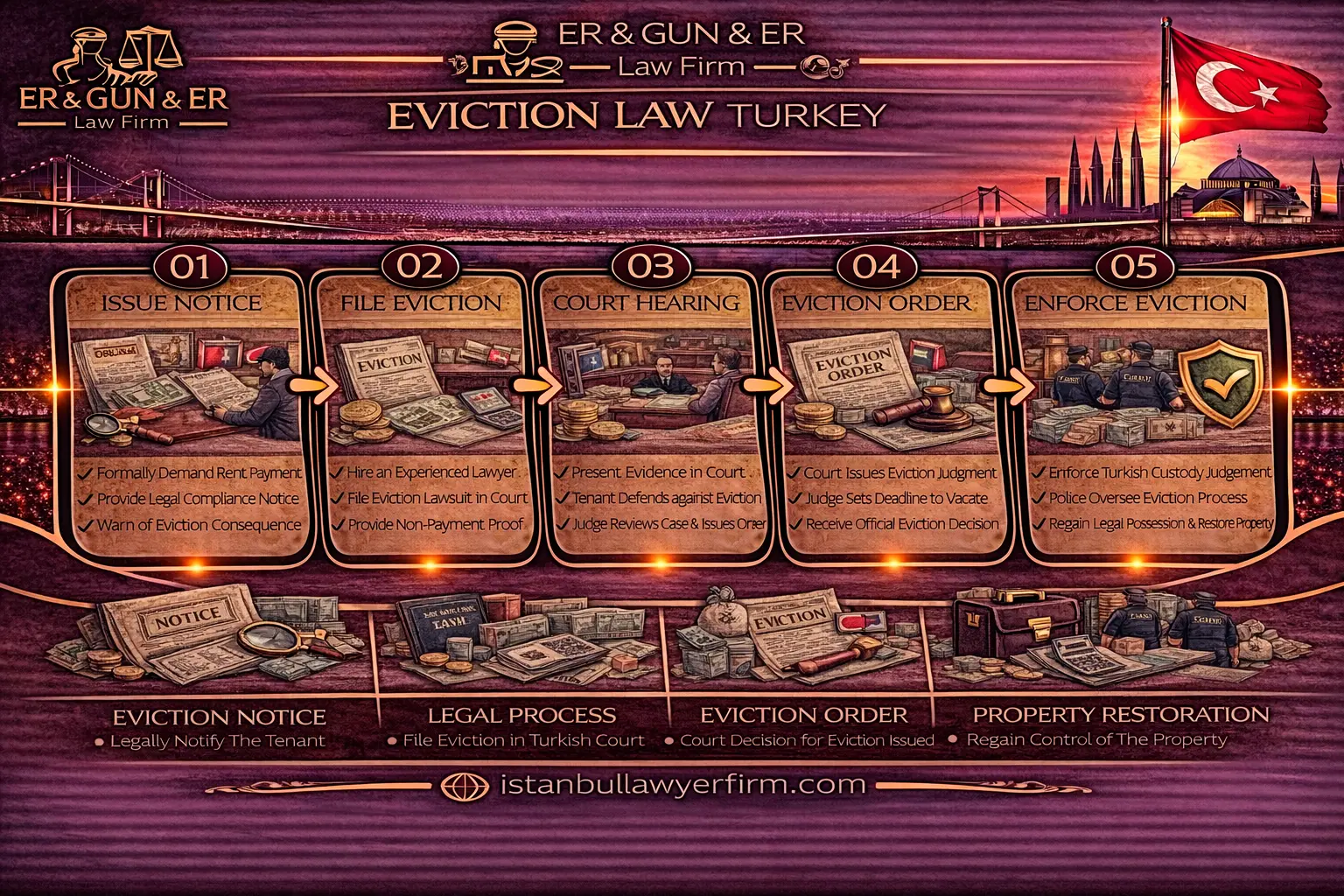
In practice, eviction disputes are not decided by emotions but by what the file proves and when it proves it. The starting point for eviction law Turkey is always the lease type, because residential and commercial dynamics shape what is realistic to claim and how a judge reads fairness. The next step is identifying the specific legal ground and matching that ground to the correct notice and evidence set. The third step is choosing the correct route between litigation and enforcement, because each route has different procedural risks and different timing pressures. The fourth step is treating service and notifications as a discipline, because poorly served notices can collapse an otherwise strong case. The fifth step is preserving documents from day one, because the case is often decided on receipts, written communications, and dated handover records rather than on witness memory. If you want a defensible plan from the first notice letter, working with a lawyer in Turkey helps keep the file consistent and avoids admissions that later undermine your position. This article also uses the phrase eviction process Turkey to describe the full sequence from notice to enforcement, not a single court day.
Eviction law overview
Eviction disputes in Turkey sit primarily within the lease framework of the Turkish Code of Obligations. The law distinguishes between ending the contractual relationship and physically recovering possession. A tenant eviction Turkey file usually fails when the claimant cannot show the correct legal ground with a clean paper trail. A landlord eviction Turkey file usually succeeds when the ground, the notice, and the proof are aligned from the first step. The first strategic choice is to define what you want, because eviction is about possession and not automatically about money. The second strategic choice is to understand that notices are evidence, not only warnings. The third strategic choice is to preserve the full lease file, including annexes, renewals, and side agreements. The fourth strategic choice is to record payment history with bank proofs rather than with informal spreadsheets. The fifth strategic choice is to document the current use and condition of the premises, because many grounds depend on factual use. The sixth strategic choice is to identify who is the real tenant and who is the real landlord, because wrong party selection creates procedural collapse. The seventh strategic choice is to treat service as a compliance step, because an unserved notice is usually useless. The eighth strategic choice is to plan for counterarguments early, because tenant objections often target procedure rather than substance. The ninth strategic choice is to keep communications calm and written, because aggressive messages can become admissions. The tenth strategic choice is to avoid promising outcomes, because court scheduling and enforcement logistics are external variables. The eleventh strategic choice is to build the file as a chronology with an index, because courts and enforcement offices read structure better than narrative.
An eviction file is often decided by whether the notice and termination steps were completed in the right order. Parties routinely underestimate eviction notice Turkey mechanics and later discover that a missing proof of delivery changes everything. Parties also misunderstand termination notice lease Turkey concepts and assume one message ends a lease, which is rarely correct in contested files. The safest approach is to treat each notice as a document that must be served and archived with delivery proof. The notice should clearly identify the lease, the address, the parties, and the ground being invoked. The notice should avoid mixing multiple legal grounds without clear separation, because mixed grounds create confusion in later pleadings. The notice should include a documentary ask when appropriate, such as requesting payment confirmation or requesting an appointment for inspection. The notice should also record the sender’s address and contact channel so later “could not reach” claims are not credible. A landlord should record rent arrears by month and attach payment proofs or non-payment proofs rather than making a single lump statement. A tenant should respond in writing and attach payment proofs where payment is claimed. A tenant who stays silent often loses procedural leverage even when the merits are mixed. A landlord who threatens unlawfully often creates defenses that did not exist before the threat. Both sides should assume that every message may be read by a judge later and should write accordingly. In complex files, keeping a single email thread and a single set of attachments reduces later authenticity disputes. The core discipline is that notices must be consistent with later pleadings, because contradictions are exploited immediately. The court will not repair sloppy notice drafting by guessing intent, and this is why early drafting matters. If the case includes foreign parties, keep translations consistent so the court does not face multiple name spellings.
When a dispute escalates, the question becomes whether the case is primarily about procedure or primarily about facts. An eviction lawsuit Turkey is usually lost on procedure when service, party identity, or documentation is weak. An eviction lawsuit Turkey is usually won on facts when the ground is clearly supported by a complete record. The best planning method is to build a file that would be understandable to a third party who has never seen the property. That file should include the signed lease, renewals, payment ledger with bank receipts, and an indexed notice chain. The file should also include photographs and handover notes if condition is relevant. The file should include identity evidence for parties if there is any doubt about signatory authority. The file should include landlord title or authority evidence where landlord identity could be challenged. The file should include tenant identity evidence where the tenant claims they are only an occupant. The file should include correspondence about repairs, renovations, and complaints because those topics often appear as defenses. The file should also include any settlement attempts, because courts sometimes look at good faith negotiation history. If enforcement is expected, the file should be built to survive objections rather than to persuade emotionally. If your case has multi-city logistics, coordinating the file through a law firm in Istanbul can reduce the risk of inconsistent letters and missing proofs. The file should be written with the assumption that timelines are uncertain and that only documents are certain. The correct approach is to use procedure to reduce uncertainty, not to increase it. When the dispute involves high-value premises, early professional management often saves cost because it prevents months of rework. The safest habit is to treat the eviction file as a litigation product from day one, even if settlement is expected.
Residential and commercial leases
Residential lease eviction Turkey disputes are typically more sensitive because the court expects a careful balance between possession rights and housing stability. Commercial lease eviction Turkey disputes are typically more documentation-heavy because businesses often have more complex contract annexes and operational claims. Residential cases often turn on personal use arguments, family need arguments, and notice correctness. Commercial cases often turn on payment history, use of premises, and contract purpose mismatch. Both categories are governed by the same general lease principles, but practice differences matter. The first step is to classify the lease correctly based on actual use and the contract text. The second step is to identify whether any special clauses exist that change notice requirements or renewal behavior. The third step is to identify whether the tenant is an individual or a company, because party identity affects evidence sources. The fourth step is to identify whether the premises is a home, a workplace, or mixed use, because mixed use creates factual disputes. The fifth step is to document the agreed rent and payment method, because cash payments create disputes later. The sixth step is to document any side agreements about repairs, furniture, or early termination. The seventh step is to document how keys were delivered and how the tenant took possession. The eighth step is to document whether the tenant sublet or assigned occupancy, because occupancy change often becomes a defense or a ground. The ninth step is to keep the record consistent across rent increases and renewals, because inconsistency invites challenges. The tenth step is to anticipate that the court will focus on what the parties actually did, not only on what they wrote. The eleventh step is to build the file as if a judge will read it without visiting the premises.
Lease classification also matters for risk management before signing, not only after conflict starts. A prudent landlord performs tenant screening, collects proof of identity, and documents payment method expectations. A prudent tenant performs address and ownership checks and verifies who is authorized to sign the lease. For foreign tenants and investors, rental due diligence for foreigners is a useful workflow to reduce later authority disputes. Commercial tenants should also verify whether the premises has permits suitable for the intended business use, because permit problems often become eviction disputes later. Residential tenants should verify whether the landlord has constraints such as mortgage enforcement risk that could affect stability. Both sides should treat written addenda as part of the lease and store them as a single package. Both sides should avoid making oral side promises about repairs because oral promises are hard to prove. Both sides should record repair requests in writing because repairs are frequently used as defenses against non-payment. If the lease uses a manager or agent, both sides should document the agent’s authority and store it. If the lease is for a business, both sides should document who is the authorized representative and how notices are received. If the lease is for a home, both sides should document who actually resides in the premises because occupancy disputes arise later. These steps are not dramatic, but they prevent later arguments about who can be sued and who can be served. If a party needs coordinated lease file hygiene across multiple properties, an Istanbul Law Firm can standardize templates and evidence discipline. When leases are drafted with proof in mind, disputes are narrower because fewer facts are contested. That narrowing is valuable because eviction conflicts often expand into multiple lawsuits when the baseline record is unclear. A clean baseline record is therefore a practical asset even before any dispute exists. practice may vary by authority and year — check current guidance.
Lease type also influences how parties should communicate during conflict because tone affects negotiation prospects. Residential disputes benefit from calm, solution-focused correspondence because courts and mediators expect good faith attempts to resolve housing issues. Commercial disputes benefit from precision because businesses often use communications as evidence in later claims. In both, parties should avoid making threats that are not legally grounded because threats create counterclaims. Parties should also avoid using social media or public postings because public postings create reputational and defamation risk. In cross-border leases, language drift is a common failure point, because one side writes in English and the other in Turkish and meanings diverge. In those cases, an English speaking lawyer in Turkey can help keep notices consistent and prevent later “I did not understand” defenses. A common escalation trigger is unclear rent payment allocation, especially when partial payments are made. Therefore, parties should label transfers and keep receipts in a monthly folder. Another trigger is unclear key delivery and inspection arrangements, especially at exit. Therefore, parties should document key returns and inventory at both entry and exit. Another trigger is unclear renewal behavior, because parties rely on assumptions rather than on written renewals. Therefore, parties should confirm renewal terms in writing and store them with the lease. Another trigger is unclear use of premises, especially when commercial use shifts over time. Therefore, parties should document use and any permissions to change use. Another trigger is unclear repair allocation, because tenants use repairs as justification for withholding and landlords use repairs as justification for deduction. Therefore, repair requests and responses should be documented. If the file is organized and communications are controlled, the dispute is easier to resolve because parties argue about evidence rather than about emotions. For practical case framing and defense planning, consult an eviction lawyer Turkey only when the record is preserved and consistent, because the first legal letter sets the tone for the entire file. The best strategy is to keep the file so clean that counsel can advise quickly without guessing.
Grounds for eviction
Grounds are the legal theory that connects facts to the remedy of possession recovery. The defense side often wins by showing that the ground is mismatched to the facts or that the procedural preconditions were not met. A strong ground selection begins by listing all candidate grounds and then excluding those you cannot prove with documents. A weak ground selection begins by copying a template without checking whether the file supports it. Courts want to see that the chosen ground is the correct legal door for the problem presented. If the problem is chronic non-payment, the file should focus on payment ledger, notices, and response history. If the problem is unauthorized use, the file should focus on use evidence and contract purpose. If the problem is a landlord’s genuine need, the file should focus on need evidence and good faith. If the problem is a rebuilding plan, the file should focus on municipal permissions and project evidence. If the problem is a new owner, the file should focus on acquisition record and lawful notice sequence. Each ground has different evidence targets and different procedural risks. In grounds selection, courts often emphasize good faith because eviction is a strong remedy. Therefore, the file should show that the landlord acted consistently and did not create artificial grounds. It should also show that the tenant had a fair chance to respond and comply where compliance is relevant. If the tenant’s defense is that the landlord is acting in bad faith, the landlord should answer with objective documents rather than denials. If the landlord needs a disciplined selection process, an Turkish Law Firm can map grounds to documents and reduce the risk of choosing an unprovable route. practice may vary by authority and year — check current guidance.
Grounds selection also requires separating eviction objectives from money recovery objectives. Many landlords want both possession and arrears, but the procedural route for each may differ. A landlord should decide whether the priority is immediate possession or full arrears recovery because that choice changes strategy. A tenant should decide whether the priority is staying in the premises or minimizing damages exposure because that choice changes defense posture. If the landlord’s file is primarily about need-based eviction Turkey, the file should be prepared to prove need as a factual necessity, not as a preference. If the landlord’s file is about contract breach, the file should be prepared to prove breach as a clear deviation from written obligations. If the landlord’s file is about pattern of default, the file should be prepared to show repeated default events with clean payment proofs. If the tenant’s defense is that rent was tendered but refused, the tenant should document tender attempts and refusal messages. If the tenant’s defense is that notices were not properly served, the tenant should document address issues and service irregularities. If the tenant’s defense is that the landlord violated obligations such as repairs, the tenant should document repair requests and the landlord’s responses. If the tenant’s defense is that the lease is not valid, the tenant should document authority challenges and signature inconsistencies. These defenses are procedural and factual, so they require early record control. Parties should avoid creating new evidence by writing exaggerated letters after the dispute starts, because exaggerated letters become credibility problems. The best ground is the one you can prove calmly with existing records. If records are missing, the strategy should shift to creating lawful records prospectively rather than asserting facts you cannot prove. practice may vary by authority and year — check current guidance.
Grounds also interact with renewal and termination behavior, because the court often checks whether the landlord accepted rent and renewed the relationship after the alleged breach. If the landlord accepted rent after alleging breach, the landlord should explain what that acceptance meant and whether it waived the breach. If the tenant claims that acceptance waived eviction, the tenant should show the acceptance pattern and the landlord’s communications. Courts often test whether the parties behaved consistently with their stated positions. Therefore, if a landlord says a lease is ended, the landlord should avoid acting like the lease continues without explaining why. If a tenant says the landlord refused payment, the tenant should show payment offers and refusal records. If the landlord claims misuse, the landlord should show inspections and written warnings, not only later accusations. If the tenant claims consent to misuse, the tenant should show the consent in writing rather than relying on oral claims. If a ground requires that the landlord provided a chance to remedy, show that chance through notices and reminders. If a ground is immediate, show why immediacy is legally justified and not a reaction. In complex files, it is often better to pursue one provable ground than to assert many weak grounds. Multiple weak grounds can dilute the strongest ground by making the court think the file is speculative. A disciplined counsel approach is to keep the petition narrow and heavily evidenced. This reduces the risk of losing on a technical defect and having to restart. Restarting is expensive because it resets time and creates new service problems. The most effective eviction file is therefore the one that treats grounds selection as a document screening exercise. practice may vary by authority and year — check current guidance.
Non-payment eviction path
Non-payment is the most frequent trigger of eviction disputes, but it is also the most procedural because the file is built on notices, payment proofs, and objection handling. The topic eviction for non-payment Turkey should be treated as a ledger project first and a legal project second. Start by building a month-by-month table of due rent, paid rent, and missing rent, supported by bank receipts. If any payment was in cash, the landlord must produce signed receipts, and the absence of receipts often becomes the tenant’s strongest defense. If the tenant claims payment, the tenant should produce bank proofs with reference lines that match the lease period. If the landlord claims partial payment was allocated incorrectly, the landlord should document allocation logic in writing and keep it consistent. If the tenant claims that rent was tendered and refused, the tenant should produce the tender message and the refusal message. The eviction route can intersect with enforcement mechanisms, and eviction through enforcement Turkey should be planned as a procedural sequence, not as a threat. The landlord should also document any agreed rent increases and renewal terms, because rent disputes often arise from unclear increase history. The landlord should document any repair complaints because tenants frequently use repair disputes as a reason to withhold rent. The tenant should document repair requests and the landlord’s responses to show good faith. The landlord should avoid making unlawful self-help attempts because self-help creates defenses and can create separate liability. The tenant should avoid ignoring notices because silence weakens procedural positions. If the file is built early with clean receipts, non-payment disputes can be resolved faster because facts are measurable. practice may vary by authority and year — check current guidance.
Non-payment disputes also include a money recovery dimension that is separate from possession recovery. A landlord who wants both should plan two evidence tracks: one for possession and one for receivables. This is where the logic of debt recovery steps can be relevant, because arrears collection has its own documentary requirements and objections workflow. The landlord should keep a clear statement of account that shows how payments were applied and how arrears were calculated. The tenant should review the statement and respond with a structured reconciliation rather than with broad denial. If utilities are included in rent, clarify that inclusion so utility disputes do not become false arrears claims. If utilities are separate, document final bills and payment history so utility arrears are not alleged without proof. If the tenant paid deposits or advances, document whether they were applied to rent or kept as separate security, because misapplication creates disputes. If the landlord claims late payment penalties, document the contract basis and the calculation method without inventing statutory rates. If the tenant claims financial hardship, hardship alone does not prove payment, so hardship must be paired with a realistic payment plan proposal. A payment plan proposal should be written, should include dates, and should include bank transfer proof standards. If the landlord accepts a plan, document acceptance in writing and define what happens on default. If the landlord refuses a reasonable plan, document the refusal because it can matter in negotiations later. If the tenant wants to stay, the tenant should prioritize curing arrears with traceable payments rather than with promises. If the tenant cannot cure, the tenant should prepare for exit logistics to reduce further liability exposure. In many files, a clean reconciliation reduces conflict because it reveals whether the dispute is about facts or about bargaining. To keep communications consistent and avoid admissions, coordinating through Turkish lawyers can help when the amounts are high or the file is complex. practice may vary by authority and year — check current guidance.
Even when non-payment is clear, possession recovery is not instantaneous, and parties should avoid false expectations. Court scheduling, service, and objection handling create variable timelines, and pretending otherwise creates bad strategy. A landlord should build the file so that objections can be answered quickly, because delay often comes from missing documents. A tenant should also build the file so that legitimate defenses are presented early and consistently, because late defenses are less credible. If the landlord’s aim is to avoid long process, the landlord should focus on the cleanest provable arrears period and avoid inflating claims. If the landlord inflates, the tenant’s objections become easier and the case slows. If the tenant’s aim is to negotiate time, the tenant should present a written cure plan and show partial payments to demonstrate seriousness. If the tenant makes no payments, the negotiation posture weakens because the landlord sees no compliance intent. If the case escalates, parties should be ready to discuss enforcement logistics and the cost of delay. If enforcement becomes necessary, the landlord should plan entry logistics and inventory documentation to reduce later damage disputes. If the tenant expects deposit disputes, the tenant should document condition and key return to protect deposit claims later. If the landlord expects damage, the landlord should document condition immediately and obtain cost proofs before making deduction claims. If the tenant is a foreigner, plan travel and service address stability because missed notices can create avoidable procedural loss. If you need a disciplined plan that balances possession and receivables strategy, a best lawyer in Turkey approach is to prioritize provable items and to avoid over-claiming. This approach often produces faster settlements because the other side cannot exploit inconsistencies. practice may vary by authority and year — check current guidance.
Default notices and timing
Default management starts with a clean and provable notice chain, because most eviction files fail on service rather than on substance. The phrase eviction notice Turkey should be treated as a document discipline and not as a threat message. A landlord should draft the notice with the lease address, the tenant identity, the rent period, and the exact default being alleged. A tenant should read the notice as a checklist of what must be proven in reply, not as a personal attack. Timing is rarely “one size fits all,” because the lease type, the ground, and the service method change the procedural map. practice may vary by authority and year — check current guidance. Notice delivery is governed by service rules, and relying on informal messaging often creates later denial and delay. In disputed cases, service questions are usually evaluated through Notification Law (Tebligat 7201) mechanics rather than social media screenshots. A termination notice lease Turkey should be written so the court can identify the legal theory without guessing intent. A landlord should avoid blending multiple grounds into one vague notice, because blended notices create inconsistent later pleadings. A tenant should respond in writing and attach payment proofs or factual objections, because silence becomes a procedural weakness. A landlord should also preserve the full delivery proof set, including envelope records and system confirmations where available. A tenant should preserve address update proofs, because many service disputes arise from outdated address records. A well-managed notice chain is usually the first place where a law firm in Istanbul adds value, because a clean chain reduces later objections. Default notices are not only about rent, because they also frame later disputes about repairs, use, and good faith.
The second layer is deciding whether the default is curable and whether the file should prioritize possession or money recovery. A landlord should distinguish between a one-off payment delay and a pattern that undermines trust and cash planning. A tenant should distinguish between an actual arrears problem and a ledger misunderstanding created by unclear reference lines. If the dispute includes arrears collection, the strategy should be coordinated with execution practice rather than improvised midstream. One practical reference point is the enforcement proceedings guide, because eviction disputes often run in parallel with receivable strategy. The phrase eviction process Turkey describes this parallel structure, where one track is possession and the other track is payment. A landlord should keep a month-by-month ledger with bank receipts, because courts do not treat summary allegations as proof. A tenant should reply with a month-by-month reconciliation, because a structured answer is more credible than broad denial. Notices should not promise specific calendar outcomes, because court and enforcement scheduling are not controlled by parties. practice may vary by authority and year — check current guidance. A landlord should also avoid telling the tenant that eviction is “automatic,” because that language is usually inaccurate and becomes an exhibit against the landlord. A tenant should avoid promising payment by a date that cannot be met, because broken promises become credibility damage. If the parties want a controlled settlement window, they should document it and define proof standards for each payment. A disciplined record is also what Turkish lawyers rely on to narrow the dispute to provable facts rather than moral claims.
Default timing disputes are frequently created by defective service, defective address data, and inconsistent renewal history. A landlord should keep the signed lease, renewals, rent increase communications, and payment receipts in one indexed folder. A tenant should keep the same folder and should also keep copies of repair requests and responses, because repair disputes are a common non-payment defense. If the landlord claims that notices were served, the landlord must produce the service proof rather than relying on memory. If the tenant claims that notices were not received, the tenant should show address update evidence and any returned mail records. When parties use agents, the file should show the agent authority, because agent service disputes can derail otherwise strong files. In tenant eviction Turkey matters, courts often focus on whether the tenant had a fair and provable chance to respond to the alleged default. In landlord eviction Turkey matters, courts often focus on whether the landlord’s steps were consistent and procedurally correct from the start. A good habit is to draft every notice as if it will be read by a judge who has never seen the property. Another good habit is to keep communications factual and to attach proof rather than to argue. If the tenant pays after notice, record exactly what was paid and how it was allocated, because allocation disputes create new defaults on paper. If the landlord accepts partial payment, record acceptance terms in writing to prevent later disputes about waiver. If the parties cannot align on timing, they should shift from informal calls to formal written notices to stabilize the record. The goal is not to flood the other side with messages, but to create a reliable chain of proof that survives objections. practice may vary by authority and year — check current guidance.
Written undertaking eviction
A written undertaking is often used as a fast route when it is properly drafted, properly dated, and provably voluntary. The topic phrase eviction commitment Turkey tahliye taahhudu refers to a written promise to vacate, but its value depends on authenticity and proper sequencing. A landlord should not treat a piece of paper as a magic solution, because courts and enforcement offices test form and context strictly. A tenant should not sign an undertaking casually, because it can be used as a strong possession recovery basis when valid. The safest approach is to ensure the undertaking is clear about the premises, the parties, and the vacate intention, and that it is not embedded in a confusing bundle. The undertaking should not be left with blank dates, because blank dates invite disputes and invalidity claims. The undertaking should not be signed under pressure at key delivery, because voluntariness becomes contested when timing is suspicious. The undertaking should be stored as an original document with controlled custody, because authenticity challenges are common. If the landlord intends to use the undertaking through execution, the file must be built to match the enforcement logic of Execution and Bankruptcy Law (İİK 2004) practice. The phrase eviction through enforcement Turkey should be understood as a procedure with objections, not as a guaranteed quick result. practice may vary by authority and year — check current guidance. A bilingual or foreign party file should also control translation and signature comprehension, and a English speaking lawyer in Turkey can help keep wording stable. A valid undertaking can narrow disputes, but a defective one can waste months because it creates false confidence and then collapses on challenge.
Defense strategy against an undertaking usually focuses on timing, authenticity, and the real intention of the signer at the time of signature. A tenant may argue that the undertaking was signed as a condition to receive keys and therefore lacked genuine consent. A tenant may argue that the date was filled later without authorization and therefore the document is unreliable. A tenant may argue that the premises identification is unclear and therefore the undertaking cannot be executed. A tenant may argue that the signatory was not the true tenant and therefore the undertaking does not bind the actual occupier. A landlord may respond by showing the signature context, the handover note, and any independent acknowledgments that support voluntariness. A landlord may also show that the undertaking was signed at a later time when the tenant had full control and therefore consent is more credible. The defense should avoid debating in abstracts and should instead map each argument to one document and one date. If the tenant claims coercion, the tenant should be ready to show contemporaneous messages or witnesses, because late allegations without proof are weaker. If the landlord claims authenticity, the landlord should be ready to show original custody and any notarization or signature verification that exists. If the tenant claims the undertaking is a template, the tenant should show how it differs from the actual lease and whether it was customized. If the landlord claims the undertaking is independent, the landlord should show that the tenant understood it as independent. If the parties are foreign or bilingual, translation drift can create “I did not understand” defenses, and the file should show what language was used in explanation. practice may vary by authority and year — check current guidance. Undertaking disputes are rarely won by emotion, because the court’s focus is document integrity and voluntariness indicators. A clean evidentiary approach reduces the risk that the case turns into a credibility contest.
An undertaking strategy should also consider parallel risks such as rent arrears and damages, because possession recovery does not automatically resolve money disputes. A landlord who relies solely on an undertaking may neglect the rent ledger and later struggle to recover arrears efficiently. A tenant who relies solely on invalidity arguments may neglect to document payments and later face arrears claims even if eviction is delayed. If arrears are substantial, landlords sometimes seek security measures while the possession track runs, but such measures depend on file strength. One practical reference point for securing claims is precautionary attachment procedure, because security planning is often paired with possession planning in high-risk files. practice may vary by authority and year — check current guidance. A landlord should also consider settlement leverage, because an undertaking can support a negotiated move-out date with controlled handover and inventory. A tenant should consider whether negotiating a structured exit reduces long-term liability exposure compared to prolonged conflict. If the tenant agrees to exit, document the exit protocol with key return receipts and condition photos to prevent later damages disputes. If the landlord agrees to a timeline, document it and avoid mixed messages that look like bad faith. If the landlord uses the undertaking but still accepts rent, document what acceptance means so waiver arguments are not created. If the tenant claims that acceptance renewed the relationship, the tenant should show the acceptance pattern and landlord messages. If the undertaking is to be used, the file should include one consistent narrative, not multiple shifting theories. A well-managed undertaking can reduce litigation, but only when both sides treat documentation as the primary battlefield. The strongest outcome is a documented and peaceful move-out that avoids separate disputes on deposits and damages. Undertakings are therefore a tool, not an outcome, and the tool must be used with discipline.
Need-based eviction claims
Need-based eviction Turkey is one of the most litigated grounds because it combines strict legal framing with subjective human facts. Courts typically test whether the need is real, serious, and consistent with good faith. A landlord should be prepared to prove need with objective documents rather than with preference language. The proof can include living arrangement evidence, family structure evidence, and evidence of lack of reasonable alternatives. The landlord should also show that the landlord’s conduct is consistent with the claimed need, because inconsistent conduct is treated as bad faith. The landlord should avoid serving need claims as retaliation for unrelated disputes, because retaliation narratives are common defenses. The tenant should focus defenses on proof gaps and on inconsistent landlord behavior rather than on personal attacks. The tenant should also preserve communications that show the landlord offered to renew or offered to rent to others, because such offers can undermine need narratives. The landlord should keep a clean file showing why the premises is required and why timing is reasonable. The landlord should also keep the rent history clean, because unpaid rent disputes can distract the court from the need analysis. The tenant should keep rent receipts clean, because rent compliance strengthens the tenant’s credibility in need disputes. If the file is complex and there are foreign stakeholders, coordinating through an Istanbul Law Firm helps keep the narrative consistent and prevents contradictory letters. practice may vary by authority and year — check current guidance. Need-based cases are often about credibility, but credibility is built through documents and consistency, not through volume of assertions.
A landlord’s claim can collapse if the landlord cannot show that the claimed need is genuine rather than strategic. Courts often look for indicators of genuine need, such as documented housing constraints and consistent life planning. Courts also look for indicators of bad faith, such as offering the same unit to another tenant while claiming urgent personal need. The tenant’s strongest defense is often to show inconsistent landlord conduct with dated messages and witnesses where lawful. The landlord’s strongest rebuttal is often to show that alternatives were evaluated and were not realistic, supported by objective evidence. The phrase landlord eviction Turkey becomes important here because the court expects the landlord to prove the ground, not the tenant to disprove everything. A landlord should also anticipate that the tenant will argue that the landlord’s need could be met in another property, and the landlord should be ready to explain why that is not realistic. The tenant should avoid claiming “no need” without evidence, because courts rarely accept unsupported denials. A better tenant defense is to request strict proof and to highlight gaps in the landlord’s documentation. If the landlord’s claim is based on family use, the landlord should show that family relationship and the planned use without exaggeration. If the landlord’s claim is based on business need, the landlord should show business plan and operational necessity without claiming automatic acceptance. practice may vary by authority and year — check current guidance. Need-based litigation is also sensitive, so both sides should keep communications respectful because aggressive language can be viewed as bad faith. If settlement is possible, a structured exit protocol can reduce risk for both sides and avoid long hearings. If the landlord is willing to offer relocation support, document it as a voluntary settlement term rather than as a legal entitlement. The central point is that need claims are decided by a consistency test over time. A best lawyer in Turkey approach is to build the need file early and to avoid last-minute invented narratives that are easily challenged.
Need-based files also require careful notice and service planning because procedural defects can defeat a strong factual case. The landlord should ensure that every notice and every filing uses the same address and identity details to avoid service disputes. The tenant should keep address updates documented to prevent “I did not receive” disputes from becoming credibility fights. If the parties have prior disputes about repairs or rent, separate those issues from the need narrative and keep the pleadings clean. If the landlord relies on family circumstances, avoid oversharing sensitive personal data and focus on what is necessary to prove need. If the tenant raises privacy objections, the landlord should propose controlled disclosure and redaction where appropriate. If the tenant claims that the landlord promised renewal, the tenant should show the promise and the landlord’s later change to test good faith. If the landlord claims that the tenant refused reasonable settlement, preserve settlement offers and refusals to show negotiation behavior. If the landlord claims urgency, show why delay creates real harm rather than only inconvenience. If the tenant claims that eviction would create disproportionate hardship, document hardship facts, but also understand that hardship alone may not defeat a legally proven need. practice may vary by authority and year — check current guidance. Need claims often become longer because courts examine facts carefully, so do not assume a quick outcome even in apparently clear situations. A disciplined file makes the case shorter because the court can verify facts without repeated requests. If the landlord wants to avoid litigation, the landlord can propose a documented timeline that allows the tenant to relocate peacefully. If the tenant wants to avoid eviction, the tenant can propose alternative arrangements and document them, but must be realistic. If the file ends in litigation, the party with the cleaner chronology usually has the advantage. Need-based eviction is therefore a planning exercise as much as a legal argument.
Renovation and rebuilding eviction
Renovation eviction Turkey claims are often misunderstood because minor repairs are not the same as a genuine rebuilding project. Courts typically test whether the planned works require vacancy and whether the plan is serious and documented. A landlord should be prepared to show project documents, permission steps, and a coherent timeline concept without promising dates. practice may vary by authority and year — check current guidance. The landlord should also show that the works are not a pretext to replace the tenant for higher rent, because pretext arguments are common defenses. The tenant should focus defenses on whether the project is documented and whether the claimed necessity of vacancy is proven. The tenant should also document any prior communications where the landlord offered renewal or offered rent increases, because those can undermine a sudden renovation narrative. The landlord should avoid starting renovation claims with informal messages and should instead build the file with written notices and project evidence. If the project requires municipal approvals, preserve the approvals and correspondence as part of the case file. If the project is financed, preserve financing evidence because financing can indicate seriousness. If the landlord intends to re-let after renovation, the landlord should anticipate that courts may scrutinize good faith and consistency. The tenant should avoid refusing access for necessary inspection if access is requested lawfully, because refusal can be framed as bad faith. The landlord should request access in writing and should propose reasonable times to reduce confrontation. If the lease is commercial, document how the business will be affected and whether alternative accommodation was discussed, because courts may consider proportionality. If foreign parties are involved, keep translations consistent so the project documents are readable to the court. A disciplined Turkish Law Firm will treat the renovation claim as a proof set rather than as a story.
Renovation claims also intersect with procedure because the court expects clean notice, clean service, and clean pleadings that match the project evidence. A termination notice lease Turkey in a renovation file should reference the project basis and attach proof that the project is real and planned. The landlord should not rely on verbal contractor statements, because courts want written project records. The tenant should not rely on disbelief alone, because disbelief is not a defense without evidence. If the tenant disputes, the tenant should request project documents and preserve refusal, because refusal can support a pretext argument. If the landlord provides documents, the tenant should review whether the documents show a vacancy requirement or only a cosmetic update. If the project is complex, the court may use expert analysis to assess whether vacancy is necessary, and the record should be ready for that. If interim measures are sought, the procedural discipline under Code of Civil Procedure (HMK 6100) becomes relevant because interim relief is evaluated on urgency and proportionality. practice may vary by authority and year — check current guidance. A landlord should avoid requesting overbroad interim relief that looks like final relief, because courts are cautious. A tenant should also avoid creating new breaches during the dispute, because new breaches can provide alternative grounds for eviction. If the landlord expects arrears, keep the arrears file separate from the renovation file so grounds do not become confused. If the tenant expects to claim relocation costs, document actual costs and keep them separate from moral arguments. Renovation litigation is easier when the dispute is narrowed to one question: is vacancy necessary for the documented project. A lawyer in Turkey can help frame that question and keep pleadings disciplined so the court focuses on proof. The best outcome is often a documented exit timeline that avoids escalation.
Rebuilding claims also require careful exit logistics because damages and deposit disputes often follow rushed renovations. A landlord should plan a documented move-out inspection and create an inventory record to avoid later allegations of fabricated damage. A tenant should plan a documented move-out inspection and create a photo set to protect against inflated deduction claims. If the landlord changes locks early, it can create separate disputes about access and missing items, so lock changes should be coordinated lawfully. If the landlord needs to secure the premises quickly, use lawful processes and document them rather than improvising. If the tenant leaves early, document key return and condition so later arrears and damages claims are bounded. If the landlord claims that the tenant must pay for restoration, the landlord should show baseline condition and prove that the claimed items are beyond ordinary use. If the tenant claims that the landlord is using renovation as leverage to keep the deposit, the tenant should document deposit discussions and request a structured settlement. If the parties negotiate, negotiate around documents, not around accusations. If the landlord offers relocation time, document the timeline and the conditions in writing so the tenant can plan. If the tenant asks for extra time, provide a written plan and propose a staged exit to show seriousness. If the tenant is a business, plan how inventory will be removed and document removal to prevent later allegations of abandonment. If the tenant is foreign, plan travel and representation so signatures and key returns are completed without logistical collapse. If the renovation file is paired with arrears, consider whether securing money claims separately is more efficient than merging everything into one dispute. A disciplined approach often avoids a second lawsuit about deposit and damages later because the exit protocol is clear. If the landlord expects future re-letting, keep records of actual renovation work because pretext claims can resurface later. If the tenant suspects pretext, preserve evidence of re-letting advertisements and timing, but rely on provable items only. Renovation disputes are won by documentation, consistency, and controlled exit logistics. practice may vary by authority and year — check current guidance.
New owner eviction route
A new owner scenario starts when the title changes and the tenant remains in possession. The first defense issue is whether the tenant was properly informed of the change and to whom rent should be paid. The second issue is whether the new owner is invoking a lawful ground that fits the facts rather than using purchase as a shortcut. The topic new owner eviction Turkey is therefore a proof question about acquisition, notice, and genuine need. The acquisition must be proven with registry evidence and a consistent identity trail that matches the lease documents. The new owner should also show that the tenancy relationship was recognized and that the rent ledger was requested or transferred. If rent was paid to the prior owner after sale, the new owner should document when the tenant was notified to redirect payments. A new owner should avoid informal demands and should prepare a written file that can later be produced to court or enforcement offices. The tenant should preserve all communications about the sale, including messages from agents, because those messages often show what the tenant was told. If the new owner claims personal need, the file should include objective indicators that the need is real and not speculative. If the new owner claims business need, the file should show the planned business use and why the premises is required. If the tenant claims the sale is used only to raise rent, the tenant should preserve any rent increase proposals to show motive. Because the legal assessment is document-led, early record organization is more valuable than late argument volume. Coordinating the first steps with a lawyer in Turkey helps keep notices, identity proofs, and payment instructions consistent. The result is that the dispute stays within verifiable facts instead of becoming a credibility fight.
In purchase-based disputes the most common failure is sloppy service of the first notice to the tenant. The tenant may claim that no valid eviction notice Turkey was received and that they continued paying in good faith. The new owner should therefore document service attempts with lawful delivery proofs and keep copies of every envelope and system confirmation where available. Service discipline matters because the file will later be reviewed under the Notification Law rather than under informal messaging assumptions. The new owner should also document the exact date the title was acquired and the date the tenant was informed of the new payee. If an agent handled the sale, the agent communications should be preserved to show whether the tenant was told accurately. If the tenant requested proof of ownership, a registry extract response should be provided and stored in the file. If the tenant continued paying the prior owner, the prior owner receipts become relevant to show the tenant state of mind. The new owner should request the lease and renewal history because eviction claims are evaluated against the actual lease term structure. If the tenant has subtenants or occupants, the new owner should document who resides there and who is the contractual tenant. If the file is cross-border, translations should be controlled so names and addresses are consistent across every document. A foreign buyer should not rely on informal explanations from brokers because brokers are not responsible for court-proof drafting. Coordinating the notice pack with an English speaking lawyer in Turkey helps keep bilingual documents aligned and reduces rework. The defense side should also keep a record of each rent payment and any attempted tender to avoid later allocation disputes. When service and payment records are clean, the court can focus on the alleged ground rather than on procedural chaos.
New owners often prefer negotiation first because negotiation can produce possession without multi-step litigation. Negotiation is most effective when it is based on documents rather than on pressure statements. The new owner can propose a written move out protocol with a dated key return, an inventory note, and a deposit reconciliation. The tenant should insist that any protocol clarifies whether rent is due up to the key return date and how utilities will be closed. If the tenant is willing to leave, the tenant should still preserve condition photos to prevent later damage claims. If the new owner insists on eviction, the tenant should request that the asserted ground is stated clearly and that supporting documents are shared. A tenant who is surprised by a sale may have a defensible good faith narrative if they paid rent consistently and preserved receipts. A new owner who failed to notify payment redirection may face avoidable arrears disputes created by communication gaps. This is why the eviction process Turkey should be designed as a sequence of provable steps rather than as a single demand. If the parties cannot agree, the file should be prepared for a court review where the judge will test good faith and coherence. Good faith is shown by consistent letters, consistent dates, and consistent payment handling. Bad faith is often inferred from inconsistent communications and sudden shifting reasons for removal. Both sides should avoid public posts and should keep the dispute in controlled written channels. If the premises is a business site, both sides should consider a transition period because disruption can create separate damages disputes. A documented transition plan often closes the matter faster than litigation because it gives both sides a predictable exit timeline.
Termination and renewal rules
Many eviction disputes start with confusion about whether the lease ended automatically or renewed by conduct. A termination notice lease Turkey is meaningful only if it matches the lease type and the applicable legal framework. Fixed term contracts and indefinite arrangements can produce different renewal expectations in practice. Landlords should not assume that an expired paper term alone creates immediate possession rights. Tenants should not assume that paying rent always guarantees renewal because some grounds are independent of payment. The first step is to compile every renewal, amendment, and rent increase document into one timeline. The second step is to verify who signed each change and whether signatory authority was valid at the time. The third step is to check whether the landlord accepted rent after sending a termination communication and what that acceptance was stated to mean. Acceptance patterns matter because they can be argued as waiver or as continuation of the relationship. The safest approach is to communicate renewals and terminations in writing and to keep delivery proofs with the file. If the parties used an agent, record the agent authority to avoid later disputes about who could bind the landlord. If the tenant changed or added occupants, record those changes because they affect who is bound and who can receive notices. If the tenant is a company, ensure that service addresses match trade registry addresses to avoid service defects. Coordinating the termination strategy through a law firm in Istanbul helps keep renewal facts, notices, and pleadings consistent. practice may vary by authority and year — check current guidance.
Renewal disputes are often sharper in business settings because parties negotiate side terms that are not reflected in clean written addenda. In commercial lease eviction Turkey files, the court usually asks for the complete written renewal history rather than for oral explanations. Therefore, any agreed rent increase, extension, or concession should be documented and stored with the lease. If the landlord issued invoices or receipts that reference a new term, keep them because they can evidence renewal by conduct. If the tenant paid under a new amount and the landlord accepted it without reservation, record that acceptance pattern. If the tenant paid late and the landlord tolerated it, document the tolerance so later sudden strictness claims can be assessed. If the landlord wants to argue that acceptance did not waive termination, the landlord should have written reservations and should preserve them. If the tenant wants to argue that acceptance renewed the relationship, the tenant should preserve messages that show mutual intention to continue. If the lease includes an early termination clause, confirm whether it was invoked properly and whether any conditions were met. If the lease includes renewal options, confirm whether the option notice was exercised and whether delivery proof exists. If the lease includes penalties, avoid treating them as automatic and focus on what can be enforced with documents. Renewal disputes often overlap with arrears disputes, so keep the money ledger separate from the possession narrative. A clean renewal timeline reduces litigation because the judge can see whether the landlord route is consistent with the contract history. Coordinating the renewal and termination record with an Istanbul Law Firm helps avoid contradictory versions circulated to banks, brokers, and courts. practice may vary by authority and year — check current guidance.
Termination disputes become more complex when the tenant is a business under financial distress and stops paying while still operating. In those scenarios, possession strategy and receivable strategy must be coordinated rather than pursued in isolation. A landlord may want eviction through enforcement Turkey because a fast possession route appears commercially necessary. A tenant may respond with objections that focus on renewal ambiguity and on procedural defects in service. If insolvency proceedings exist, landlords should understand whether the tenant operational status changes enforcement dynamics. Founders should avoid assuming that an eviction order automatically produces cash recovery because collectability is a separate question. The landlord should map whether the tenant assets are reachable or whether the company is effectively empty. The tenant should map whether a negotiated exit is more rational than prolonged objections that increase costs. If insolvency is in play, the background described in this insolvency overview can help frame realistic expectations without overpromising outcomes. Renewal ambiguity often becomes a bargaining tool, so landlords should close ambiguity early with clear written renewals or clear written reservations. Tenants should also close ambiguity early by requesting written confirmations rather than relying on verbal approvals. When the record is clean, both sides can predict how the judge will view renewal behavior and can negotiate accordingly. When the record is messy, the case becomes longer because the judge must reconstruct the relationship from fragments. A disciplined termination file therefore reduces both possession risk and money risk, even when the tenant is distressed. practice may vary by authority and year — check current guidance.
Evidence and documentation
Evidence is the real engine of an eviction case because the court decides on documents rather than on recollections. In eviction law Turkey practice, the file should start with the signed lease and every annex that changes obligations. The file should include renewals, rent increase agreements, and any side letters about repairs or furniture. The file should include a rent ledger that is supported by bank receipts and not only by internal tables. The file should include copies of every notice sent and every response received, with delivery proof for each. The file should include service proofs that show the correct address and the correct recipient identity. The file should include identity and authority proofs if a company signed or if an agent acted. The file should include handover notes and key delivery notes because possession dates matter for both rent and exit claims. The file should include repair requests and repair responses because repair disputes are common defenses and often explain payment behavior. The file should include photographs and timestamped condition records when damage or misuse is alleged. The file should include utility statements and management dues statements when the dispute includes side debts. The file should include proof of landlord ownership or authority when tenant challenges who can sue. The file should be indexed so each exhibit can be cited in one line without searching. A structured approach used by Turkish lawyers is to build a chronology that points each allegation to one exhibit and one date. practice may vary by authority and year — check current guidance.
Landlord files are often weakened by missing ownership proofs or by outdated authority documents. In landlord eviction Turkey disputes, a tenant frequently argues that the claimant is not the true landlord or is not authorized to terminate. Therefore, landlords should preserve title records, purchase contracts, and agent authorities as a standard part of the lease binder. If the landlord is a company, preserve trade registry extracts and signatory circulars to show who can sign notices. If the landlord is represented by an agent, preserve the agent mandate and show that the mandate covers notice and litigation. If rent is paid to an agent, preserve receipts that show the agent acted as payment collector, because payment collector facts affect good faith. If the landlord changes, preserve the transition notices and the tenant acknowledgment if any. If the lease is long, preserve every renewal or extension document because the court will not assume continuity without proof. If the landlord alleges misuse, preserve inspection requests and tenant responses so misuse is framed as fact and not as suspicion. If the landlord alleges unauthorized subletting, preserve evidence of third-party occupancy and preserve any written prohibitions. If the landlord alleges a need ground, preserve documents that show genuine need and preserve any settlement offers that show good faith. If the landlord alleges renovation, preserve project approvals and contractor communications that show the project is real. If the landlord alleges repeated default, preserve the entire payment timeline so the court can see pattern rather than one month. Keep copies of all notices in the same format used at filing so authenticity is not disputed. A landlord who can produce a complete binder usually shortens the case because the judge does not need to request missing items.
Tenants also need a structured file because defenses are often decided on proof rather than on sympathy. In tenant eviction Turkey disputes, the strongest defense is usually a clean payment history backed by bank transfers and receipts. Tenants should preserve every rent transfer receipt and should ensure reference lines identify the month and the address. Tenants should preserve messages where the landlord acknowledged payment or agreed to payment plans. Tenants should preserve repair requests and landlord responses, because unresolved repairs can explain negotiation behavior. Tenants should preserve photos of the premises condition at entry and throughout the lease to counter later damage claims. Tenants should preserve key delivery notes and inventory lists to counter claims of missing items at exit. Tenants should preserve any agent communications that show where payments should be sent after ownership changes. Tenants should preserve address updates and residence registration records to rebut claims of deliberate service avoidance. Tenants should preserve notices received and should respond in writing, because silence is often read as acceptance. Tenants should preserve evidence of good faith negotiations, such as proposals for exit timelines or partial payments. Tenants should avoid sending emotional messages that admit breach or insult the landlord, because those messages become exhibits. Tenants should keep a single chronology that matches the landlord chronology so contradictions are not created by inconsistent dates. Tenants should also keep copies of any settlement protocols signed, because settlement protocols often override earlier disputes. If the tenant is foreign or multilingual, practice may vary by authority and year — check current guidance.
Lawsuit procedure steps
An eviction lawsuit Turkey begins with a petition that states the ground clearly and attaches the core evidence set. The petition should include the lease, renewals, the notice chain, and proof of service for the critical notices. The petition should also include a concise chronology so the judge can see how the dispute evolved. The respondent should file an answer that addresses each alleged fact with documents rather than with broad denials. If the tenant alleges payment, the tenant should attach bank receipts and identify allocation month by month. If the landlord alleges need or renovation, the landlord should attach objective documents that show the plan is real. If the landlord alleges a written undertaking, the landlord should attach the original and explain custody of the original. If the tenant alleges coercion, the tenant should attach contemporaneous communications and explain timing clearly. Courts apply procedural rules of pleading and evidence under the Code of Civil Procedure (HMK 6100) and expect coherent exhibit numbering. The court may schedule hearings, request additional documents, and refer certain disputes to experts when technical issues arise. The court will test service and notice validity early because invalid service can defeat the ground regardless of merits. Parties should therefore keep their service proofs complete and should not rely on informal delivery claims. A disciplined pleading strategy avoids claiming facts that cannot be proven because unsupported claims reduce credibility. Case preparation by a best lawyer in Turkey typically focuses on narrowing the dispute to the one ground that is strongest on documents. practice may vary by authority and year — check current guidance.
After the initial pleadings, the court usually asks whether the alleged ground is supported by the record and whether objections are specific. If the parties raise multiple grounds, the judge may require clarification so the case does not become unfocused. If the tenant raises procedural objections, the landlord should answer with service proofs and address consistency evidence. If the landlord raises arrears, the tenant should answer with a reconciliation that matches each payment to a month. If the tenant raises habitability issues, the tenant should show written repair requests and any inspection records. If the landlord raises misuse, the landlord should show warnings, inspection requests, and any third-party occupancy evidence. Expert involvement is often limited to technical issues, such as whether a project requires vacancy or whether damage is beyond ordinary use. Parties should instruct experts with a clear question set so expert reports are usable and not generic. Hearings are usually short and focus on whether the documentary record supports the legal ground and not on long storytelling. Witness evidence may exist but courts often place more weight on written records in lease disputes. A party who lacks a written record often tries to rely on witness narratives, which can be risky if the witness is interested. Therefore, parties should invest in document organization rather than in persuasion speeches. If the parties want settlement, they can propose a written protocol that includes a move out date and a ledger reconciliation. If the file is complex, instructing an eviction lawyer Turkey early can reduce rework because the first petition sets the entire trajectory. Where the court requests additional documents, respond with indexed bundles and keep submission receipts for each filing.
When the court issues a decision, the next question is how the decision becomes operational for possession recovery. Some files proceed directly to enforcement steps once the necessary procedural conditions are met. Other files face objections, appeals, or procedural disputes that delay physical recovery. Therefore, parties should plan the post judgment stage at the beginning and not at the end. The landlord should prepare a key handover and inventory plan so that possession recovery does not create new damage disputes. The tenant should prepare an exit plan that preserves condition evidence and utility closures. If the parties settle during litigation, they should submit the settlement in a form that is consistent with the case record. If a settlement includes payments, require bank transfer proof and a reference line so later disputes about performance do not arise. If the landlord expects arrears recovery, keep arrears evidence separate so the possession decision is not delayed by money disputes. If the tenant expects deposit return, document the deposit payment proof and plan how deductions will be evidenced. If the landlord is a new owner, ensure that ownership proof is already in the file so enforcement does not face authority challenges. If the tenant is a company, ensure that service addresses remain current so post judgment notices are not returned. If the premises is a business site, coordinate exit timing to reduce business interruption claims and to reduce conflict at handover. The safest approach is to treat litigation as one component of a broader resolution plan that includes enforcement readiness and settlement options. practice may vary by authority and year — check current guidance.
Enforcement and bailiff steps
Enforcement is the stage where a possession outcome becomes a physical handover of the premises. In many files the legal debate is finished but the practical dispute begins at the execution office desk. The procedural backbone is the Execution and Bankruptcy Law (İİK 2004) and the file is treated as a chain of documents. The first enforcement task is verifying that the enforceable document is the correct one and that it matches the party identities in the lease. The second task is checking address accuracy because execution actions run on address, not on informal location descriptions. The third task is ensuring that the tenant was properly notified of the enforcement step so later objections do not delay implementation. The fourth task is coordinating a lawful date concept for vacating so the process does not turn into confrontation. The fifth task is preparing an inventory and condition recording plan so that later damage arguments are limited to provable items. The sixth task is identifying who will attend on the day, including landlord, tenant, representatives, and any necessary locksmith. The seventh task is ensuring that utilities, access cards, and keys are documented at the moment possession changes. The eighth task is keeping communications minimal and written so that the day does not produce new disputes. The ninth task is anticipating the tenant’s procedural objections and preparing documentary answers in advance. The tenth task is separating money issues from possession issues so arrears debates do not block the handover. The eleventh task is ensuring that any third-party occupants are addressed lawfully so the handover is not contested later. When parties describe eviction through enforcement Turkey, they should understand it as a structured sequence that succeeds only when the record is clean.
On the day of execution, the practical risks are less about law and more about logistics and recordkeeping. The enforcement officer or bailiff will want clarity on who is authorized to receive possession and who is authorized to sign handover notes. If the landlord is a company, the signatory circular and authorization documents should be ready in printed form. If the landlord is an individual, identity proof should match the name on the judgment and the lease record. If the tenant is a company, its representative’s authority should also be documented to prevent later claims of invalid handover. If the premises contains goods, the parties should agree on a method for listing them so that later claims of missing items are not invented. If the tenant refuses to cooperate, the file should still be completed with a condition record that notes refusal and records visible facts. If a locksmith is used, document the locksmith identity and the time of lock change because lock timing often becomes contested. If police presence is requested, treat it as a safety measure and not as a negotiation tactic, because escalation language can backfire. If the tenant requests extra time, evaluate the request against the cost of delay and document any agreed extension in writing. If the landlord wants immediate access, the landlord should still avoid entering without the procedural step being completed and documented. If the handover note is incomplete, disputes often move from eviction to a new fight about property and liability. Coordinating these steps with a Istanbul Law Firm can help because one team can prepare the binder, the authority proofs, and the handover record. The binder should include the lease, the notice chain, the decision, and the enforcement file receipts so each question can be answered in one minute. The best operational practice is to finish the day with a signed handover note, a key count, and a photo set stored in the same folder.
After possession is delivered, the legal fight often shifts to secondary claims such as arrears, utilities, and alleged damages. Landlords should avoid immediately discarding items left behind, because disposal can create separate claims and can weaken credibility. A safer practice is to document what remains, notify the tenant in writing, and follow a controlled storage approach aligned with procedure. Tenants should also document what they removed and what they believe remained, because later allegations of missing property are common. If the premises is commercial, equipment and stock lists should be recorded with photos and serial numbers where possible. If the premises is residential, furniture and appliances should be recorded at a basic level to prevent inflated claims. If utilities must be transferred, record meter readings and closure requests so later bills are not attributed to the wrong party. If the landlord discovers damage, the landlord should obtain invoices and quotes promptly to avoid speculative deduction claims. If the tenant disputes damage, the tenant should point to entry photos and to ordinary wear explanations rather than denying everything. If the dispute is purely about money, do not re-litigate possession in correspondence, because possession is already settled procedurally. If the tenant believes the enforcement step was defective, the tenant should raise objections through the proper channels and attach service proof arguments. If the landlord expects further enforcement such as arrears recovery, keep the arrears ledger separate and supported by bank receipts. If either party threatens self-help, counsel should redirect them to lawful procedures because self-help creates new liability exposure. If the case is cross-border, preserve certified copies because foreign institutions often request proof of finality and procedural fairness. A clean enforcement closeout is one where the possession file is archived with photos, key receipts, and service proofs so later disputes are answerable.
Tenant defenses and objections
Tenant defenses usually begin with challenging whether the landlord followed the correct procedural path for the ground asserted. A tenant should first check whether the notice chain is complete and whether delivery proofs show lawful service to the correct address. If the tenant moved and updated address records, the tenant should preserve those updates because service disputes often decide early hearings. If the landlord served notices to an old address, the tenant can argue that the tenant did not have a fair chance to cure or respond. If the landlord mixed multiple grounds in one notice, the tenant can argue that the notice did not clearly state the basis for termination. If the landlord claims arrears, the tenant should answer with a month-by-month reconciliation and bank receipts rather than general denials. If the landlord claims misuse, the tenant should demand that misuse is proven with dated inspections and written warnings. If the landlord claims need, the tenant should test need with consistency evidence, such as whether the landlord offered the unit to others. If the landlord relies on a written undertaking, the tenant should test voluntariness and authenticity with timing evidence and signature context. Tenant objections also include authority objections, such as whether the claimant is the true landlord or has power to sue. Authority objections can be supported by ownership records and by inconsistencies between the lease signatory and the registry owner. A tenant should also avoid over-pleading, because weak objections can dilute strong procedural points. A disciplined defense prepared with a best lawyer in Turkey focuses on the two or three objections that are provable and case-dispositive. The defense file should be indexed so the judge can see each objection and the exhibit that supports it without searching. When the defense stays factual and procedural, it reduces the risk that the case becomes a credibility contest about personal conflict.
Substantive defenses focus on whether the alleged breach is real and whether it justifies the remedy of possession loss. If the tenant paid rent but the landlord claims non-payment, the tenant should show bank receipts with clear reference lines for each month. If the tenant made partial payments, the tenant should show allocation communications so the landlord cannot reallocate payments opportunistically. If the tenant attempted to pay and the landlord refused, the tenant should document the refusal and any proposed payment plan. If the tenant withheld payment due to serious repair issues, the tenant should produce written repair requests and the landlord responses. If repair issues existed at move-in, the tenant should produce entry photos and entry inventory notes to show that issues are not tenant-caused. If the landlord delayed repairs, the tenant should produce dated requests to show that the tenant acted in good faith. If the landlord alleges that the tenant damaged the premises, the tenant should compare entry condition to exit condition and separate wear from damage. If the tenant alleges that the landlord is acting in retaliation, the tenant should produce messages that show shifting landlord motives. If the tenant alleges discrimination or improper pressure, the tenant should focus on objective records rather than on subjective impressions. If the tenant is a business, the tenant should show how operations were conducted and whether the use aligns with the lease purpose. If the landlord alleges unauthorized subletting, the tenant should show any written permissions or prove that occupants are family or staff where relevant. If the tenant is willing to exit, negotiating a documented exit protocol can reduce liability exposure and avoid enforcement confrontation. If the tenant is not willing to exit, the tenant should still keep communication calm and written to prevent creating new breaches. Substantive defenses are stronger when they are paired with procedural discipline, because courts rarely accept defenses that are not supported by the record.
Objections are often raised late, but late objections are less persuasive if they could have been raised earlier with the same documents. A tenant should treat every stage as a record-building stage, including early replies, hearing submissions, and enforcement notices. If the tenant intends to challenge service, the tenant should preserve returned mail records and address update confirmations. If the tenant intends to challenge calculation of arrears, the tenant should keep a spreadsheet that matches bank receipts to months and amounts. If the tenant intends to challenge a need claim, the tenant should preserve public listings, broker messages, and relocation offers with dates. If the tenant intends to challenge a renovation claim, the tenant should request project documents and preserve any refusal to share them. If the tenant intends to challenge a new owner claim, the tenant should preserve sale notification communications and rent redirection instructions. If the tenant intends to challenge an undertaking, the tenant should preserve how and when it was signed and any pressure evidence. If the tenant intends to challenge enforcement steps, the tenant should respond through the proper procedural channels rather than through informal calls. If the tenant leaves during litigation, the tenant should document key return, condition, and meter readings to prevent later damages claims. If the tenant remains, the tenant should avoid actions that look like misuse, such as unauthorized changes or new occupants, because they create new grounds. If a settlement is proposed, the tenant should insist that the settlement defines move-out date, key handover, deposit reconciliation, and arrears reconciliation. If settlement is accepted, the tenant should perform exactly as written and keep proof, because incomplete performance reopens disputes. If settlement is rejected, the tenant should keep a clean communications protocol so messages do not become admissions. A tenant defense is strongest when it is consistent, documentary, and focused on legal relevance rather than on personal blame.
Deposit and damages disputes
Deposit disputes frequently appear after an eviction because parties treat the deposit as leverage rather than as a documented security. A landlord should separate deposit from rent and should keep deposit payment proof distinct from monthly rent receipts. A tenant should also keep deposit proof because many disputes are simply about whether a deposit was paid and in what amount. If the deposit was paid in cash, the receipt quality often decides the dispute, so unsigned or generic receipts are risky. If the deposit was paid by bank transfer, the reference line should identify it as deposit and should match the lease address. At exit, the landlord should prepare an itemized deduction statement supported by invoices and a baseline condition record. At exit, the tenant should prepare a photo set that mirrors entry photos and should request a joint inspection note. Deduction disputes are usually about wear versus damage and about reasonableness of cost, not about rhetorical blame. If the landlord claims cleaning or repainting, the landlord should show entry condition and explain why the work is corrective rather than routine turnover. If the tenant claims that defects were pre-existing, the tenant should show entry photos and early repair requests. If the landlord claims missing items, the landlord should show a signed inventory list and not rely on memory. If the tenant disputes missing items, the tenant should show handover notes and any replacement evidence. If parties want a structured reference for deposit handling, security deposit rules provides a framework for documenting payment, deductions, and return. A deposit dispute becomes harder when parties mix it with unrelated rent arguments, so keep ledgers separate and evidence distinct. A clean exit protocol with key receipts, meter readings, and an itemized deduction sheet often prevents the deposit from becoming a second lawsuit.
Foreign tenants and foreign landlords face extra friction because proof must survive language and currency differences. If the lease is bilingual, the parties should keep one controlling version and store certified translations of key receipts and notices. If the deposit is paid in foreign currency, parties should document the payment channel and avoid informal conversion arguments. If deductions are claimed, deductions should be expressed with invoice proof and a clear link to the currency of the invoice. If the tenant leaves Turkey, the tenant should provide updated bank details in writing and preserve delivery proof of that update. If the landlord claims the tenant was unreachable, address update emails and message logs become important exhibits. If the landlord wants to withhold deposit due to alleged arrears, the landlord should show a ledger that matches bank receipts and due dates. If the tenant disputes arrears, the tenant should respond with a reconciliation file rather than with a general denial. If the parties disagree on condition, a notary record or another formal condition record can sometimes reduce later exaggeration. If the property is managed by an agency, the agency’s authority and receipts should be preserved because agency conduct often becomes contested. If there are multiple occupants, document who returned keys and who attended inspection so later identity disputes do not appear. If the parties use messaging apps, export full threads and preserve timestamps so selective screenshots are not the only proof. When parties are cross-border, working with an English speaking lawyer in Turkey helps keep the evidence pack consistent and avoids translation drift in notices and settlement protocols. The evidence pack should also include utility closure proofs so the landlord cannot shift post-exit bills onto the tenant without basis. A structured closeout reduces the chance that deposit fights become multi-jurisdiction disputes where collectability becomes harder than merits.
Where alleged damages exceed the deposit, landlords often pursue separate claims, and those claims require the same causation and proof discipline. A landlord should not present a single lump damages number without invoices, because lump numbers are treated as bargaining positions. A tenant should not deny all damages reflexively, because denial without alternative evidence can reduce credibility. If the landlord claims structural damage, the landlord should show expert assessment or contractor reports that explain cause and scope. If the tenant claims that damage is due to building defects, the tenant should show early defect notices and repair refusal evidence. If the landlord claims loss of rent due to delayed handover, the landlord should show when keys were actually delivered and when re-letting occurred. If the tenant claims that the landlord re-let quickly, the tenant should preserve re-letting evidence to test mitigation. If a settlement includes a damages waiver, ensure that waiver scope matches what was actually settled and does not waive unrelated rights unintentionally. If the landlord wants to set off damages against deposit, record the set-off with itemization so later accounting disputes are avoided. If the tenant wants deposit back but fears a damages claim, negotiate a mutual release that is linked to a full condition record. If the premises is commercial and includes fixtures, define whether fixtures are tenant property or landlord property so removal does not become alleged damage. If the tenant removed improvements, preserve permission records because permitted removal has a different legal posture than unauthorized stripping. If the landlord alleges unpaid utilities as damages, require final bills and meter readings, because estimates are rarely persuasive. If enforcement is pursued on damages, the claimant should be ready to show the court that damages are documented and not speculative. A disciplined exit file therefore protects both parties because it limits the damages dispute to provable items rather than to broad accusations.
Practical roadmap
A landlord roadmap starts with classifying the lease and selecting one provable ground rather than many weak grounds. Build a lease binder that includes the signed lease, renewals, rent increase records, and a month-by-month payment ledger. Decide early whether the priority is possession or arrears, because that choice changes notice strategy and settlement posture. Draft notices that state the ground clearly and keep delivery proofs as part of the binder. Keep all communications factual and avoid threats that are not grounded in procedure. If non-payment is the ground, reconcile payments with bank receipts and avoid cash ambiguity. If an undertaking is used, preserve the original document and preserve the signature context evidence. If need is the ground, build the need proof set early and avoid inconsistent renewal offers that undermine good faith. If renovation is the ground, gather project documentation and permission steps before drafting the first notice. If a new owner route is used, gather acquisition proof and notify the tenant clearly about rent redirection. Plan the enforcement day as a controlled operation with a handover note, key count, and photo set. Plan deposit reconciliation separately and require itemized deductions with invoices if deductions are claimed. Maintain a settlement protocol template so negotiated exits are recorded cleanly and enforceably. A Turkish Law Firm approach is to treat each step as an exhibit that must survive objections, not as a conversation that will be remembered. When the roadmap is document-led, landlords reduce delay because the court and the execution office can verify facts quickly.
A tenant roadmap starts with building a defensive archive before conflict escalates, because later reconstruction is usually incomplete. Store the signed lease, every renewal, and every rent increase agreement in one folder with stable filenames. Pay rent by bank transfer when possible and label the month and address in the reference line to prevent allocation disputes. If you paid cash, insist on signed receipts and scan them immediately because lost receipts are hard to replace. If you receive a notice, respond in writing and attach proofs rather than relying on phone calls. If you have repair issues, send repair requests in writing and store landlord responses to prevent later denial. If a new owner claims authority, verify the ownership change and keep a record of what you verified before redirecting payments. For that verification, title deed check workflow is a practical reference for confirming who is recorded as owner and whether annotations exist. If you are negotiating time, propose a written move-out protocol and avoid vague promises that will be used against you. Document key return, meter readings, and condition photos at exit so later damage claims are bounded. Keep utility closure proofs because utility disputes are frequently used as leverage after exit. If the landlord claims arrears, prepare a month-by-month reconciliation that matches your bank receipts to the ledger. If the landlord claims misuse, request the specific evidence and respond only to what can be verified. If you plan to litigate, keep service proofs and address update proofs because procedural objections often decide early. When your archive is organized, you can negotiate calmly because you know what you can prove and what you cannot.
Both sides should treat eviction as a two-stage process, meaning legal termination and physical recovery, and each stage needs its own proofs. Both sides should assume that service issues can derail the strongest merits argument, so address records and delivery proofs deserve priority. Both sides should separate possession disputes from money disputes so that deposit and arrears do not delay handover. Both sides should avoid self-help actions such as lock changes without procedure, because self-help usually creates new liability exposure. Both sides should keep communications consistent because inconsistent letters are used as credibility attacks. If the file is cross-border, preserve certified copies and translate key documents consistently to avoid name drift. If a business tenant is involved, plan operational transition to reduce inventory conflict and to prevent damage allegations at exit. If a residential tenant is involved, plan relocation logistics and utilities closure so the exit is clean and provable. If a settlement is possible, record it in a written protocol with a move-out date, key delivery proof, and payment proof standards. If a settlement is not possible, litigate narrowly on the provable ground and resist adding weak allegations that slow the case. If enforcement is expected, prepare a handover binder in advance and assign roles for who attends, who photographs, and who signs. If deposit deductions are claimed, insist on invoices and baseline condition comparison rather than on estimates. If either party fears asset dissipation, consider security measures carefully and keep them proportionate to avoid overreach. For high-stakes or multi-property portfolios, a lawyer in Turkey can standardize templates, evidence indices, and communications so files do not drift across cases. The practical objective is a documented outcome that can be enforced, audited, and explained without relying on memory.
FAQ
Q1: Eviction is a procedural remedy that requires a lawful ground and a provable notice chain. Self-help actions like unilateral lock changes usually create legal risk and rarely solve the dispute. practice may vary by authority and year — check current guidance.
Q2: Non-payment disputes are decided on a month-by-month ledger supported by bank receipts or signed cash receipts. Partial payments should be allocated in writing to avoid later reallocation fights. A structured reconciliation often resolves the dispute faster than broad denials.
Q3: A written undertaking is useful only when it is authentic, voluntary, and properly documented. Blank dates and unclear premises identification create high challenge risk. practice may vary by authority and year — check current guidance.
Q4: Need-based claims usually require consistent and objective proof of genuine necessity. Tenants typically defend by testing good faith and highlighting inconsistent landlord conduct. Each side should focus on documents and chronology.
Q5: Renovation claims require proof that vacancy is necessary for the planned works. Cosmetic updates are often disputed because they look like pretext without project documentation. practice may vary by authority and year — check current guidance.
Q6: New owner disputes often revolve around ownership proof, rent redirection notice, and service correctness. Tenants should keep payment proofs and ownership communications. Landlords should keep acquisition records and a clean notice chain.
Q7: Service mistakes are a major cause of delay, so keep delivery proofs and current address records. Parties should avoid relying only on informal messaging for critical notices. practice may vary by authority and year — check current guidance.
Q8: Enforcement is a logistics and documentation process after a decision, and it still requires clean party identity and address proof. A handover note, key count, and condition photos reduce later disputes. Keep the enforcement folder archived with receipts and photos.
Q9: Deposit disputes are best managed with an itemized deduction sheet supported by invoices and baseline condition evidence. Tenants should document entry and exit condition and request a joint inspection note. Landlords should avoid lump deductions without proof.
Q10: Commercial premises disputes often require stricter document control because fixtures, stock, and business interruption claims appear. Record inventories and handover steps carefully to prevent later missing item allegations. Written protocols usually reduce escalation.
Q11: Foreign parties should prioritize consistent translations, stable identity spelling, and bank transfer proof discipline. Cross-border travel and address changes should be documented to avoid service disputes. practice may vary by authority and year — check current guidance.
Q12: The most effective preparation is a structured binder with the lease, renewals, payment ledger, notice chain, and delivery proofs. Keep condition records and key receipts for entry and exit. A clean archive turns disputes into verifiable questions rather than credibility battles.
Author: Mirkan Topcu is an attorney registered with the Istanbul Bar Association (Istanbul 1st Bar), Bar Registration No: 67874. His practice focuses on cross-border and high-stakes matters where evidence discipline, procedural accuracy, and risk control are decisive.
He advises individuals and companies across Sports Law, Criminal Law, Arbitration and Dispute Resolution, Health Law, Enforcement and Insolvency, Citizenship and Immigration (including Turkish Citizenship by Investment), Commercial and Corporate Law, Commercial Contracts, Real Estate (including acquisitions and rental disputes), and Foreigners Law. He regularly supports corporate clients on governance and contracting, shareholder and management disputes, receivables and enforcement strategy, and risk management in Turkey-facing transactions—often in matters involving foreign shareholders, investors, or cross-border documentation.
Education: Istanbul University Faculty of Law (2018); Galatasaray University, LL.M. (2022). LinkedIn: Profile.