

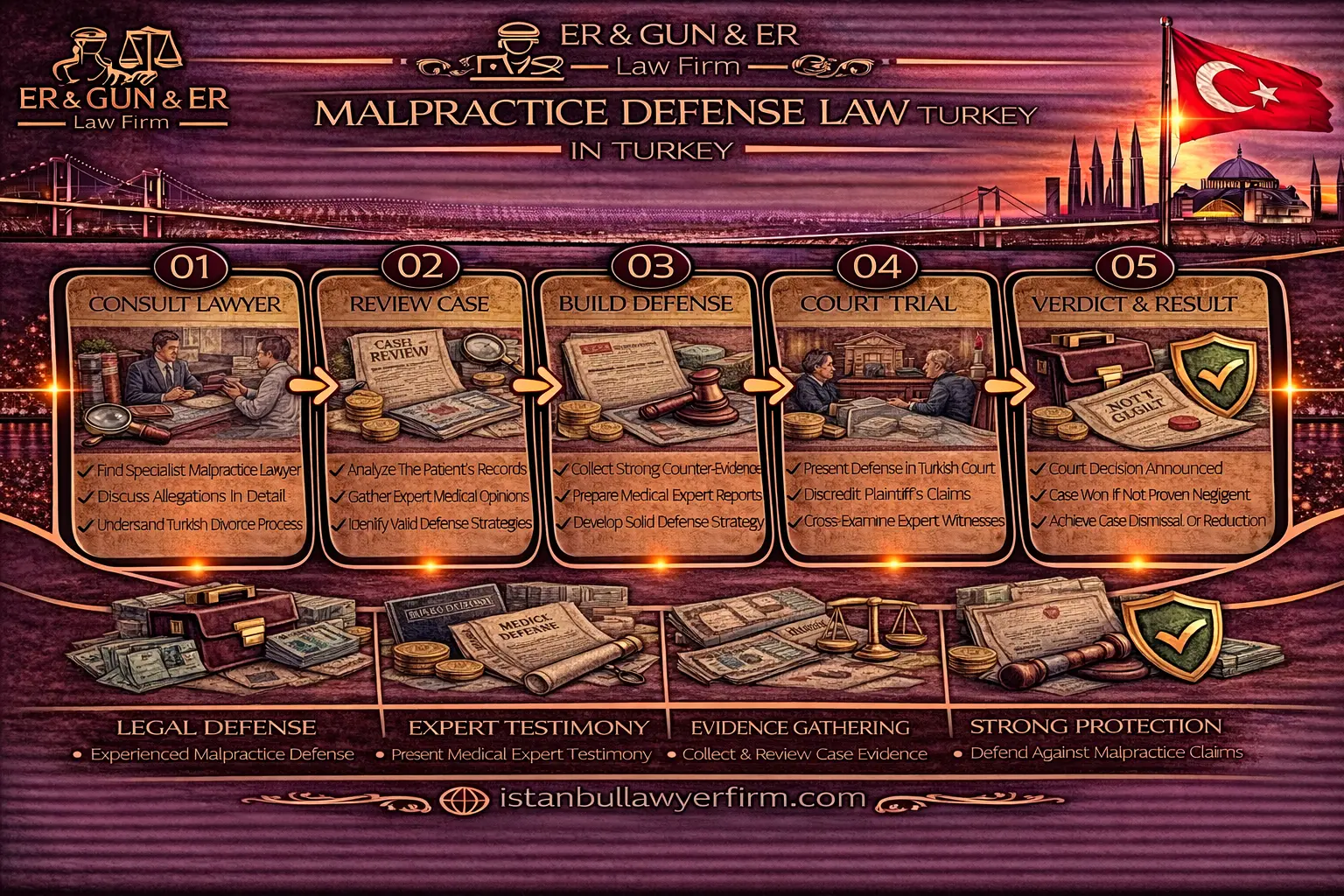
Malpractice defense in Turkey is a litigation discipline focused on proving what was done, what should have been done, and whether any proven error caused a proven loss. This article on malpractice defense law Turkey treats the defense as an evidence project, not as a rhetorical fight. It frames professional liability defense Turkey around three core elements: duty, causation, and damage. Defendants lose cases when they cannot show the contemporaneous record of decision-making and the limits of the engagement. Plaintiffs lose cases when they cannot prove that the outcome would have been different with a different professional act. Courts look for documentary clarity, and they often rely on expert analysis to translate technical practice into legal findings. Early record control is therefore more important than late argument polish. If stakeholders are cross-border or bilingual, an English speaking lawyer in Turkey can stabilize the narrative and prevent avoidable admissions caused by translation drift.
Malpractice defense overview
Most malpractice disputes begin as dissatisfaction and mature into a claim once the claimant identifies a defendable legal theory. The defense begins by confirming the role that the professional actually assumed in writing. The defense then maps every alleged mistake to a specific time, document, and decision point. The phrase malpractice lawsuit procedure Turkey describes the judicial path, but the defense posture is decided long before the hearing date. A defendant should treat the claim letter, complaint, and attachments as a checklist of what must be answered with evidence. The most effective defenses separate what is objectively documented from what is hindsight criticism. The defense should also separate professional judgment calls from clear process failures. Technical fields produce complex disputes, so the defense must translate technical practice into plain factual assertions the court can verify. The court will usually ask whether the professional followed a reasonable method rather than whether the result was perfect. The defense should prepare a chronology that shows what information was available at each step. The defense should also preserve communications that show warnings, options, and client instructions. The defense should avoid counterattacking the claimant personally, because personal attacks rarely change the proof analysis. For a procedural map of pleadings, evidence phases, and hearings, see commercial litigation procedure and then adapt it to the professional context. A Turkish Law Firm will typically start by organizing the factual record and then choosing which legal defenses are provable. “practice may vary by authority and year — check current guidance.”
Defense planning is also about controlling the scope of the alleged duty so the case does not expand into every business disappointment. Many claimants try to reframe a limited engagement as a general guarantee of outcome. The defense should anchor the court to the engagement letter, contract, and documented instructions. The defense should also identify what the claimant did not provide, because missing inputs can break causation and reduce the duty scope. In evidence preservation malpractice Turkey practice, the first mistake is allowing records to be overwritten after a dispute signal is received. The second mistake is producing inconsistent copies to different stakeholders, which creates authenticity disputes later. The defense should issue an internal legal hold and stop routine deletion of emails and files. The defense should identify who has access to records and restrict access to prevent accidental alteration. The defense should also preserve system logs that show when documents were created or changed. The defense should maintain a clean chain of custody for originals and certified copies where possible. The defense should prepare a short disclosure plan for what must be provided to insurers and regulators without compromising strategy. The defense should test whether there are parallel proceedings, such as disciplinary investigations, that can create conflicting narratives. The defense should also assess whether the claimant is pursuing settlement leverage rather than true adjudication. Settlement leverage often increases when the defendant’s records are disorganized and slow to produce. A structured evidence index can reduce that leverage by making the defense credible early. A law firm in Istanbul can coordinate this record control with a consistent communications strategy to avoid contradictory statements. “practice may vary by authority and year — check current guidance.”
Malpractice defense is not one profession, and the defense posture changes with the professional field and the forum. Medical cases often turn on consent documentation, treatment records, and expert evaluations of clinical judgment. Legal service cases often turn on scope letters, advice memos, deadlines management, and client instruction logs. The topic medical malpractice defense Turkey typically involves technical file review and specialist reports that connect events to medical records. The topic legal malpractice defense Turkey typically involves reconstructing deadlines, correspondence, and what advice was given at each decision point. In both, the defense must show that the alleged breach is not proven or that causation is not established. In both, the defense should also show that damages are speculative if the claimant cannot prove the counterfactual outcome. The defense should anticipate that the claimant will use selective excerpts of records to frame negligence. The defense should therefore produce complete contextual sets rather than isolated pages where confidentiality permits. The defense should also maintain a consistent narrative across court, insurer communications, and internal communications. A defense becomes fragile when one memo says one thing and another memo says the opposite. Reputation pressure often pushes rushed statements, but rushed statements create admissions. For institutional clients, internal compliance teams often require a structured defense memorandum early. A Istanbul Law Firm can manage that memo discipline and avoid inconsistent internal versions. “practice may vary by authority and year — check current guidance.”
Identify the duty standard
Duty analysis begins by identifying the relationship that created the professional obligation. The court will ask whether the obligation arose from contract, statutory duty, or assumed responsibility. The professional should first produce the engagement letter, contract, or service request record. The professional should then identify the precise service promised, including any limitations and exclusions. The duty standard usually depends on the profession’s accepted method, not on perfect results. The phrase standard of care Turkey malpractice captures this method-based concept, but the content still depends on the specific profession. A surgeon’s duty is measured differently than an architect’s duty, and a tax adviser’s duty is measured differently than a litigation counsel’s duty. The defense should avoid claiming a universal standard because universality is rarely provable. The defense should instead show the recognized method used and why that method was reasonable in the circumstances. The defense should show what information the professional had and what information the professional lacked due to the client. The defense should show what warnings were given and what options were presented. The defense should show what risks were disclosed and what risks were accepted by the client. The defense should also show what decisions were the client’s decisions rather than the professional’s decisions. If professional guidelines or internal protocols exist, they can be used as a benchmark if they were actually followed. If they were not followed, the defense should be careful, because the claimant may use the deviation as a breach indicator. If the standard is contested, the defense should plan an expert-supported explanation rather than relying on lawyer argument alone. “practice may vary by authority and year — check current guidance.”
Duty identification also requires clarity on who the client was and who relied on the professional act. Many disputes arise when third parties claim reliance without being the client. The defense should identify whether any third-party reliance was foreseeable and whether it was disclaimed. The defense should also identify whether the professional gave advice to a company or to an individual, because identity affects scope. If the engagement involved multiple stakeholders, document who gave instructions and who approved decisions. If the engagement involved a multidisciplinary team, document who did what and how supervision was structured. Courts often ask whether supervision was reasonable for the task complexity. The defense should show internal delegation rules and review steps where relevant. The defense should show whether the professional requested missing data and whether the client refused or delayed. If the professional warned that the work could not proceed without data, preserve those warnings. If the professional documented a risk memo, preserve the memo in original form and show delivery proof where possible. If the claimant argues that the professional promised an outcome, the defense should search for any written statement that could be read as a promise. Where an ambiguous statement exists, the defense should contextualize it with surrounding correspondence. Duty disputes also turn on what a reasonable professional would do, so peer practice evidence can matter. Peer practice evidence should be presented cautiously and through experts, not through anecdotes. The defense should also avoid overstating standards because overstatement can backfire as a self-imposed duty. If the professional is part of a regulated profession, disciplinary rules can also influence how duty is framed. “practice may vary by authority and year — check current guidance.”
Duty analysis should culminate in a one-page duty map that the court can understand. The map should list each alleged duty and the document that proves or refutes it. It should separate duties that are explicit in contract from duties implied by professional practice. It should separate duties that were assumed from duties that were refused. It should also separate duties that were conditional on client cooperation from unconditional duties. This duty map protects the defendant because it prevents the plaintiff from expanding the case midstream. It also helps the defense decide which expert discipline is needed to explain the standard. The duty map also helps the defense choose which records must be preserved and which are peripheral. If the case is multi-country, the duty map should also clarify which law governs duty and which law governs procedure, without guessing on conflict rules. If the case involves an institution, the duty map should also define who speaks for the institution in the defense narrative. A lawyer in Turkey should also ensure that the duty map is consistent with every pleading and every insurer notice. Inconsistency is often exploited by claimants to argue concealment or shifting explanations. If the defendant is a professional firm, the duty map should also clarify whether the firm or individual is defendant and how internal responsibility is allocated. If the defendant is an employee professional, the duty map should clarify employer supervision and policy expectations. Duty analysis is therefore not academic, because it defines what must be disproved and what can be conceded safely. If you define duty precisely, the rest of the case becomes a focused causation and damage debate rather than an unlimited critique of competence.
Contract versus tort theories
Claimants often plead malpractice under both contract and tort labels to widen the argument space. The defense should identify which theory the claimant uses for duty, causation, and damage. Contract-based theories typically require showing a service commitment and a breach of that commitment. Tort-based theories typically require showing a general duty of care and a breach that caused harm. The boundary between contract and tort can affect what damages are claimed and what evidence is relevant. The defense should not assume one label controls the whole case, because courts may characterize the claim differently. A practical defense is to answer both theories with the same factual record, while arguing why one theory is legally mischaracterized. If the engagement letter includes limitation of scope clauses, those clauses are usually more relevant to contract framing. If the claimant is a third party, tort framing may be used to bypass privity arguments. The defense should test whether the claimant’s reliance was foreseeable and documented. The defense should also test whether the alleged harm is purely economic loss or includes personal injury, because theory selection often follows harm type. For legal background on non-contractual liability logic, review tort law framework and then translate those elements into the professional record. The defense should avoid treating theory selection as purely legal, because the judge will often anchor on the facts first. If the facts show warnings and informed decisions, both contract and tort allegations become harder to prove. If the facts show silence and missing documentation, both theories become easier to plead. The defense should therefore focus first on reconstructing the communication history. The defense should also identify whether there were acceptance forms, sign-off sheets, or delivery acknowledgments that show client approval. If approval existed, it can limit later claims of unexpected harm. If approval did not exist, the defense should explain why and whether approval was refused. “practice may vary by authority and year — check current guidance.”
The defense should also consider whether the claimant is trying to transform a business risk into a malpractice claim. Many disputes are essentially about market outcomes, not professional error. In those cases, the defense should frame the risk as a known uncertainty that was disclosed. This is where documented risk memos and consent records become decisive. The defense should also show that alternative professional choices would not necessarily have produced a different result. Courts often require proof of a counterfactual, and counterfactual proof is difficult without reliable expert analysis. The defense should also question whether the claimant mitigated loss once a problem emerged. Mitigation evidence can include steps taken to reduce harm, such as seeking second opinions or taking corrective actions. If the claimant did nothing to mitigate, that can reduce damage causation persuasiveness. The defense should also identify whether the claimant contributed to the outcome through incomplete disclosure or late instructions. Contribution can be shown through missing documents, delayed signatures, or contradictory instructions. The defense should be careful to present contribution in a factual tone, not as blame, because factual tone is more credible. Where documentation is sparse, the defense should avoid inventing conversations and should instead focus on what is provably absent. The defense can also argue that the claimant’s case is speculative if the claimant cannot show a clear causal chain. A disciplined set of Turkish lawyers will align contract and tort defenses to a single factual story to avoid contradictory pleadings. If different lawyers draft different storylines, the plaintiff can exploit differences as admissions. Consistency across theories is therefore a strategic asset. “practice may vary by authority and year — check current guidance.”
Some malpractice claims also overlap with consumer law and sector regulation, depending on profession and client type. The defense should identify whether the claimant is invoking consumer protection concepts to shift burden or expand remedies. The defense should also identify whether the profession is regulated and whether regulatory breach is alleged as proof of negligence. Regulatory breach allegations should be answered with regulatory compliance evidence rather than with general denials. If the profession is medical, regulatory records and consent logs can be central. If the profession is engineering, project documentation, site logs, and approval chains can be central. If the profession is legal, file logs, advice memos, and client instruction confirmations can be central. In each, the defense should isolate the allegedly breached protocol and show compliance or justified deviation. If deviation is admitted, show why deviation did not cause the alleged damage. Contract and tort theories both still require causation, so keep causation evidence central. The defense should also watch for hybrid claims that include both civil liability and disciplinary complaints. Hybrid claims require coordinated messaging to avoid admissions in one forum harming the other. If the defense uses settlement discussions, keep settlement communications separate and label them appropriately where possible. Do not allow settlement offers to be read as admissions of breach. If the court asks about settlement, answer carefully and focus on dispute resolution intent, not on fault. If the defense uses experts, ensure expert opinions align with the chosen theory and do not drift into legal conclusions beyond their role. A proportionate and consistent strategy is more credible than a maximalist strategy that argues everything at once. This is why an Istanbul Law Firm often centralizes drafting and review when multiple professionals and insurers are involved. The court will not reward complexity if it does not clarify the factual record. A clean theory structure makes the judge’s job easier, which often helps the defense.
Causation and damage analysis
Even if a breach is alleged, the claimant must still prove that the alleged breach caused the alleged loss. The phrase causation defense malpractice Turkey captures this focus on breaking the causal chain with documents and expert logic. The defense should separate medical causation, technical causation, and economic causation depending on the profession. The defense should identify the alternative causes that could have produced the same outcome. The defense should document those alternative causes using third-party records, not speculation. The defense should show time sequence clearly, because causation often fails when timing is inconsistent. The defense should also show that some losses are inherent risks of the underlying activity, not professional error. This is especially relevant when the claimant is complaining about an uncertain outcome that was disclosed as uncertain. The defense should also test whether the claimant’s own actions created or increased loss, such as delaying treatment or ignoring advice. If the claimant ignored advice, the advice must be documented to be useful. If the claimant claims that advice was never given, the defense must show the advice was given through records. Causation is also affected by mitigation, so the defense should document whether the claimant took reasonable steps to reduce loss. Damage must be proven as actual, not hypothetical, so the defense should challenge speculative numbers and unsupported forecasts. Where damages depend on lost chance or lost profit narratives, expert evidence is often necessary, but the expert must rely on primary data. The defense should also check whether the claimant is double counting damage items across different legal heads. The defense should propose a clean damage map that separates direct loss, consequential loss, and claimed moral components without assuming the court will accept all heads. “practice may vary by authority and year — check current guidance.”
A strong causation defense often focuses on one decisive break in the chain rather than on many small debates. For example, the defense may show that the harm occurred before the professional act, or that the harm would have occurred regardless of the act. The defense may also show that the claimant’s loss is caused by market movement or third-party decisions outside the professional’s control. The defense should use contemporaneous records such as logs, emails, consent forms, and decision minutes to prove what happened. Where the record is incomplete, the defense should be cautious and avoid filling gaps with assumptions. Instead, the defense should argue that the claimant cannot meet the burden of proving causation with the existing record. The defense should also test whether the claimant’s claimed loss is linked to a legally protected interest. If the claimant claims emotional distress in a technical case, the defense should require proof and should challenge the causal link. If the claimant claims reputational damage, the defense should ask for objective evidence of reputational loss, such as contract cancellations with documentation. If the claimant claims business interruption, the defense should ask for accounting records and objective proof of interruption. If the claimant claims future loss, the defense should test whether the future loss is a reasonable projection or a guess. Courts often demand a clear and plausible narrative supported by documents, and purely speculative damages are easier to resist. Where multiple defendants exist, causation analysis should separate each defendant’s role to avoid joint liability assumptions. If the professional acted under client instructions, the defense should document those instructions to show shared decision-making. If the professional acted under emergency conditions, document the emergency context because it affects what was reasonable. Causation is where most malpractice cases are won because breach alone rarely proves liability without a causal chain. This is why a defense team must invest early in record reconstruction and expert framing.
Damage analysis should also be realistic and defensible because exaggerated counterclaims can undermine credibility. The defense should build a counter-damage analysis that tests the claimant’s numbers line by line. It should identify which claimed items lack invoices or lack contractual basis. It should also identify which claimed items were already paid by insurance or third parties, because double recovery is a common issue. If there is an insurance component, the defense should coordinate with insurer counsel to ensure consistent damage positions. If there are settlement discussions, the defense should separate settlement value from legal damage proof. Settlement may be rational even when legal damage proof is weak, because reputation and cost risk exist. This is why the defense should also evaluate business risk in parallel with legal risk. If the defendant is a professional firm, reputational exposure can influence settlement posture, but reputational exposure should still be managed with factual communications. A best lawyer in Turkey approach is to keep damage arguments conservative and evidence-based so the court trusts the defense. If the defense over-argues that no harm exists when harm is obvious, the court may distrust the defense on other points. Instead, concede what is objectively true and challenge what is not proven. If the defendant offered remedial action, document the offer and whether it was refused, because remedial refusal can affect loss causation and mitigation. If the claimant refused remedial action, the defense should present that refusal calmly with records. If the case involves professional organizations or disciplinary bodies, ensure that damage statements are consistent across forums to avoid admissions. “practice may vary by authority and year — check current guidance.” A precise causation and damage frame also improves expert instruction later because the expert can be asked targeted questions rather than broad opinions.
Early evidence preservation
Defense success often depends on what is preserved in the first week after a complaint signal appears. Evidence preservation malpractice Turkey begins with identifying the record universe, including emails, paper files, system logs, and third-party communications. The defendant should issue an internal legal hold to stop deletion of emails, chats, and case files. The defendant should also suspend automated retention policies that overwrite logs or records. If the defendant uses case management software, preserve audit trails and access logs because they show who changed what and when. If the defendant uses shared drives, preserve folder histories and versioning metadata. The defendant should also preserve the physical file in a sealed, documented location to prevent later authenticity disputes. If the dispute is medical, preserve clinical records, consent forms, imaging, and laboratory reports as complete sets. If the dispute is legal, preserve advice memos, drafts, filing receipts, court notifications, and client instruction emails. If the dispute is engineering, preserve project plans, site logs, approvals, change orders, and contractor communications. If the dispute is accounting, preserve working papers, reconciliation files, and client-provided source documents. The defendant should preserve inbound documents too, because missing client inputs often explain why an outcome occurred. Preserve communication showing what the client did not provide and when it was requested. Preserve communication showing warnings and risk disclosures because these records often defeat breach narratives. Preserve communication showing that choices were presented and that the client chose among options. Preserve phone call notes where they exist and preserve meeting minutes where they exist. If no notes exist, do not fabricate notes later because fabrication risk is worse than absence. “practice may vary by authority and year — check current guidance.” A disciplined law firm in Istanbul defense approach is to freeze the record before drafting any substantive reply.
Preservation must also be lawful, because illegal collection can backfire and can create separate liability. The defendant should preserve only records they lawfully control and should not access the claimant’s private data without authority. If third-party records are needed, request them through procedural channels after counsel review. If the defendant’s staff are questioned, instruct them to avoid informal statements and to route communications through designated counsel. Informal statements are frequently used as admissions in malpractice files. If there is a parallel internal investigation, document the investigation scope and keep investigation documents controlled because they can become discoverable depending on forum practice. If there is a disciplinary complaint, keep disciplinary correspondence separate from civil defense correspondence to reduce cross-contamination. If there is an insurer, preserve the first notice and the insurer’s acknowledgment because the notice timing can later be disputed. If there is a media risk, preserve public statements and internal approvals for those statements because reputation issues can trigger separate claims. If the claimant sends a preservation letter, respond in writing confirming that preservation is being done to prevent adverse inference arguments later. If the defendant receives a court-ordered evidence determination request, comply precisely and keep delivery proofs. If the record includes sensitive personal data, consult privacy counsel and manage disclosure through lawful redaction processes. For a privacy defense context relevant to record handling, review KVKK audit defense guidance and align internal data handling steps. Preserve backups but ensure backups are not altered by routine restoration operations. Preserve device images only through lawful internal IT procedures and counsel oversight, because device imaging can create privacy disputes. “practice may vary by authority and year — check current guidance.” The goal is a clean chain of custody that a judge and an expert can trust.
Early preservation should also include building a structured chronology and an exhibit index while memories are fresh. Create a timeline that lists each key event, the document that proves it, and the person who can explain it. Do not rely on witness memory to prove what the file can prove. Identify missing documents early so you can explain why they are missing and who should have produced them. If the defendant delivered work product, preserve delivery proofs such as email sends, portal uploads, and signed receipt acknowledgments. If the defendant requested approvals, preserve the approval request and the response. If the defendant warned of risk, preserve the risk memo and any follow-up communication. If the claimant later alleges that no warning was given, the warning record becomes decisive. If the defendant offered corrective action, preserve the offer and the claimant’s response because mitigation affects causation. If the claimant refused corrective action, preserve the refusal because it can reduce damages. If the file includes technical measurements, preserve raw data files and device calibration records because experts may ask for them. If the file includes photographs, preserve original photos with metadata and avoid editing that changes content. If the file includes messaging apps, export chats in a lawful manner and preserve context rather than isolated lines. A disciplined chronology reduces stress because counsel can answer allegations by pointing to exhibits rather than by reconstructing stories. A structured chronology also improves settlement posture because it shows you can prove your defense. “practice may vary by authority and year — check current guidance.” Early evidence preservation is therefore not an optional best practice; it is the core defense move that enables every later step.
Records and document control
After preservation, the defense must manage records so production is consistent and no contradictions are created. Document control begins by creating a single controlled repository with access rights. Restrict editing rights and preserve originals in read-only form to avoid accidental changes. Use stable file naming and an exhibit numbering system that can be used in pleadings and expert instructions. Create a master index that lists each document, its date, its author, and its source system. Separate client-provided inputs from professional work product because inputs often drive causation defenses. Separate drafts from final versions and preserve version history because plaintiffs often claim that “the final advice omitted a warning.” If drafts are preserved, the defense can show whether warnings were removed at the client’s request or due to scope change. Preserve calendar entries and meeting invites because they prove when a meeting occurred and who attended. Preserve billing records where they show scope and task completion, but avoid relying on billing alone as proof of performance. Preserve signed consent forms and signed approvals in original form because signatures are frequently challenged. If signature authenticity is questioned, be prepared to obtain signature comparison analysis through lawful expert channels. If the file includes internal protocols, preserve the protocols and the policy version effective at the time, because later policy changes can confuse the record. If the file includes training records, preserve them because they show organizational diligence, but do not claim training equals performance without linking to the case facts. If the claimant alleges missing records, respond by showing record retention policy and what exists, without inventing missing items. If records were lost due to an IT incident, preserve the incident report and the remediation steps as evidence of good faith. “practice may vary by authority and year — check current guidance.” Document control is where a Turkish Law Firm defense team often wins because it prevents the plaintiff from exploiting inconsistencies.
Document production should also be strategic, because overproduction can expose irrelevant sensitive data while underproduction can appear obstructive. Begin by identifying what the court will likely request and what the expert will likely request. Then prepare targeted production sets that are complete within each category rather than partial across categories. For example, produce the entire consent set rather than one consent page that lacks annexes. Produce the entire instruction chain for a decision rather than one email that lacks the thread. Produce the entire test result set rather than only the final report without raw data. Where confidentiality is real, propose protective measures such as redaction of unrelated personal data, and document why redaction is used. If the claimant alleges that redaction is concealment, document the privacy basis and offer controlled inspection where appropriate. If the record includes trade secrets, propose a confidentiality undertaking and limit access to experts and counsel. If you rely on confidentiality, be consistent; inconsistent confidentiality claims undermine credibility. Use one spokesperson for production decisions so that different departments do not produce different versions. Coordinate with insurers before producing records that may affect coverage positions, but do not delay lawful court production without a clear basis. If the case overlaps with insurance, review policy reporting and document handling principles in insurance policy review guidance so you avoid coverage disputes created by careless admissions. If the case overlaps with ongoing operations, create a parallel working copy of records so the business can continue without altering the preserved originals. Keep an access log that records who accessed the preserved repository and when, because access can become an authenticity question. “practice may vary by authority and year — check current guidance.” A clean production approach helps the defense because it keeps the court focused on the core facts rather than on record-keeping chaos.
Document control also includes controlling external communications that can become evidence. Instruct staff not to send ad hoc emails about fault or blame. Route all substantive communications through counsel or designated managers. Preserve any apology letters carefully because apologies can be misread as admissions even when intended as courtesy. If the business needs to communicate with clients, prepare standardized factual notices that avoid legal conclusions. If the business needs to communicate with regulators, coordinate regulatory communications with civil defense so narratives do not conflict. If a disciplinary body requests records, produce the same core factual set and keep a record of what was produced to prevent later claims of selective disclosure. If the claimant contacts staff directly, instruct staff to refer the claimant to counsel and document the contact. If the claimant posts public allegations, preserve screenshots with timestamps and URLs as reputation evidence, but do not respond impulsively. If you must respond publicly, keep the response factual and minimal and document internal approval. For reputation management malpractice Turkey issues, internal discipline is often more important than external messaging. Where the record includes sensitive health data or personal data, coordinate with data protection counsel to ensure lawful handling. If you anticipate disputes about authenticity, consider notarizing certain documents or obtaining certified copies where procedural rules allow. Document control is therefore a mix of technical IT practices, legal exhibit practices, and communication governance. A defense team that controls documents can answer allegations quickly, which often encourages settlement. A defense team that does not control documents spends months arguing about what exists, which increases both cost and reputational harm. “practice may vary by authority and year — check current guidance.” This section is the operational backbone that supports expert strategy and litigation positioning later.
Expert report strategy
Expert analysis is usually the center of gravity in malpractice cases because judges need technical translation of professional conduct. The phrase expert report malpractice Turkey should be treated as a structured process, not as a random opinion. Begin by identifying what the expert must answer: duty standard, deviation from standard, causation link, and damage calculation basis. Avoid asking experts to answer legal conclusions; instead ask experts to explain technical norms and whether the conduct matched those norms. Provide experts with the complete relevant record, not selectively chosen pages, because selective records reduce credibility. Provide experts with a chronology and an exhibit index so they can follow the sequence of decisions. Define the relevant timeframe and exclude irrelevant historical documents to keep the report focused. If the profession is medical, ensure the expert has relevant specialization and can interpret clinical records properly. If the profession is legal, consider whether expert evidence is needed at all or whether the court will decide on legal standards directly, but still use technical case-management evidence. If the profession is engineering, ensure the expert can interpret drawings, site logs, and technical approvals. If the profession is accounting, ensure the expert can reconcile ledgers and demonstrate where losses came from. The defense should also anticipate that the claimant will produce an expert report, so defense expert instruction should be prepared early. If the defense waits, the claimant’s expert narrative can dominate the case file. practice may vary by authority and year — check current guidance. A disciplined law firm in Istanbul defense team usually drafts expert questions as a tightly controlled list to prevent scope creep.
Expert strategy should also be aligned with causation defense malpractice Turkey logic, because breach without causation is not enough. Ask the expert to address counterfactual outcomes: what would likely have happened with an alternative professional choice. Counterfactual analysis must be grounded in data, not in speculation, and the expert should cite the record and recognized practice standards. Ask the expert to address alternative causes, such as underlying disease progression in medical cases or market movements in business cases. Ask the expert to address whether the claimant’s actions contributed to outcome, such as refusal to follow advice or delay in seeking remedy. Ask the expert to quantify uncertainty and avoid overstating certainty, because overstated certainty invites cross-examination and skepticism. Ask the expert to address documentation adequacy: whether records meet professional record-keeping norms and whether missing records exist. If missing records exist, ask the expert whether missing records are likely to change outcome or whether the existing record is sufficient. Provide the expert with originals or certified copies where possible to reduce authenticity disputes. If the case includes digital records, provide metadata and system logs so the expert can test integrity rather than relying on printouts. If the case includes consent, provide the consent forms and the disclosure materials delivered to the claimant. If the claimant alleges consent was not informed, ask the expert to assess whether the disclosed information was adequate for the procedure and time. If the case includes protocols, provide the protocol version in effect at the time and show compliance or justified deviation. Avoid presenting later protocol updates as if they existed earlier, because that creates credibility problems. practice may vary by authority and year — check current guidance. The defense should also plan whether a single expert is enough or whether multiple experts are needed, because multiple experts can create inconsistent narratives if not coordinated.
Expert coordination is as important as expert content, because inconsistent expert language can be exploited by the claimant. Use one central counsel to communicate with experts and to control the instruction pack. Require experts to cite exhibit numbers so the report is court-readable. Require experts to separate facts, assumptions, and opinions clearly so the court can see which parts are proven. Review the draft report for internal contradictions and correct them before submission. Ensure that the expert does not rely on hearsay or unsupported industry rumors. Ensure that the expert does not criticize the defendant in a way that undermines the defense narrative unless it is strategically necessary. In some cases, conceding a minor record-keeping flaw while denying causation can be a credible strategy, but concessions must be controlled. If the defense uses multiple experts, ensure that each expert addresses only their domain and does not opine outside scope. If the claimant’s expert is biased or unqualified, prepare a qualification challenge with documents rather than with insults. If the court appoints an expert panel, prepare targeted questions and request that the panel addresses specific contested points. If the panel report is flawed, prepare objections with technical corrections and record citations. For insurer interface, ensure that expert communications are consistent with the insurer’s coverage narrative and do not create admissions that trigger coverage denial. For process understanding of claims handling and expert use, review insurance claims process guidance and align the defense’s expert workflow accordingly. practice may vary by authority and year — check current guidance. A strong expert strategy makes the case predictable because it turns a technical fight into a structured set of answerable questions.
Consent and disclosure defenses
Consent and disclosure are recurring defense themes because many malpractice claims are about “I was not informed” rather than “you acted incorrectly.” The defense should first identify whether consent is legally relevant for the profession and the service type. In medical malpractice defense Turkey, consent is often central because treatment involves risk tradeoffs. In engineering malpractice defense Turkey, consent can arise in design changes, scope changes, and acceptance of risk by the employer. In legal malpractice defense Turkey, consent can arise when the client chose among procedural options after being warned of risk. The defense should start with the written disclosure materials, such as consent forms, advisories, email memos, and meeting minutes. The defense should then show that disclosure was delivered before the critical decision and in a language the client could understand. If the client claims language barrier, the defense should show interpreter use or bilingual documents where they exist. If the client signed a consent form, preserve the original and signature details because signature authenticity is often challenged. If consent forms are standardized, preserve the version in use at the time, because later updated versions can create confusion. If the client claims they were pressured, the defense should point to objective indicators such as time stamps, multi-step approval, and opportunity to ask questions. If the claimant alleges that risks were hidden, show the risk section and show any follow-up emails that emphasized risk. If the claimant alleges that alternatives were not offered, show documentation of alternatives discussion. A disciplined defense does not argue “you signed, therefore you lose,” and instead argues “you were informed, and the decision was made with that information.” This approach aligns with standard of care Turkey malpractice framing because informed decision-making is part of reasonable practice. practice may vary by authority and year — check current guidance.
Disclosure defenses also require showing that the material risk was disclosed, not necessarily every theoretical risk. Materiality is judged by what a reasonable person would want to know for that decision. The defense should avoid claiming that a generic consent form covers every circumstance if the case involves unusual risks. Instead, show any case-specific disclosures made by letter, email, or consultation note. In clinical cases, consent should be connected to the specific procedure and specific patient context, not to a generic category. In service cases, consent should be connected to the specific scope and specific deliverable limitations, not to vague disclaimers. If the claimant argues that disclosure was not understood, the defense can show that questions were asked and answered, or that the client had time to review. If the claimant argues that disclosure was rushed, the defense can show appointment scheduling and consultation records. If the claimant argues that documents were not delivered, the defense can show delivery proofs such as email logs, portal uploads, or signed handovers. If the claimant argues that signatures were forged, the defense should preserve signature comparison materials and consider forensic steps through lawful channels. If the claimant argues that disclosure should have been oral, the defense can show that oral discussions were documented in notes, and that notes were contemporaneous. If the defense lacks oral notes, the defense should not fabricate them and should instead rely on what exists and on standard practice evidence. If the claimant alleges that consent was revoked, the defense should show whether revocation was documented and what actions followed revocation. Consent is also linked to causation, because if a risk was disclosed, the claimant must show they would have chosen differently if properly informed. That counterfactual is often tested through credibility and evidence. practice may vary by authority and year — check current guidance.
Disclosure defenses must be integrated with reputation management malpractice Turkey concerns because public narratives often accuse concealment. The defense should keep communications factual and avoid defensive public statements that create admissions. If an institution must communicate with patients or clients, use standardized letters that explain process and rights without admitting fault. If the institution must report to a regulator or insurer, align disclosures across those channels to avoid contradiction. Where personal data is involved, disclosure and consent documents intersect with privacy compliance, so ensure that document sharing is lawful and controlled. The defense should separate consent about the underlying service from consent about data processing to avoid confusion. If the claimant uses social media posts as evidence, preserve posts with timestamp and URL but do not engage publicly. If the case proceeds to expert analysis, ask experts to assess disclosure adequacy relative to practice standards without making legal conclusions. A strong expert report malpractice Turkey pack will include the disclosure record and the timing evidence. If the defense intends to settle, be cautious in settlement language and avoid implying that consent was defective unless that is an agreed concession. If the defense intends to litigate, preserve the full disclosure record and avoid selective excerpting because selective excerpting can be used against you. In cross-border files, ensure translations of consent forms are consistent and preserve the original language copies. If the client is foreign, show how language comprehension was supported, such as interpreter or bilingual materials. An English speaking lawyer in Turkey can also ensure that English-language disclosures do not drift from Turkish-language records. practice may vary by authority and year — check current guidance. The aim is to show that the client’s decision was informed and that the alleged harm is a realized disclosed risk or an unrelated event, not a concealed danger.
Compliance and protocols evidence
Compliance evidence is used to show that the defendant operated within recognized protocols rather than improvising. Courts often interpret protocol compliance as a proxy for reasonable care, even when outcomes are adverse. The defense should first identify which protocol category applies: internal policy, professional guideline, or regulatory standard. Then the defense should identify which version of the protocol was in effect at the time of the event. Preserve that version in original form and record version control details. Do not rely on later updated policies to prove past compliance because that creates chronology confusion. If the organization has training logs, preserve training logs that show staff were trained on the protocol. If the protocol requires checklists, preserve completed checklists and any exceptions recorded at the time. If an exception was made, preserve the exception rationale and who approved it. If the protocol includes a consent workflow, align it with the consent record and show that each step occurred. If the protocol includes a documentation workflow, show that documentation was completed and stored according to policy. If the protocol includes escalation rules, show when escalation occurred and what decisions were made. If the claimant alleges that protocols were ignored, the defense should respond with the relevant protocol excerpts and the specific compliance proof. If the defendant is a corporate entity, a robust compliance program can reduce liability exposure by showing organizational diligence. For a structured view of how compliance programs are documented, see corporate compliance program guidance and apply the evidence logic to your sector. practice may vary by authority and year — check current guidance.
Protocol evidence should also be tied to the specific alleged breach points rather than presented as generic “we have policies.” Judges are persuaded by specific checklists, signed forms, and contemporaneous logs, not by policy binders alone. If the alleged breach is failure to warn, show the warning template used and the case-specific warning delivered. If the alleged breach is incorrect procedure, show the procedure checklist and the completed checklist for that case. If the alleged breach is late action, show timestamped communications and system logs that show when action was taken. If the alleged breach is inadequate supervision, show supervision workflows and review signatures on deliverables. If the alleged breach is wrong calculation, show calculation templates, inputs, and review notes. If the alleged breach is wrong design, show design approvals, change orders, and acceptance tests. If the alleged breach is documentation failure, show record retention logs and file integrity logs. If a protocol was violated, consider whether the violation is material and whether it caused harm, because not every protocol deviation creates liability. The defense can concede minor deviations while still denying causation and denying damage. Such concessions must be controlled and consistent across pleadings, insurer notices, and disciplinary communications. If the defendant works in a regulated industry, protocol compliance may be monitored by regulators, so ensure regulatory submissions do not contradict civil defenses. If the claimant alleges systemic failure, protocol evidence can also show that the case is an exception rather than a systemic pattern. However, avoid claiming “never happens” because such claims can be disproven and harm credibility. Focus on the case-specific record. practice may vary by authority and year — check current guidance.
Data protection compliance is increasingly relevant because malpractice cases involve sensitive data and record sharing. If the defense shares records, it must do so lawfully, with redaction where necessary, and with controlled access. If the case involves patient data, client secrets, or proprietary design data, protective handling must be documented. This is where KVKK audit defense guidance can be adapted to the malpractice defense context. Create a disclosure log that records what data was shared, with whom, and for what purpose. Use secure channels for data transfer and avoid informal messaging apps for sensitive attachments. If the claimant requests data beyond relevance, object in writing and propose a narrower set consistent with privacy and relevance. If the court orders disclosure, comply with the order while using lawful protective measures, and keep proof of compliance. If the insurer requests data, share only what is necessary and keep a record of what you sent to avoid later coverage disputes about misrepresentation. If a disciplinary body requests data, provide a consistent production set and keep proof. Document control prevents contradictions because you can show that the same core file was used everywhere. If the defense anticipates reputational exposure, build an internal communications protocol so staff do not share case facts externally. Reputation management malpractice Turkey is often ruined by one unauthorized email rather than by the lawsuit itself. A law firm in Istanbul can coordinate document control, privacy compliance, and production strategy under one unified evidence index. practice may vary by authority and year — check current guidance. The end state is a defensible record that shows not only “we had protocols,” but “we followed the protocols and documented the steps.”
Insurance notification duties
Insurance coordination is a core defense track because professional liability insurance Turkey defense often determines resources, counsel coordination, and settlement authority. The first step is identifying whether a policy exists and who the insured parties are. The second step is understanding what triggers notice under that policy, because policies often require prompt notice when a claim is made or when circumstances arise. Do not assume a fixed notice period because policy language differs and practice differs by insurer. practice may vary by authority and year — check current guidance. A safe approach is to notify early once you have a written complaint, demand letter, or court filing. The notice should be factual, limited, and consistent with the preserved record, because early notice statements can later be used as admissions. The notice should attach the complaint documents and a short chronology without speculating about liability. The notice should identify key dates, key documents, and current procedural posture. The notice should also confirm that evidence is being preserved and that no records are being destroyed. If the insurer appoints counsel, coordinate roles so that defense counsel and coverage counsel do not contradict each other. If the insured has multiple policies, coordinate notices to avoid inconsistent narratives across insurers. If the insured is a professional firm, ensure that internal reporting procedures are followed so no partner delays notice. A structured review of policy terms can be done using insurance policy review guidance and adapted to professional liability. If the case includes a coverage dispute, keep coverage communications separate from merits communications to avoid cross-contamination. Insurance notification is therefore a procedural discipline and a narrative discipline.
Insurer interface also affects how settlements are negotiated and how defense costs are controlled. If the insurer controls defense, the insurer may require approval for major steps such as expert reports or settlement offers. That approval requirement should be understood early to avoid surprise denials. If the insured retains independent counsel, document the arrangement with the insurer so cost disputes do not arise later. If the insured must participate in defense, such as providing records and staff interviews, plan participation as a structured process with counsel present. If the insurer requests additional facts, respond with documents rather than with speculative opinions. If the insurer requests an internal incident report, assess whether and how it should be shared, because internal reports can contain sensitive conclusions. If internal reports are shared, control the sharing and preserve what was shared so narratives remain consistent. If the claim could trigger multiple lines of coverage, coordinate with the insurer on classification, such as whether the claim is professional negligence or contractual breach. If the claimant alleges intentional misconduct, be careful in communications because insurers often treat intentional acts differently. The defense should focus on negligence denial and causation defense rather than on broad character arguments. For claims handling expectations, review insurance claims process and align the defense file with typical insurer documentation expectations. If insurer disputes arise, the concepts in insurer liability law can help frame rights and duties in the insurer-insured relationship. practice may vary by authority and year — check current guidance. A controlled insurer interface reduces both liability risk and coverage risk.
Insurance notification also interacts with litigation posture because insurers may seek early settlement to manage cost, while defendants may seek vindication to protect reputation. That tension must be managed through a realistic risk memo that separates legal risk from reputational risk. The defense should provide the insurer with a clean evidence index and an expert strategy plan so the insurer can evaluate merit objectively. If the insurer pushes settlement, evaluate settlement malpractice claim Turkey feasibility based on evidence strength and potential precedent risk. If the insured refuses settlement, document the reasoning and confirm whether the policy permits that refusal without coverage consequences. Do not assume you can reject settlement without consequences, because policy language differs. practice may vary by authority and year — check current guidance. If the claimant demands a public apology, treat it cautiously because apologies can be interpreted as admissions. If a settlement requires confidentiality, coordinate confidentiality with regulatory duties and disciplinary proceedings, because some disclosures cannot be suppressed. If the insurer requests that communications be routed through its counsel, comply to avoid mixed messaging. If the case is high-profile, plan a communications protocol and ensure the insurer is aligned with the protocol so statements do not conflict. If the insured must notify professional associations, coordinate those notifications with the insurer notice so narratives remain consistent. Insurance is therefore not only a funding mechanism; it is a strategic channel that must be managed with the same evidence discipline as the court case. A defense team that manages insurer interface well often resolves cases faster because the insurer is confident in the defense narrative and the record integrity.
Settlement and ADR options
Settlement is often the rational path in malpractice disputes because litigation cost and reputational risk can exceed the expected judgment delta. The phrase settlement malpractice claim Turkey should be read as a structured negotiation process, not as a quick compromise. A defense team should first define the litigation risk range using duty, causation, and damage analysis based on what can actually be proved. Then it should define the business risk range such as client relationship impact and publicity exposure. Settlement should be approached with a clear narrative that avoids admissions while still addressing the claimant’s core concerns. A settlement proposal should also be anchored to documents, such as showing why causation is weak or why damages are overstated. If the claimant’s story is primarily emotional, the defense can still offer practical fixes such as cost reimbursement for narrow items, without conceding negligence. If the claimant’s story is primarily financial, the defense can propose structured payment schedules or conditional payments tied to proof. If the dispute involves ongoing services, the defense should clarify whether services continue and under what terms, because continued service can create new duty exposure. If the dispute involves a professional liability insurer, align settlement authority and documentation with policy expectations before negotiating numbers. practice may vary by authority and year — check current guidance. A disciplined law firm in Istanbul approach is to treat settlement as a file with its own evidence index and approval map. Settlement should also define confidentiality, data handling, and non-disparagement terms carefully because reputation risk is often the reason to settle. Avoid signing broad admissions because admissions can trigger coverage issues and disciplinary exposure. If a settlement includes a technical remediation plan, define who verifies remediation and what closes the file. This turns settlement from a payment into a risk closure tool.
ADR options can include negotiated protocols, mediation-style meetings, and structured expert neutral reviews, depending on the profession and the parties’ sophistication. In some files, a neutral expert review can narrow the technical dispute before it becomes a full court battle. A neutral review should be structured with a clear mandate and a defined question set, such as whether the standard of care was met and whether the alleged harm is causally linked. The defense should propose that the neutral review relies on the same preserved record used for litigation to avoid manipulation allegations. If the claimant refuses neutral review, preserve the refusal because it can later show that the claimant preferred escalation over resolution. If the claimant accepts, control the neutrality selection process and record it in writing. Do not allow the claimant to select a reviewer with an obvious conflict or lack of domain competence. If the profession is medical, consider whether a panel review is appropriate and how patient privacy is protected. If the profession is legal, consider whether an independent senior practitioner review can provide credibility in settlement discussions. If the profession is engineering, consider whether a third-party technical audit can isolate whether failure was design, construction, or operation. The ADR process should also control communications so that statements made for settlement are not later used as admissions. If the parties exchange settlement documents, mark them appropriately where that convention is used, but do not assume all forums treat labels identically. practice may vary by authority and year — check current guidance. A good ADR track reduces litigation cost by narrowing the factual questions before pleadings harden. It also protects reputation by avoiding public hearings when confidentiality can be maintained. When settlement is realistic, early ADR can be a stronger defense tool than late courtroom argument.
Settlement terms should be drafted as enforceable instruments, not as polite emails. Define payment method, currency, and proof standards such as bank receipts with reference lines. Define whether the payment is full and final or partial and whether any future claims are reserved. Define confidentiality obligations realistically and align them with regulatory duties and disciplinary proceedings so you do not promise what you cannot legally keep. Define data return and data deletion obligations where client data is involved, and align them with privacy compliance. If the settlement includes non-disparagement, define what counts as disparagement and what statements are allowed for legal compliance. If the settlement includes withdrawal of complaints, define which complaints and which forums are covered and whether withdrawal is within the claimant’s control. Avoid clauses that require a party to procure actions from authorities that the party cannot control. If the settlement includes expert review or remedial work, define deliverables, deadlines conceptually, and acceptance criteria. Do not promise fixed court timeline impacts because settlement does not control court scheduling. practice may vary by authority and year — check current guidance. If a settlement includes insurer funding, confirm insurer consent in writing before execution to prevent later reimbursement disputes. If the defense is a corporate defendant, obtain internal approvals and board approvals where necessary and store them in the settlement file. If the defendant is an individual professional, consider whether reputational clauses need to be tailored to professional association rules. A robust settlement closes risk because it is enforceable, coherent, and consistent with the defense narrative. The most common settlement failure is ambiguous release language that reopens the dispute later. A disciplined drafting approach prevents that failure.
Litigation procedure roadmap
Litigation begins with identifying the correct forum and claim characterization because professional disputes can be filed under different theories. The first procedural step is mapping whether the claim is framed as contract breach, tort liability, or both. The second step is mapping whether the claimant seeks monetary damages, declaratory relief, or both. The third step is confirming which evidence must be produced early to avoid adverse inferences. A malpractice lawsuit procedure Turkey file is usually driven by pleadings and expert reports, so the defense should plan its expert strategy at the pleading stage, not later. The defense should also plan whether it will request a court-appointed expert panel or use party experts, depending on forum practice. Service and response deadlines exist procedurally, but the exact deadlines and consequences can differ by court type and case type. practice may vary by authority and year — check current guidance. Therefore, the defense should calendar all service dates and response dates immediately and keep proofs of service. The defense should answer allegations head by head and attach exhibits that show contemporaneous documentation, warnings, and client instructions. Avoid long emotional narratives because judges respond to indexed exhibits and clear fact statements. If the claim is brought by a corporate client, identify the internal decision makers who instructed the professional and preserve their instruction records. If the claim is brought by an individual, preserve identity and consent evidence and explain the consultation chain. If the claimant alleges lost chance, plan a causation rebuttal using counterfactual evidence and expert support. For procedural expectations on evidence and hearings, consult commercial litigation guide and adapt its discipline to the malpractice context. A clean roadmap reduces cost because it prevents reactive document searches.
After pleadings, the case usually moves into evidence and expert phases, where record integrity and question framing are decisive. The defense should propose a structured list of disputed issues so the court can assign expert questions precisely. If the expert question list is vague, the expert report often becomes vague, and vague reports create longer litigation. The defense should request that the expert addresses the precise alleged breach and the precise causation claim, not a broad evaluation of professional quality. If the claimant provides new allegations mid-case, request that the court requires specificity and evidence rather than allowing unlimited expansion. If the defense needs third-party documents, request them through court channels and keep request proofs. If the defense relies on internal protocols, provide the protocol version in effect at the time and show compliance with exhibit proofs. If the defense relies on consent, provide the consent record and the disclosure record, and tie them to the event dates. If the defense relies on client contribution, provide the missing input request history and the client’s delayed responses. If the defense relies on alternative cause, provide third-party records that show the alternative cause. Maintain a clean exhibit index and update it when new documents are added so the court can follow. If a hearing is scheduled, prepare a hearing binder that includes the key exhibits and the disputed issue list. Avoid surprising the court with new evidence at hearing unless procedure allows it and you can explain why it was unavailable earlier. practice may vary by authority and year — check current guidance. A disciplined roadmap also includes appeal planning, meaning preserving objections to expert methodology and preserving procedural rights in writing. Winning on appeal often depends on what you preserved at first instance. A defense team that plans the record early reduces risk at every later stage.
Litigation also includes parallel tracks such as insurer correspondence and disciplinary inquiries, and these tracks must be coordinated. If you send a statement to the insurer, ensure it does not contradict what you plead in court. If you respond to a disciplinary body, ensure it does not contain admissions inconsistent with the civil defense unless strategically necessary. Use one master chronology and one terminology sheet so every document uses the same dates and names. Maintain one communications channel for external statements to prevent rogue emails that create admissions. If the case is sensitive, implement an internal communications protocol and limit who can speak about the case. Reputation management malpractice Turkey is often lost through internal leaks rather than through court judgments. If the claimant threatens to go public, avoid reactive public statements and focus on disciplined, factual messaging. If the case involves personal data, comply with privacy duties and record what data was shared and why. If the case involves technical data, preserve raw data and system logs so experts can test integrity. If the case settles mid-litigation, ensure settlement is recorded properly and that court file steps are closed cleanly. If the case does not settle, continue to build the defense record methodically, because judges often decide based on the consistency of the record rather than on one dramatic hearing moment. A litigated malpractice defense is a long project, and project discipline is the main risk control. practice may vary by authority and year — check current guidance.
Interim measures and security
Interim measures are used when there is a credible risk of asset dissipation or when evidence will be lost if the court waits. The phrase interim injunction malpractice Turkey describes the general idea, but the specific measure depends on the claim type and forum. A defendant may seek interim relief to prevent unlawful publication of confidential records or to protect trade secrets, depending on the case. A claimant may seek interim measures to freeze assets or secure payment, and the defense must be ready to respond quickly. Interim disputes are won on urgency and proportionality, not on broad narrative. The defense should challenge interim requests that are too broad or that function as final relief without trial. The defense should also propose narrower alternatives that preserve rights without destroying operations. If the interim request is about evidence, propose court-supervised evidence determination rather than uncontrolled disclosure. If the interim request is about assets, require the claimant to show concrete risk indicators and not only fear. If the defendant is an operating business, show how an overbroad freeze would harm third parties and operations. If the defendant has insurance, show how coverage and defense arrangements reduce urgency for asset freezes, without making admissions. practice may vary by authority and year — check current guidance. If interim measures involve bank accounts, prepare bank proof and cash flow proof to show operational impact. If interim measures involve reputation, propose controlled communication and confidentiality undertakings instead of court gag orders where appropriate. A lawyer in Turkey can prepare a rapid interim response binder because interim hearings move quickly. The goal is to keep interim measures proportional and to prevent the plaintiff from using interim relief as settlement leverage.
Security requests can also arise when courts want assurance that costs will be covered or that an award will be collectible. The defense should be prepared to explain why security is unnecessary or why a narrower security is sufficient. If the defendant is solvent and insured, document solvency and coverage position carefully, without overstating coverage certainty. If the defendant is not insured, consider whether voluntary security is a better negotiation tool than litigating over security orders. Voluntary security can include escrowed amounts or bank guarantees, but feasibility should be confirmed before offering. If the defendant offers security, ensure that the offer is framed as a procedural risk-control and not as an admission of liability. If the claimant seeks attachment, require that the claimant shows strong prima facie case and urgent risk indicators. If the claimant cannot show risk, emphasize proportionality and the availability of later enforcement. If the defendant fears evidence destruction by the claimant, consider whether to request protective measures for confidential data. If the case involves medical records, propose redaction and controlled access to protect privacy. If the case involves client files in a legal malpractice defense Turkey claim, propose controlled access under confidentiality and privilege protection expectations. If the case involves engineering files, propose controlled access to design files with confidentiality undertakings. For insurer interaction, align interim positions with insurer counsel so you do not undermine coverage. The defense should also preserve all interim hearing records and decisions because they often influence settlement dynamics. practice may vary by authority and year — check current guidance. Interim measures should be treated as a separate mini-case with its own evidence index and rapid response plan. A coordinated Istanbul Law Firm can maintain that mini-case discipline and prevent reactive messaging that creates admissions.
Interim strategy is also linked to enforcement planning because interim decisions can shape later collectability and negotiation leverage. If the defense defeats an overbroad interim request, it often reduces the claimant’s leverage and opens space for rational settlement. If the defense loses an interim request, it must manage compliance precisely to avoid contempt-like consequences and reputational harm. If an interim order requires disclosure, disclose exactly what is ordered and document compliance steps. If an interim order requires preservation, implement preservation and document it with access logs. If an interim order restricts communications, follow it and create an internal communications protocol that prevents accidental violation. If the interim order involves asset freeze, document operational harm and consider seeking modification or clarification promptly. If the case is insured, inform the insurer promptly about interim orders because interim orders can affect defense cost and settlement posture. If the case includes disciplinary investigations, interim orders can also affect what can be disclosed to disciplinary bodies, so coordinate with counsel. If the claimant uses interim orders as public leverage, keep public responses minimal and factual and avoid debating the case in public. Reputation management malpractice Turkey is often best served by disciplined silence rather than reactive statements. If the interim phase reveals that the claimant’s case is weak, propose early ADR to close the file before costs grow. If the interim phase reveals real process flaws, consider whether remediation can be offered without admissions as part of settlement. The end objective is to prevent interim proceedings from consuming the entire case budget while still protecting core rights. practice may vary by authority and year — check current guidance.
Reputation and communications
Reputation is often the hidden cost driver in malpractice cases because professional trust is the business asset. Reputation management malpractice Turkey should be managed as a controlled communications protocol, not as a public debate. The first step is identifying who is authorized to speak externally and who is authorized to speak internally. The second step is preparing a factual holding statement that avoids legal conclusions and admissions. The third step is ensuring that staff do not send informal emails that speculate about fault. Informal emails often become exhibits and can override the formal defense narrative. If the claimant contacts staff, staff should be instructed to refer the claimant to counsel and document the contact. If the claimant posts public allegations, preserve them with timestamps and URLs but do not engage publicly. If an institution must communicate with clients, use standardized letters that explain process and do not blame. If an institution must communicate with regulators, coordinate messages with civil defense counsel and insurance counsel. If confidentiality duties exist, do not disclose case facts publicly even to defend reputation because that can create separate liability. If the case involves patient or client data, privacy compliance must govern every statement and every disclosure. The defense should also coordinate with the insurer because insurers often have their own communications preferences. practice may vary by authority and year — check current guidance. A law firm in Istanbul can also help design an internal communications protocol so the defense record stays consistent. The goal is to protect trust without creating admissions that later harm the court case.
Communication strategy should also include a plan for client relationship management when the claimant is a client or former client. If ongoing services exist, decide whether services will continue and under what documented terms. Continuing services can be risky because new acts can be alleged as part of the same dispute. If services continue, record the scope, warnings, and approvals more strictly than usual. If services stop, record the termination notice and the handover of files to prevent later allegations of abandonment. If the claimant requests records, respond through counsel and document what is provided and why. If the claimant demands an apology, treat it carefully because apologies can be interpreted as admissions in later filings. If the claimant demands public statements, consider whether settlement can include controlled statements that do not admit liability. If a media inquiry arrives, do not respond ad hoc; route it through a prepared protocol and counsel review. If internal staff are interviewed, prepare them to answer factually and to avoid speculation. If the case is technical, coordinate with experts so that technical explanations do not drift into admissions. If the case is about legal advice, be cautious in public communications because privilege and confidentiality can limit what can be said. If the case is about medical treatment, be cautious because patient privacy can block most disclosures. In all, communication should be minimal, factual, and consistent with pleadings and insurer notices. Inconsistent communications are a common source of defense failure because they provide the plaintiff with admissions. practice may vary by authority and year — check current guidance. A disciplined communications approach often supports settlement because it reduces escalation and reduces the plaintiff’s ability to create public leverage.
Reputation risk also includes digital footprints such as reviews, forums, and social media. Monitor public channels for false statements, but do not respond emotionally or publicly without legal review. If a statement is demonstrably false and harmful, consider whether a formal notice is appropriate, but avoid making it a spectacle. Preserve evidence of the statement, including screenshots with timestamps and URLs, and store them in the evidence repository. If the platform allows reporting, follow platform rules and document what was reported. If the case includes confidential data, ensure that public statements do not inadvertently reveal protected information. If staff are targeted online, protect staff and instruct them not to engage directly. If the claimant threatens to publish confidential documents, consider protective measures and controlled court applications if appropriate. Interim injunction malpractice Turkey requests related to confidentiality should be narrowly framed and evidence-led to avoid being dismissed as overreach. If the dispute is likely to settle, include non-disparagement and confidentiality provisions in the settlement, but draft them realistically so they can be followed. If the dispute goes to trial, accept that some publicity may occur and focus on keeping the defense narrative consistent and evidence-based. If the defendant is a corporate entity, coordinate communications with compliance and HR so internal messages do not contradict. If the defendant is a solo professional, consider appointing a communications point person so you do not react while stressed. Reputation management is successful when it reduces noise and keeps the court case clean. A clean court case often does more for reputation than any public argument because outcomes follow credibility and documentation.
Disciplinary investigations interface
Many malpractice claims trigger parallel disciplinary investigations, and the defense must coordinate across forums. The phrase disciplinary investigation professional Turkey covers the idea that professional bodies can investigate conduct independent of civil courts. A disciplinary file can create admissions risk if statements are made loosely. Therefore, prepare a forum map that lists civil court case posture, insurer posture, and disciplinary posture. Then draft a consistent narrative that is factual and aligned with the preserved record. Do not claim legal conclusions in disciplinary responses unless you are certain, because disciplinary bodies often focus on professional norms and record-keeping. Provide the disciplinary body with the necessary records, but control scope and protect confidentiality where lawful. If the disciplinary body requests additional documents, request written scope clarification and provide only what is relevant and permissible. If the case involves sensitive personal data, apply privacy rules to disciplinary disclosures as well. If the disciplinary body schedules interviews, prepare the interview with counsel and keep a post-interview note of questions and answers. Do not improvise explanations that differ from court pleadings. If a disciplinary proceeding is used by the claimant as leverage, keep the civil defense calm and avoid escalation. practice may vary by authority and year — check current guidance. A disciplined Turkish Law Firm can coordinate disciplinary submissions and civil pleadings so they do not undermine each other. The core objective is to avoid self-inflicted contradictions across forums.
Disciplinary proceedings can also influence insurance because insurers sometimes consider disciplinary findings in coverage analysis. Therefore, insurance notification duties should include informing the insurer about disciplinary notices where policy requires it. Do not assume the insurer knows about the disciplinary track unless you inform it. practice may vary by authority and year — check current guidance. The defense should also consider whether disciplinary confidentiality rules apply and how those rules interact with civil disclosure obligations. If a disciplinary decision is issued, preserve it and assess whether it should be submitted in civil case and how it will be interpreted. Disciplinary standards are not identical to civil liability standards, so the defense should avoid overstating the relationship. A disciplinary reprimand does not automatically prove civil causation and damage, but it can influence perceptions. Conversely, a disciplinary dismissal does not automatically defeat a civil claim, but it can support the defense narrative. The defense should plan how to present disciplinary outcomes factually without turning them into exaggerated legal arguments. If the professional is part of an institution, coordinate internal reporting of disciplinary steps so leadership does not issue inconsistent statements. If the professional is an individual, coordinate personal statements carefully to avoid admissions. If the disciplinary body requires remedial training or protocol updates, implement them thoughtfully and document them, but do not present them as admissions of past breach. Frame remediation as risk improvement and future compliance. Where protocol updates occur, keep version history to prevent plaintiff arguments that “the new policy proves the old policy was wrong.” Coordinate remediation documentation with counsel so it is phrased consistently. A coherent disciplinary interface protects both legal outcome and professional standing.
Parallel proceedings can create schedule pressure because deadlines and hearing dates may overlap. Maintain a calendar that tracks every deadline and every meeting date across forums. Ensure that the same evidence index is used, but create separate production sets per forum to respect scope and confidentiality differences. For civil court, produce what is required by procedure. For insurer, produce what is required by policy and claims handling practice. For disciplinary body, produce what is required by professional rules. Keep a log of what was produced to each forum and when, so later “you hid documents” allegations can be rebutted. If one forum requests a document that was not produced in another forum, document the reason for the difference, such as confidentiality or relevance, to prevent suspicion. If a witness gives a statement in one forum, preserve it and ensure that later statements do not contradict. Contradiction is often exploited by claimants to argue dishonesty. If settlement occurs, consider whether and how disciplinary proceedings will be withdrawn or closed, but avoid promising closure you cannot control. If the claimant is using disciplinary proceedings for leverage, consider whether ADR could reduce hostility while the disciplinary track continues. Keep communications minimal and exhibit-led, because disciplinary bodies and courts respond to documents. If you need a procedural discipline blueprint, the same principles used for insurance dispute documentation in insurance litigation guidance can be adapted to malpractice defense because both involve heavy reliance on records and expert opinion. practice may vary by authority and year — check current guidance. The main defense objective is consistent truthfulness across forums supported by preserved records.
Practical checklist
Start by freezing the record and issuing an internal legal hold immediately after any complaint signal. Build a master chronology that lists each event and the exhibit that proves it. Identify the duty scope using the engagement contract and written instructions. Separate contract allegations from tort allegations and answer each with the same factual story. Build a causation map that shows alternative causes and mitigation steps with documents. Preserve consent and disclosure records and tie them to dates and delivery proofs. Preserve protocols and the version in effect at the time and show compliance with checklist evidence. Create a document index and a controlled repository with access logs. Notify the insurer early with a factual notice and avoid admissions in notice language. Keep insurer communications separate from court pleadings and disciplinary submissions. If reputational risk is high, implement an internal communications protocol and restrict who can speak. Preserve public allegations with timestamps but do not engage publicly. If a disciplinary notice arrives, coordinate a consistent factual response with counsel. Plan expert questions early and provide experts with complete, indexed records. Use ADR when it can close risk without admissions, and draft settlements as enforceable instruments with clear proof standards. Keep all production logs and delivery proofs for every forum. This checklist keeps the defense evidence-led and prevents self-inflicted contradictions.
When the matter is medical malpractice defense Turkey, confirm that the clinical record set is complete, including consent forms, imaging, and lab reports. When the matter is legal malpractice defense Turkey, confirm that court notifications, filing receipts, client instruction chains, and advice memos are preserved. When the matter is engineering malpractice defense Turkey, confirm that drawings, change orders, site logs, and acceptance tests are preserved. In all, confirm that version history exists and that originals are not overwritten. Prepare a “core bundle” that can be used across court, insurer, and expert instruction without reformatting. Prepare a “privacy bundle” that controls sensitive data and includes redaction rules and access control. Use one terminology sheet for names and dates to prevent translation drift. Coordinate with compliance teams for data handling and records. For a compliance mindset that supports defense, review corporate compliance programs guidance and apply its documentation discipline to your defense file. If you need to understand insurer duties and claims handling pressures, review insurer liability overview and align your communications accordingly. Avoid informal apologies and informal blame emails because they become admissions. If staff must be interviewed, prepare them to answer factually and avoid speculation. Keep settlement discussions separate and control settlement language to avoid admissions. Use counsel to coordinate every external submission so narratives do not diverge. This practical approach reduces cost because it prevents rework and reduces the claimant’s leverage based on record chaos.
Finally, measure success by risk closure, not by rhetorical victory. A defense is strong when the record is preserved, the duty scope is defined, and the expert questions are controlled. A defense is stronger when insurer coordination is clean and coverage risk is minimized. A defense is stronger when interim measures are handled proportionately and do not create operational collapse. A defense is stronger when communications are controlled and public noise is minimized. A defense is stronger when disciplinary proceedings are managed consistently with civil pleadings. If the case should be settled, settle on enforceable terms that include confidentiality and non-disparagement where appropriate. If the case should be litigated, litigate with a narrow disputed issue list and an indexed exhibit set. If the case requires remediation, implement remediation as forward-looking improvement and document version history carefully. If the case ends, create a closing binder that includes the chronology, key exhibits, expert reports, insurer correspondence, and final outcomes. This binder supports future audits and prevents repeat disputes. A disciplined defense is also a learning tool, because it identifies process gaps and fixes them. Use the outcome to update protocols and training, but phrase updates as improvement, not as admissions. Keep the defense file in secure storage with controlled access for a defined retention period. The best defense posture is one where you can explain your process calmly with documents, because courts and insurers reward coherence. practice may vary by authority and year — check current guidance.
FAQ
Q1: Malpractice defense in Turkey is built around duty, causation, and provable damages. The best early move is evidence preservation and record control. practice may vary by authority and year — check current guidance.
Q2: A professional liability defense file should begin with the engagement scope and instruction records. This prevents the case from expanding into general dissatisfaction. Keep contracts, emails, and approvals indexed.
Q3: Expert reports are usually central because judges need technical translation. Control expert questions and provide complete, indexed records. expert report malpractice Turkey quality often decides credibility.
Q4: Consent and disclosure defenses depend on contemporaneous records such as consent forms and advice memos. The defense should show delivery timing and alternatives discussion. practice may vary by authority and year — check current guidance.
Q5: Causation defense malpractice Turkey focuses on alternative causes and counterfactual outcomes. Even if a breach is alleged, the claimant must prove the outcome would have changed. Document mitigation and client contribution.
Q6: Insurance notification should be done early and factually to avoid coverage disputes. Coordinate insurer communications with court pleadings to avoid contradictions. professional liability insurance Turkey defense is often decisive for strategy.
Q7: Settlement can be rational when cost and reputation risk exceed the expected judgment delta. Settlement terms should be enforceable and should avoid admissions that trigger coverage or disciplinary exposure. practice may vary by authority and year — check current guidance.
Q8: Interim injunction malpractice Turkey requests should be challenged on proportionality and urgency. The defense should propose narrower alternatives that preserve rights without destroying operations. Maintain a rapid interim response binder.
Q9: Disciplinary investigation professional Turkey tracks should be coordinated with civil defense to avoid admissions. Keep separate production logs and a consistent chronology. practice may vary by authority and year — check current guidance.
Q10: Record control is essential because inconsistent productions create authenticity disputes. Use a controlled repository, access logs, and stable exhibit numbering. Avoid staff speculation emails.
Q11: Data protection and confidentiality must be respected when producing records. Use controlled access and redaction where lawful, and log what was shared. KVKK compliance can become a secondary dispute if ignored.
Q12: The best practical checklist is freeze records, define duty scope, build chronology, control experts, notify insurer, and control communications. This converts a messy dispute into a provable defense narrative. practice may vary by authority and year — check current guidance.
Author: Mirkan Topcu is an attorney registered with the Istanbul Bar Association (Istanbul 1st Bar), Bar Registration No: 67874. His practice focuses on cross-border and high-stakes matters where evidence discipline, procedural accuracy, and risk control are decisive.
He advises individuals and companies across Sports Law, Criminal Law, Arbitration and Dispute Resolution, Health Law, Enforcement and Insolvency, Citizenship and Immigration (including Turkish Citizenship by Investment), Commercial and Corporate Law, Commercial Contracts, Real Estate (including acquisitions and rental disputes), and Foreigners Law. He regularly supports corporate clients on governance and contracting, shareholder and management disputes, receivables and enforcement strategy, and risk management in Turkey-facing transactions—often in matters involving foreign shareholders, investors, or cross-border documentation.
Education: Istanbul University Faculty of Law (2018); Galatasaray University, LL.M. (2022). LinkedIn: Profile.